Convento y Museo de San Francisco
This isn't just a church; it's a time capsule holding secrets from Argentina's early days.
Full story unlocks in the tour
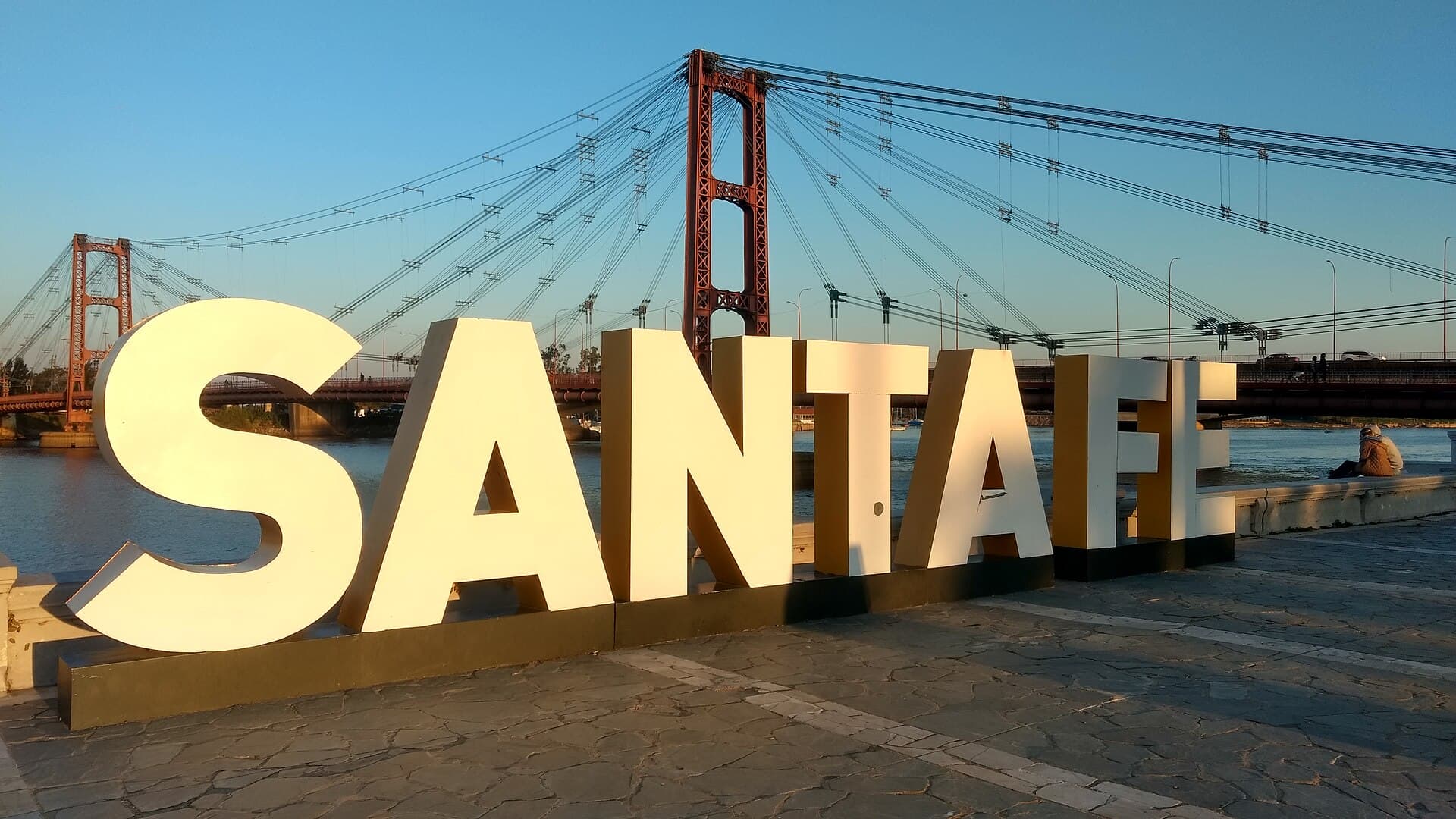 ElGuruCesar / CC BY-SA 4.0, via Wikimedia Commons
Self-guided audio walking tour of Santa Fe — GPS route, offline playback, story-driven narration in 32 languages.
“Where colonial echoes meet the Paraná's embrace.”
Not the postcards. The stories even locals don't know — whispered in your ear, right where they happened.
This isn't just a church; it's a time capsule holding secrets from Argentina's early days.
Santa Fe is known for its beer, but the reason behind its prime brewing location is rooted in the very river that defines the city.
This iconic bridge is a symbol of Santa Fe, but its history holds a dramatic tale of resilience against nature's power.
Discover every secret of Santa Fe
Every address, every reveal in full — in your ear, right where it happened.
You pick your stops. You walk. The voice reveals what the others miss.


Your self-guided audio tour of Santa Fe is ready — pick your landmarks, choose your language, and start the moment you arrive.
BuyLume has a built-in augmented-reality guide. Hold your phone up and its camera shows the street ahead of you, with a glowing arrow laid over the real view that always points to your next stop — no map to puzzle over, no wrong turns. Like everything in Lume, it works fully offline.
Santa Fe de la Vera Cruz, often simply called Santa Fe, is the capital of its namesake province in northeastern Argentina. Situated at the confluence of the Paraná and Salado rivers, and embracing the Setúbal lagoon, this riverside metropolis offers a unique blend of colonial heritage and modern urban life. With a population of around 500,000, it's a lively destination known for its warm, humid subtropical climate and lush natural surroundings.
The city holds a special place in Argentina's history, often celebrated as the "Cradle of the Constitution" because the nation's foundational document was signed here in 1853. Beyond its historical significance, Santa Fe is deeply connected to its waterways, offering scenic waterfront promenades, river activities, and a distinct culinary tradition influenced by its aquatic environment.
Santa Fe presents a more authentic, less Europeanized Argentine experience compared to Buenos Aires, with a palpable regional character shaped by its proximity to the Paraná River and its past as a Jesuit mission hub. It's a city that invites exploration, from its well-preserved colonial architecture to its cultural scene and relaxed pace of life.
## Founding and Relocation Santa Fe was originally founded as Santa Fe de la Vera Cruz in 1573 by Spanish conquistador Juan de Garay, near the junction of the Paraná and Salado rivers at a site known today as Cayastá. This early settlement, sometimes referred to as "Santa Fe la Vieja" (Old Santa Fe), served as a crucial river port supporting the Spanish settlement at Asunción, Paraguay. However, persistent flooding from the Salado River and ongoing conflicts with indigenous communities led to a significant decision: the entire city was relocated to its current, higher ground in 1651 (or 1653, depending on the source).
## Colonial Era and Jesuit Influence During the colonial era, Santa Fe developed into an important missionary center for the Jesuits. Their influence is still visible in the city's architecture, with the San Francisco Church and Convent, dating back to 1680, standing as a National Historic Monument. The city's strategic location on the Paraná River made it a key hub for trade, exporting salted meat, hides, wood products, and even yerba mate.
## The Cradle of the Constitution Santa Fe played a pivotal role in Argentina's early political history and its path to nationhood. The city hosted preliminary meetings for the Congress of Tucumán, which ultimately declared Argentina's independence in 1816. More significantly, Santa Fe is famously known as the "Cradle of the Constitution" because the Argentine Constitution, the foundation of the modern Argentine state, was signed here in 1853. This event marked a turning point in the nation's political consolidation, following years of strife between federalist and unitarian factions.
## Modern Development In 1814, Santa Fe officially became the provincial capital when the territory was separated from the province of Buenos Aires. The arrival of the railway in 1885 connected Santa Fe to Buenos Aires, spurring economic growth and modernization. The city's port was modernized to accommodate oceangoing vessels, making it one of the most inland seaports in the world and a vital commercial hub for Argentina, Bolivia, and Paraguay. Today, Santa Fe continues to be a significant cultural and economic center, blending its historical legacy with a dynamic urban environment.
Begin your exploration at Plaza 25 de Mayo, the historical and civic heart of Santa Fe, surrounded by colonial architecture and significant buildings. From here, visit the Convento y Museo de San Francisco, a National Historic Monument from 1680, offering insights into colonial art and history. Nearby, the Museo Etnográfico y Colonial Juan de Garay provides a deeper dive into the city's founding, local crafts, and indigenous heritage, including artifacts from the original settlement of Cayastá.
Stroll along the Costanera, Santa Fe's scenic waterfront promenade, for views of the Setúbal Lagoon and the iconic Puente Colgante (Suspension Bridge), especially beautiful when illuminated at night. Consider a tour of the Cervecería Santa Fe, the local brewery, to learn about its history and the beer-making process. For a unique culinary experience, seek out El Quincho de Chiquito for its renowned river fish buffet.
Further afield, the Santa Fe la Vieja Archaeological Park in Cayastá allows you to walk through the excavated remains of the city's original 16th-century settlement. For those interested in sports, Santa Fe is home to two first-division football teams, Club Atlético Colón and Club Atlético Unión, offering a chance to catch a local derby.
The best times to visit Santa Fe are during spring (September to November) and fall (March to May). During these months, the weather is mild and pleasant, with average daytime temperatures around 13-18°C (55-64°F) in autumn and a comfortable transition in spring, making it ideal for outdoor activities and exploring the city. Summers (December to February) can be hot and humid, with temperatures often exceeding 30°C (86°F) and more frequent rainfall. Winters (June to August) are generally mild and drier, with cooler nights.
Santa Fe is generally a calm city, but standard big-city precautions apply, such as keeping valuables out of sight. The city is fairly flat and walkable, especially the downtown area. For longer distances, a public bus system, Santa Fe Trails, serves the city, with fares paid using a SUBE card. Taxis and ride-hailing apps are also available.
Sauce Viejo Airport (SFN) offers daily direct flights to Buenos Aires and Rosario. Long-distance buses are a common and affordable way to reach Santa Fe from other major Argentine cities like Buenos Aires and Rosario. When it comes to currency, using ATMs for exchange is not always recommended due to low withdrawal limits and high fees; exchange offices at the airport or in the city center are better options, as are some hotels.
Accommodation and dining options are varied, with reservations recommended for upscale restaurants, especially during peak hours (6:30 PM to 8:00 PM). Tipping 15-20% is standard, though some restaurants may include a service charge for larger parties.
Santa Fe in Korean, in Chinese or in Hebrew — and 29 more languages, every stop narrated by a native voice. The widest language range of any self-guided audio tour.
Available in: