Mine de Mbah Suro
Sous la surface de Sawahlunto, un tunnel porte le nom d'une figure légendaire. Qui était Mbah Suro, et quelles histoires ce passage souterrain raconte-t-il à son sujet ?
L'histoire complète se débloque dans le tour
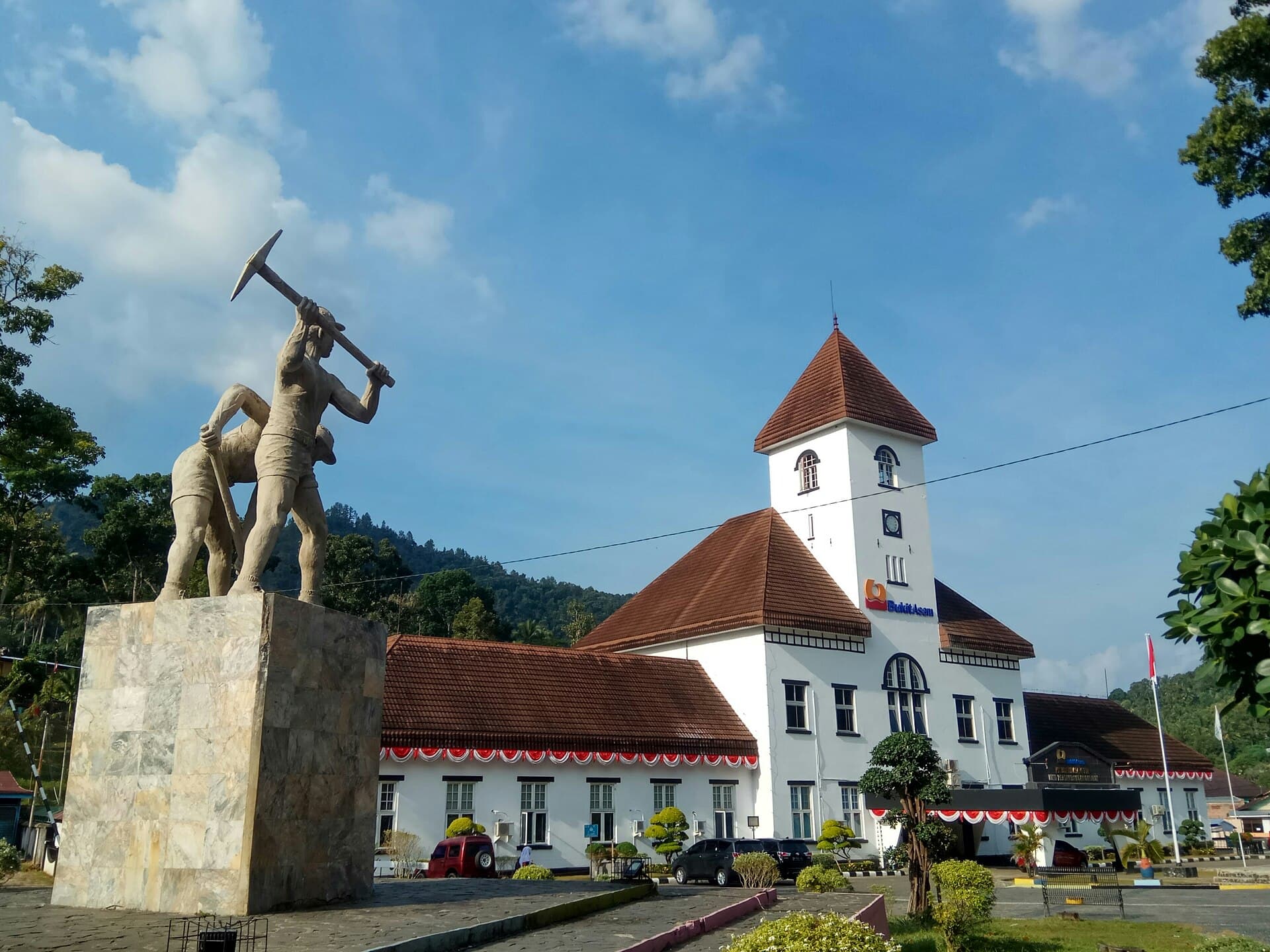
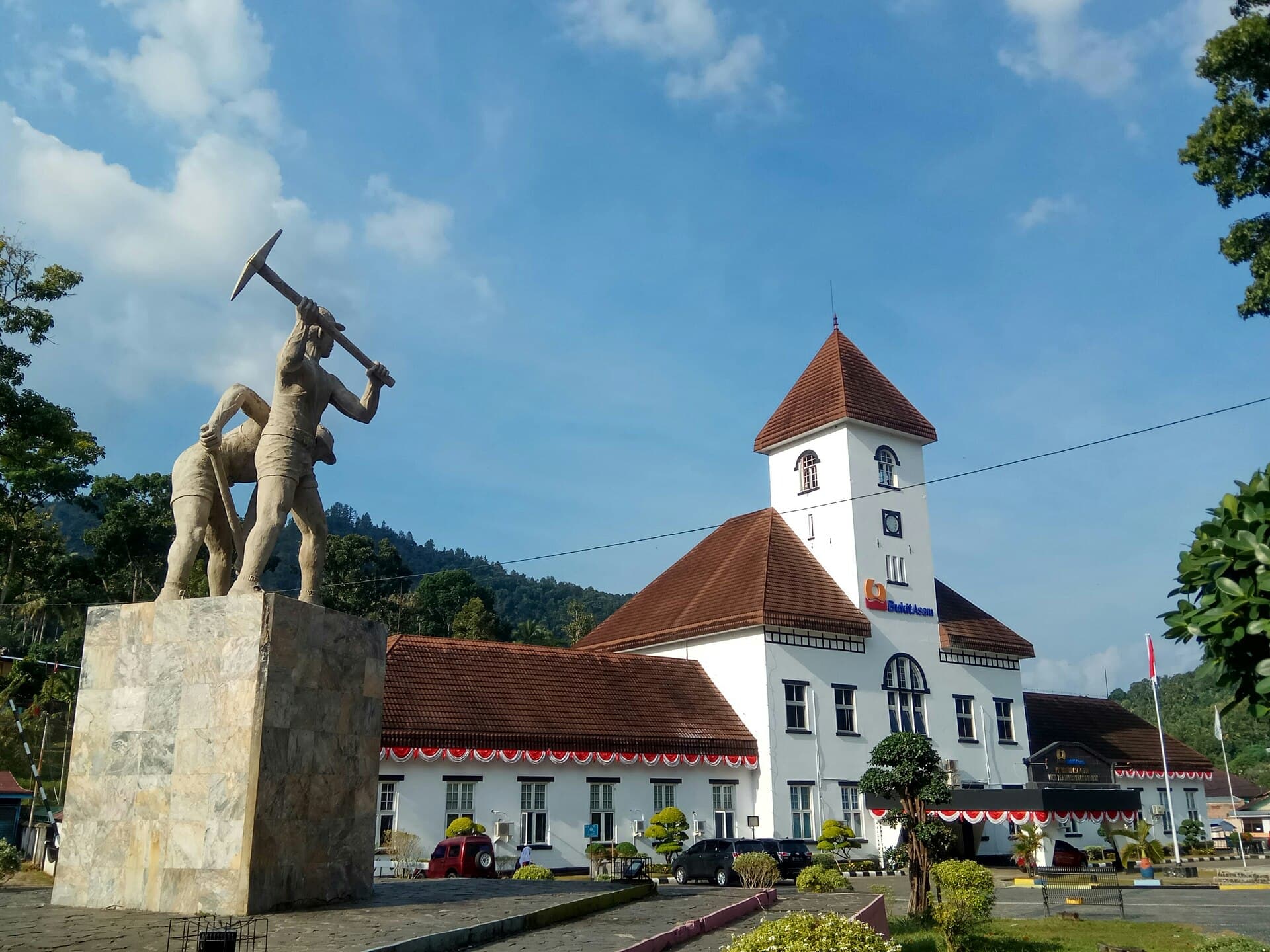 Rhmtdns / CC BY-SA 4.0, via Wikimedia Commons
Visite audio autoguidée de Sawahlunto — parcours GPS à pied, lecture hors ligne, narration en 32 langues.
“Là où les échos industriels rencontrent une culture florissante.”
Pas les cartes postales. Les histoires que même les habitants ignorent — soufflées à l'oreille, là où elles se sont passées.
Sous la surface de Sawahlunto, un tunnel porte le nom d'une figure légendaire. Qui était Mbah Suro, et quelles histoires ce passage souterrain raconte-t-il à son sujet ?
Les rails menant à Sawahlunto racontent une saga d'ingénierie née d'un besoin pressant. Qu'est-ce qui a rendu ce chemin de fer si extraordinaire ?
Une élévation panoramique surplombant Sawahlunto porte un nom surprenant avec une connexion européenne. Comment 'Polan' est-il devenu une partie de ce paysage indonésien ?
Découvrez tous les secrets de Sawahlunto
Chaque adresse, chaque révélation en entier — dans ton oreille, là où elle s'est passée.
Tu choisis tes lieux. Tu marches. La voix te révèle ce que les autres ignorent.
Votre visite audioguidée de Sawahlunto vous attend — choisissez vos lieux, votre langue, et lancez-vous dès votre arrivée.
AcheterLume intègre un guide en réalité augmentée. Levez votre téléphone : sa caméra montre la rue devant vous, avec une flèche lumineuse posée sur l'image réelle qui pointe toujours vers votre prochain arrêt — aucune carte à déchiffrer, aucun mauvais virage. Comme tout dans Lume, ça fonctionne entièrement hors-ligne.
Sawahlunto, une ville de l'ouest de Sumatra, en Indonésie, offre une fenêtre unique sur une ère industrielle passée, désormais gracieusement réaménagée pour les visiteurs. Autrefois une ville minière de charbon animée établie par les Néerlandais à la fin du XIXe siècle, elle est devenue un site du patrimoine mondial de l'UNESCO, reconnu pour son extraordinaire héritage industriel.
Entourée par les ondulations vertes de la chaîne de montagnes de Bukit Barisan, Sawahlunto mêle architecture coloniale préservée et splendeur naturelle. L'attrait de la ville réside dans sa capacité à raconter une histoire captivante d'ingéniosité technologique, d'échange culturel et d'entreprise humaine, en faisant une destination attrayante pour ceux qui recherchent une expérience indonésienne authentique au-delà des sentiers battus.
## L'ascension de l'or noir L'histoire de Sawahlunto a commencé au milieu du XIXe siècle avec la découverte d'abondants gisements de charbon par des géologues hollandais, notamment Ir. W.H. de Greve en 1867-1868. Reconnaissant le potentiel de l'« or noir » pour alimenter la révolution industrielle, le gouvernement colonial hollandais a officiellement établi Sawahlunto comme ville minière en 1888. Une infrastructure étendue a été rapidement développée, y compris la mine de charbon d'Ombilin, qui a officiellement commencé sa production en 1892.
## Une ville industrielle délibérément conçue Contrairement à de nombreuses communautés qui se sont développées de manière organique, Sawahlunto était un noyau industriel méticuleusement planifié. Les Néerlandais ont investi considérablement, construisant non seulement des installations minières, mais aussi des logements pour les travailleurs, des édifices administratifs et un réseau ferroviaire complexe. Ce chemin de fer, une merveille d'ingénierie de son temps, était vital pour transporter le charbon des terrains montagneux inaccessibles jusqu'au port d'Emmahaven (aujourd'hui Teluk Bayur) à Padang. L'aménagement de la ville intégrait des zones résidentielles, des installations industrielles et une architecture néoclassique européenne aux côtés de maisons traditionnelles Minangkabau, reflétant l'afflux varié de personnes.
## L'équation humaine et le tissage culturel La main-d'œuvre des mines d'Ombilin était diverse, comprenant des habitants Minangkabau, des travailleurs sous contrat de Java et de Chine, et un nombre considérable de travailleurs forcés et de prisonniers coloniaux de toutes les Indes orientales néerlandaises. Ces « gens enchaînés » (orang rantai) travaillaient dans des conditions sévères, souvent avec des salaires minimes et des châtiments physiques. Malgré l'exploitation, cette convergence culturelle a favorisé une culture distincte de Sawahlunto, influençant la langue, l'art, la tradition, l'artisanat et les styles culinaires.
## De la prospérité au déclin et à la renaissance Sawahlunto a prospéré en tant qu'important exportateur de charbon en Asie du Sud-Est au début du XXe siècle, la production de charbon répondant à une part significative des besoins énergétiques des Indes orientales néerlandaises en 1930. Cependant, après la Seconde Guerre mondiale et l'indépendance indonésienne en 1945, les mines ont été nationalisées. À la fin des années 1990, la diminution des gisements de charbon et la baisse des prix mondiaux ont conduit à l'arrêt des opérations minières en 1998, provoquant un départ massif et transformant Sawahlunto en ce que beaucoup craignaient de devenir une communauté déserte.
Dans une remarquable résurgence, le gouvernement de la ville a lancé une politique en 2004 pour transformer Sawahlunto en une destination pour les visiteurs, en se concentrant sur la préservation et la mise en valeur de son vaste patrimoine minier. Cette vision a culminé en 2019 lorsque le patrimoine minier de charbon d'Ombilin de Sawahlunto a été inscrit sur la liste du patrimoine mondial de l'UNESCO, reconnaissant sa valeur universelle exceptionnelle en matière de technologie industrielle, d'urbanisme et d'histoire sociale. Aujourd'hui, Sawahlunto témoigne d'une préservation réussie du patrimoine, invitant les visiteurs à explorer son passé et son présent animé.
Commencez votre exploration au Patrimoine minier de charbon d'Ombilin de Sawahlunto, un site du patrimoine mondial de l'UNESCO. Descendez dans la Mine de Mbah Suro (Lubang Mbah Suro), un ancien tunnel de charbon qui offre un voyage tangible dans la vie des mineurs. En surface, le Musée du chemin de fer de Sawahlunto (Museum Kereta Api Sawahlunto), abrité dans l'ancienne gare, expose des locomotives à vapeur d'époque et des artefacts, détaillant le système unique de chemin de fer à crémaillère construit pour le transport du charbon.
Explorez l'architecture coloniale bien préservée de la ville, y compris le Bureau de l'unité minière d'Ombilin de PT Bukit Asam (anciennement Hoofdkantoor van de Steenkolenmijn Ombilin) et le Bâtiment du centre culturel de Sawahlunto (Gedung Pusat Kebudayaan Sawahlunto). Le Musée Goedang Ransoem (Musée de l'entrepôt de rations) donne un aperçu de la vie quotidienne des mineurs, présentant la vaste cuisine commune qui les nourrissait autrefois.
Pour des vues imprenables sur la ville et les montagnes environnantes, y compris le mont Merapi et le mont Singgalang, dirigez-vous vers Puncak Polan (Pic de la colline de Polan). De ce point de vue, vous pouvez également distinguer l'emblématique bâtiment du bureau de Bukit Asam et la haute tour de la mosquée Nurul Al-Iman, une ancienne centrale électrique à vapeur. Pour un interlude tranquille, visitez le Taman Segitiga (Parc du Triangle), une place centrale appréciée des habitants. Ceux qui apprécient la nature peuvent également explorer le Kandi Tourism Resort, qui comprend trois lacs formés à partir d'anciennes excavations minières : le lac Kandi, le lac Tanah Hitam et le lac Tandikek.
Sawahlunto bénéficie d'un climat tropical avec des températures constamment chaudes tout au long de l'année, oscillant en moyenne entre 23°C et 24°C. Les températures diurnes se situent généralement autour de 27-28°C, se rafraîchissant à un agréable 19-21°C la nuit. Bien que la pluie soit fréquente toute l'année, avec 21 à 28 jours de pluie par mois, elle se manifeste souvent par de légères bruines ou de brèves averses plutôt que par des pluies prolongées. Le mois le plus sec est généralement juillet, ce qui en fait une période favorable pour les activités de plein air. Cependant, le temps chaud et les paysages verdoyants peuvent être appréciés presque à tout moment, avec des vêtements légers et respirants recommandés.
Sawahlunto est située à environ 90 kilomètres au nord-est de Padang, la capitale de l'ouest de Sumatra. Le moyen le plus pratique d'atteindre Sawahlunto est de prendre un vol pour l'aéroport international de Minangkabau (PDG) à Padang, puis de prendre un taxi ou une voiture de location pour un trajet de 1 heure 40 minutes à 2 heures. Des bus et des navettes-taxis sont également disponibles depuis Padang, offrant une option plus économique mais plus longue. Une fois à Sawahlunto, vous pouvez vous déplacer dans la ville en utilisant des minibus locaux appelés angkot ou des motos-taxis (ojek), dont les prix doivent être convenus à l'avance. Des services de covoiturage basés sur des applications comme Gojek ou Grab peuvent également être disponibles. Lors de votre visite, habillez-vous modestement (épaules et genoux couverts) surtout dans les sites religieux. La monnaie locale est la roupie indonésienne (IDR), et bien que les cartes de crédit soient acceptées dans les grands établissements, il est prudent d'avoir de l'argent liquide pour les petits magasins et les marchés.
Sawahlunto en coréen, en chinois ou en hébreu — et dans 29 autres langues, chaque étape narrée par une voix native. La plus large gamme de langues de tous les audioguides autoguidés.
Disponible en :