Aalto Centre Piazza
The expansive square at the heart of Seinäjoki's architectural masterpiece, the Aalto Centre, might initially feel a little... empty.
Full story unlocks in the tour
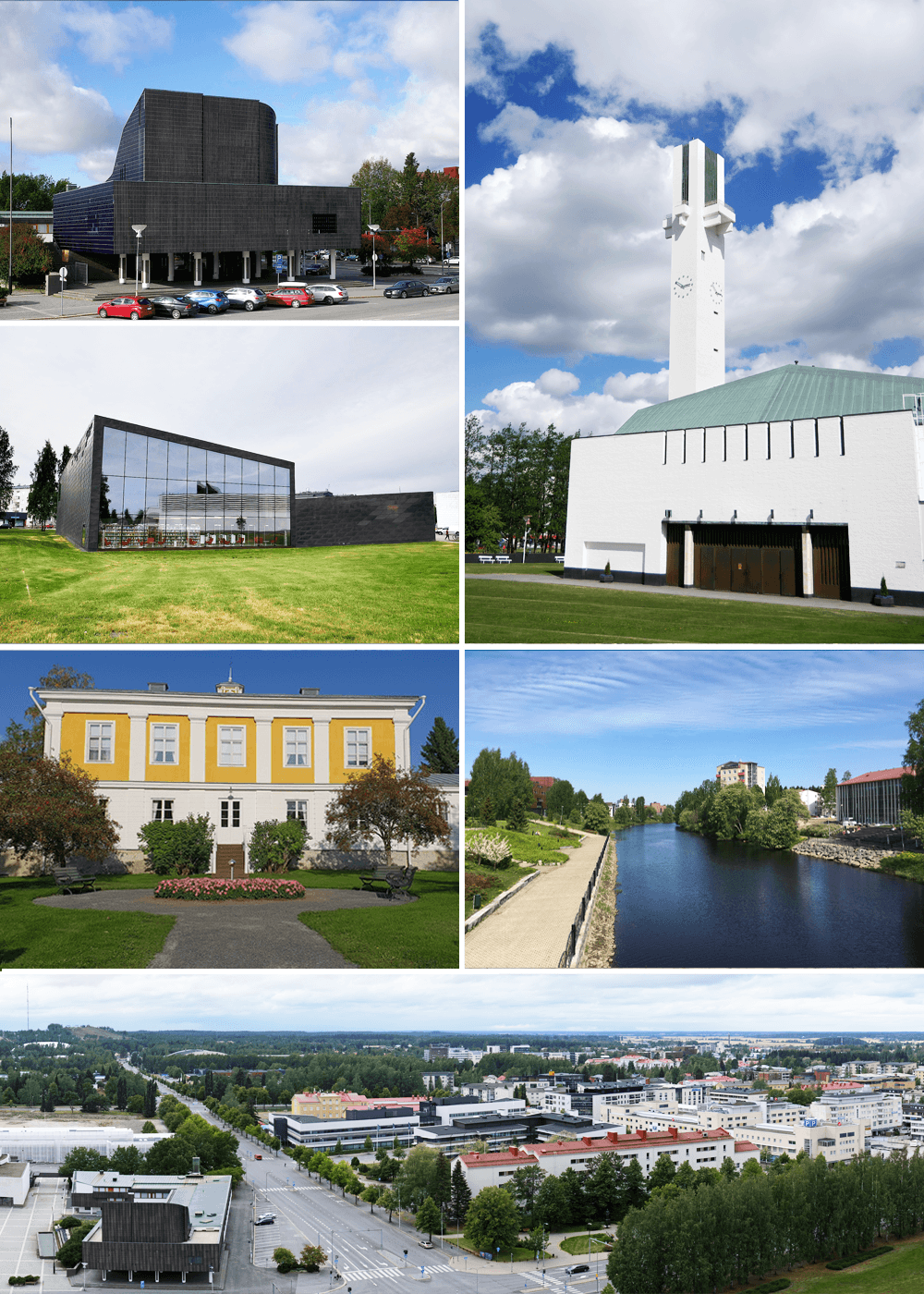 Weisself, AnitaMet, Santeri Viinamäki, kallerna / CC BY-SA 4.0, via Wikimedia Commons
Self-guided audio walking tour of Seinäjoki — GPS route, offline playback, story-driven narration in 32 languages.
“Where Finnish tango finds its beat and Aalto's vision shapes the skyline.”
Not the postcards. The stories even locals don't know — whispered in your ear, right where they happened.
The expansive square at the heart of Seinäjoki's architectural masterpiece, the Aalto Centre, might initially feel a little... empty.
The striking white church, a symbol of Seinäjoki, was almost a very different color.
Seinäjoki, a modern city, owes its very existence to a gunpowder factory and an ironworks established in the late 18th century.
Discover every secret of Seinäjoki
Every address, every reveal in full — in your ear, right where it happened.
You pick your stops. You walk. The voice reveals what the others miss.
Your self-guided audio tour of Seinäjoki is ready — pick your landmarks, choose your language, and start the moment you arrive.
BuyLume has a built-in augmented-reality guide. Hold your phone up and its camera shows the street ahead of you, with a glowing arrow laid over the real view that always points to your next stop — no map to puzzle over, no wrong turns. Like everything in Lume, it works fully offline.
Seinäjoki, the beating heart of South Ostrobothnia, is a city that gracefully blends modern design with deep-rooted Finnish traditions. Situated in western Finland amidst wide, open plains, it offers a unique balance of serene northern nature and a dynamic urban rhythm. The city is particularly recognized for its exceptional architectural ensemble, the Aalto Centre, designed by the iconic Alvar Aalto, which draws design enthusiasts from across the globe.
Beyond its architectural marvels, Seinäjoki pulses with a rich cultural life, especially during its lively festival season. It proudly hosts some of Finland's largest musical events, including the world-famous Tangomarkkinat, which transforms the city into the capital of Finnish tango each July. With a welcoming atmosphere and a strong entrepreneurial spirit, Seinäjoki provides a compelling experience for those seeking both cultural immersion and a taste of authentic Ostrobothnian life.
## From Ironworks to Railway Hub Seinäjoki's story began in the mid-16th century with the first permanent settlements along the Seinäjoki River, initially part of the extensive Ilmajoki parish. A pivotal moment arrived in 1798 with the establishment of the Östermyra ironworks and gunpowder factory by Abraham Falander. This industrial venture became the economic engine of the region, laying the groundwork for the future city.
Seinäjoki gained independent municipality status in 1868. The 1880s marked a significant turning point with the arrival of the railway. Seinäjoki quickly transformed into a crucial junction, connecting northern and southern Finland and dramatically accelerating population growth and trade. The railway station itself was initially named Ostermyra, reflecting its industrial origins.
## The Aalto Era and Modern Growth In the 20th century, Seinäjoki continued its development, becoming a market town in 1931 and finally receiving its city charter in 1960. A defining period for the city's identity began with the visionary work of architect Alvar Aalto. He designed the unique administrative and cultural center of Seinäjoki, known as the Aalto Centre, which includes the Lakeuden Risti Church, City Hall, City Library, Parish Centre, and State Office Building. The City Theatre, based on Aalto's plans, was completed later, solidifying the center as a globally significant architectural whole.
Post-war, Seinäjoki experienced significant migration and diversification of its economy. The city has also expanded through several municipal consolidations, notably in 2005 with Peräseinäjoki, and in 2009 with Nurmo and Ylistaro, further strengthening its position as the regional center of South Ostrobothnia. Today, Seinäjoki is recognized for its strong entrepreneurial environment, significant food production industry, and its continued role as a major event city.
The undisputed highlight of Seinäjoki is the Aalto Centre, a remarkable collection of civic buildings designed by Alvar Aalto. Begin at the Lakeuden Risti Church (Cross of the Plains), a striking white modernist church with a 65-meter-high bell tower offering expansive city views. Adjacent are the City Hall, known for its distinctive blue ceramic rod facade, and the Aalto Library, an open book-shaped building. The City Theatre, Parish Centre, and State Office Building complete this internationally recognized architectural ensemble.
For a contrasting historical perspective, visit the Törnävä Museum Area. This open-air museum features traditional 17th- to 19th-century farm buildings, a knife workshop, pharmacy museum, and a gunpowder museum, illustrating old Ostrobothnian life. Don't miss the modern Apila Library, connected to the Aalto Library, with its unique cloverleaf and origami-inspired design. The Kalevan Navetta Art and Culture Centre, housed in a renovated cowshed, offers contemporary art exhibitions and cultural events. If you're visiting in July, the Tangomarkkinat festival is a spirited spectacle of Finnish tango, with public dancing and competitions.
Seinäjoki truly comes alive during the summer months, particularly in July, when the city hosts its major festivals like Tangomarkkinat, Provinssi rock festival, and Vauhtiajot. The weather is mild and pleasant, with temperatures typically ranging from 15-22°C (59-72°F). For those seeking a quieter experience, late spring or early autumn offer reflective visits with fewer crowds. While winters are cold and days are shorter, they present opportunities for snow-related activities.
Seinäjoki is a compact and walkable city, making it easy to explore its main attractions on foot. While there's no passenger airport within the city itself, Vaasa Airport (VAA) is the most convenient option, about 63 km away, with an hour's journey by taxi, rental car, or bus. Tampere-Pirkkala Airport (TMP) is another alternative, approximately 158 km away. Seinäjoki is well-connected by rail, serving as an important junction with frequent train services from major Finnish cities like Helsinki, Tampere, and Vaasa. Accommodation and food prices are generally moderate by Finnish standards. Electric scooters are available for rent during the summer for convenient city navigation.
Seinäjoki in Korean, in Chinese or in Hebrew — and 29 more languages, every stop narrated by a native voice. The widest language range of any self-guided audio tour.
Available in: