Sarah Island
La colonie pénitentiaire de Sarah Island était tristement célèbre pour ses conditions difficiles, mais elle a également favorisé une industrie inattendue.
L'histoire complète se débloque dans le tour
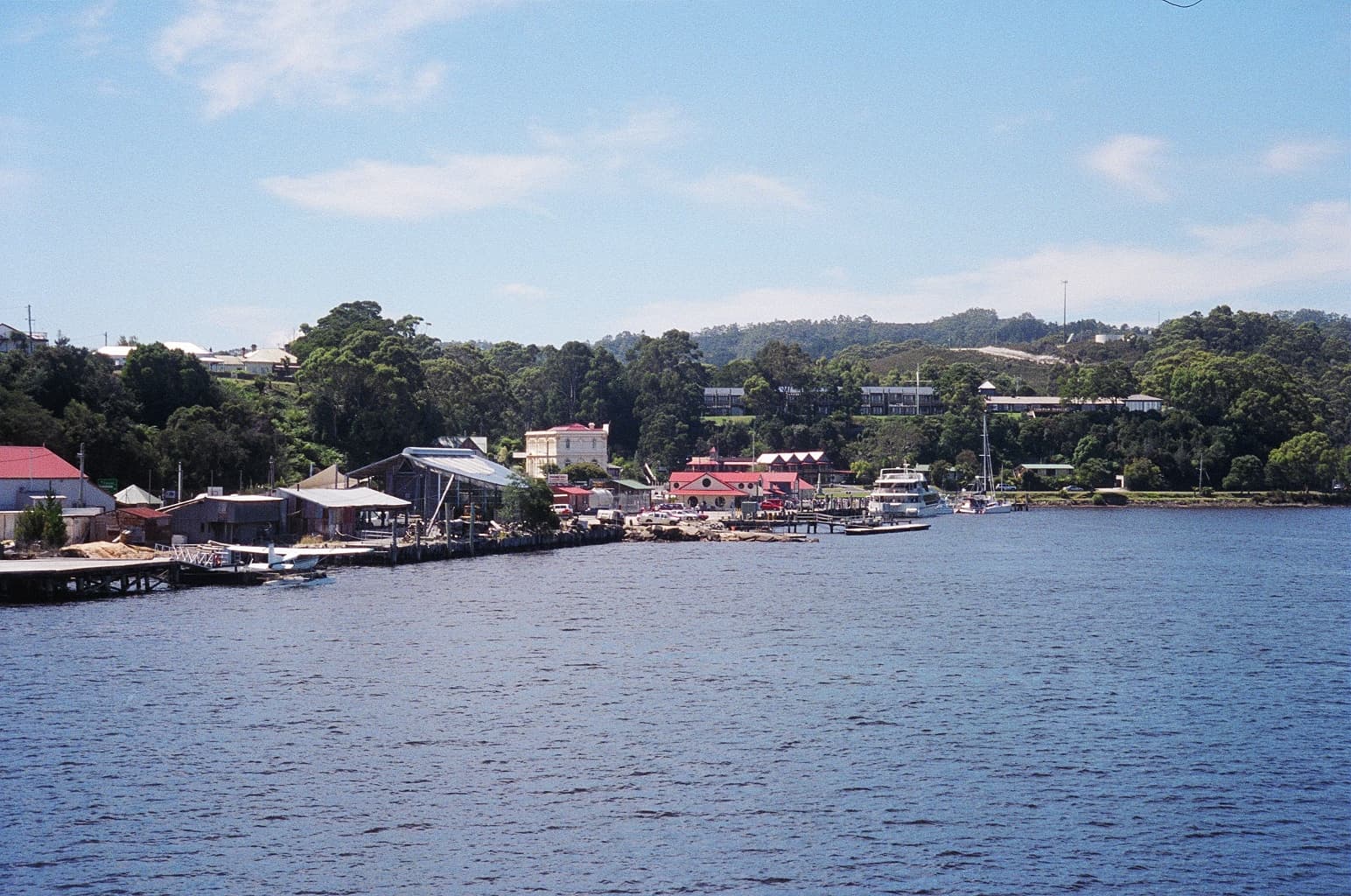 M. Murphy / Public domain, via Wikimedia Commons
Visite audio autoguidée de Strahan — parcours GPS à pied, lecture hors ligne, narration en 32 langues.
“Là où la côte ouest sauvage murmure d'anciennes histoires.”
Pas les cartes postales. Les histoires que même les habitants ignorent — soufflées à l'oreille, là où elles se sont passées.
La colonie pénitentiaire de Sarah Island était tristement célèbre pour ses conditions difficiles, mais elle a également favorisé une industrie inattendue.
L'entrée étroite de Macquarie Harbour, connue sous le nom de « Hells Gates » (Portes de l'Enfer), a gagné son nom sinistre de ceux qui la traversaient.
Le pin Huon, à croissance lente et essentiel à l'histoire de Strahan, détient un secret sur sa remarquable longévité.
Découvrez tous les secrets de Strahan
Chaque adresse, chaque révélation en entier — dans ton oreille, là où elle s'est passée.
Tu choisis tes lieux. Tu marches. La voix te révèle ce que les autres ignorent.


Votre visite audioguidée de Strahan vous attend — choisissez vos lieux, votre langue, et lancez-vous dès votre arrivée.
AcheterLume intègre un guide en réalité augmentée. Levez votre téléphone : sa caméra montre la rue devant vous, avec une flèche lumineuse posée sur l'image réelle qui pointe toujours vers votre prochain arrêt — aucune carte à déchiffrer, aucun mauvais virage. Comme tout dans Lume, ça fonctionne entièrement hors-ligne.
Strahan, prononcé « Strawn », est un village portuaire isolé sur la côte ouest accidentée de Tasmanie, un endroit où l'océan Austral sauvage rencontre d'anciennes forêts tropicales et une histoire complexe. Il est situé sur Macquarie Harbour, une vaste étendue d'eau six fois plus grande que le port de Sydney, et sert de porte d'entrée à la zone de nature sauvage de Tasmanie, classée au patrimoine mondial. Cette petite ville, avec une population d'un peu plus de 600 habitants, est un mélange de grandeur naturelle et d'un passé captivant, ce qui en fait une destination distinctive pour ceux qui recherchent à la fois l'aventure et la réflexion tranquille.
La vie à Strahan se déroule à un rythme plus détendu, offrant une évasion sereine du quotidien. Le village est un point de départ populaire pour explorer les diverses offres de la région, des croisières en bateau le long de la paisible rivière Gordon aux promenades à travers les forêts tropicales tempérées fraîches. Que vous soyez attiré par son patrimoine pénitentiaire, l'industrie unique du pin Huon ou les paysages spectaculaires façonnés par les vents des « Quarantièmes Rugissants », Strahan promet une expérience unique.
Les origines de Strahan sont profondément liées aux industries de ressources de Tasmanie et à son histoire pénitentiaire. La terre autour de Macquarie Harbour est le territoire traditionnel des bandes Mimegin et Lowreenne de la tribu Toogee. Alors que la tristement célèbre colonie pénitentiaire de Sarah Island fut établie dès 1821, le port de Strahan lui-même ne commença à se développer qu'autour de 1877. Initialement connu sous le nom de Long Bay ou Regatta Point, le campement fut rebaptisé Strahan en 1881, en l'honneur de Sir George Cumine Strahan, alors gouverneur de Tasmanie. La ville fut officiellement proclamée en 1892.
Strahan devint rapidement un port vital, desservant principalement l'industrie du bois en plein essor, en particulier le très prisé pin Huon, et les champs miniers intérieurs de la côte ouest. Avec des lignes de chemin de fer le reliant aux villes minières voisines comme Zeehan (en 1890) et Queenstown (en 1899), Strahan prospéra, devenant le deuxième port le plus achalandé de Tasmanie à son apogée, avec une population dépassant les 2 000 habitants. Le port facilitait l'expédition de bois, de minéraux comme le cuivre, l'or, le plomb et l'argent, ainsi que de passagers et de marchandises.
La fortune de la ville changea avec le déclin de l'industrie minière au début du 20e siècle, et son importance en tant que port diminua. Les liaisons ferroviaires avec Zeehan et Queenstown furent finalement fermées dans les années 1960. Cependant, un nouveau chapitre commença dans la seconde moitié du 20e siècle. Dans les années 1980, Strahan se transforma en une destination touristique importante, en grande partie grâce à la déclaration de la zone de nature sauvage de Tasmanie comme site du patrimoine mondial de l'UNESCO en 1982. Cette période vit la restauration de nombreux bâtiments historiques et le développement d'infrastructures touristiques. Les croisières sur Macquarie Harbour et la rivière Gordon, qui avaient débuté en 1969, devinrent un attrait majeur. Aujourd'hui, Strahan continue de prospérer en tant que principal centre touristique de la côte ouest de Tasmanie, célébrant son patrimoine avec des événements comme le festival annuel des Piners, qui a débuté en 1995.
Strahan offre un éventail d'expériences, des explorations historiques aux merveilles naturelles. Une croisière sur la rivière Gordon est souvent considérée comme une activité essentielle, vous emmenant à travers les eaux tranquilles de Macquarie Harbour, devant l'entrée tristement célèbre de « Hells Gates », et dans la forêt tropicale vierge de la rivière Gordon. De nombreuses croisières incluent un arrêt à Sarah Island, où vous pouvez explorer les ruines de la plus ancienne et la plus isolée des colonies pénitentiaires d'Australie.
Pour une dose de culture locale, assistez à « The Ship That Never Was », la pièce de théâtre la plus ancienne d'Australie, qui dramatise de manière comique une véritable évasion de bagnards de Sarah Island. Les amoureux de la nature peuvent faire une promenade facile de 40 minutes aller-retour à travers la forêt tropicale tempérée fraîche jusqu'aux chutes de Hogarth dans le People's Park, avec une chance d'apercevoir des ornithorynques. Juste à l'extérieur de la ville, Ocean Beach, la plus longue plage de Tasmanie s'étendant sur plus de 30 kilomètres, offre une étendue sauvage et peu fréquentée, parfaite pour de longues promenades et l'observation du coucher de soleil, bien que la baignade ne soit pas recommandée en raison des eaux dangereuses.
Au nord de Strahan, les dunes de Henty s'élèvent de manière spectaculaire, atteignant des hauteurs allant jusqu'à 30 mètres. Ces vastes dunes de sable, sculptées par les vents des « Quarantièmes Rugissants », offrent des opportunités de sandboarding ou simplement de profiter du paysage unique. Enfin, plongez dans le patrimoine forestier de la région à la scierie de pin Huon de Morrison, où vous pourrez en apprendre davantage sur l'ancien pin Huon et assister à des démonstrations de coupe de bois.
Pour le temps le plus favorable, planifiez votre visite à Strahan entre octobre et avril. Les températures les plus chaudes et moins de risques de pluie se produisent de décembre à février, avec des maximums moyens allant de 18°C à 23°C. Cependant, préparez-vous à des pluies occasionnelles à tout moment de l'année, car la côte ouest est généralement plus humide que l'est. L'automne (mars à mai) offre des températures plus fraîches (9-17°C) et moins de foules. Bien que l'hiver (juin à août) soit plus frais (5-13°C) et plus humide, vous pourriez avoir la région en grande partie pour vous et trouver des prix d'hébergement plus bas, bien que certaines attractions, comme le West Coast Wilderness Railway, puissent ne pas fonctionner.
Strahan est mieux accessible en voiture, offrant la flexibilité d'explorer la nature sauvage environnante. Il se trouve à environ 4,5 heures de route de Hobart et à 3,5 heures de route de Launceston. Bien que des services de bus soient disponibles depuis les grandes villes de Tasmanie, le trajet peut être long. Par Avion Airways propose également des vols aller-retour deux fois par semaine entre Hobart et Strahan.
Les options d'hébergement à Strahan répondent à diverses préférences, y compris des hôtels comme Strahan Village et Franklin Manor, et des parcs de vacances tels que BIG4 Strahan Holiday Retreat et Strahan Beach Tourist Park. La cuisine à Strahan met en valeur les produits frais de Tasmanie, en particulier les fruits de mer. Les options vont des repas bistro décontractés au Hamers Bar & Grill et au Regatta Point Tavern à des expériences plus raffinées au Risby Cove Restaurant et au Charlotte's at Franklin Manor. Le West Coast Visitor Information and Booking Centre est situé au 29 Esplanade pour vous aider à planifier vos activités.
Strahan en coréen, en chinois ou en hébreu — et dans 29 autres langues, chaque étape narrée par une voix native. La plus large gamme de langues de tous les audioguides autoguidés.
Disponible en :