Château de Sully-sur-Loire
Au-delà de son extérieur imposant, une merveille architecturale particulière à l'intérieur du donjon passe souvent inaperçue aux yeux des visiteurs occasionnels.
L'histoire complète se débloque dans le tour
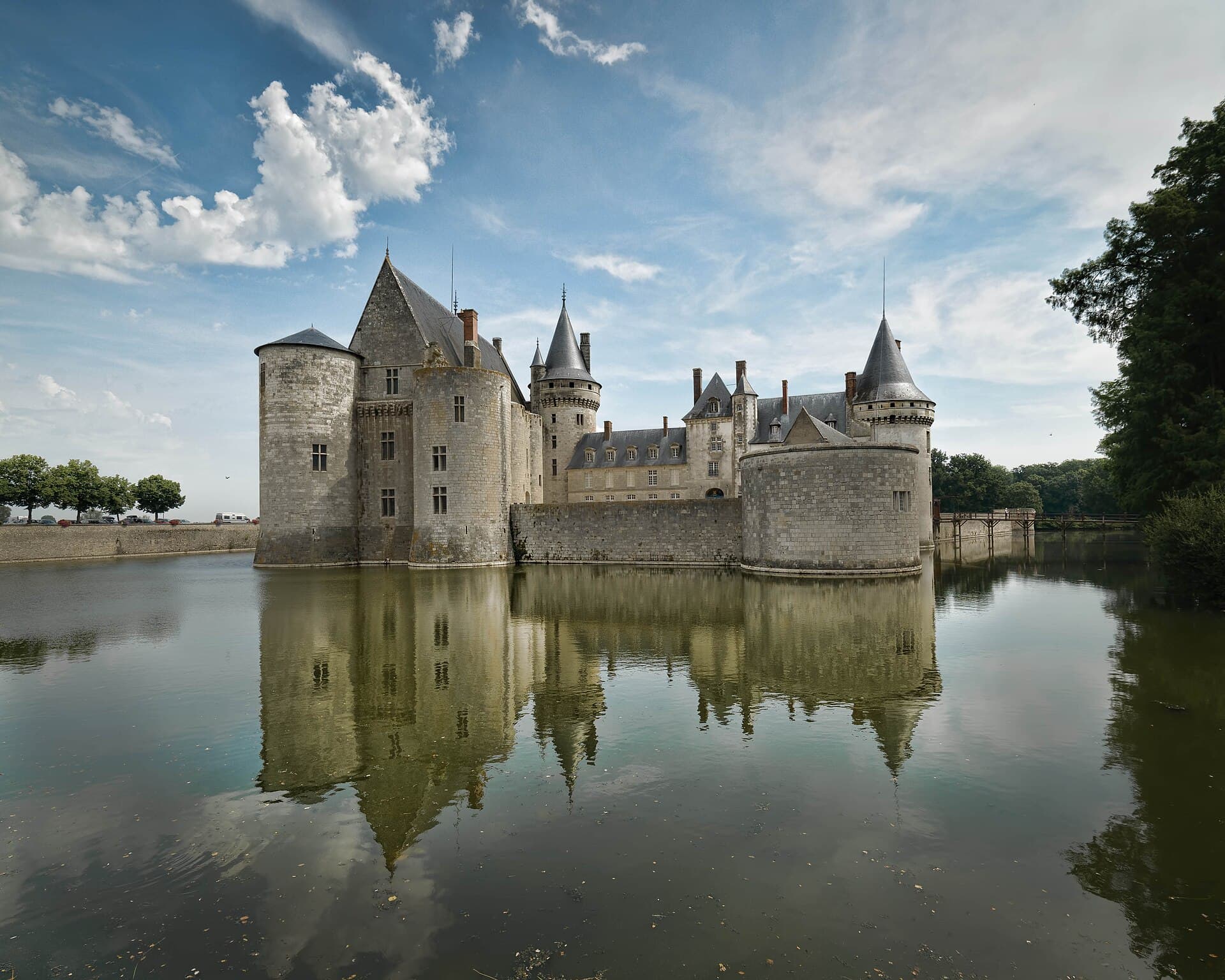 Alexbrn / CC BY-SA 3.0, via Wikimedia Commons
Visite audio autoguidée de Sully-sur-Loire — parcours GPS à pied, lecture hors ligne, narration en 32 langues.
“Là où les courants de la Loire portent les échos du passé, et les vieilles pierres recèlent des histoires oubliées.”
Pas les cartes postales. Les histoires que même les habitants ignorent — soufflées à l'oreille, là où elles se sont passées.
Au-delà de son extérieur imposant, une merveille architecturale particulière à l'intérieur du donjon passe souvent inaperçue aux yeux des visiteurs occasionnels.
L'une des figures historiques les plus célèbres de France, Jeanne d'Arc, s'est retrouvée dans une situation inattendue entre les murs de ce château.
Le paisible domaine entourant le château recèle une histoire singulière, presque macabre, liée à un projet de reconstruction.
Découvrez tous les secrets de Sully-sur-Loire
Chaque adresse, chaque révélation en entier — dans ton oreille, là où elle s'est passée.
Tu choisis tes lieux. Tu marches. La voix te révèle ce que les autres ignorent.


Votre visite audioguidée de Sully-sur-Loire vous attend — choisissez vos lieux, votre langue, et lancez-vous dès votre arrivée.
AcheterLume intègre un guide en réalité augmentée. Levez votre téléphone : sa caméra montre la rue devant vous, avec une flèche lumineuse posée sur l'image réelle qui pointe toujours vers votre prochain arrêt — aucune carte à déchiffrer, aucun mauvais virage. Comme tout dans Lume, ça fonctionne entièrement hors-ligne.
Sully-sur-Loire, une commune captivante du département du Loiret, dans le centre-nord de la France, est une porte d'entrée vers la Vallée de la Loire, classée au patrimoine mondial de l'UNESCO. Située sur la rive gauche de la Loire, à environ 40 kilomètres d'Orléans, l'histoire de la ville remonte à l'époque gallo-romaine, s'épanouissant considérablement au Moyen Âge avec la construction de son château emblématique.
Aujourd'hui, Sully-sur-Loire enchante les visiteurs par un mélange d'héritage historique et de splendeur naturelle. La ville, reconnue comme 'Ville d'Art et d'Histoire', offre un havre de paix avec son cadre en bord de rivière et ses bois environnants. Malgré les dommages subis pendant la Seconde Guerre mondiale, Sully-sur-Loire a connu une revitalisation économique substantielle et reste une destination touristique notable dans la région.
En son cœur se dresse l'imposant Château de Sully-sur-Loire, une véritable forteresse médiévale au passé profond. Cet édifice impressionnant, avec ses tourelles imposantes et ses douves remplies d'eau alimentées par la Sange, a été un point stratégique pendant des siècles, surveillant l'un des rares passages praticables de la Loire.
L'histoire de Sully-sur-Loire remonte à l'époque gallo-romaine, le site du château étant déjà fortifié à cette période. La première mention documentée d'un château date de 1102. Philippe Auguste est crédité de la construction d'un donjon cylindrique au sud de l'enceinte actuelle ; ses fondations reposent toujours sous terre.
En 1395, Guy de la Trémoïlle commença la construction du donjon de l'actuel Château de Sully-sur-Loire, le fortifiant de quatre tours. Après le décès de Guy en 1396, son épouse Marie acheva le donjon, bien que deux tours occidentales soient restées inachevées. C'est le fils de Guy, Georges de la Trémoïlle, qui accueillit le roi Charles VII et Jeanne d'Arc en juin 1429, alors qu'ils menaient campagne pour reprendre les points de passage des ponts sur la Loire. Jeanne d'Arc revint en mars 1430, pour être retenue par Georges de la Trémoïlle, s'échappant avant sa capture par les Bourguignons.
Le château fut acquis en 1602 par Maximilien de Béthune, Marquis de Rosny, qui devint le premier Duc de Sully et un fidèle compagnon et ministre du roi Henri IV. Maximilien de Béthune agrandit considérablement la forteresse, ajoutant le Petit Château pour les invités et renforçant les digues de la Loire pour protéger la ville des inondations. Il commanda également la construction de la tour d'artillerie, connue sous le nom de Tour de Béthune, en 1606, pour renforcer les défenses du château. La famille de Sully en conserva la propriété pendant quatre siècles.
Le château offrit également un refuge à des figures notables. En mars 1652, pendant la Fronde, le jeune roi Louis XIV, sa mère Anne d'Autriche et le Cardinal Mazarin y trouvèrent abri, Louis XIV dormant dans la Chambre du Roi au premier étage du donjon. Plus tard, Voltaire trouva refuge à Sully-sur-Loire en 1716 et 1719 après son exil de Paris, le décrivant comme « le plus agréable des châteaux ».
Le château fut confronté à la destruction pendant la Révolution française, un incendie en 1918, et subit des dommages dus aux bombardements en 1940 et 1944 pendant la Seconde Guerre mondiale, où il servit de quartier général à l'état-major allemand. En 1962, le Conseil Général du Loiret acheta le château et entreprit d'importants efforts de restauration, l'ouvrant au public. Aujourd'hui, le Château de Sully-sur-Loire est classé Monument Historique et continue d'être restauré, avec des efforts pour remeubler les pièces afin d'illustrer sa vie à travers les siècles.
L'attraction principale à Sully-sur-Loire est, sans aucun doute, le Château de Sully-sur-Loire, une forteresse médiévale entourée de larges douves alimentées par la Sange. Les visiteurs peuvent explorer 19 pièces distinctes, dont la grande salle basse, la salle d'honneur et la chambre du Roi dans le donjon, ainsi que les quartiers plus privés du Petit Château. Le château abrite également un magnifique plafond en berceau du XIVe siècle dans la charpente du donjon et une tapisserie du XVIIe siècle représentant le mythe de Psyché.
Au-delà du château, la ville offre une atmosphère charmante pour des promenades. Vous pouvez vous promener le long des rives de la Loire et découvrir le pont à poutres. La Collégiale Saint-Ythier, la Maison d'Henri IV du XVIe siècle et l'Église Saint-Germain méritent également une visite. Pour les amoureux de la nature, la réserve naturelle départementale du Château de Sully, d'une superficie de 42 hectares, propose de jolis sentiers bordés d'arbres du XIXe siècle, vestiges du jardin d'agrément créé par Maximilien de Béthune, et un parcours d'énigmes pour découvrir sa biodiversité. Le parc présente également une grotte construite en 1883 avec des pierres de la région de Lourdes.
La période idéale pour visiter Sully-sur-Loire pour les activités touristiques de plein air s'étend de mi-juin à mi-septembre, avec un pic la troisième semaine de juillet, lorsque le temps est clair et les températures ressenties se situent entre 18°C et 27°C. Pour les activités par temps chaud, de mi-juillet à mi-août est parfait, avec les cieux les plus clairs généralement en juillet. Le printemps (fin mars à fin juin) offre des journées ensoleillées et tempérées avec des jardins en fleurs, tandis que l'automne (fin septembre à décembre) offre un soleil doux et un feuillage coloré. Le Château de Sully-sur-Loire accueille divers événements, dont le Festival de Sully et du Loiret dédié à la musique classique en mai et juin, et des reconstitutions historiques en mai.
Le Château de Sully-sur-Loire propose des visites libres et guidées. Les visites libres durent généralement environ 1 heure et 15 minutes, avec des plans et des fiches d'information fournis. Un film d'introduction de 12 minutes avec sous-titres anglais et allemand est également disponible. Les visites guidées, d'une durée d'environ 1 heure et 30 minutes, sont proposées tous les jours à 15h du mardi au dimanche, avec des visites supplémentaires à 11h certains jours en mai et en juillet et août. L'entrée est de 8 € pour les adultes et de 5 € pour les tarifs réduits (étudiants, jeunes de 6 à 17 ans, personnes handicapées, etc.). Le château est fermé le lundi. Les visiteurs doivent prévoir de monter 235 marches pendant leur visite.
Sully-sur-Loire accueille un marché hebdomadaire tous les lundis. Les villes voisines proposent également des marchés tout au long de la semaine. La ville organise également 'Sully Plage' de début juillet à début août.
Sully-sur-Loire en coréen, en chinois ou en hébreu — et dans 29 autres langues, chaque étape narrée par une voix native. La plus large gamme de langues de tous les audioguides autoguidés.
Disponible en :