Supraśl Orthodox Monastery
Beyond its grand facade, the Supraśl Monastery once held a revered icon believed to work miracles.
Full story unlocks in the tour
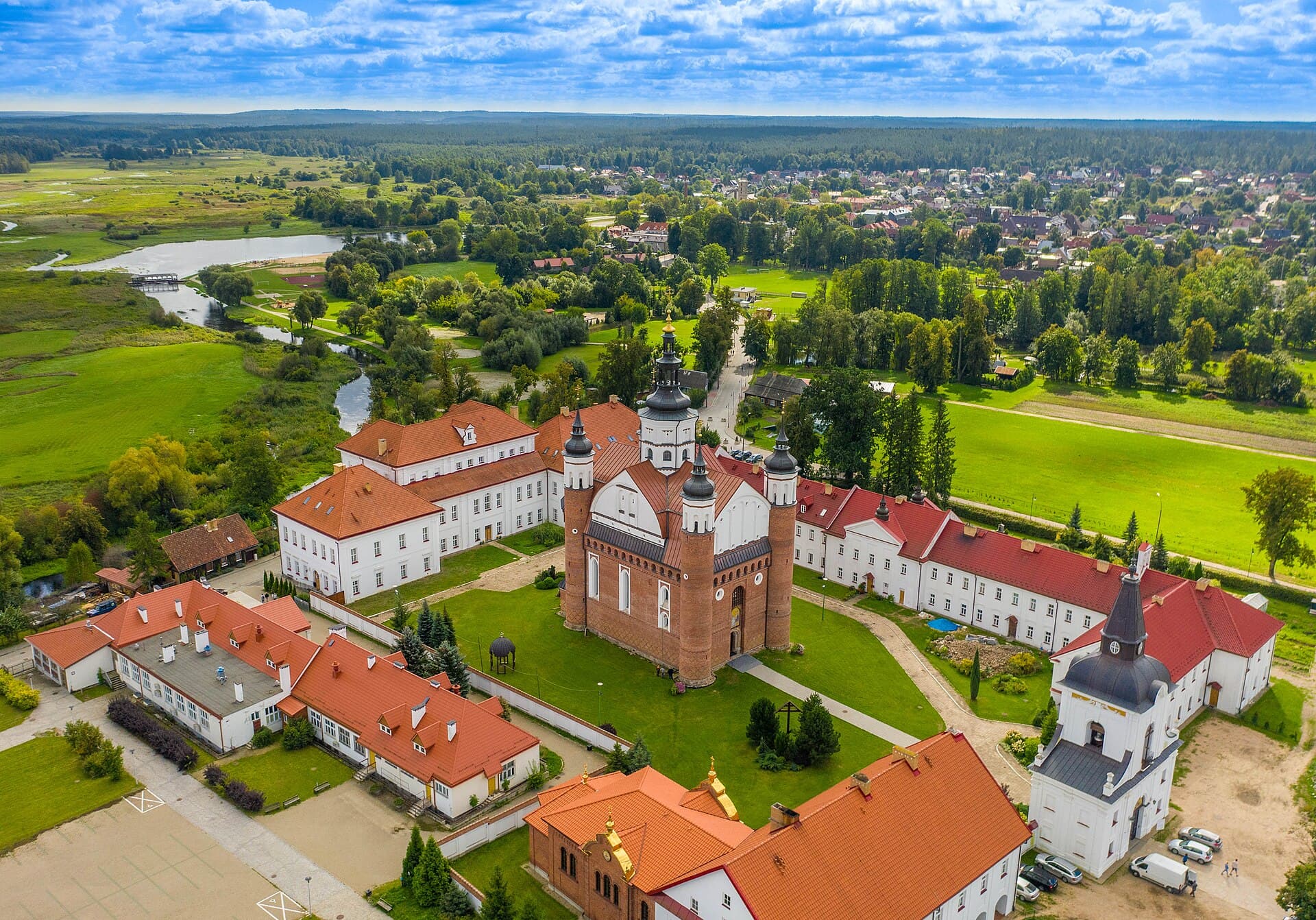 Dlinemedia / CC BY-SA 4.0, via Wikimedia Commons
Self-guided audio walking tour of Supraśl — GPS route, offline playback, story-driven narration in 32 languages.
“Where ancient faith meets primeval forest.”
Not the postcards. The stories even locals don't know — whispered in your ear, right where they happened.
Beyond its grand facade, the Supraśl Monastery once held a revered icon believed to work miracles.
This quiet town was once a major publishing hub, but a change in political winds silenced its presses.
The opulent Buchholtz Palace, now an art school, was once the grand residence of a textile magnate, but its interiors hold a secret artistic legacy.
Discover every secret of Supraśl
Every address, every reveal in full — in your ear, right where it happened.
You pick your stops. You walk. The voice reveals what the others miss.


Your self-guided audio tour of Supraśl is ready — pick your landmarks, choose your language, and start the moment you arrive.
BuyLume has a built-in augmented-reality guide. Hold your phone up and its camera shows the street ahead of you, with a glowing arrow laid over the real view that always points to your next stop — no map to puzzle over, no wrong turns. Like everything in Lume, it works fully offline.
Supraśl, a serene spa town in northeastern Poland, offers a captivating blend of spiritual heritage and natural beauty. Situated on the Supraśl River, approximately 15 kilometers northeast of Białystok, it's a place where the rhythms of history and the tranquility of the Knyszyńska Forest converge.
Known primarily for its magnificent Orthodox Monastery of the Annunciation, Supraśl has long been a significant center of Orthodox culture. Yet, beyond its spiritual heart, the town reveals layers of diverse influences—Polish, Belarusian, Russian, Tatar, Jewish, and German—each contributing to its unique character and architectural landscape. From grand palaces to charming wooden houses, Supraśl invites a slower pace, encouraging visitors to immerse themselves in its rich past and the pristine environment of the surrounding wilderness.
The origins of Supraśl are deeply intertwined with the founding of its Orthodox monastery in the late 15th or early 16th century. Legend has it that monks, seeking a new home, released a wooden cross into the Supraśl River, allowing divine guidance to determine their new settlement. This led to the establishment of the Monastery of the Annunciation, which quickly blossomed into a vital center of Orthodox culture and learning in the Polish-Lithuanian Commonwealth.
The monastery's influence extended beyond spiritual matters; it amassed a substantial library of Polish, Latin, French, and Ruthenian works, and established a printing house in 1695, followed by a paper mill in 1711. This made Supraśl a significant publishing hub for the entire Podlasie region.
Supraśl's location on the border of various historical powers meant its fate was often subject to political shifts. After the Third Partition of Poland in 1795, it was annexed by Prussia, leading to the closure of its prominent printing house. In 1807, it came under Russian rule, and the monastery was transferred to the Russian Orthodox Church. This period saw the development of the textile industry after 1831, with figures like Wilhelm Fryderyk Zachert transforming the small settlement into a burgeoning town. By the mid-19th century, Supraśl was the largest textile industry center in the region before being surpassed by nearby Białystok.
The 20th century brought significant challenges. During World War I, monks fled, taking the revered Supraśl Icon with them, which was ultimately lost. The monastery was occupied by the Latin Rite Salesian Order between the wars. World War II inflicted further devastation, with Soviet troops quartered in the monastery and the retreating German army destroying the Church of the Annunciation in 1944. Under Communist rule, the monastery served as an agricultural academy.
The late 20th century marked a period of rebirth. Property rights to the monastery were returned to the Orthodox Church after 1984, and a monumental reconstruction effort, lasting nearly 40 years, brought the Church of the Annunciation and its frescoes back to their former glory, consecrated in 2021. In 1999, Supraśl was recognized as a health resort due to its clean air, natural microclimate, and therapeutic mud deposits.
The heart of Supraśl is undoubtedly the Orthodox Monastery of the Annunciation. This monumental 16th-century complex, with its distinctive black and white towers, is one of only five Orthodox male monasteries in Poland. Explore the meticulously reconstructed Church of the Annunciation, marveling at its frescoes, a testament to decades of restoration. Within the monastery complex, the Museum of Icons is a vital stop. It houses one of Central Europe's most valuable collections of Eastern Christian art, featuring around 1,200 icons, many confiscated during smuggling attempts. The museum offers a multimedia experience, including a room styled as a hermit's cave.
Beyond the monastery, stroll along 3 Maja Street to admire the 19th-century Weavers' Houses and the eclectic Buchholtz Palace. This former residence of a textile factory owner now houses an art high school and displays impressive Art Nouveau interiors. For a dose of nature, the Supraśl River boulevards offer a tranquil setting for walks or cycling, with a municipal beach available in summer. The town is surrounded by the vast Knyszyńska Forest Landscape Park, offering numerous hiking and cycling trails. The Arboretum Kopna Góra, a unique botanical garden within the forest, showcases diverse tree and shrub species.
Supraśl offers a pleasant experience throughout the year, with each season presenting its own charm. Spring (March to May) brings lush greenery and milder temperatures, ideal for walking and sightseeing before the peak crowds. Summer (June to August) is the most popular time, with warm weather perfect for exploring the forest, river activities like kayaking, and enjoying the municipal beach. Autumn (September to November) is particularly rewarding for nature lovers, as the Knyszyńska Forest transforms with lively fall colors and fewer tourists. While winter (December to February) offers a serene, snowy landscape, it's best for those interested in cross-country skiing or a quiet, reflective visit.
Supraśl is located approximately 15-16 kilometers northeast of Białystok, making it easily accessible by car or public transport from the larger city. While the town is small and walkable, exploring the wider Knyszyńska Forest may require a car or bicycle. Accommodation options include hotels, guesthouses, and private rentals, with prices generally stable throughout the week. Many establishments offer wellness and spa facilities, leveraging Supraśl's status as a health resort. Local cuisine, particularly Podlasie specialties like babka ziemniaczana (potato cake), can be enjoyed at various restaurants. The official language is Polish, but English may be understood in tourist-oriented establishments. It's always a good idea to carry some Polish Złoty (PLN) for smaller purchases, though card payments are widely accepted. Remember to check opening hours for attractions, especially during off-peak seasons.
Supraśl in Korean, in Chinese or in Hebrew — and 29 more languages, every stop narrated by a native voice. The widest language range of any self-guided audio tour.
Available in: