De Drie Tommen (The Three Tumuli)
Beyond the city's sugar-coated fame, ancient Roman burial mounds hold a surprising secret about Tienen's earliest named resident.
Full story unlocks in the tour
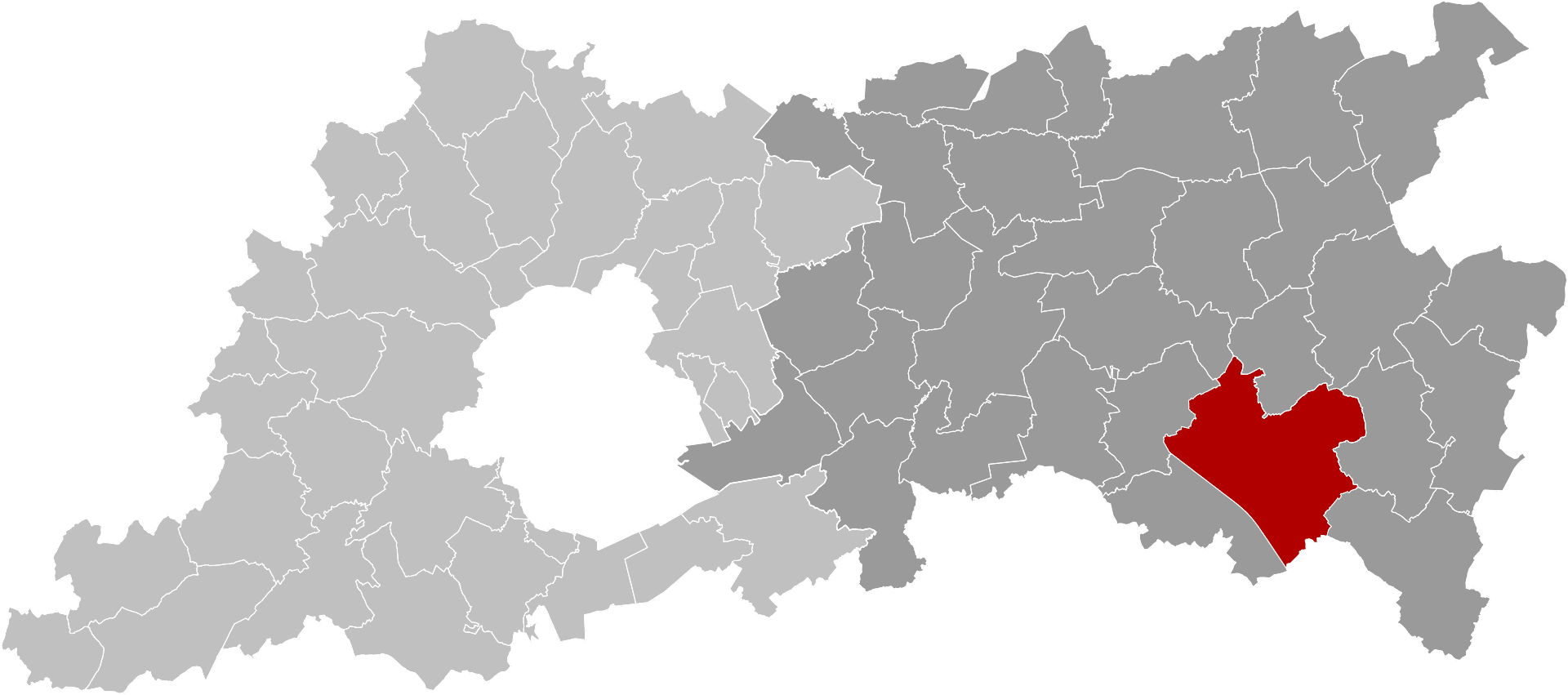 OD02fr / CC BY-SA 4.0, via Wikimedia Commons
Self-guided audio walking tour of Tienen — GPS route, offline playback, story-driven narration in 32 languages.
“Where the sweetness of industry meets the enduring grace of the past.”
Not the postcards. The stories even locals don't know — whispered in your ear, right where they happened.
Beyond the city's sugar-coated fame, ancient Roman burial mounds hold a surprising secret about Tienen's earliest named resident.
The city's tranquil park holds a romantic, international origin story involving an exotic plant collection.
A seemingly ordinary 19th-century lock along the Gete River bears a name with a surprising connection to a famous historical figure.
Discover every secret of Tienen
Every address, every reveal in full — in your ear, right where it happened.
You pick your stops. You walk. The voice reveals what the others miss.
Your self-guided audio tour of Tienen is ready — pick your landmarks, choose your language, and start the moment you arrive.
BuyLume has a built-in augmented-reality guide. Hold your phone up and its camera shows the street ahead of you, with a glowing arrow laid over the real view that always points to your next stop — no map to puzzle over, no wrong turns. Like everything in Lume, it works fully offline.
Tienen, affectionately known as the "Suikerstad" or "Sugar City," offers a distinctive blend of industrial heritage and medieval charm in the Flemish Brabant province of Belgium. Far from the more bustling tourist hubs, Tienen provides a tranquil yet culturally rich escape, where the legacy of its centuries-long sugar industry is evident in its architecture, museums, and local traditions.
At its heart lies the expansive Grote Markt, one of Belgium's largest town squares, framed by impressive historical buildings. Beyond the central square, ancient Gothic churches stand as architectural masterpieces, while the remnants of medieval city walls hint at a long and storied past. Whether you're drawn to history, local flavors, or the surrounding Flemish countryside, Tienen promises an authentic Belgian experience.
Tienen's origins stretch back to Roman times, when it was a significant settlement and trade center with roads connecting it to other important locations. Evidence of this Roman past can still be seen in sites like De Drie Tommen, a group of well-preserved Gallo-Roman burial mounds dating to the 1st or 2nd century CE. In the early Middle Ages, the town was likely under the rule of the German Thienen family, which is believed to be the origin of its name.
During the late Middle Ages, Tienen flourished as a center for cloth weaving. However, the 16th century brought a period of decline due to various wars, culminating in significant destruction during the Franco-Spanish War in 1635. Much of Tienen was burned down, including the first town hall, and many buildings, such as the Van Ranst houses, had to be rebuilt.
The 19th century marked a pivotal shift for Tienen with the rise of the sugar industry. On May 16, 1836, permits were issued for two new sugar factories, one of which would become the nucleus of the Raffinerie Tirlemontoise, or Tiense Suikerraffinaderij. This factory, built near the Begijnhof, began operations in November 1836 with 90 employees. Tienen quickly became the heart of sugar production in Belgium, a legacy that continues to define the city.
Tienen has endured numerous conflicts throughout its history. In March 1793, it was a base for French commander Charles François Dumouriez during the Battle of Neerwinden. The city was occupied by German forces during World War I, sustaining damage to many houses. During World War II, Tienen, an important railway junction, was bombed by the Allies in May 1944, resulting in civilian casualties and extensive damage, including the destruction of the old guest house and parts of the beguinage.
Despite these challenges, Tienen has consistently rebuilt and evolved, celebrating 100 years of Belgian independence in 1930, by which time its population had grown significantly. Today, it remains a resilient city, proud of its industrial heritage and its deep historical roots.
Begin your exploration at the Grote Markt, Tienen's expansive central square, where you can admire the neo-classical Town Hall and soak in the atmosphere from one of the many terraces.
Dominating the skyline is the Church of Our Lady of the Pool (Onze-Lieve-Vrouw-ten-Poel), a masterpiece of Brabantine Gothic architecture dating back to the 14th century, though it remains unfinished. Nearby, the Sint-Germanuskerk, a UNESCO World Heritage site, showcases Romanesque elements and an impressive carillon that chimes over the city. Across from the Sint-Germanuskerk, on Wolmarkt, are the Van Ranst Houses, some of the oldest surviving residences in Tienen, rebuilt after the 1635 destruction.
For a deeper dive into the city's defining industry, visit the Sugar Museum (Suikermuseum), which offers an interactive look at sugar beet processing and its impact on the region. On the outskirts of town, discover De Drie Tommen, a group of Gallo-Roman burial mounds from the 2nd century CE, offering insights into Tienen's ancient past. Also, explore the intriguing ruins of the Paterskerk (Collage of Tienen), a church that, despite its ancient appearance, met its dramatic end in a 1976 fire.
Consider a stroll through the Tienen Town Park, once the exotic garden of a prominent local family, featuring remarkable trees. The Sint-Helena lock along the old Gete River also offers a charming historical feature.
The ideal time to visit Tienen for pleasant weather and outdoor activities is during the spring (April to June) or summer months (June to August). Spring offers mild weather, blooming flowers, and fewer crowds, making it perfect for exploring the city and surrounding orchards. Summer brings warm temperatures and a lively atmosphere, with events like the Suikerrock music festival in late July or early August. If you prefer a quieter visit, autumn (September to October) offers crisp weather and harvest festivals, while winter provides a cozy experience with Christmas decorations.
Tienen is well-connected and easily accessible. The main transport hub is Tienen Station, located within walking distance of the city center, serving regional buses and national trains with connections to major Belgian cities like Leuven and Brussels. If driving, Tienen is conveniently located on the E40 motorway between Brussels and Liège.
For local transport, the city center is walkable, and regional buses serve the wider area. Tienen is considered a very safe and welcoming destination for tourists. To stay connected, activating an eSIM for Belgium before arrival is recommended to avoid roaming charges and ensure high-speed data access.
When it comes to dining, be sure to sample local specialties. Besides the famous Tiense knopkes hard candies, local brasseries offer classic Flemish dishes like Stoofvlees (Belgian beef stew). Tienen is also close to the Hoegaarden brewery, so you'll find a wide range of regional craft beers.
Tienen in Korean, in Chinese or in Hebrew — and 29 more languages, every stop narrated by a native voice. The widest language range of any self-guided audio tour.
Available in: