Trosaån (Rivière Trosa)
La rivière qui donne son identité à Trosa prend sa source dans un endroit inattendu, loin de l'étendue côtière.
L'histoire complète se débloque dans le tour
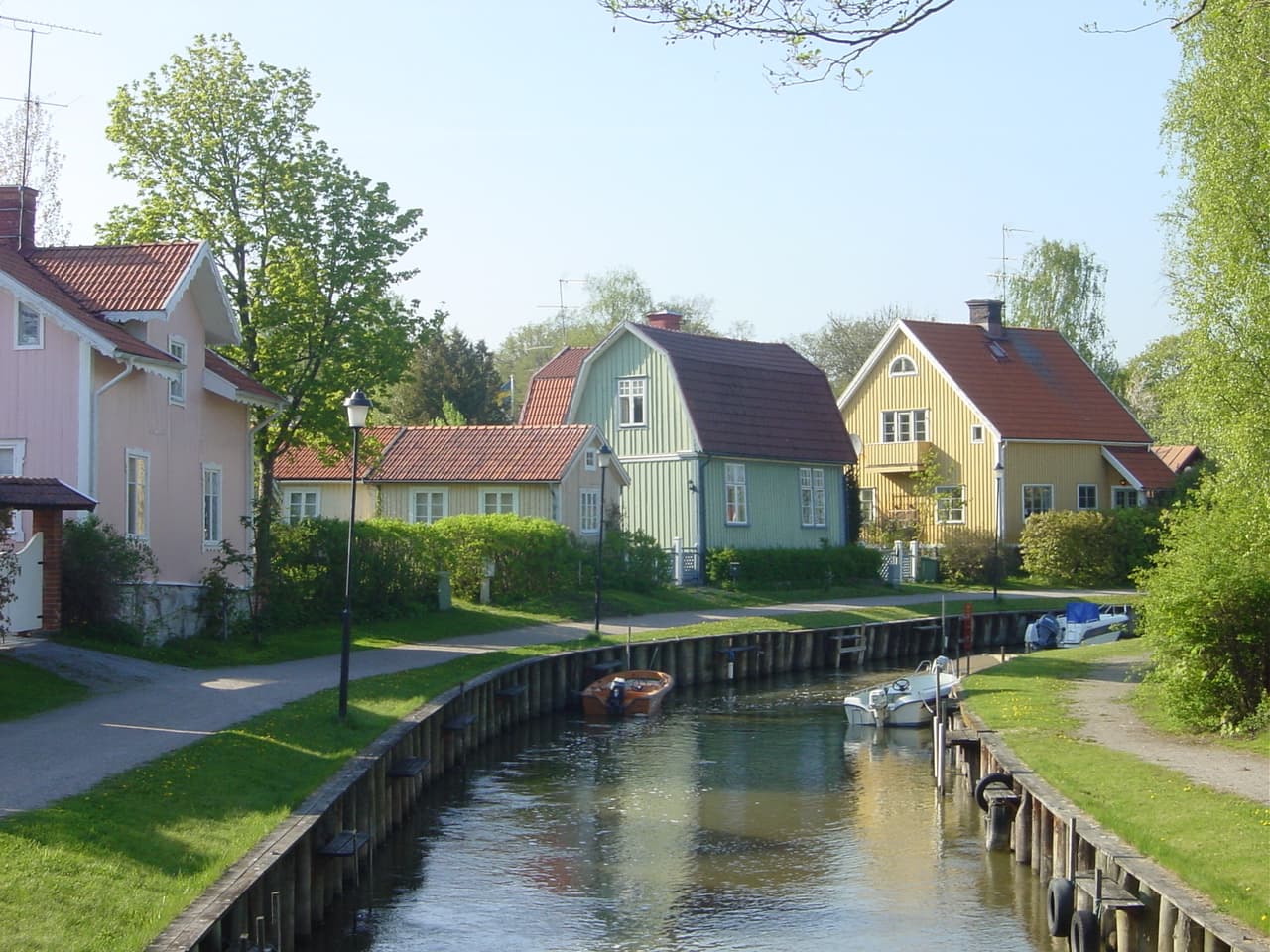 No machine-readable author provided. Epiq assumed (based on copyright claims). / CC BY-SA 3.0, via Wikimedia Commons
Visite audio autoguidée de Trosa — parcours GPS à pied, lecture hors ligne, narration en 32 langues.
“Là où la rivière rencontre la mer, et le temps trouve son propre rythme doux.”
Pas les cartes postales. Les histoires que même les habitants ignorent — soufflées à l'oreille, là où elles se sont passées.
La rivière qui donne son identité à Trosa prend sa source dans un endroit inattendu, loin de l'étendue côtière.
Observez l'horloge de l'Hôtel de Ville avec attention ; elle révèle une omission intentionnelle.
Une rue de Trosa est si étroite qu'elle ressemble plus à un passage privé.
Découvrez tous les secrets de Trosa
Chaque adresse, chaque révélation en entier — dans ton oreille, là où elle s'est passée.
Tu choisis tes lieux. Tu marches. La voix te révèle ce que les autres ignorent.


Votre visite audioguidée de Trosa vous attend — choisissez vos lieux, votre langue, et lancez-vous dès votre arrivée.
AcheterLume intègre un guide en réalité augmentée. Levez votre téléphone : sa caméra montre la rue devant vous, avec une flèche lumineuse posée sur l'image réelle qui pointe toujours vers votre prochain arrêt — aucune carte à déchiffrer, aucun mauvais virage. Comme tout dans Lume, ça fonctionne entièrement hors-ligne.
Trosa, une ville côtière pittoresque du Södermanland, en Suède, offre une invitation tranquille où la rivière Trosa se jette gracieusement dans la mer Baltique. Reconnue pour ses maisons en bois bien préservées, son port animé et son ambiance calme, elle incarne l'expérience archipélagique suédoise par excellence. Promenez-vous le long de ses ruelles pavées, explorez les boutiques indépendantes, ou simplement attardez-vous au bord de l'eau, observant les bateaux glisser.
Cette « ville » attrayante – une désignation historique plutôt qu'un reflet de ses modestes dimensions – encourage les visiteurs à ralentir leur rythme et à savourer chaque instant. De ses origines historiques en tant que village de pêcheurs et comptoir commercial à son statut contemporain de destination estivale prisée, Trosa tisse harmonieusement son passé durable avec un présent dynamique. L'archipel environnant, avec ses innombrables îles et îlots, ajoute une autre dimension de splendeur naturelle et de possibilités récréatives.
Les débuts de Trosa sont profondément liés à la rivière Trosa et à la mer Baltique. La région est habitée depuis l'âge viking, avec des découvertes archéologiques indiquant des communautés anciennes. La ville a officiellement reçu ses privilèges de ville en 1444, un statut reconfirmé en 1473 et de nouveau en 1610. Initialement, Trosa était située plus à l'intérieur des terres, mais en raison du rebond post-glaciaire, où la terre s'élève progressivement, la ville s'est progressivement déplacée plus près de la mer pour maintenir l'accès à ses activités de pêche et de commerce.
Tout au long des XVIIe et XVIIIe siècles, Trosa a prospéré en tant que ville commerciale et maritime importante. Sa position stratégique à l'embouchure de la rivière Trosa en a fait un port crucial pour le transport de marchandises, notamment le bois, le fer et les produits agricoles, des régions intérieures vers la mer Baltique. La prospérité de la ville est encore évidente dans les maisons de marchands et les entrepôts bien entretenus qui bordent ses rues, en particulier autour de la zone portuaire. La pêche est restée une pierre angulaire de l'économie locale, les pêcheurs de Trosa étant reconnus pour leur habileté et leurs prises de harengs de la Baltique.
Le XIXe siècle a apporté de nouveaux développements, y compris l'avènement du trafic de bateaux à vapeur, qui a davantage relié Trosa aux grandes villes comme Stockholm. Cette période a également marqué le début de l'évolution de Trosa en une retraite estivale populaire. Les riches Stockholmois, attirés par les paysages pittoresques et l'air marin vivifiant, ont commencé à construire des villas d'été dans et autour de la ville. Cet afflux de visiteurs estivaux a contribué au développement du caractère de la ville, ajoutant des éléments de loisirs et de tourisme à ses industries maritimes traditionnelles. Aujourd'hui, Trosa continue d'embrasser sa double identité de ville portuaire historique et de destination estivale prisée, préservant soigneusement son patrimoine tout en accueillant les visiteurs de près et de loin.
Commencez votre exploration au Trosaån, la rivière qui divise la ville, guidant votre regard vers le port actif. Promenez-vous dans la charmante vieille ville, distinguée par ses rues étroites et sinueuses et ses maisons en bois exquises, dont beaucoup sont peintes en rouge Falu traditionnel. Ne manquez pas d'observer l'Hôtel de Ville de Trosa, une structure jaune emblématique avec son horloge caractéristique.
Visitez Garvaregården, l'ancienne tannerie aujourd'hui musée, pour plonger dans le passé industriel de Trosa. Flânez le long de la promenade du port, où les bateaux de pêche et les embarcations de plaisance se balancent doucement, et savourez un repas dans l'un des restaurants au bord de l'eau. Pour un air vivifiant et de vastes vues sur la mer, embarquez pour une excursion en bateau dans l'archipel de Trosa, un labyrinthe d'îles et de récifs. L'Église de Trosa, dont certaines sections datent du XIIIe siècle, offre un aperçu de la continuité spirituelle de la ville. Enfin, explorez les diverses petites boutiques et galeries d'art disséminées dans la ville, présentant des créations locales et des souvenirs distinctifs.
La période la plus favorable pour découvrir Trosa est pendant les mois d'été, de juin à août. Le temps est le plus chaud, les journées sont longues et la ville est animée, avec des marchés en plein air et des excursions en bateau dans l'archipel. Le printemps et le début de l'automne offrent également des expériences agréables avec moins de monde et des paysages attrayants alors que la nature s'éveille ou se pare de couleurs automnales vives.
Trosa est facilement accessible en voiture, à environ une heure de route au sud de Stockholm. Les options de transport en commun incluent des bus depuis Nyköping ou Vagnhärad, qui se connectent aux trains de banlieue depuis Stockholm. Le centre-ville est compact et se parcourt mieux à pied. Les hébergements vont des maisons d'hôtes et hôtels accueillants aux cabanes dans l'archipel environnant. Les choix de restauration sont abondants, avec un accent sur les fruits de mer frais et la cuisine suédoise traditionnelle. De nombreux établissements sont saisonniers, il est donc conseillé de vérifier les heures d'ouverture, en particulier en dehors de la haute saison estivale.
Trosa en coréen, en chinois ou en hébreu — et dans 29 autres langues, chaque étape narrée par une voix native. La plus large gamme de langues de tous les audioguides autoguidés.
Disponible en :