Within the solemn walls of the Troyan Monastery, a particular icon of the Virgin Mary stands out, not just for its age or reverence, but for an unusual anatomical detail.
Photo of Veliko Tarnovo, via Wikimedia CommonsTroyan
Self-guided audio walking tour of Troyan — GPS route, offline playback, story-driven narration in 32 languages.
“Where ancient crafts meet mountain tranquility.”
Troyan, as no one tells it.
Not the postcards. The stories even locals don't know — whispered in your ear, right where they happened.
Walk through the halls of Troyan's craft museum and you'll encounter a specific pottery technique that dates back to Roman times, still in use today.
The renowned plum rakia of Troyan, a local emblem, has a centuries-old production tradition that began in an unexpected, sacred location.
Discover every secret of Troyan
Every address, every reveal in full — in your ear, right where it happened.
You pick your stops. You walk. The voice reveals what the others miss.


How long do you have in Troyan?
Your self-guided audio tour of Troyan is ready — pick your landmarks, choose your language, and start the moment you arrive.
BuyThe story of Troyan
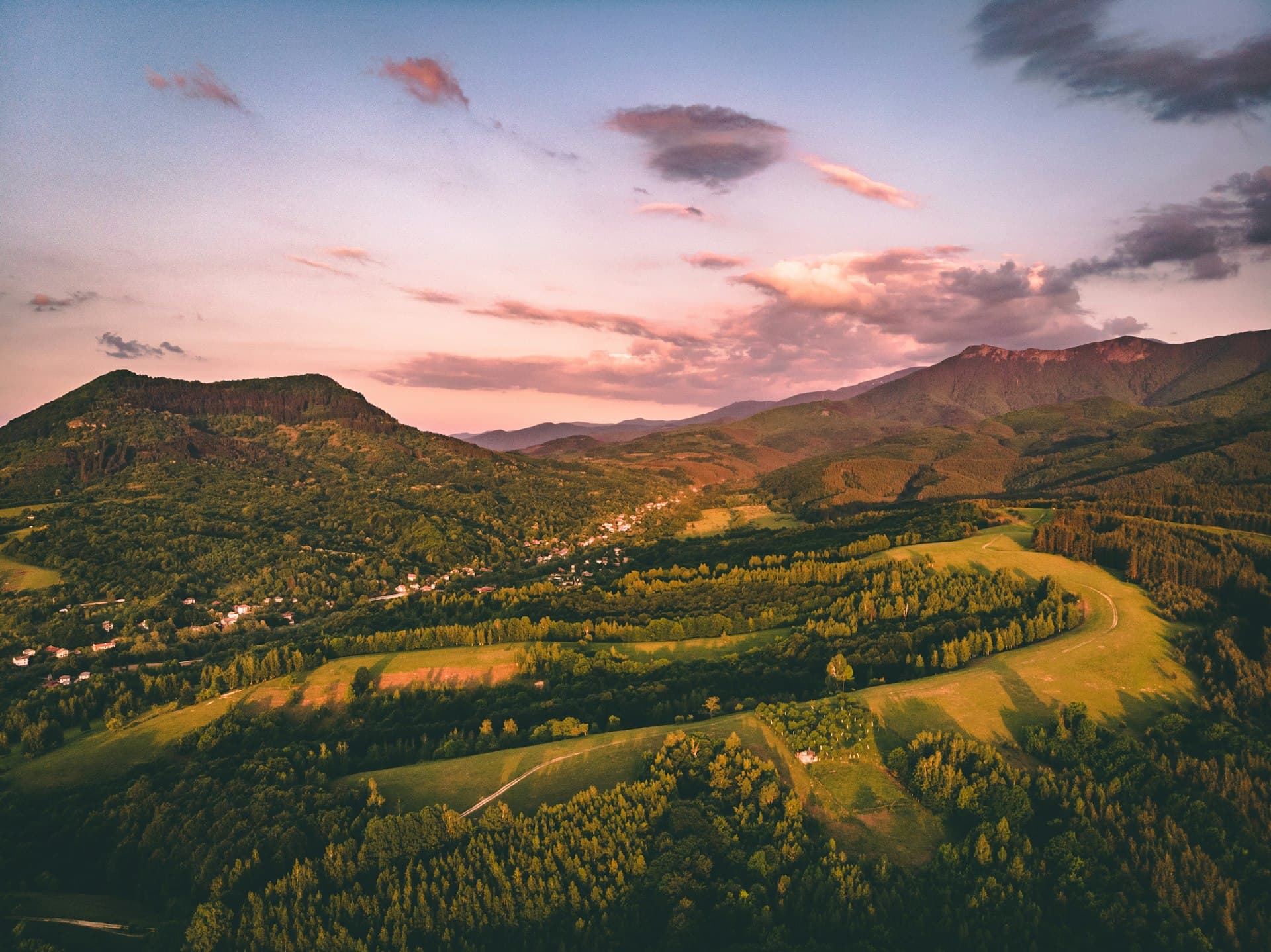
Troyan, a town in central Bulgaria, settles amidst the gentle folds of the Stara Planina (Balkan) Mountains, with the Beli Osam River tracing its path through the town's core. This area, often referred to as the Troyan Balkan, is a place where nature's grandeur converges with a lively display of Bulgarian cultural heritage. Known for its distinctive pottery and the celebrated plum rakia, Troyan offers a glimpse into traditions that have been preserved and perfected over centuries.
The town serves as a threshold to the Central Balkan National Park, a region of sweeping mountain landscapes, diverse flora and fauna, and abundant opportunities for outdoor exploration. Beyond its natural allure, Troyan is a living archive of Bulgarian crafts, with a strong emphasis on the handmade, reflecting a deep connection to its past. It's a destination that invites visitors to slow their pace, engage with local life, and discover the authentic spirit of Bulgaria.
From Roman Roads to Renaissance Crafts
The history of Troyan reaches back to antiquity, with archaeological excavations indicating human habitation since the Paleolithic era. The region's development was significantly shaped by the Roman road "Via Traiana," which connected the Danube River with the Aegean Sea. This ancient route, built by Emperor Trajan, not only gave the town its name but also established it as a strategic crossroads. Remains of Roman security structures, such as the Sostra fortress, can still be found in the municipality, testifying to its historical importance.
Troyan was officially declared a town in 1868, though its origins as a settlement trace back to the early 15th century, when Bulgarian refugees found a new home in this mountainous and forested region after the fall of Bulgaria under Ottoman Rule. The 19th century marked a flourishing period for crafts in Troyan, transforming it into a prominent center for homespun tailoring, forge crafts, wood turnery, fur-dressing, jewelry, and most notably, pottery. This era saw the emergence of the unique Troyan ceramic school, characterized by its distinct decorative system and aesthetic style, influenced by Thracian and Slavic designs.
The Troyan Monastery, founded in the 16th or early 17th century, played a pivotal role in preserving Bulgarian culture and identity during the Ottoman period. It became a spiritual and cultural core, housing a revolutionary committee established by Vasil Levski, a key figure in Bulgaria's national liberation struggles. In 1911, Troyan became the third Bulgarian town, after Sofia and Plovdiv, to be electrified, a testament to its early industrial development. Today, Troyan maintains its reputation as a center for crafts, woodworking, furniture production, and the acclaimed plum rakia, continuing to honor its deep historical and cultural legacy.
Begin your exploration at the Museum of Folk Crafts and Applied Arts, located in the town center. This museum, opened in 1968, illustrates the evolution of Troyan's celebrated pottery, woodworking, and other traditional crafts through its eleven chambers. Just 7 km away, in the village of Oreshak, the National Exhibition of Arts and Crafts offers an expansive display of Bulgarian craftsmanship across nine large halls, with opportunities to participate in workshops and purchase handmade souvenirs.
A visit to the Troyan Monastery "Assumption of the Virgin Mary" is essential. As the third-largest monastery in Bulgaria, it impresses with its Bulgarian Renaissance architecture and frescoes by Zahariy Zograph. The monastery also houses the miraculous 'Three-Handed Virgin' icon and a museum dedicated to Vasil Levski. For a taste of local flavor, explore the Vinprom Troyan Distillery, where you can learn about the centuries-old tradition of plum rakia production and sample various distillates. Nature enthusiasts can enjoy Turlata Forest Park for sweeping views of the region or venture further to discover the Skoka Waterfall near Kaleytsa and the Sopot Dam.
The best time to visit Troyan for warm-weather activities and outdoor exploration is from mid-June to mid-September. During these months, temperatures are pleasant, averaging highs of 73°F to 81°F (23°C to 27°C), ideal for hiking and sightseeing. June also marks the beginning of the traditional craft and music fair in Oreshak, which continues through September. While July and August can be warm, the mountain areas offer cooler retreats. Spring (April to early June) and autumn (September to early October) also offer mild temperatures, fewer crowds, and lively natural scenery.
Troyan is located approximately 160 km east of Sofia and 120 km north of Plovdiv. The most convenient way to reach Troyan and explore the surrounding landmarks is by car, offering flexibility. Regular bus lines connect Troyan to Sofia, Lovech, and other towns. Train services are also available, with connections at Levski Station. Within the town, the Museum of Folk Crafts is centrally located, opposite the municipality building. Accommodation in the Troyan region includes guest houses, hotels, and villas, particularly in villages known for SPA tourism like Chiflik and Shipkovo. Many establishments offer family-run hospitality, providing an authentic local experience.
- What is Troyan most famous for?
- Troyan is most famous for its traditional pottery and its plum brandy, known as Troyan plum rakia.
- Where is the Troyan Monastery located?
- The Troyan Monastery "Assumption of the Virgin Mary" is located on the banks of the Cherni Osam River, near the village of Oreshak, about 10 km from Troyan.
- Can I buy local crafts in Troyan?
- Yes, you can find a wide array of local crafts in Troyan. The Museum of Folk Crafts and Applied Arts and the National Exhibition of Arts and Crafts in Oreshak are excellent places to see and purchase handmade pottery and other traditional items.
- What is rakia?
- Rakia is a strong fruit brandy popular in the Balkan region. Troyan is particularly known for its plum rakia, which typically has an alcohol content of 40-50%.
- Are there hiking opportunities in Troyan?
- Yes, Troyan is situated in the Balkan Mountains and offers numerous hiking opportunities. The Turlata Forest Park provides sweeping views, and the region is part of the Central Balkan National Park, with various reserves and rock formations to explore.
- Is Troyan a good destination for families?
- Yes, the Troyan region is considered family-friendly, offering a variety of activities and accommodations suitable for families and friends.