Usson Castle remains
The formidable Usson Castle, once a symbol of power, vanished almost entirely.
Full story unlocks in the tour
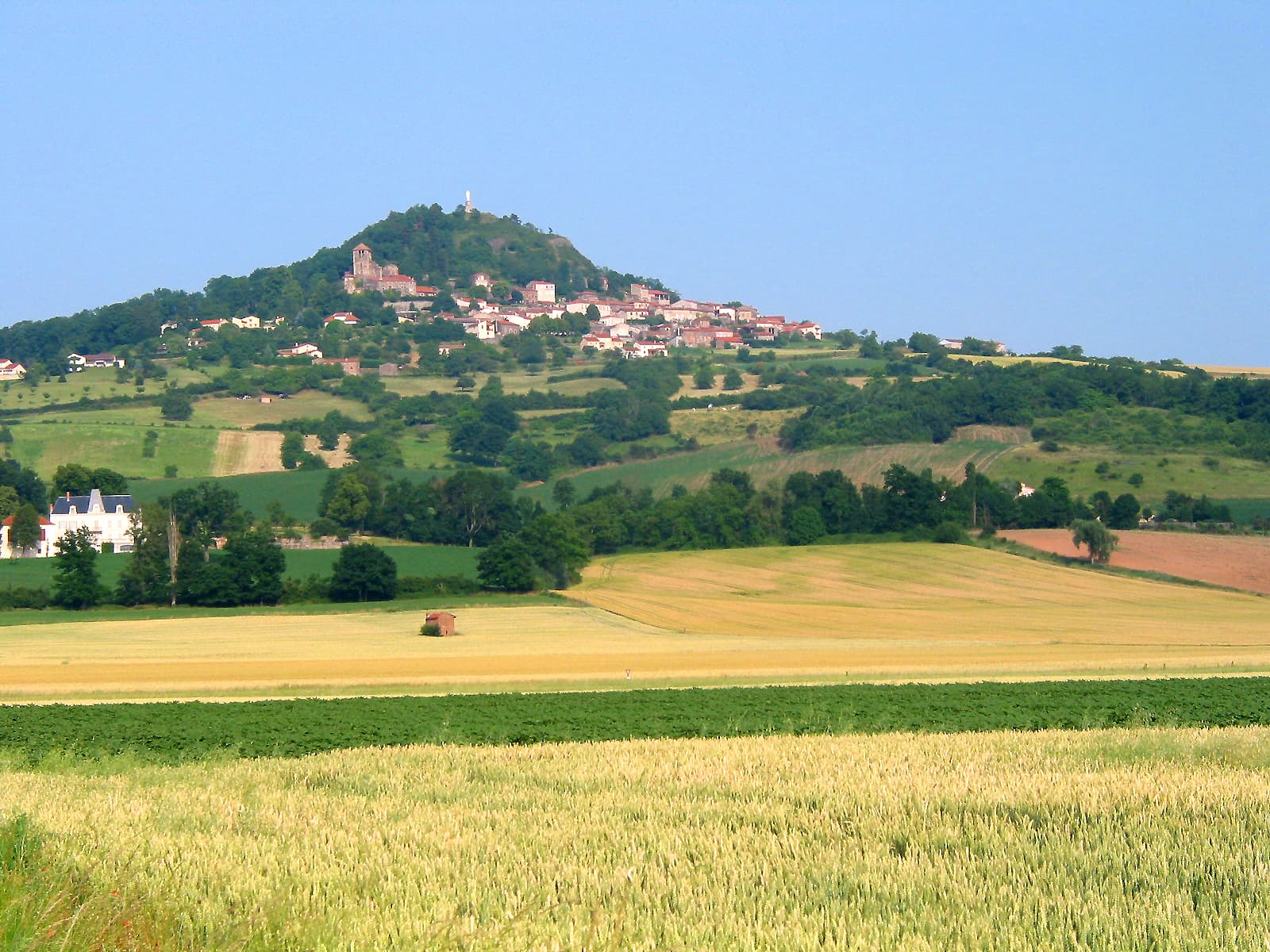 Jean-Pol GRANDMONT / CC BY 3.0, via Wikimedia Commons
Self-guided audio walking tour of Usson — GPS route, offline playback, story-driven narration in 32 languages.
“Where volcanic drama meets royal intrigue.”
Not the postcards. The stories even locals don't know — whispered in your ear, right where they happened.
The formidable Usson Castle, once a symbol of power, vanished almost entirely.
Within the village church, a 17th-century altarpiece depicts an unexpected royal figure.
A specific symbol guides visitors through Usson's historic pathways.
Discover every secret of Usson
Every address, every reveal in full — in your ear, right where it happened.
You pick your stops. You walk. The voice reveals what the others miss.


Your self-guided audio tour of Usson is ready — pick your landmarks, choose your language, and start the moment you arrive.
BuyLume has a built-in augmented-reality guide. Hold your phone up and its camera shows the street ahead of you, with a glowing arrow laid over the real view that always points to your next stop — no map to puzzle over, no wrong turns. Like everything in Lume, it works fully offline.
Usson, a village in the Puy-de-Dôme department of central France, is officially recognized among "France's Most Beautiful Villages" (Les Plus Beaux Villages de France). It rises dramatically atop a volcanic peak, offering sweeping panoramic views of the Chaîne des Puys, the Dore mountains, and the Livradois mountains. This elevated position, reaching approximately 600 meters above sea level, historically rendered Usson an impregnable citadel.
The village's allure resides in its preserved traditional architecture, narrow stone streets, and a quiet atmosphere that feels untouched by the passage of time. Usson is deeply intertwined with the story of Queen Marguerite de Valois, known as Queen Margot, who spent nineteen years of exile here in the late 16th century. Her presence left an indelible mark on the village, which continues to captivate visitors with its blend of natural splendor and historical weight.
Beyond its historical connections, Usson is also a village of winegrowers, adding another layer to its cultural fabric. Its unique volcanic geology is evident in features like the 'basaltic organs'—rock formations resembling organ pipes—that can be observed while climbing to the village's summit. Usson offers a journey into a past where royal drama unfolded against a striking natural backdrop.
Usson's strategic position on a volcanic butte, approximately 600 meters above the surrounding plain, made it a significant site long before its most famous resident arrived. In the 14th century, it was home to one of Auvergne's most important castles, a formidable fortress with three surrounding walls and 20 towers, renowned for its impenetrability. The castle's motto, "garde le traître et la dent" (beware the traitor and the tooth), hinted that only betrayal or starvation could threaten its secure fortifications.
In 1585, Usson's history took a dramatic turn with the arrival of Marguerite de Valois, Queen Margot, daughter of Henry II and Catherine de Médici. Banished from the court in Paris by her brother, King Henri III, and estranged from her husband, Henri de Navarre, Margot was sent to Usson. What began as an imprisonment evolved into a nearly two-decade-long exile, during which she transformed the fortress into her own court, surrounded by advisors. Despite her initial confinement, Margot actively restored the castle and engaged in political life, even helping to secure the annulment of her marriage to Henri de Navarre (who later became King Henri IV) in 1599, ensuring her financial security.
Queen Margot's time in Usson ended in 1605, but her legacy endures throughout the village. The enormous fortress she inhabited, however, met a different fate. In 1633, on the orders of Cardinal Richelieu, the castle was largely destroyed, a move to prevent it from being used to challenge the king's power. Today, only remnants of its walls and foundations remain, allowing visitors to imagine its former scale. The 12th-century Église St Maurice, to which Queen Margot added a Gothic chapel, stands as a tangible link to her presence.
Begin your exploration of Usson at the base of the volcanic mound, where a large car park is available, as driving within the village is not permitted. From there, wander through the village's narrow, appealing streets, appreciating the traditional stone-and-slate architecture. Follow the 'Salamander Trail,' marked by salamander symbols, for a self-guided tour that highlights the village's fortified walls and fountains.
A key stop is the 11th-century Église St Maurice, which was expanded in the 14th century and later saw the addition of a chapel dedicated to Queen Margot. Inside, observe a 17th-century altarpiece depicting Queen Margot as Saint Radegonde. Continue your ascent to the summit of the hill, where you'll find the remains of the powerful fortress that once dominated the landscape. Near the top, look for the unique 'basaltic organs,' rock formations that resemble organ pipes.
At the very peak, a statue of the Virgin Mary and child stands, offering unparalleled panoramic views across the Auvergne countryside, including the Massif du Sancy and the Chaîne des Puys on a clear day. While the castle itself is largely gone, the views from its former site are spectacular and provide a sense of the strategic importance of Usson.
Usson is particularly pleasant to visit during the warmer months. The Église St Maurice is open from April to September. For those interested in local festivities, the patronal festival of Usson is held every last weekend of May. July and August offer daily access to the church, while May, June, and September allow weekend visits. The mild climate during these months makes strolling through the village and enjoying the panoramic views most comfortable.
Usson is approximately 8 kilometers east of Issoire. While driving within the village is prohibited, a large car park is available at the base of the hill. The village is one of four in the Puy-de-Dôme department classified among the 'most beautiful villages of France'. Information on local events, such as the patronal festival in late May, can be found through local tourism resources. For those seeking accommodation or dining, nearby Issoire offers a range of options. Usson's tranquil atmosphere means you're more likely to encounter local life than large crowds of tourists. The 'Salamander Trail' provides a clear, self-guided route for exploring the village's key historical and natural features.
Usson in Korean, in Chinese or in Hebrew — and 29 more languages, every stop narrated by a native voice. The widest language range of any self-guided audio tour.
Available in: