Cathédrale de Verden (Dom zu Verden)
La taille impressionnante de la cathédrale témoigne de son passé, mais peu connaissent la raison inhabituelle de sa grandeur dans une ville relativement petite.
L'histoire complète se débloque dans le tour
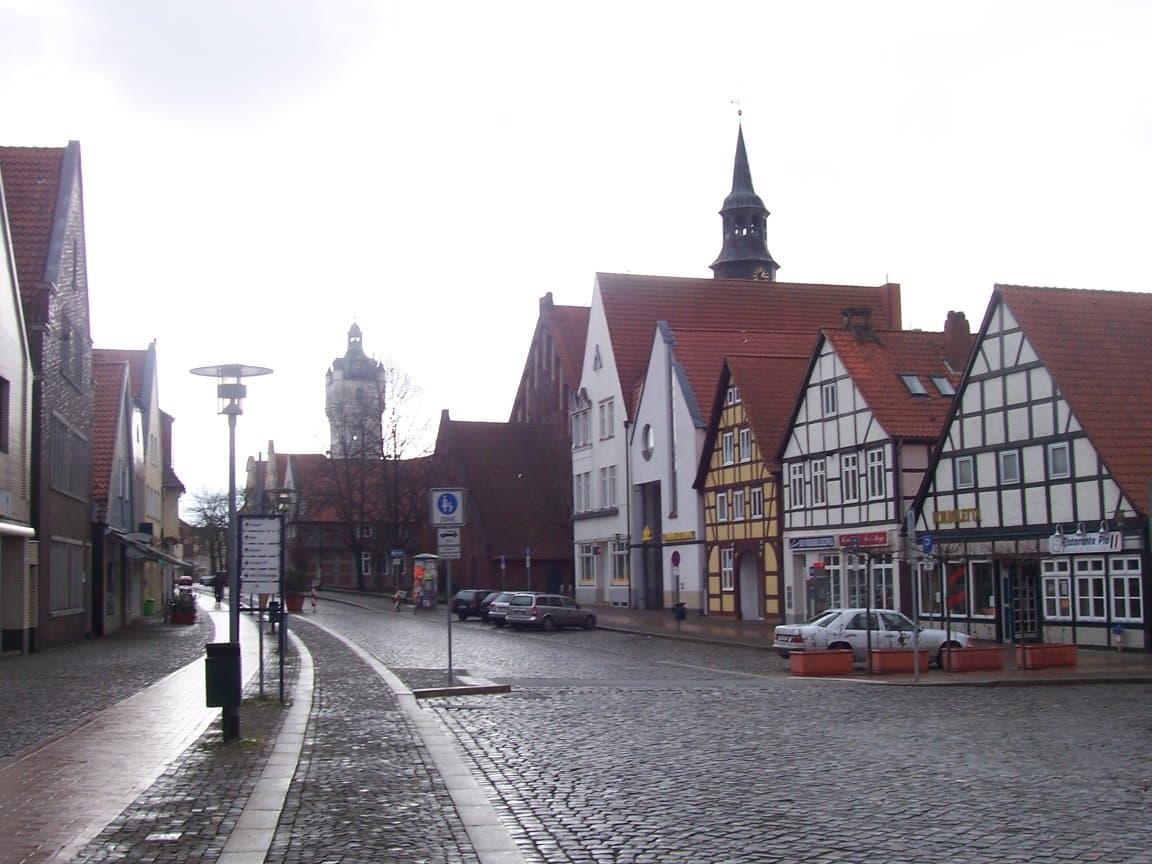 Traveler100 / CC BY-SA 4.0, via Wikimedia Commons
Visite audio autoguidée de Verden — parcours GPS à pied, lecture hors ligne, narration en 32 langues.
“Là où les sabots antiques rencontraient les routes romaines et la justice portait une couronne de chêne.”
Pas les cartes postales. Les histoires que même les habitants ignorent — soufflées à l'oreille, là où elles se sont passées.
La taille impressionnante de la cathédrale témoigne de son passé, mais peu connaissent la raison inhabituelle de sa grandeur dans une ville relativement petite.
Verden est connue comme la « Ville du Cheval », un titre qui va au-delà de ses célèbres ventes aux enchères et de son élevage. Il existe un lien particulier, presque mythique, avec les chevaux qui a façonné ses fondations mêmes.
La rivière Aller semble paisible aujourd'hui, mais elle a autrefois joué un rôle silencieux, mais crucial, dans un événement historique dramatique qui a consolidé le pouvoir de Charlemagne.
Découvrez tous les secrets de Verden
Chaque adresse, chaque révélation en entier — dans ton oreille, là où elle s'est passée.
Tu choisis tes lieux. Tu marches. La voix te révèle ce que les autres ignorent.


Votre visite audioguidée de Verden vous attend — choisissez vos lieux, votre langue, et lancez-vous dès votre arrivée.
AcheterLume intègre un guide en réalité augmentée. Levez votre téléphone : sa caméra montre la rue devant vous, avec une flèche lumineuse posée sur l'image réelle qui pointe toujours vers votre prochain arrêt — aucune carte à déchiffrer, aucun mauvais virage. Comme tout dans Lume, ça fonctionne entièrement hors-ligne.
Le long de la rivière Aller en Basse-Saxe, Verden (Aller) se déploie comme une ville où l'histoire galope aux côtés de la vie moderne. Connue comme la « Ville du Cheval », elle porte un héritage profondément lié à la culture équestre, de l'ancienne vénération saxonne des chevaux à son rôle contemporain de centre d'élevage et de sport équestre. Au-delà de ses connexions équines, Verden offre un voyage captivant à travers le temps, avec une grande cathédrale qui a été témoin de siècles de changements spirituels et politiques, et une vieille ville accueillante qui invite à l'exploration.
L'histoire de Verden est celle de la résilience et de la transformation, depuis ses débuts comme établissement saxon jusqu'à son importance stratégique dans le Saint Empire romain germanique. Le paysage de la ville est un doux mélange de caractère urbain et de beauté naturelle, les rivières Aller et Weser façonnant son essence et offrant des décors pittoresques. C'est un lieu où les échos des évêques et des empereurs, des commerçants et des guerriers, peuvent encore être ressentis le long de ses chemins et à travers son architecture historique.
## Débuts et racines saxonnes Les origines de Verden remontent au début du Moyen Âge, avec des preuves d'habitation datant du VIIIe siècle. Elle a commencé comme un important village saxon, stratégiquement situé à un gué de la rivière Aller. Cette période ancienne a été marquée par la forte identité culturelle des Saxons et leurs croyances polythéistes, où les chevaux détenaient un statut sacré. L'arrivée de Charlemagne et des Francs à la fin du VIIIe siècle a entraîné un changement dramatique. Pendant les guerres saxonnes, Charlemagne chercha à christianiser et à incorporer les Saxons dans son empire. Cette ère a culminé avec le tristement célèbre « Verdict sanglant de Verden » en 782 après J.-C., où des milliers de Saxons auraient été exécutés pour rébellion, un événement qui reste un chapitre sombre de l'histoire de la ville et un témoignage des méthodes brutales de conquête de l'époque.
## L'ascension de la principauté-épiscopale Après les guerres saxonnes, Verden est devenue un important centre ecclésiastique. Le diocèse de Verden a été établi vers 800 après J.-C., et la construction de la cathédrale de Verden a commencé, consolidant son rôle de cœur spirituel. Au fil des siècles, les évêques de Verden ont progressivement acquis un pouvoir temporel, transformant le diocèse en une principauté-épiscopale indépendante au sein du Saint Empire romain germanique. Cela signifiait que l'évêque n'était pas seulement un chef religieux mais aussi un souverain séculier, exerçant une influence politique et économique significative sur un territoire qui s'étendait au-delà de la ville elle-même. Ce double rôle a conduit à la construction d'impressionnants bâtiments administratifs et de fortifications, reflétant l'autorité des évêques. La ville a prospéré en tant que centre de marché et de commerce, bénéficiant de son emplacement fluvial.
## Réforme, guerres et modernité La Réforme au XVIe siècle a apporté des bouleversements religieux à Verden, comme elle l'a fait dans une grande partie de l'Europe. La principauté-épiscopale est finalement devenue protestante, bien que son statut unique de principauté ecclésiastique ait persisté pendant un certain temps. La guerre de Trente Ans (1618-1648) a eu un impact dévastateur sur Verden, la ville ayant connu des sièges, des occupations et des destructions généralisées. Après la paix de Westphalie, la principauté-épiscopale a été sécularisée et est devenue la principauté de Verden, d'abord sous domination suédoise, puis passant à l'électorat de Hanovre. Le XIXe siècle a vu Verden intégrée au royaume de Prusse, puis à l'Empire allemand, subissant l'industrialisation et la modernisation. Malgré les défis des deux guerres mondiales, Verden a conservé une grande partie de son caractère historique, tout en embrassant son identité de centre régional, particulièrement réputée pour son lien profond avec les chevaux.
Commencez votre exploration par la Cathédrale de Verden (Dom zu Verden), un grand édifice gothique en brique qui domine la ligne d'horizon de la ville. Son ampleur reflète des siècles de pouvoir ecclésiastique et offre un espace serein pour la contemplation. À l'intérieur, admirez les retables complexes, les vitraux et l'impressionnant orgue.
À quelques pas de la cathédrale, découvrez le Musée allemand du cheval (Deutsches Pferdemuseum), abrité dans la structure historique de l'ancienne « écurie d'artillerie ». Ce musée détaille de manière exhaustive l'histoire des chevaux, leur rôle dans la culture humaine et la relation spéciale de Verden avec ces animaux.
Promenez-vous dans la vieille ville historique, caractérisée par d'accueillantes maisons à colombages et des rues étroites et sinueuses. Le Rathaus (Hôtel de Ville), avec son architecture distinctive, est un point central. Explorez les boutiques et les cafés locaux, en vous imprégnant de l'atmosphère de la ville.
Pour un moment de réflexion tranquille, visitez l'Andreaswall, un rempart défensif historique qui protégeait autrefois la ville. Aujourd'hui, il offre d'agréables sentiers de promenade et des vues sur certaines parties de Verden. Envisagez une promenade le long de la rivière Aller, où vous pourrez profiter du paysage paisible au bord de l'eau et observer la faune locale.
Si votre visite le permet, vivez l'excitation d'un événement équestre au siège de la Fédération nationale équestre allemande (FN) ou à la Halle des ventes de Verden, où des chevaux d'élite sont échangés, témoignant de l'héritage équestre durable de la ville.
Verden est agréable toute l'année, mais la fin du printemps (mai-juin) et le début de l'automne (septembre-octobre) offrent le temps le plus agréable pour l'explorer à pied. Ces saisons coïncident souvent avec divers événements équestres et festivals locaux. Les mois d'été sont chauds et animés, tandis que l'hiver apporte un charme plus tranquille, avec la possibilité de marchés festifs autour des fêtes.
Verden est facilement accessible en train, avec des liaisons régulières vers les grandes villes allemandes. La gare est idéalement située à proximité du centre-ville. En voiture, Verden est située près de l'autoroute A27. Des parkings sont disponibles dans divers parkings publics de la ville. Le centre historique est compact et se prête le mieux à l'exploration à pied. Pour les distances plus longues ou pour atteindre les installations équestres, des bus locaux sont disponibles. La plupart des établissements acceptent les cartes de crédit courantes, mais il est toujours judicieux d'avoir quelques euros pour les petits achats. L'anglais est compris dans les zones touristiques, mais quelques phrases en allemand seront appréciées.
Verden en coréen, en chinois ou en hébreu — et dans 29 autres langues, chaque étape narrée par une voix native. La plus large gamme de langues de tous les audioguides autoguidés.
Disponible en :