Église Sainte-Walburge
L'imposante église Sainte-Walburge, avec son chœur gothique élancé, recèle un secret d'une époque où la ville dut faire un choix désespéré.
L'histoire complète se débloque dans le tour
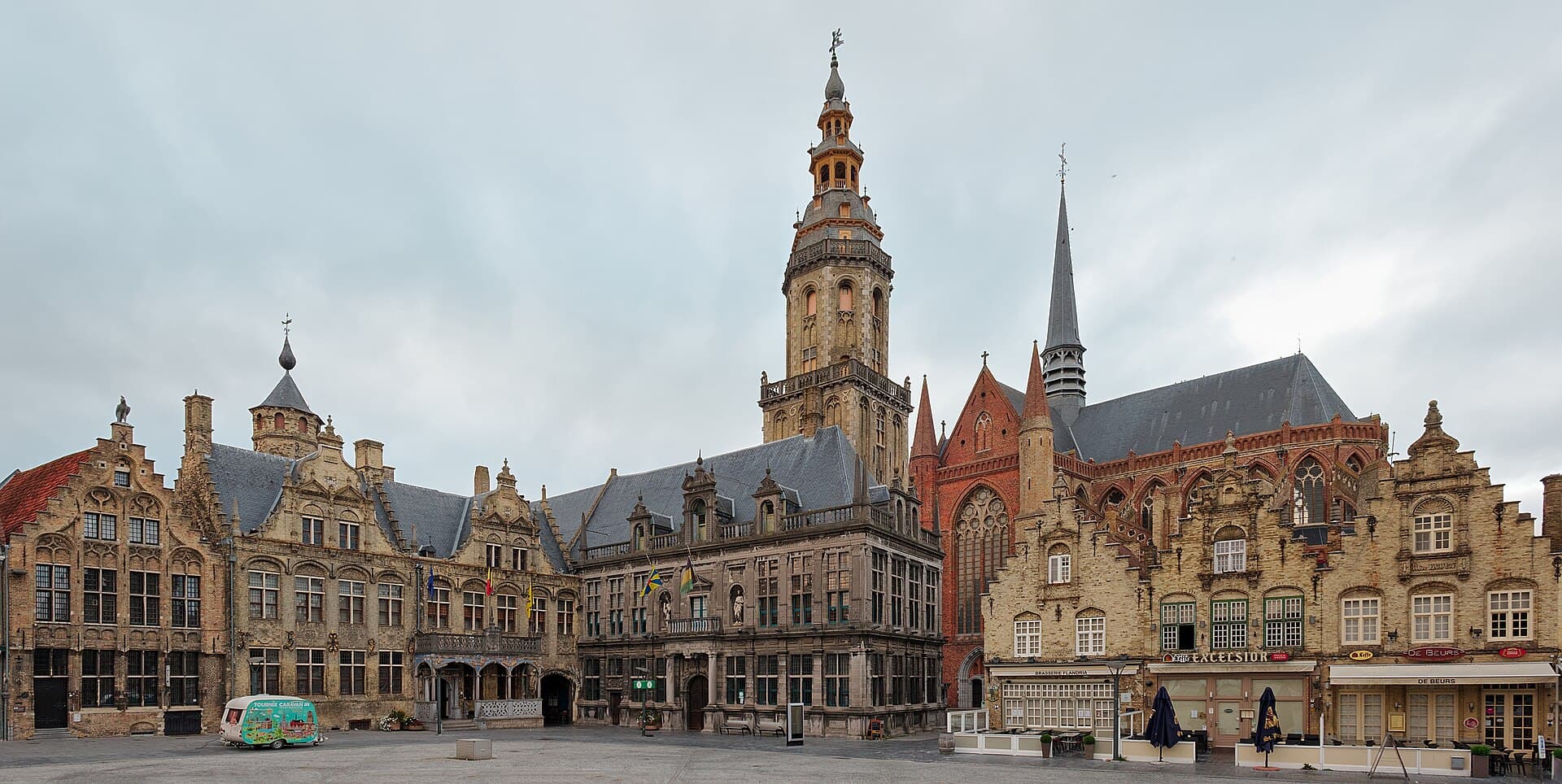 Trougnouf (Benoit Brummer) / CC BY 4.0, via Wikimedia Commons
Visite audio autoguidée de Furnes — parcours GPS à pied, lecture hors ligne, narration en 32 langues.
“Où le temps semble suspendu et chaque pavé résonne d'une époque oubliée.”
Pas les cartes postales. Les histoires que même les habitants ignorent — soufflées à l'oreille, là où elles se sont passées.
L'imposante église Sainte-Walburge, avec son chœur gothique élancé, recèle un secret d'une époque où la ville dut faire un choix désespéré.
La pittoresque Grand-Place, souvent louée pour son architecture harmonieuse, dissimule un passé qui a valu à Furnes un surnom peu flatteur.
Le majestueux Hôtel de Ville de Furnes, un chef-d'œuvre de la Renaissance flamande, servait autrefois à une double fonction bien au-delà de la simple administration civique.
Découvrez tous les secrets de Furnes
Chaque adresse, chaque révélation en entier — dans ton oreille, là où elle s'est passée.
Tu choisis tes lieux. Tu marches. La voix te révèle ce que les autres ignorent.

Votre visite audioguidée de Furnes vous attend — choisissez vos lieux, votre langue, et lancez-vous dès votre arrivée.
AcheterFurnes, petite ville de la province belge de Flandre-Occidentale, offre un voyage captivant dans le temps. Souvent surnommée la 'Petite Bruges', c'est un lieu où l'attrait médiéval converge avec la splendeur de la Renaissance flamande. Le cœur de la ville est sa magnifique Grand-Place, une place encerclée par des bâtiments des XVe, XVIe et XVIIe siècles soigneusement préservés qui racontent des histoires de prospérité, de conflits et de résolution durable.
Au-delà de sa grandeur architecturale, Furnes occupe une place distinctive dans l'histoire belge, notamment pendant la Première Guerre mondiale où elle fut le dernier bastion inoccupé et le quartier général militaire du roi Albert Ier. Aujourd'hui, avec une population d'environ 12 000 habitants, Furnes conserve une atmosphère paisible, invitant les visiteurs à flâner dans ses ruelles pavées, ses églises vénérables et ses canaux gracieux.
Furnes est plus qu'une simple collection de sites historiques ; c'est une toile vivante où les moments semblent s'attarder, offrant un interlude enchanteur loin de l'agitation des grandes villes. De son beffroi classé à l'UNESCO à sa Procession Pénitentielle annuelle, la ville présente un riche récit culturel et ancestral, ce qui en fait une destination idéale pour ceux qui recherchent une rencontre flamande authentique.
## De la défense viking à la grandeur de la Renaissance Les origines de Furnes remontent à 877, lorsqu'elle fut mentionnée pour la première fois sous le nom de 'Furnae', possession de l'abbaye de Sint-Bertijns. Le nom lui-même ferait référence à une petite île émergeant d'un paysage marécageux et riche en eau. À la fin du IXe siècle, un château y fut construit comme défense contre les raids vikings, jetant les bases de ce qui allait devenir l'un des lieux les plus fortifiés de Flandre. La communauté qui se développa autour de ce château obtint des droits de cité au XIIe siècle.
À partir du XIe siècle, le Comté de Flandre fut divisé en châtellenies, et Furnes devint le chef d'un vaste territoire connu sous le nom de Furnes-Ambacht, englobant 42 paroisses. Les XIIe et XIIIe siècles marquèrent une période d'activité économique significative pour Furnes, la ville devenant même membre de la Ligue hanséatique de Londres, commerçant activement avec l'Angleterre. Cependant, une rupture des relations anglo-flamandes en 1270 entraîna un déclin économique prolongé, valant aux habitants de la ville le surnom peu flatteur de 'Dormeurs de Furnes'.
## Régime espagnol et résilience en temps de guerre Les XVe et XVIe siècles virent la région affligée par de nombreuses guerres. Cependant, sous la domination espagnole aux XVIe et XVIIe siècles, Furnes connut un âge d'or, avec de nombreux de ses bâtiments emblématiques, tels que l'Hôtel de Ville (Stadhuis) et le Landshuis, datant de cette période prospère. Le Landshuis, en particulier, servit de cœur administratif et judiciaire de la châtellenie de Furnes-Ambacht. Le XVIIe siècle vit également l'établissement de la Procession Pénitentielle annuelle en 1637 par Jacob Clou, un Norbertin, alors que la ville faisait face à la guerre et à la peste.
La situation stratégique de Furnes fit qu'elle fut fréquemment assiégée au XVIIe siècle. L'ingénieur militaire français Vauban conçut même des fortifications pour la ville, dont des vestiges peuvent encore être explorés aujourd'hui. Après la bataille de Waterloo et la réunification avec les Pays-Bas en 1815, Furnes connut un siècle de paix et de prospérité. Ce fut la première ville à accueillir le nouveau roi de Belgique, Léopold Ier, en 1831.
## La Grande Guerre et au-delà Pendant la Première Guerre mondiale, Furnes joua un rôle crucial et unique. Alors qu'une grande partie de la Belgique était occupée par les forces allemandes, Furnes resta partie du territoire inoccupé derrière l'Yser. Le roi Albert Ier établit son quartier général militaire dans l'Hôtel de Ville de Furnes, faisant de la ville un centre vital pour les décisions stratégiques et accueillant même des dignitaires étrangers. Les plaines environnantes furent délibérément inondées pour créer une barrière défensive contre les avancées allemandes.
Furnes subit quelques dommages pendant les deux Guerres mondiales, y compris des bombardements alliés et des inondations stratégiques. Cependant, la ville fut méticuleusement reconstruite, préservant son caractère historique. Aujourd'hui, Furnes est un pôle régional, offrant des services commerciaux, médicaux et éducatifs, tout en attirant une attention touristique croissante pour son patrimoine remarquablement préservé et son atmosphère tranquille.
Commencez votre exploration à la Grand-Place, la place centrale de Furnes, largement considérée comme l'une des plus pittoresques de Belgique. Ici, vous serez entouré d'une collection harmonieuse d'architecture de la Renaissance flamande, notamment le Stadhuis (Hôtel de Ville) et le Landshuis (Palais de Justice), tous deux datant du XVIIe siècle.
À côté du Landshuis se dresse le Beffroi, un site classé au patrimoine mondial de l'UNESCO, offrant des vues imprenables sur la ville et son paysage plat de polders s'étendant jusqu'à la côte. Juste au-delà de la Grand-Place, découvrez la majestueuse Église Sainte-Walburge, un chef-d'œuvre gothique dont les origines remontent au XIIe siècle, connue pour son impressionnant chœur du XIIIe siècle et une relique de la Sainte Croix. Ne manquez pas la Sint-Niklaaskerk (Église Saint-Nicolas), un autre ancien édifice religieux avec un clocher en briques du XIIIe siècle et un carillon de 47 cloches.
Explorez le Pavillon Espagnol, un bâtiment de style gothique du XVe siècle qui servit autrefois d'hôtel de ville avant de devenir un quartier général militaire sous la domination espagnole. Pour une expérience culturelle distinctive, visitez le Bakkerijmuseum (Musée de la Boulangerie), logé dans des fermes du XVIIe siècle, offrant un voyage interactif à travers l'histoire de la fabrication du pain. Enfin, trouvez le repos dans le Parc Vauban, un espace vert qui évoque les anciennes fortifications de la ville, ou flânez le long des canaux sinueux qui bordent la ville.
Furnes est une destination charmante toute l'année, mais la période idéale pour les activités par temps chaud s'étend de fin juin à début septembre. Pendant ces mois d'été, le temps est agréable et la ville s'anime d'une atmosphère joyeuse, avec des concerts, des activités pour enfants et des festivités culturelles. Juillet est particulièrement remarquable pour la Procession Pénitentielle annuelle, un événement culturel important qui remonte au XVIIe siècle. Le printemps, d'avril à mai, offre des jardins fleuris et des promenades colorées, tandis que l'automne transforme la ville avec des teintes chaudes. Même l'hiver a son charme, avec des marchés de Noël chaleureux et des événements culturels, bien que les heures d'ensoleillement soient plus courtes.
Furnes est facilement accessible, notamment par les transports en commun, avec une gare la reliant aux grandes villes comme Gand et Bruges. Si vous conduisez, Furnes est une excellente base pour explorer la Flandre-Occidentale et la côte belge. Le centre-ville est compact et très agréable à pied, ce qui facilite l'exploration des principaux sites. Prévoyez deux jours pour vous immerger pleinement, bien que les points forts puissent être vus en une journée.
Les options d'hébergement vont des charmants B&B aux hôtels confortables du centre-ville, beaucoup à distance de marche des attractions clés. Pour ceux qui recherchent un cadre plus calme, des options près du Parc Vauban ou dans les banlieues sont disponibles. Bien que de nombreuses attractions, comme l'Hôtel de Ville et le Landshuis, soient généralement gratuites, il est conseillé de vérifier leurs horaires d'ouverture actuels, car certaines sections peuvent être fermées pour rénovations.
Furnes en coréen, en chinois ou en hébreu — et dans 29 autres langues, chaque étape narrée par une voix native. La plus large gamme de langues de tous les audioguides autoguidés.
Disponible en :