Le pont frontalier entre Maringá (RJ) et Maringá (MG)
Imaginez passer d'un État brésilien à un autre en quelques pas seulement.
L'histoire complète se débloque dans le tour
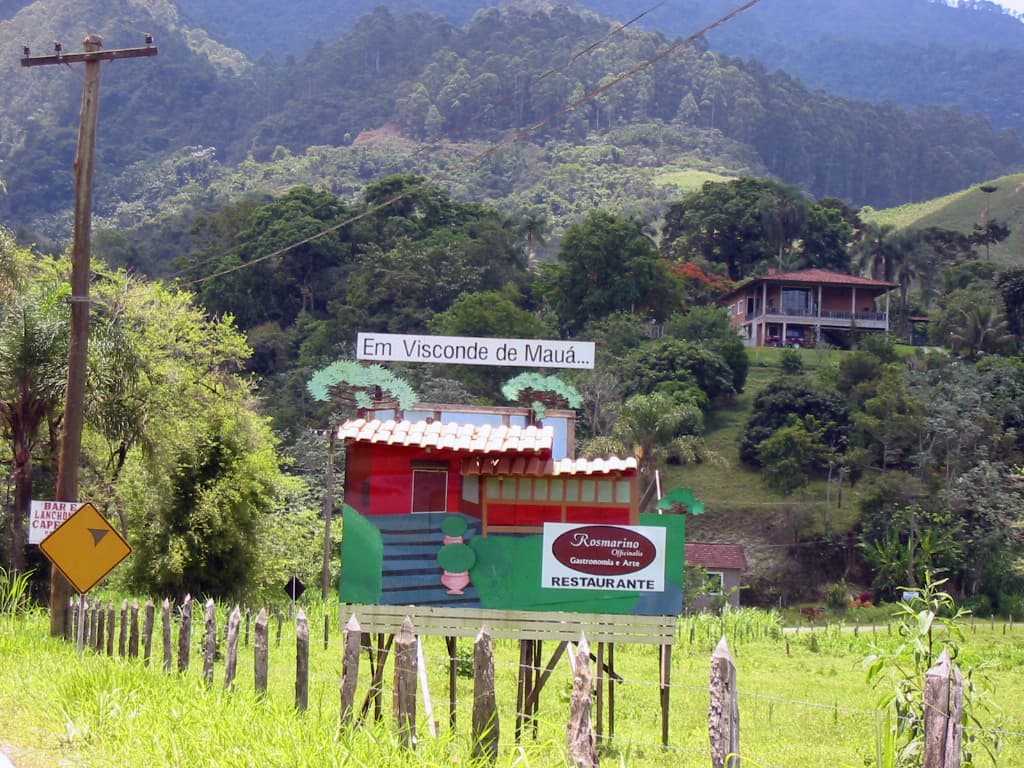 Robert Thompson / Public domain, via Wikimedia Commons
Visite audio autoguidée de Visconde de Mauá — parcours GPS à pied, lecture hors ligne, narration en 32 langues.
“Là où les montagnes rencontrent une allure libre et des eaux dévalent.”
Pas les cartes postales. Les histoires que même les habitants ignorent — soufflées à l'oreille, là où elles se sont passées.
Imaginez passer d'un État brésilien à un autre en quelques pas seulement.
La désignation de la région honore un visionnaire, mais ses premiers efforts de colonisation ont rencontré un obstacle imprévu.
Pendant de nombreuses décennies, ce sanctuaire montagnard est resté un secret tranquille, jusqu'à ce qu'un mouvement particulier découvre son attrait.
Découvrez tous les secrets de Visconde de Mauá
Chaque adresse, chaque révélation en entier — dans ton oreille, là où elle s'est passée.
Tu choisis tes lieux. Tu marches. La voix te révèle ce que les autres ignorent.

Votre visite audioguidée de Visconde de Mauá vous attend — choisissez vos lieux, votre langue, et lancez-vous dès votre arrivée.
AcheterLume intègre un guide en réalité augmentée. Levez votre téléphone : sa caméra montre la rue devant vous, avec une flèche lumineuse posée sur l'image réelle qui pointe toujours vers votre prochain arrêt — aucune carte à déchiffrer, aucun mauvais virage. Comme tout dans Lume, ça fonctionne entièrement hors-ligne.
Visconde de Mauá est un district montagneux du Brésil, une évasion tranquille où les États de Rio de Janeiro et du Minas Gerais convergent au sein de la chaîne de montagnes de la Serra da Mantiqueira. Cette région géographiquement isolée, située à une altitude de 1 200 mètres, présente une collection de trois villages principaux : Vila de Visconde de Mauá, Vila de Maringá et Vila da Maromba. C'est un endroit où l'air est vif, les paysages sont verdoyants et le rythme de vie s'harmonise avec le flux de ses nombreuses cascades et de ses ruisseaux clairs.
L'attrait principal de la région réside dans son tourisme de montagne, offrant une abondance de sentiers de randonnée et d'équitation, et des piscines naturelles sous des cascades descendantes qui proviennent du parc national d'Itatiaia, situé à proximité. Au-delà de sa splendeur naturelle, Visconde de Mauá cultive un caractère raffiné mais rustique, évident dans ses hébergements accueillants et ses offres culinaires variées, particulièrement à Maringá, souvent connue comme le 'village des restaurants'.
Le récit de Visconde de Mauá commence en 1870, lorsque Irineu Evangelista de Sousa, un éminent entrepreneur et industriel brésilien, reçut des terres dans la Serra da Mantiqueira du gouvernement impérial. Sousa, reconnu comme le Vicomte de Mauá, était un individu avant-gardiste qui, au cours de sa vie, a supervisé une vaste entreprise commerciale, y compris le premier chemin de fer et chantier naval du Brésil, et était un ardent défenseur du libéralisme économique et de l'abolition de l'esclavage. Il envisageait un noyau colonial dans la région, axé sur l'exploitation forestière durable et l'immigration européenne.
En 1889, son fils, Enrique Irineu de Souza, s'efforça d'établir une colonie avec des familles européennes. Cependant, cette entreprise initiale échoua en grande partie, de nombreux colons retournant dans leur pays d'origine en raison des conditions difficiles. Une deuxième tentative du gouvernement fédéral en 1908 pour créer le Noyau Colonial Visconde de Mauá se conclut également en 1916. Malgré ces premières difficultés, quelques familles allemandes restèrent, et dans les années 1930, elles commencèrent à accueillir parents et amis d'Europe, préparant ainsi, par inadvertance, le terrain pour l'avenir de la région en tant que destination de voyage.
La véritable explosion du tourisme à Visconde de Mauá commença dans les années 1970, lorsque le village de Maromba devint un havre pour les individus cherchant un mode de vie alternatif. Cet afflux contribua à l'ambiance distinctive et décontractée de la région. Dans les années 1980, Visconde de Mauá avait pleinement embrassé son identité de destination populaire, développant son infrastructure pour accueillir un nombre croissant de visiteurs attirés par son charme naturel et son environnement paisible. Aujourd'hui, la région, qui comprend des parties des municipalités de Resende, Itatiaia et Bocaina de Minas, continue de prospérer grâce au tourisme de montagne, équilibrant sa préservation naturelle avec une touche de confort raffiné.
Visconde de Mauá est une destination pour ceux qui apprécient le monde naturel et un rythme de vie plus lent. La région est parsemée de nombreuses cascades et piscines naturelles, idéales pour une immersion rafraîchissante. La Cachoeira do Escorrega est un lieu populaire, reconnu pour sa formation rocheuse lisse qui fonctionne comme un toboggan naturel. Le Poção da Maromba est une autre cascade prisée, excellente pour la baignade et même le plongeon depuis ses bords. Pour ceux qui recherchent des piscines naturelles plus isolées, le Vale de Santa Clara offre des sites pittoresques accessibles via un charmant pont en bois.
La marche et l'équitation sont des moyens privilégiés d'explorer les vallées verdoyantes et les sentiers qui sillonnent le paysage. Le Parque Corredeiras do Alcantilado est un complexe de loisirs offrant une séquence de cascades, de sentiers et d'activités telles que la tyrolienne et les parcours d'accrobranche. Au-delà des attractions naturelles, les villages eux-mêmes offrent une expérience agréable. Vila de Maringá est reconnue pour ses restaurants et bistrots variés, tandis que Vila da Maromba conserve une atmosphère plus rustique et libre d'esprit avec des boutiques artisanales et des cafés. À Vila de Visconde de Mauá, vous trouverez diverses options de maisons d'hôtes et des boutiques d'artisanat local vendant des céramiques et des articles de décoration.
Visconde de Mauá connaît des étés doux et des hivers froids et secs. De juin à août, pendant l'hiver, les températures peuvent varier de -8°C à 13°C, alors habillez-vous chaudement. Les étés, de décembre à février, voient des températures entre 8°C et 27°C, souvent avec des pluies l'après-midi. Bien que l'été offre des températures plus chaudes, de fortes pluies peuvent compliquer certains sports d'aventure et l'accès à certains sites touristiques. Les saisons de transition, en particulier l'automne (mars à mai) et le printemps (septembre à novembre), peuvent offrir un équilibre favorable entre un temps agréable et moins de monde, bien que la fin du printemps marque le début de la période des pluies.
L'accès à Visconde de Mauá se fait principalement via la BR-116/Rodovia Presidente Dutra, en sortant au km 311 entre Resende et Itatiaia. De là, il faut parcourir 30 km sinueux sur la RJ-163, dont les 15 derniers kilomètres ne sont pas pavés. Les aéroports internationaux les plus proches sont Tom Jobim/Galeão (GIG) à Rio de Janeiro et Cumbica/Guarulhos (GRU) à São Paulo. De Rio, des bus se rendent à Resende, où vous pouvez prendre un bus local pour Visconde de Mauá. Le trajet en voiture depuis Rio ou São Paulo prend environ 2,5 à 4 heures. L'économie de la région est centrée sur le tourisme, avec un large éventail d'auberges, de chalets et de restaurants disponibles dans les trois villages principaux. Il est judicieux d'apporter des vêtements légers pour la journée et des couches plus chaudes pour les soirées, surtout en hiver, ainsi que des chaussures appropriées pour la marche.
Visconde de Mauá en coréen, en chinois ou en hébreu — et dans 29 autres langues, chaque étape narrée par une voix native. La plus large gamme de langues de tous les audioguides autoguidés.
Disponible en :