Mélusine Tower
The formidable Mélusine Tower, a solitary guardian over Vouvant, is said to have materialized under extraordinary circumstances.
Full story unlocks in the tour
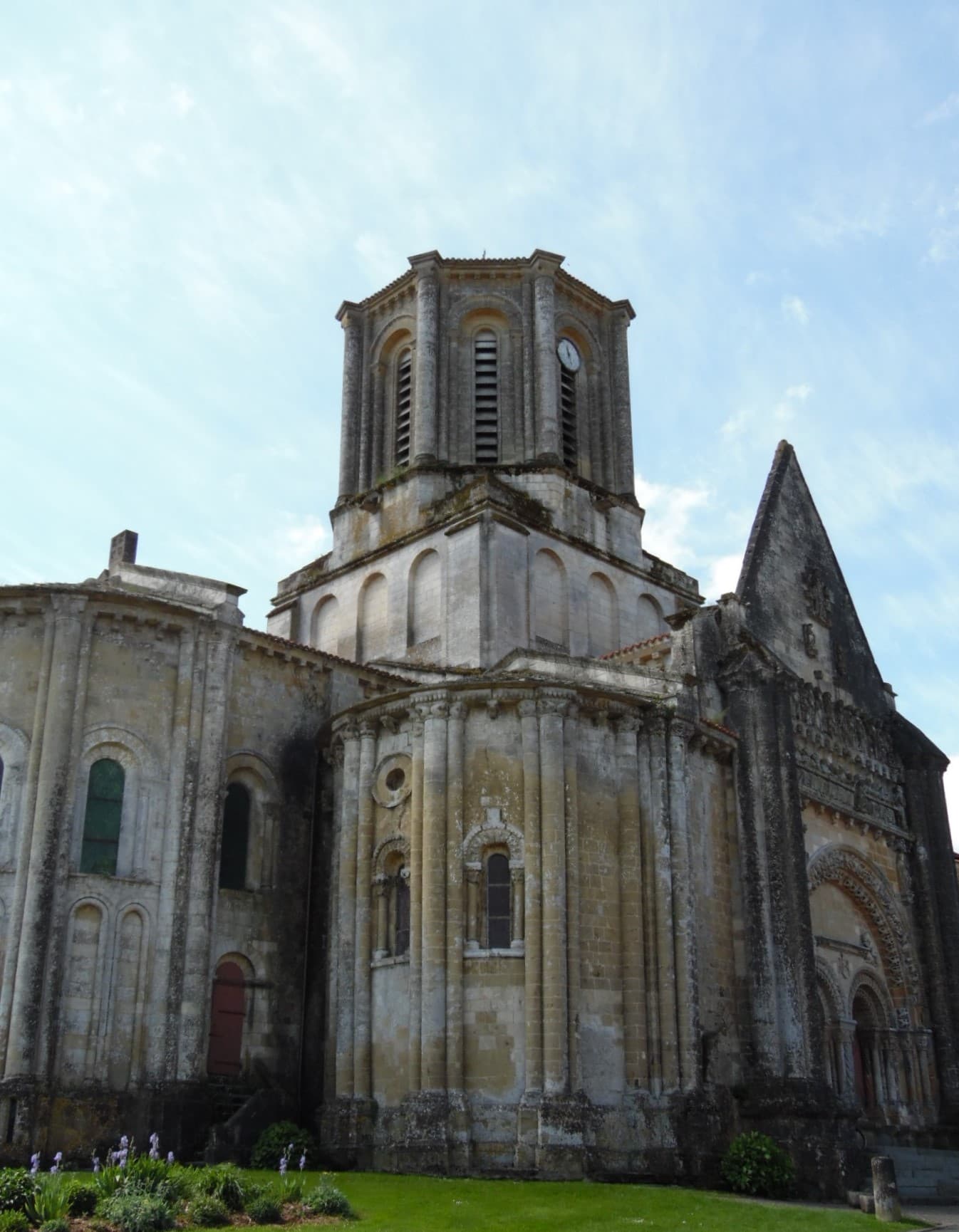 Charly G. / CC BY-SA 4.0, via Wikimedia Commons
Self-guided audio walking tour of Vouvant — GPS route, offline playback, story-driven narration in 32 languages.
“Where ancient stones recount the legend of a serpent-fairy.”
Not the postcards. The stories even locals don't know — whispered in your ear, right where they happened.
The formidable Mélusine Tower, a solitary guardian over Vouvant, is said to have materialized under extraordinary circumstances.
A small, almost secluded spot in Vouvant is known as the 'Cour des Miracles' (Court of Miracles).
The elaborate carvings on the Romanesque portal of Vouvant's Notre-Dame Church contain a surprising detail.
Discover every secret of Vouvant
Every address, every reveal in full — in your ear, right where it happened.
You pick your stops. You walk. The voice reveals what the others miss.


Your self-guided audio tour of Vouvant is ready — pick your landmarks, choose your language, and start the moment you arrive.
BuyLume has a built-in augmented-reality guide. Hold your phone up and its camera shows the street ahead of you, with a glowing arrow laid over the real view that always points to your next stop — no map to puzzle over, no wrong turns. Like everything in Lume, it works fully offline.
Vouvant, a designated "Most Beautiful Village in France" and a "Petite Cité de Caractère," invites visitors to step into a preserved medieval past in the Vendée region. Enclosed by its original ramparts and embraced by a bend in the Mère river, the village offers a compelling blend of history, nature, and legend. Its cobbled thoroughfares, ancient dwellings, and a pervasive artistic spirit make it a destination that feels both timeless and alive.
This fortified village, the only one of its kind in the Vendée, is dominated by the imposing Mélusine Tower, the last complete vestige of its once-grand castle. Beyond its architectural heritage, Vouvant is deeply intertwined with the captivating legend of the fairy Mélusine, a mythical figure said to have constructed the castle overnight. The surrounding Mervent-Vouvant State Forest, a vast expanse of 5,500 hectares, provides a natural backdrop for exploration, with numerous trails winding through wooded hills and offering views of the Mère valley.
Vouvant's origins trace back to the early 11th century, when Guillaume le Grand, Duke of Aquitaine and Count of Poitiers, ordered the construction of a stronghold and a monastic complex. Abbot Théodelin of Maillezais was tasked with clearing the forest and building the church and monastery dedicated to the Virgin Mary. This strategic fortification aimed to curb Norman incursions along the Vendée and Mère rivers and control the extensive Mervent-Vouvant forest.
By the 12th century, the powerful Lusignan family acquired the lordship of Vouvant, significantly expanding their influence. They undertook a major defensive overhaul, constructing a new urban enclosure and a formidable castle, which included the keep now known as the Mélusine Tower. This period saw the village protected by as many as 30 defensive towers. The Notre-Dame church also underwent significant modifications during this time, with the crypt being altered and the lower part of its sculpted Romanesque portal being added.
Vouvant's strategic importance led to it being besieged twice in the first half of the 13th century. In 1202, King John Lackland of England imprisoned Geoffroy I de Lusignan and confiscated the castle, placing an English royal garrison for six months. Later, in May 1242, King Louis IX of France besieged the stronghold, which was reportedly defended by 140 knights and 60 crossbowmen. Geoffroy II of Lusignan surrendered the castle to the King of France for a year, regaining control in April 1243 after pledging allegiance to Alphonse de Poitiers, Louis IX's brother.
By 1694, with the extinction of the Vouvantese lords' lineage, the forest and the village reverted to the French Crown, becoming the Royal Forest of Vouvant. The castle gradually fell into ruin, with most of its vestiges dismantled in the mid-1800s, leaving only the Mélusine Tower as a testament to its former grandeur. In recent decades, Vouvant has experienced a renaissance, earning recognition as one of "The Most Beautiful Villages of France" in 1988 and a "Petite Cité de Caractère" in 2000. It has also become a haven for artists, attracting painters, sculptors, and craftspeople drawn to its picturesque landscapes and unique atmosphere.
Begin your exploration at the Mélusine Tower, the iconic 36-meter-tall keep that offers a 360-degree panoramic perspective of the medieval town, the Mervent-Vouvant forest, and the Mère valley. You can ascend its five levels for a small fee, with tickets available at the Vouvant Tourist Office. For a more interactive experience, consider the virtual reality and mini-game adventure, "You have to save the Tour Mélusine."
Next, visit the Notre-Dame Church, a masterpiece of Bas-Poitevin Romanesque art and one of the oldest Romanesque churches in the Vendée. It was the first church in the Vendée to be listed as a historic monument. Admire its richly sculpted portal and explore the crypt, unearthed in 1854, which houses a Merovingian sarcophagus and a 12th-century knight's torso.
Wander along the well-preserved ramparts that encircle the village, offering scenic views and glimpses of ancient towers and gates, including the Porte de la Poterne, the last remaining medieval gateway. Cross the 14th-century stone bridge over the Mère river to discover the town's washhouse. Do not overlook the sensory garden for a moment of tranquility.
Vouvant is also known as a "painter's village." From April to October, the 'Vouvant Village de Peintres' association organizes artistic events, and many artists open their studios to the public. Throughout the year, the Nave Théodelin hosts exhibitions by artists, painters, and sculptors.
The ideal time to visit Vouvant for comfortable weather is from May to September. During these months, daytime temperatures are pleasantly warm, ranging from 14°C to 26°C (58°F to 79°F). July and August are the warmest months, with July also being one of the sunniest. The village truly comes alive in July and August with artists opening their studios. Organ concerts are offered from May to November, transforming the church into a temple of music.
Vouvant is located in the Vendée department, approximately 15 minutes from Fontenay-le-Comte and 45 minutes from Puy du Fou. A half-day is sufficient to experience the village essentials, but allow a full day to ascend the Mélusine Tower, take a guided tour, visit artists' workshops, and walk around the village or into the Mervent-Vouvant Forest. The Tourist Office, located on Place du Bail, provides maps for a city discovery trail.
For dining, options include La Grange du Hameau for traditional French cuisine, L'Auberge de Maître Pannetier for traditional French cuisine, and Crêperie Les Délices de Mélusine for crepes and waffles. Local produce can be found at Le Panier de Mélusine. Supermarkets are available in La Châtaigneraie, about 13 km away, and local markets are held in La Châtaigneraie on Saturday mornings and Foussais-Payré on Wednesday mornings. If staying overnight, the Hameau de Vouvant offers self-catering accommodation with a swimming pool and restaurant.
Vouvant in Korean, in Chinese or in Hebrew — and 29 more languages, every stop narrated by a native voice. The widest language range of any self-guided audio tour.
Available in: