Grotte de glace d'Eisriesenwelt
La plus grande grotte de glace du monde recèle un secret non seulement de merveille géologique, mais aussi d'entreprise humaine.
L'histoire complète se débloque dans le tour
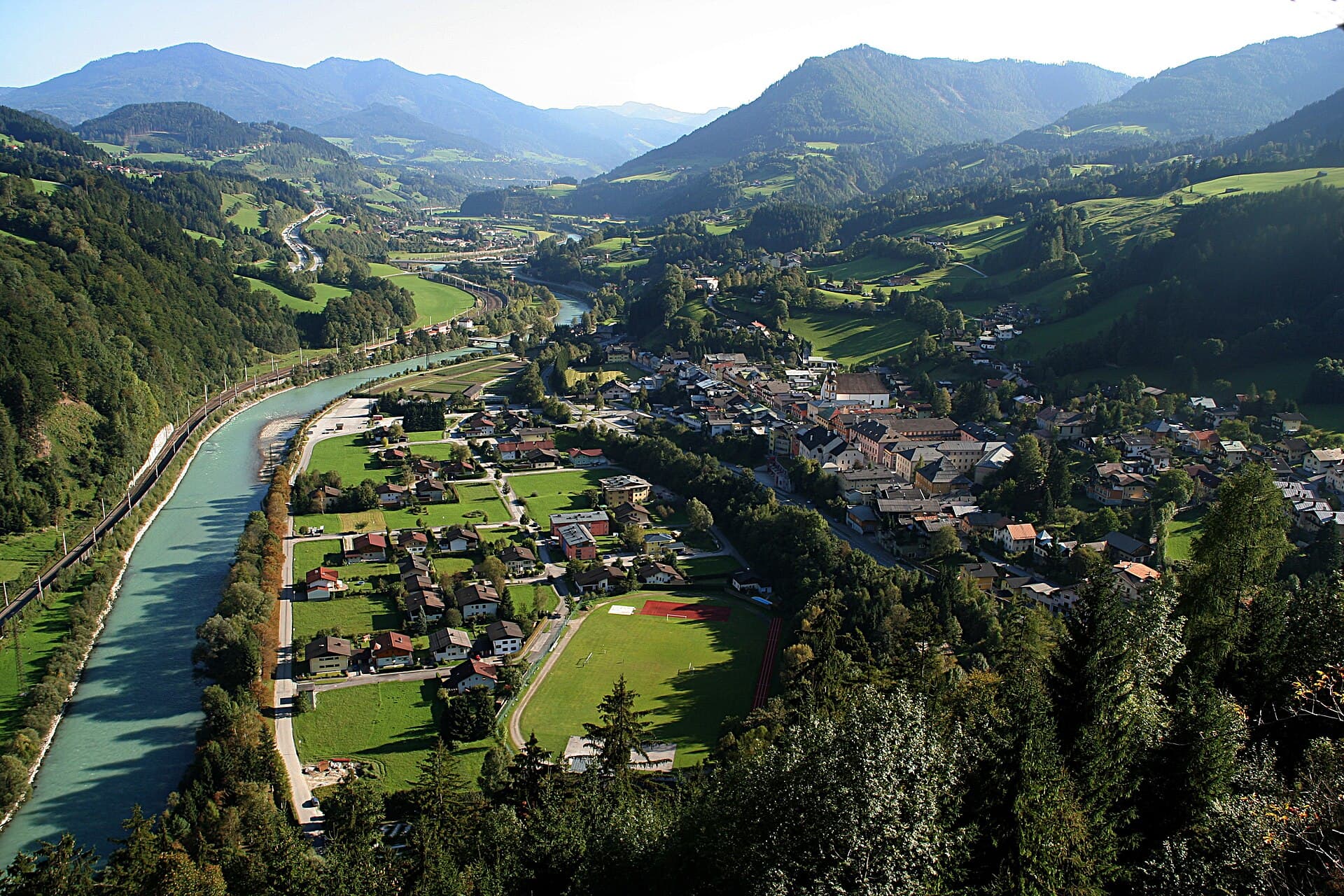 User:MatthiasKabel / CC BY-SA 3.0, via Wikimedia Commons
Visite audio autoguidée de Werfen — parcours GPS à pied, lecture hors ligne, narration en 32 langues.
“Là où la glace millénaire rencontre la pierre médiévale, et où des paysages cinématographiques se déploient.”
Pas les cartes postales. Les histoires que même les habitants ignorent — soufflées à l'oreille, là où elles se sont passées.
La plus grande grotte de glace du monde recèle un secret non seulement de merveille géologique, mais aussi d'entreprise humaine.
Cette imposante forteresse médiévale, apparemment épargnée par le temps, a joué un rôle surprenant dans un conflit mondial.
La scène emblématique « Do-Ré-Mi » de « La Mélodie du Bonheur » a été filmée dans une prairie pittoresque de Werfen, mais le film trompe subtilement les spectateurs sur un détail clé.
Découvrez tous les secrets de Werfen
Chaque adresse, chaque révélation en entier — dans ton oreille, là où elle s'est passée.
Tu choisis tes lieux. Tu marches. La voix te révèle ce que les autres ignorent.


Votre visite audioguidée de Werfen vous attend — choisissez vos lieux, votre langue, et lancez-vous dès votre arrivée.
AcheterLume intègre un guide en réalité augmentée. Levez votre téléphone : sa caméra montre la rue devant vous, avec une flèche lumineuse posée sur l'image réelle qui pointe toujours vers votre prochain arrêt — aucune carte à déchiffrer, aucun mauvais virage. Comme tout dans Lume, ça fonctionne entièrement hors-ligne.
Werfen, une ville marchande de l'État autrichien de Salzbourg, présente un tableau dramatique sculpté par la nature et le temps. Située dans la vallée de la Salzach, à environ 40 kilomètres au sud de Salzbourg, elle est encadrée par les formidables Alpes de Berchtesgaden et les montagnes du Tennengebirge. Ce village alpin, avec son marché historique et ses maisons traditionnelles, offre un mélange captivant de merveilles naturelles et de patrimoine médiéval.
La ville est peut-être mieux connue pour deux attractions extraordinaires : l'imposant château de Hohenwerfen et la vaste Eisriesenwelt, la plus grande grotte de glace du monde. Au-delà de ces attractions phares, Werfen occupe également une place spéciale dans l'histoire du cinéma, avec un célèbre lieu de tournage de « La Mélodie du Bonheur ». Que vous soyez attiré par les palais de glace souterrains, les forteresses antiques ou les paysages de films emblématiques, Werfen offre un voyage mémorable au cœur alpin de l'Autriche.
L'emplacement stratégique de Werfen dans la vallée de la Salzach en a fait un point important le long des routes commerciales historiques depuis l'Antiquité, lorsque la région faisait partie de la province romaine de Noricum. Aujourd'hui, elle reste facilement accessible, ce qui en fait une destination idéale pour une excursion d'une journée depuis Salzbourg ou un séjour plus long pour explorer la région environnante.
L'histoire de Werfen remonte à l'Antiquité, avec d'importantes routes commerciales traversant la vallée de la Salzach lorsque la région faisait partie de la province romaine de Noricum. Le village de Werven lui-même a été documenté pour la première fois vers 1140 après J.-C. Cependant, l'importance de la région a été cimentée bien plus tôt, avec des preuves d'habitation humaine datant de quatre millénaires, et des traces romaines, y compris des routes, découvertes lors de la construction d'autoroutes.
La caractéristique déterminante de l'histoire ancienne de Werfen est sans aucun doute le château de Hohenwerfen. Cette formidable forteresse rocheuse a été construite entre 1075 et 1078 sur ordre de l'archevêque Gebhard de Salzbourg. Construite comme un rempart stratégique au sommet d'un pilier rocheux de 155 mètres de haut, elle était destinée à sécuriser les routes traversant les Alpes orientales le long de la rivière Salzach pendant la Querelle des Investitures. L'archevêque Gebhard, un allié du pape Grégoire VII, a également supervisé l'extension de la forteresse de Hohensalzburg et du château de Petersberg à Friesach, faisant de Hohenwerfen une forteresse « sœur ».
Au cours des siècles suivants, Hohenwerfen a servi les princes-archevêques de Salzbourg non seulement comme base militaire, mais aussi comme résidence et pavillon de chasse. La forteresse a subi des extensions aux XIIe et XVIe siècles. Pendant la guerre des paysans allemands en 1525 et 1526, le château a fait face à des défis importants, avec des paysans et des mineurs émeutiers assiégeant et endommageant gravement certaines parties de la structure.
Werfen a également joué un rôle dans l'expulsion des protestants de Salzbourg en 1731 sous le prince-archevêque comte Leopold Anton von Firmian. À la fin du XVIIIe siècle, le développement d'un grand gisement de limonite à Sulzau a conduit à la création de la Konkordiahütte, qui est devenue la plus importante usine sidérurgique de l'archevêché de Salzbourg à partir de 1770. Après la sécularisation de la principauté archiépiscopale, Werfen est devenue partie de l'Empire autrichien en 1816 après le Congrès de Vienne.
Les XIXe et XXe siècles ont vu d'autres transformations pour le château de Hohenwerfen. Après une période de désuétude, l'archiduc Johann l'a restauré entre 1824 et 1833, l'utilisant principalement comme base de chasse. L'archiduc Eugène d'Autriche a ensuite acheté le château en 1898 et l'a transformé en une demeure seigneuriale. Cependant, un incendie en 1931 a causé des dommages importants, et après restauration, il a été vendu à l'administration du Reichsgau de Salzbourg en 1938. Pendant la Seconde Guerre mondiale, le château a été utilisé comme camp d'éducation nazi, et de 1945 à 1987, il a servi de camp d'entraînement pour la Gendarmerie autrichienne. Depuis 1987, la forteresse est ouverte au public en tant que musée et attraction touristique.
Werfen offre une expérience concentrée de grandeur naturelle et d'intrigue historique. La pièce maîtresse incontestable est le château de Hohenwerfen, une forteresse médiévale dramatiquement située sur un pilier rocheux de 155 mètres de haut. Les visiteurs peuvent explorer sa vaste collection d'armes, la fauconnerie historique de Salzbourg avec des démonstrations de vol, et une taverne de la forteresse. Des visites guidées donnent accès à la chapelle, au donjon et à la tour de l'horloge, offrant des vues impressionnantes sur la vallée.
Tout aussi captivante est la grotte de glace d'Eisriesenwelt, la plus grande grotte de glace du monde, s'étendant sur plus de 42 kilomètres dans le mont Hochkogel. Des visites guidées, d'une durée d'environ 75 minutes, présentent de magnifiques formations de glace. Préparez-vous à des températures froides à l'intérieur, même en été.
Pour les cinéphiles, le sentier de La Mélodie du Bonheur mène à la prairie de Gschwandtanger, le lieu original de la scène emblématique « Do-Ré-Mi », avec le château de Hohenwerfen visible en arrière-plan. Le sentier offre une randonnée d'une demi-heure depuis le centre-ville. Pour les délices culinaires, le restaurant Obauer est un établissement très réputé, connu pour sa cuisine primée mélangeant saveurs autrichiennes traditionnelles et techniques modernes.
La meilleure période pour visiter Werfen pour les activités par temps chaud et pour explorer ses principales attractions est de début juillet à fin août. Pendant ces mois, les températures diurnes moyennes varient d'un confortable 17°C à 21°C. La grotte de glace d'Eisriesenwelt est généralement ouverte de mai à octobre. Bien que l'été offre des conditions agréables, juin peut être le mois le plus humide, avec une moyenne de 16,5 jours de précipitations. Pour ceux qui s'intéressent aux sports d'hiver ou aux marchés festifs, Werfen est également une base idéale pour visiter les stations de ski et les marchés de l'Avent à proximité.
Werfen est facilement accessible depuis Salzbourg. Des trains régionaux directs depuis la gare centrale de Salzbourg circulent fréquemment, avec un temps de trajet d'environ 45 à 60 minutes. En voiture, Werfen est à environ 40 minutes au sud de Salzbourg via l'autoroute A10 Tauernautobahn. Le stationnement peut être limité pendant la haute saison.
Pour atteindre le château de Hohenwerfen, vous pouvez emprunter un sentier depuis le parking ou prendre un funiculaire. Pour la grotte de glace d'Eisriesenwelt, un bus depuis Werfen, suivi du téléphérique le plus raide d'Autriche, vous rapproche de l'entrée de la grotte, après quoi une randonnée est toujours nécessaire. Des chaussures confortables et des vêtements chauds sont essentiels pour les grottes de glace, car les températures restent en dessous de zéro à l'intérieur.
Envisagez d'acheter la SalzburgerLand Card pour d'éventuelles réductions sur les attractions. De nombreuses visites guidées depuis Salzbourg regroupent le transport avec les visites du château et des grottes, offrant une option pratique pour la logistique.
Werfen en coréen, en chinois ou en hébreu — et dans 29 autres langues, chaque étape narrée par une voix native. La plus large gamme de langues de tous les audioguides autoguidés.
Disponible en :