Herzog August Bibliothek
Entre les murs de l'une des plus anciennes bibliothèques du monde, un objet apparemment ordinaire a autrefois atteint un prix extraordinaire et record.
L'histoire complète se débloque dans le tour
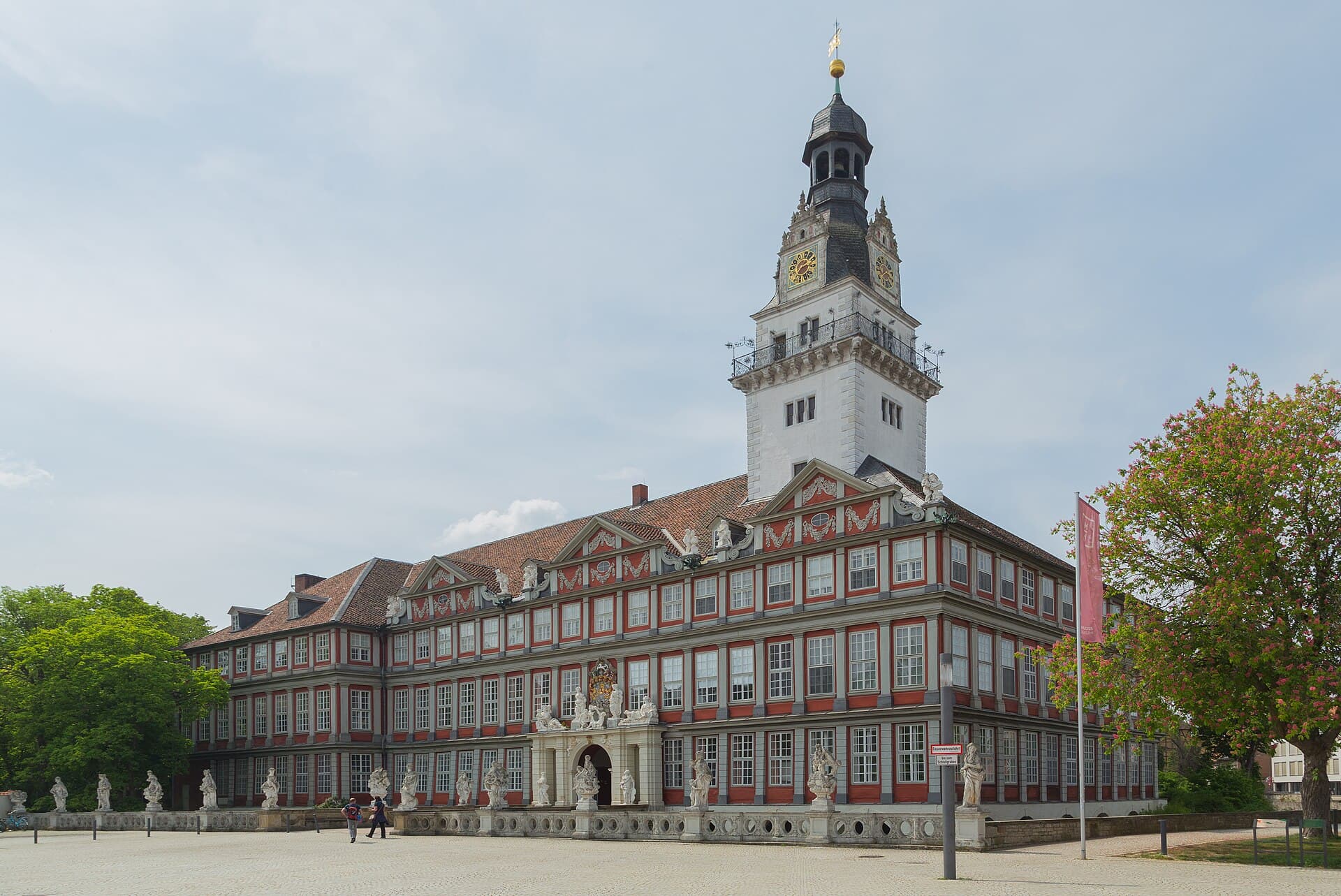 Jan-Herm Janßen / CC BY-SA 4.0, via Wikimedia Commons
Visite audio autoguidée de Wolfenbüttel — parcours GPS à pied, lecture hors ligne, narration en 32 langues.
“Là où l'histoire ducale, les livres rares et une célèbre liqueur aux herbes convergent.”
Pas les cartes postales. Les histoires que même les habitants ignorent — soufflées à l'oreille, là où elles se sont passées.
Entre les murs de l'une des plus anciennes bibliothèques du monde, un objet apparemment ordinaire a autrefois atteint un prix extraordinaire et record.
Ce charmant quartier au bord du canal, avec ses jolies maisons, n'a pas toujours été si romantique ; son but initial était bien plus pratique – et odorant.
L'emblématique liqueur aux herbes, Jägermeister, conserve une recette secrète inchangée depuis des décennies, mais elle n'a pas toujours été commercialisée comme la boisson festive qu'elle est aujourd'hui.
Découvrez tous les secrets de Wolfenbüttel
Chaque adresse, chaque révélation en entier — dans ton oreille, là où elle s'est passée.
Tu choisis tes lieux. Tu marches. La voix te révèle ce que les autres ignorent.

Votre visite audioguidée de Wolfenbüttel vous attend — choisissez vos lieux, votre langue, et lancez-vous dès votre arrivée.
AcheterLume intègre un guide en réalité augmentée. Levez votre téléphone : sa caméra montre la rue devant vous, avec une flèche lumineuse posée sur l'image réelle qui pointe toujours vers votre prochain arrêt — aucune carte à déchiffrer, aucun mauvais virage. Comme tout dans Lume, ça fonctionne entièrement hors-ligne.
Wolfenbüttel, une ville de Basse-Saxe, en Allemagne, offre un mélange d'histoire profonde et d'atmosphère tranquille. Elle a largement échappé aux dégâts importants de la Seconde Guerre mondiale, permettant à son caractère historique de perdurer. La ville est particulièrement reconnue pour sa vaste collection de bâtiments à colombages, avec environ 1 000 exemples bien conservés couvrant six siècles, ce qui en fait la plus grande concentration d'Allemagne.
Située sur la rivière Oker, Wolfenbüttel a servi de résidence principale aux ducs de Brunswick-Lunebourg pendant plus de trois siècles jusqu'en 1754. Ce passé ducal est évident dans le grand château baroque de Wolfenbüttel et la Herzog August Bibliothek, de renommée internationale. Au-delà de son architecture historique, Wolfenbüttel est également l'origine de la liqueur aux herbes Jägermeister, mondialement connue.
## Résidence ducale et centre culturel L'histoire documentée de Wolfenbüttel remonte à 1074, lorsque le Schloss Wolfenbüttel fut mentionné pour la première fois comme un fort sur la rivière Oker. Le château a subi de nombreuses transformations, avec son agencement actuel, ses douves et les niveaux inférieurs du donjon datant de 1283, lorsque Henri Ier de Brunswick-Grubenhagen a reconstruit la structure. Pendant environ 400 ans, jusqu'en 1754, Wolfenbüttel fut la résidence principale des ducs de Braunschweig et de Lunebourg.
Ce patronage ducal a favorisé un environnement culturel et intellectuel significatif. La Herzog August Bibliothek, établie en 1572 par le duc Jules de Brunswick-Lunebourg, est devenue la pierre angulaire de cet héritage. Elle a acquis une reconnaissance mondiale sous le duc Auguste le Jeune, érudit et collectionneur de livres, qui a apporté toute sa bibliothèque à Wolfenbüttel. Au moment de sa mort en 1666, la « Bibliotheca Augusta » comptait 35 000 volumes, ce qui en faisait la plus grande bibliothèque au nord des Alpes. La collection de la bibliothèque s'est enrichie pour inclure environ un million de volumes, dont environ 350 000 des XVe au XVIIIe siècles. Elle fut autrefois considérée comme la « huitième merveille du monde » en raison de sa vaste collection de manuscrits et de livres rares.
## Innovation industrielle : Jägermeister En 1878, Wilhelm Mast a créé une vinaigrerie à Wolfenbüttel. Son fils, Curt Mast, a repris l'entreprise en 1918 et, après des années d'expérimentation, a développé la recette du Jägermeister, une liqueur aux herbes, qu'il a introduite pour la première fois en 1935. L'entreprise, Mast-Jägermeister SE, maintient toujours ses bureaux et sa production à Wolfenbüttel.
## Une vieille ville préservée La vieille ville de Wolfenbüttel est remarquable par sa préservation exceptionnelle, ayant largement échappé aux dégâts des deux guerres mondiales. Cela a laissé un paysage urbain harmonieux avec plusieurs centaines de bâtiments à colombages bien conservés, dont beaucoup datent de plusieurs siècles. La plus ancienne maison à colombages près du château date d'environ 1535. La ville a également été candidate au statut de patrimoine mondial de l'UNESCO de 1984 à 1993.
Commencez votre exploration au Schloss Wolfenbüttel, un château baroque qui a autrefois servi de résidence aux ducs de Brunswick-Lunebourg. Aujourd'hui, une partie du bâtiment fonctionne comme un lycée, tandis qu'une autre section est ouverte au public en tant que musée, présentant des appartements d'État baroques.
Une courte promenade vous mènera à la Herzog August Bibliothek, une bibliothèque de recherche mondialement reconnue, abritée dans un bâtiment de style palazzo florentin de la fin du XIXe siècle. Bien que la section musée puisse être fermée pour rénovations, des visites guidées sont souvent disponibles dans les Zeughaus et Lessinghaus voisins. La collection de la bibliothèque comprend environ un million de volumes, avec des trésors notables comme les Évangiles d'Henri le Lion du XIIe siècle.
Promenez-vous dans Klein Venedig (« Petite Venise »), un charmant quartier le long de la rivière Oker, avec des maisons du XVIIIe siècle au bord du canal. Ce lieu attrayant est un vestige d'un système de canaux du XVIe siècle construit par des architectes néerlandais.
Découvrez la vieille ville, avec ses quelque 1 000 bâtiments à colombages bien conservés. Ces structures, dont certaines datent du XVIe siècle, créent une atmosphère unique et invitante pour une promenade tranquille. La place du marché est particulièrement attrayante, souvent avec des canards qui se dandinent en son centre.
Le moment idéal pour visiter Wolfenbüttel est à la fin du printemps et au début de l'été, de mai à juillet. Pendant ces mois, le temps est agréablement doux, parfait pour explorer les sites historiques de la ville et ses rues invitantes. La longue tradition de jardinage de la ville est évidente dans les fleurs épanouies qui rehaussent l'atmosphère pittoresque. Cette période coïncide souvent aussi avec des événements culturels, tels que le Wolfenbüttel Kultursommer. Pour les activités par temps chaud, la fin juin à début septembre est également recommandée.
Wolfenbüttel est facilement accessible par diverses options de transport. Si vous voyagez en voiture, vous pouvez atteindre la ville via l'autoroute A2 (Hanovre-Berlin) en prenant la sortie Braunschweig-Nord, puis en suivant l'A391, l'A39 et l'A36 en direction de Bad Harzburg, en sortant à Wolfenbüttel-Nord. Du sud, prenez l'autoroute A7, sortez à Salzgitter et suivez les panneaux pour Wolfenbüttel.
En train, prenez un service IC ou ICE jusqu'à Braunschweig Hauptbahnhof, puis transférez-vous sur un train régional jusqu'à Wolfenbüttel ; le trajet dure environ 10 minutes, avec des trains toutes les 30 minutes. La gare se trouve à la lisière sud du centre-ville. Le centre-ville est compact et la plupart des visites peuvent être effectuées à pied. Des locations de vélos électriques sont disponibles à l'office de tourisme pour ceux qui souhaitent explorer plus loin.
Wolfenbüttel en coréen, en chinois ou en hébreu — et dans 29 autres langues, chaque étape narrée par une voix native. La plus large gamme de langues de tous les audioguides autoguidés.
Disponible en :