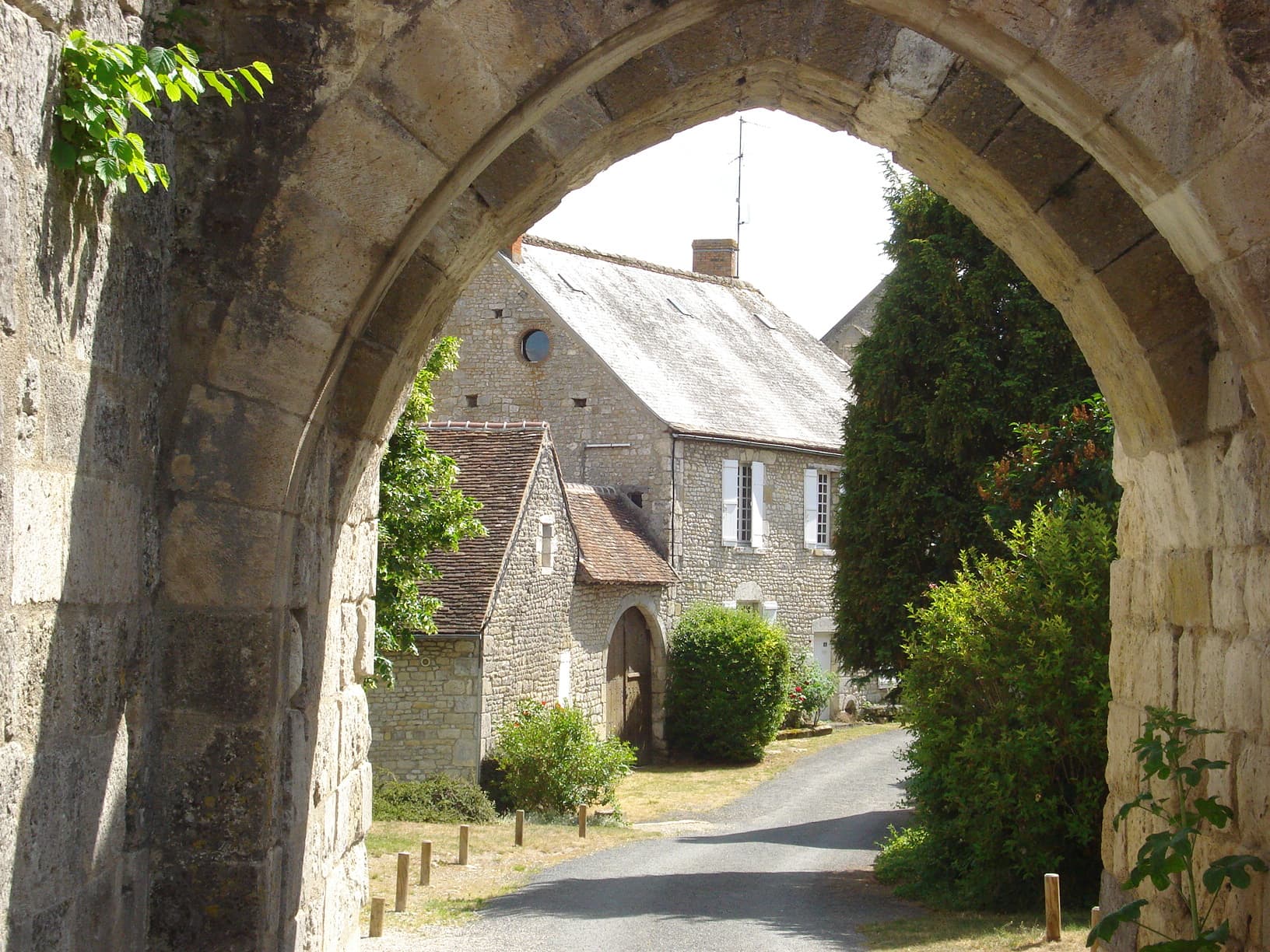
Church of Saint Lubin
Victor Hugo, the celebrated French writer, found himself captivated by the romantic ruins of Yèvre-le-Châtel. What drew his artistic eye to this particular unfinished church?
Full story unlocks in the tour
 Chatellenie / CC BY-SA 4.0, via Wikimedia Commons
Self-guided audio walking tour of Yèvre-le-Châtel — GPS route, offline playback, story-driven narration in 32 languages.
“Where medieval stones meet blooming pathways, a village murmurs enduring beauty.”
Not the postcards. The stories even locals don't know — whispered in your ear, right where they happened.
Victor Hugo, the celebrated French writer, found himself captivated by the romantic ruins of Yèvre-le-Châtel. What drew his artistic eye to this particular unfinished church?
This seemingly tranquil village once held a strategic secret during the tumultuous Hundred Years' War. What made its fortress almost impenetrable?
Yèvre-le-Châtel is recognized not only for its historical monuments, but also for its exceptional floral displays. How did this small village earn a rare 'Remarkable Garden' label?
Discover every secret of Yèvre-le-Châtel
Every address, every reveal in full — in your ear, right where it happened.
You pick your stops. You walk. The voice reveals what the others miss.
Your self-guided audio tour of Yèvre-le-Châtel is ready — pick your landmarks, choose your language, and start the moment you arrive.
BuyLume has a built-in augmented-reality guide. Hold your phone up and its camera shows the street ahead of you, with a glowing arrow laid over the real view that always points to your next stop — no map to puzzle over, no wrong turns. Like everything in Lume, it works fully offline.
Yèvre-le-Châtel, a village in the Loiret department of central France, offers a captivating destination known for its medieval character and abundant floral displays. Situated on a rocky outcrop overlooking the Rimarde valley, it provides a vivid glimpse into a bygone era. The village is officially recognized as one of 'Les Plus Beaux Villages de France' (The Most Beautiful Villages of France), a distinction it uniquely holds within the Loiret department. Its allure resides in its well-preserved stone houses, narrow flower-lined streets, and significant historical monuments.
Beyond its architectural heritage, Yèvre-le-Châtel is celebrated for its natural splendor, particularly its impressive planting and flowers that adorn the village throughout spring and summer. It has also earned the prestigious 'Jardin remarquable' (Remarkable Garden) label, a testament to its exceptional botanical efforts. This blend of history, architecture, and horticulture creates an inviting atmosphere for visitors seeking a tranquil and visually rich experience.
The history of Yèvre-le-Châtel stretches back to the 10th century when it was a possession of the Abbey of Fleury. Early accounts mention complaints from the monks to King Hugues Capet about the abuses of the local baron, Arnoul de Yèvre. His wife, Lucinde, is credited with founding a monastery dedicated to Saint Gault within the castle grounds, which is now the village's parish church. The area was eventually annexed to the French crown around 1112 by King Louis VI, who had the existing castle dismantled to prevent further issues with powerful local viscounts.
The most prominent historical feature, the medieval fortress, was rebuilt around 1200 under the reign of King Philip Augustus. Its design was influenced by military defensive architecture developed during the Crusades. This substantial structure, with its four round corner towers, additional entrance towers, and defensive walls, proved its strategic worth during the Hundred Years' War. It was one of the few strongholds north of the Loire to resist both English and Burgundian forces. By the 15th century, with the advent of cannon power, the castle's defensive importance waned, and its interior vaults eventually collapsed, rendering it uninhabitable by 1562.
The village is also home to two churches: the Church of Saint Gault, which still serves as a place of worship, and the romantic ruins of the 13th-century Church of Saint Lubin. The construction of Saint Lubin was interrupted, possibly due to a dispute between the bishop of Orléans and the monks of Saint-Benoît-sur-Loire, and it was never fully completed. These evocative ruins captivated Victor Hugo in the 19th century, who sketched them during his travels.
In more recent times, Yèvre-le-Châtel has attracted numerous artists, including Maria Helena Vieira da Silva and Arpad Szenes, who spent summers there for nearly three decades. This artistic legacy is still evident today through contemporary sculptures and art installations found throughout the village, creating an open-air museum.
Begin your exploration at the Medieval Fortress, which defines the village skyline. You can walk along the ramparts and ascend the towers for expansive views of the Beauce, Gâtinais, and the edges of the Orléans Forest. Within the castle's upper courtyard, discover medieval squares showcasing over 150 aromatic, medicinal, and dye plants.
Next, visit the Church of Saint Gault, a Romanesque church from the 12th century that remains active for worship. Nearby, explore the evocative ruins of the Church of Saint Lubin, a 13th-century edifice that was never completed. Its romantic appearance has charmed visitors for centuries.
Wander through the village's appealing streets and alleyways, which are lined with traditional stone houses and spirited floral displays, especially from spring to summer. Look for contemporary sculptures and wrought-iron gates that add an artistic touch to the historic setting. Don't miss the Marcel Robichon Rose Garden, a conservatory dedicated to the creations of a renowned rosarian, featuring dozens of rose varieties in a 'flowery garland' design.
The most pleasant times to visit Yèvre-le-Châtel are during late spring (April-June) and early autumn (September-October). During these periods, the weather is mild, ideal for strolling through the village and exploring the castle grounds without the intense heat or crowds of peak summer. Spring brings the village's celebrated gardens and streets into full bloom, while autumn offers beautiful foliage and the grape harvest season in the wider Loire Valley. While summer (July-August) is lively with fully open attractions, it can be quite warm and busy. Winter (November-March) is quieter, though some attractions may have reduced hours or close for renovations.
Yèvre-le-Châtel is located approximately 40 kilometers northeast of Orléans, in the Loiret department. It is part of the commune of Yèvre-la-Ville. The village is accessible by car, and free parking is available near the castle. The medieval fortress is open to the public from April 1st to November 1st, typically in the afternoons. Group visits can be arranged year-round by appointment. Admission to the fortress is €6 for adults, with reduced rates for children under 15 (€3) and guided groups. The churches and village streets are generally open for free exploration. While there are a few restaurants in the village, including 'The Rolanciene' serving traditional fare, consider nearby towns for more dining and accommodation options. The local Tourist Information Point can provide further assistance. The village is generally accessible for people with reduced mobility.
Yèvre-le-Châtel in Korean, in Chinese or in Hebrew — and 29 more languages, every stop narrated by a native voice. The widest language range of any self-guided audio tour.
Available in: