The Bull Inn
This venerable pub holds a secret within its very structure, a quiet testament to the abbey's dramatic past.
Full story unlocks in the tour
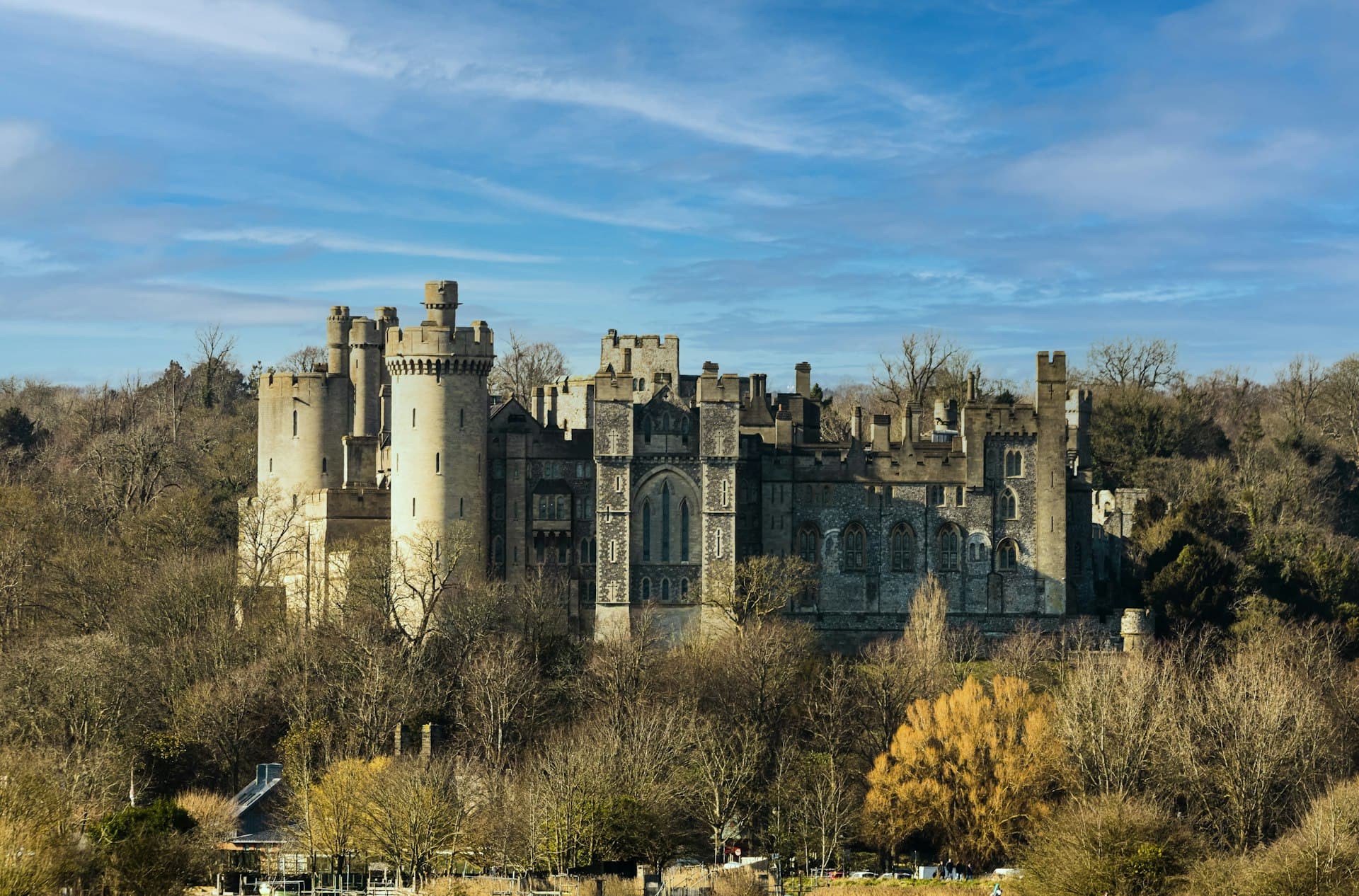 Photo of Arundel, via Wikimedia Commons
Self-guided audio walking tour of Battle — GPS route, offline playback, story-driven narration in 32 languages.
“Where the echoes of a defining conflict resonate through a gracious market town.”
Not the postcards. The stories even locals don't know — whispered in your ear, right where they happened.
This venerable pub holds a secret within its very structure, a quiet testament to the abbey's dramatic past.
Beneath the contemporary exterior of a familiar high street bank lies a medieval past, complete with subterranean wonders.
A brass plaque on the High Street commemorates a poignant wartime event and a daughter's remarkable fortitude.
Discover every secret of Battle
Every address, every reveal in full — in your ear, right where it happened.
You pick your stops. You walk. The voice reveals what the others miss.


Your self-guided audio tour of Battle is ready — pick your landmarks, choose your language, and start the moment you arrive.
BuyLume has a built-in augmented-reality guide. Hold your phone up and its camera shows the street ahead of you, with a glowing arrow laid over the real view that always points to your next stop — no map to puzzle over, no wrong turns. Like everything in Lume, it works fully offline.
Battle, a market town in East Sussex, is forever interwoven with one of England's most pivotal moments: the Battle of Hastings in 1066. The town derives its name directly from this historic conflict, which saw William, Duke of Normandy, overcome King Harold II, fundamentally reshaping the course of English history.
At the heart of Battle stands Battle Abbey, founded by William the Conqueror as an act of penance and to memorialize his triumph. The abbey's high altar is reputedly positioned on the exact spot where King Harold fell. Beyond its monumental historical significance, Battle presents a blend of medieval heritage, independent shops, and traditional pubs, all set within the High Weald National Landscape.
The town's compact and walkable nature renders it an appealing destination for history enthusiasts, families, and those seeking to explore a distinctive English town. From traversing the battlefield where armies clashed to exploring atmospheric abbey ruins and perusing the inviting High Street, Battle offers a tangible connection to a defining chapter in British history.
## From Roman Ironworks to Norman Conquest Before the Norman Conquest, the area around Battle was relatively sparsely populated. However, evidence suggests a substantial Roman ironworks operated at Beauport Park, about two miles southeast of the current town, between AD 100 and 200. While nothing remains of the ironworks today, artifacts from this period are displayed in the Battle Museum of Local History.
The defining moment in Battle's history, and indeed English history, occurred on October 14, 1066. The Battle of Hastings unfolded on Senlac Hill, where William, Duke of Normandy, confronted King Harold II of England. William had pledged to construct a monastery if he prevailed in the battle. Following his victory, which resulted in Harold's demise and the commencement of the Norman Conquest, Pope Alexander II instructed William to perform penance for the bloodshed. This led to the construction of Battle Abbey, with its high altar said to mark the spot where King Harold fell.
Construction of Battle Abbey commenced around 1070 and was dedicated in 1095. The town of Battle grew around the abbey, with a settlement likely existing beyond its gates by 1110, sustained by the commerce the abbey generated. The abbey continued to flourish until the Dissolution of the Monasteries in 1538 under King Henry VIII. The imposing abbey gatehouse, a principal feature of the High Street, was erected in 1338, providing defense against potential French incursions.
## Gunpowder and Georgian Charm In later centuries, Battle cultivated a reputation for its gunpowder production. The first recorded gunpowder mill was established in 1676, and by 1722, Daniel Defoe observed the town for producing "the finest gun-powder, and the best perhaps in Europe." The local mills supplied the British army with gunpowder until the Crimean War, and it is even believed that Guy Fawkes acquired his gunpowder from Battle. The town also displays fine examples of medieval domestic architecture, including Wealden-style hall-houses, and Georgian buildings along its High Street.
The primary attraction in Battle is the 1066 Battle of Hastings, Abbey and Battlefield, managed by English Heritage. Visitors can walk the battlefield with an audio tour, explore the abbey ruins, and ascend the gatehouse, which offers expansive views and exhibitions on the abbey's story. A new exhibition in the visitor centre features interactive displays, armor, and a film about the battle.
The High Street itself is a destination, lined with independent shops, tea rooms, and traditional pubs. Just off the High Street, St Mary the Virgin Church dates back to the 12th century and features a rare 14th-century wall painting of St Margaret of Antioch, 13th-century wall paintings, and a 12th-century font. It also houses the three-meter-long Battle Tapestry, depicting the town's evolution after 1066.
For a deeper exploration of local history, the Battle Museum of Local History at The Almonry offers exhibits ranging from dinosaur footprints and Roman artifacts to relics of the Battle of Hastings and the world's oldest Guy Fawkes effigy. The Almonry Gardens, including a Physic Garden and Pleasance Garden, provide a serene retreat. For those who enjoy walking, the Battle Heritage and Sculpture Trail and the 1066 Country Walk offer scenic routes through the surrounding countryside and ancient woodlands.
Battle is inviting throughout the year, but the most agreeable time for outdoor pursuits is from late June to early September, when average daily high temperatures exceed 64°F (18°C). Autumn is particularly evocative, especially around October 14th, when the anniversary of the Battle of Hastings is commemorated with re-enactments. These re-enactments involve hundreds of participants recreating the conflict, complete with battle cries and demonstrations. Spring offers pleasant weather and fewer crowds, while winter provides a delightful experience with comfortable pubs and historic streets.
Battle is readily accessible by train, with regular services from London Charing Cross and London Bridge to Battle Station, which is approximately a ten-minute walk from Battle Abbey. If traveling by car, the town is accessible via the A2100, and paid parking is available near Battle Abbey. Comfortable footwear is advised, particularly for exploring the battlefield. Dogs on leads are welcome in the outdoor areas of Battle Abbey but are not permitted in exhibition spaces. Accessible toilets are available at the Battle Abbey visitor centre, and portable accessible toilets are on the battlefield. Wheelchair users can enter Battle Abbey through the Gatehouse (by ringing a bell for assistance), and mobility scooters are available for loan. The site features gravel pathways and some steep slopes, with a suggested route for visitors with limited mobility. The Tourist Information Point is located in The Almonry on the High Street.
Battle in Korean, in Chinese or in Hebrew — and 29 more languages, every stop narrated by a native voice. The widest language range of any self-guided audio tour.
Available in: