Centro de Bemidji
Las colosales figuras de Paul Bunyan y Babe el Buey Azul son más que meras atracciones de carretera.
La historia completa se desbloquea en el tour
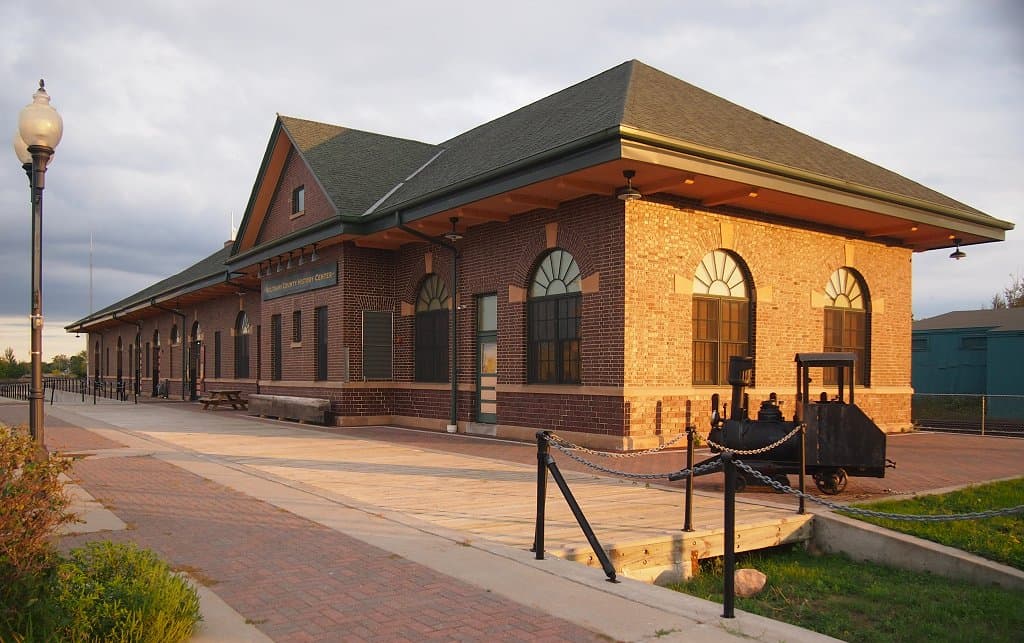 McGhiever / CC BY-SA 3.0, via Wikimedia Commons
Tour de audio autoguiado de Bemidji — ruta GPS a pie, reproducción offline, narración en 32 idiomas.
“Donde el Misisipi comienza su viaje y las leyendas crecen más allá de la vida.”
No las postales. Las historias que ni los locales conocen — al oído, justo donde ocurrieron.
Las colosales figuras de Paul Bunyan y Babe el Buey Azul son más que meras atracciones de carretera.
Se dice que los propios contornos del lago Bemidji son testigos de las legendarias labores de Paul Bunyan.
Antes del asentamiento europeo, esta tierra tenía un nombre diferente, uno que hablaba de su geografía singular.
Descubre todos los secretos de Bemidji
Cada dirección, cada revelación al completo — a tu oído, justo donde ocurrió.
Eliges tus paradas. Caminas. La voz te revela lo que los demás ignoran.


Tu tour de audioguía por Bemidji te espera — elige tus lugares, tu idioma y empieza al llegar.
ComprarBemidji, Minnesota, a menudo conocida como 'La Primera Ciudad en el Misisipi', se asienta en la orilla suroeste del lago Bemidji, el lago más septentrional que alimenta el colosal río Misisipi. Esta ciudad del norte de Minnesota, con una población estimada de 15.770 habitantes en 2025, funciona como un importante centro comercial para la región, uniendo la extensión entre Grand Forks, Dakota del Norte, y Duluth. Es un lugar donde la grandeza de la naturaleza converge con una rica trama de historia y folclore, ofreciendo un viaje único para aquellos que buscan tanto la exploración al aire libre como la comprensión cultural.
Bemidji es quizás más reconocida como el dominio legendario de Paul Bunyan y Babe el Buey Azul, cuyas monumentales figuras saludan a los visitantes a orillas del lago Bemidji. Estas esculturas icónicas son más que simples oportunidades para tomar fotografías; encarnan las profundas conexiones de la ciudad con la industria maderera y su abrazo a la narración épica. Más allá de estas leyendas, Bemidji sirve como punto focal para los servicios nativos americanos, rodeada por las Reservas Indias de Red Lake, White Earth y Leech Lake, lo que refleja una profunda presencia y herencia indígena.
La historia de Bemidji está íntimamente tejida con su entorno natural y las personas que primero la habitaron. Antes de que los colonos europeos llegaran a finales del siglo XIX, el área que rodea el lago Bemidji era un recurso vital para los pueblos indígenas, particularmente los Ojibwe. El propio nombre de la ciudad, 'Bemidji', se deriva del término Ojibwe 'Bemejigamaug' o 'Bemidjigamaag', que significa 'lago que atraviesa otro cuerpo de agua' o 'lago con aguas que se cruzan', una referencia directa al paso del río Misisipi a través del lago Bemidji. Shaynowishkung, un venerado líder Ojibwe, se convirtió en el primer colono permanente de la zona en 1882, y los primeros colonos europeos adoptaron erróneamente el nombre del lago como propio, refiriéndose a él como Jefe Bemidji.
El asentamiento europeo comenzó oficialmente alrededor de 1888 con el establecimiento de un puesto comercial. Los densos bosques de pinos de la región atrajeron rápidamente a los industriales madereros, transformando Bemidji en un bullicioso centro de tala y aserraderos a finales del siglo XIX. La llegada del ferrocarril Great Northern en 1898 impulsó aún más la expansión de la ciudad, abriéndola a un extenso comercio y migración. Para 1900, la población del pueblo había aumentado a 2.000 habitantes. El carácter inicial de Bemidji estuvo marcado por su atmósfera de ciudad fronteriza ruda, con la vida diaria girando en torno a los aserraderos y los campamentos madereros. Fue durante este período que las narrativas legendarias de Paul Bunyan, el leñador gigante, y su buey azul, Babe, se arraigaron profundamente en el folclore estadounidense, con Bemidji afirmándose como su origen.
Bemidji se incorporó oficialmente como pueblo en 1896 y alcanzó el estatus de ciudad en 1905 debido a su rápido crecimiento demográfico y económico. A medida que la industria maderera disminuyó finalmente en el siglo XX, Bemidji se adaptó, evolucionando hacia una comunidad diversa con énfasis en la educación, la atención médica y una próspera escena artística y cultural. La apertura de la Escuela Normal del Estado en 1919, que más tarde se convertiría en la Universidad Estatal de Bemidji, marcó un paso significativo para establecer la ciudad como un centro educativo. Hoy en día, Bemidji continúa honrando su pasado mientras abraza su papel como un centro regional contemporáneo en el norte de Minnesota.
Comience su exploración de Bemidji en las icónicas estatuas de Paul Bunyan y Babe el Buey Azul a orillas del lago Bemidji. Estas figuras colosales, reconocidas en el Registro Nacional de Lugares Históricos, son una vista memorable y brindan maravillosas oportunidades para tomar fotografías. Mientras esté allí, entre al Centro de Información Turística cercano para profundizar en su historia. Justo después, descubrirá la impresionante estatua de bronce del Jefe Bemidji, en honor al líder Ojibwe que da nombre a la ciudad.
Para un viaje a la historia local, diríjase al Centro de Historia del Condado de Beltrami, ubicado dentro de la bellamente restaurada Estación Great Northern de 1912. Aquí, puede explorar exhibiciones sobre la historia regional, incluida la era maderera y la herencia nativa americana. Aquellos que aprecian el aire libre encontrarán consuelo en el Parque Estatal del Lago Bemidji, que ofrece diversos ecosistemas, un paseo marítimo de pantano y vistas panorámicas. También puede disfrutar del entorno junto al lago del Diamond Point Park, el primer espacio verde público de Bemidji, con instalaciones para nadar y hacer pícnic. Si es un entusiasta del golf, el venerable Bemidji Town and Country Club presenta desafiantes campos de golf con amplias vistas al lago.
La época más agradable para experimentar Bemidji para actividades de clima cálido es desde principios de julio hasta finales de agosto, cuando las temperaturas máximas diarias promedio superan los 19°C (67°F) y los cielos suelen estar despejados. Julio se erige como el mes más cálido, con una máxima promedio de 26°C (79°F) y una mínima de 14°C (58°F). Principios de otoño, particularmente septiembre, también ofrece un clima agradable y la belleza de las hojas cambiantes. Los inviernos son intensamente fríos y nevados, siendo enero el mes más frío, con una mínima promedio de -18°C (0°F) y una máxima de -7°C (19°F). La nevada anual promedio mide 118,6 cm (46,7 pulgadas), y el lago Bemidji suele permanecer congelado desde finales de noviembre hasta finales de abril.
Bemidji es servida por el Aeropuerto Regional de Bemidji (BJI), situado a tres millas al noroeste de la ciudad. Ofrece vuelos diarios al Aeropuerto Internacional de Minneapolis-St. Paul (MSP) a través de SkyWest Airlines, operando como Delta Connection. El aeropuerto es un centro compacto y eficiente con servicios esenciales, que incluyen una cómoda sala de espera, servicios de alquiler de coches, una cafetería y una tienda de regalos. Hay Wi-Fi gratuito disponible en toda la terminal. Para aquellos que llegan en coche, Bemidji se encuentra aproximadamente a cuatro horas al norte de Minneapolis y a dos horas al noreste de Fargo, Dakota del Norte. Las rutas principales incluyen la U.S. Route 2 y la U.S. Route 71. Si bien Bemidji es una ciudad relativamente compacta, centrada en el lago Bemidji, tener un vehículo ofrece la mayor libertad para explorar las atracciones naturales circundantes.
Bemidji en coreano, en chino o en hebreo — y 29 idiomas más, cada parada narrada por una voz nativa. La mayor variedad de idiomas de cualquier audioguía autoguiada.
Disponible en: