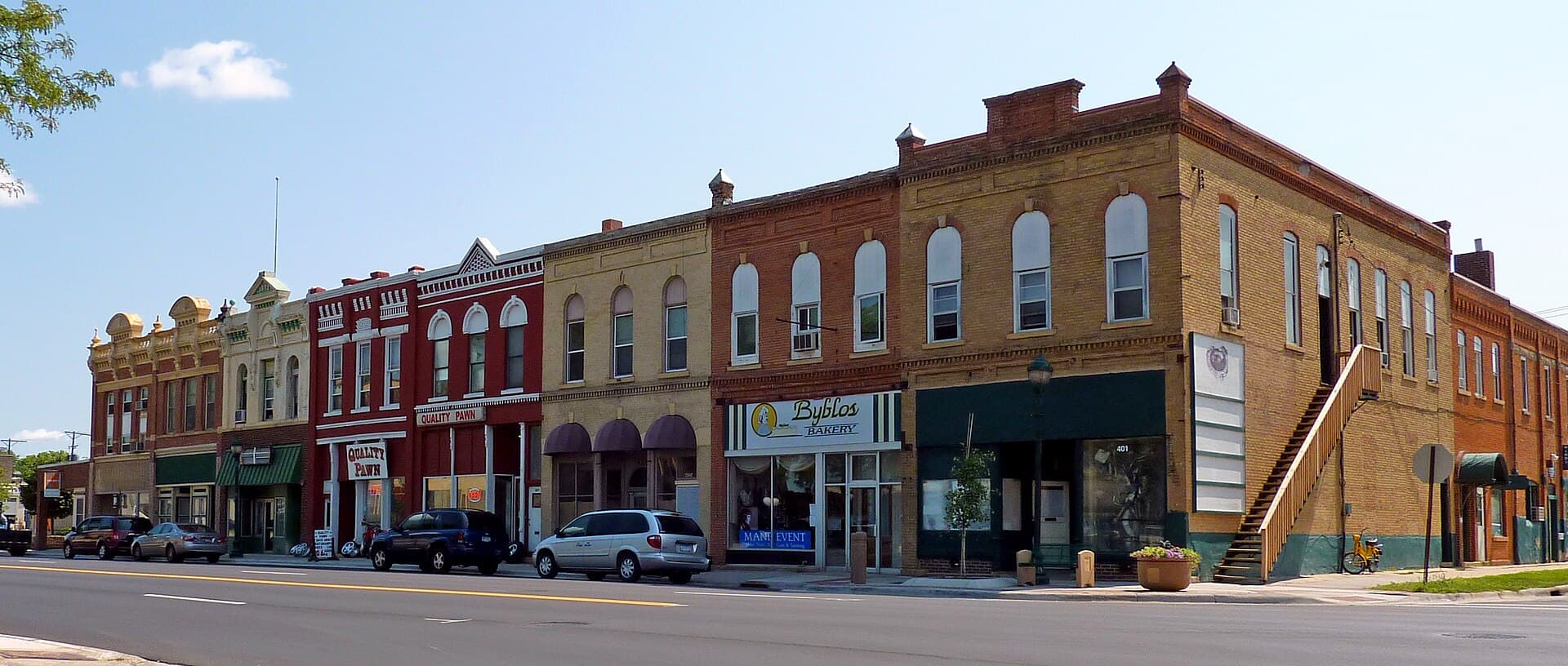
Mankato, United StatesBobak Ha'Eri / CC BY 3.0, via Wikimedia Commons
US

Mankato

Self-guided audio walking tour of Mankato — GPS route, offline playback, story-driven narration in 32 languages.

Where two rivers converge, stories flow deep.

The secrets of Mankato

Mankato, as no one tells it.

Not the postcards. The stories even locals don't know — whispered in your ear, right where they happened.

3 secrets below. Many more wait inside the tour.
Old Main Building, Minnesota State University

A time capsule, sealed into the cornerstone of the Old Main building in 1869, contained documents from a secret society with disturbing similarities to the Ku Klux Klan.

Full story unlocks in the tour
Mankato Courthouse

Justice, it seems, can be swayed by a sympathetic performance, even causing a symbolic imbalance.

Full story unlocks in the tour
Judson Bottom Road

Beyond the well-known waterfalls, a lesser-seen cascade awaits those willing to explore a little further.

Full story unlocks in the tour
The full tour

Discover every secret of Mankato

Every address, every reveal in full — in your ear, right where it happened.

Get the key to Mankato

You pick your stops. You walk. The voice reveals what the others miss.

Mankato
Bobak Ha'Eri / cc by 3.0, via Wikimedia Commons
Choose your time

How long do you have in Mankato?

Your self-guided audio tour of Mankato is ready — pick your landmarks, choose your language, and start the moment you arrive.

Buy
About Mankato

The story of Mankato

Mankato, Minnesota, where the Minnesota and Blue Earth Rivers converge, offers a blend of natural splendor and urban amenities. Originally named "Mahkato" by the Dakota, meaning "greenish-blue earth," the city's name reflects the unique clay found in the area. Situated approximately 75 miles southwest of the Minneapolis-St. Paul metropolitan area, Mankato serves as a regional center for southern Minnesota.

The city's landscape is defined by its river valleys, providing a backdrop for outdoor adventures and sweeping views. From expansive parklands to a lively downtown, Mankato presents a dynamic environment for both residents and visitors.

With a population of over 44,000 residents as of the 2020 census, Mankato is a significant city outside of the immediate Twin Cities area, balancing small-town hospitality with the offerings of a larger community.

History

From Dakota Lands to a Developing City

The area now known as Mankato has been a significant site for Indigenous people for centuries, serving as a regular campsite and a place of gathering, ceremony, and spiritual importance due to the abundant natural resources at the confluence of the Minnesota and Blue Earth Rivers. Mounds at the current Sibley Park were historically used for spring ceremonies.

The first known European contact with this part of Minnesota was in 1683 by French explorer Pierre Le Sueur, who arrived at the river confluence. However, permanent European American settlement didn't begin until 1852, when Parsons K. Johnson and Henry Jackson staked claims along the Minnesota River. The city was officially founded on May 11, 1858, the same day Minnesota achieved statehood. A popular story suggests the city was intended to be named 'Mahkato,' but a typographical error led to 'Mankato.'

The establishment of Mankato followed the Treaty of Traverse des Sioux in 1851, which opened Dakota lands to white settlement. This period was marked by increasing friction between settlers and the Dakota people, culminating in the U.S.-Dakota Conflict of 1862. Mankato became the site of the largest mass execution in U.S. history on December 26, 1862, when 38 Dakota warriors were hanged. This somber event is commemorated today with memorials and is a significant, though difficult, part of the city's past.

By 1880, Mankato was Minnesota's fourth-largest city, with a population of 5,500. The late 19th and early 20th centuries saw continued growth, with the establishment of institutions like the Mankato Normal School (now Minnesota State University, Mankato) in 1869 and the completion of the Minnesota Valley Railroad line. The city also became a center for entertainment, with the opening of an opera house in 1872, drawing in travelers and performers. Notable figures like Sinclair Lewis, who wrote a portion of his novel Main Street in Mankato, and Presidents William Howard Taft and Harry Truman, who visited the city, are part of its narrative.

What to see

Mankato offers a variety of attractions that cater to different interests. For those seeking outdoor experiences, Minneopa State Park is a highlight, featuring grand waterfalls and a bison herd that visitors can drive through. Sibley Park, the city's first park, provides family-friendly activities, including a petting zoo at Sibley Farm. The city also maintains an extensive network of bike trails, such as the Sakatah and Red Jacket Trails, which offer scenic routes along the river valley and extend to other natural sites.

Art and culture enthusiasts can explore Mankato's public art scene, including the CityArt Walking Sculpture Tour, an annual outdoor exhibit of sculptures throughout the city center. The Ardent Mills Grain Silos display a massive mural by Australian artist Guido Van Helton, depicting the community's history and future. The Carnegie Art Center, housed in a beautiful 1902 building, showcases visual arts.

History enthusiasts can visit the R.D. Hubbard House, a historic landmark, and the Blue Earth County Historical Society. The Betsy-Tacy Houses, the childhood homes of author Maud Hart Lovelace's characters, offer a glimpse into the literary inspiration drawn from Mankato.

When to visit

The optimal time to visit Mankato for pleasant weather is between late May and early September. During these months, the city experiences ample sunshine and mild temperatures, with June offering over 15 hours of daylight and average highs around 76.6°F (24.8°C). July is the warmest month, with average highs of 82°F (28°C), making it ideal for warm-weather activities. Autumn, particularly September, also provides mild and enjoyable weather, with average temperatures around 66°F (19°C), perfect for leisurely walks before the colder months arrive.

Practical

Mankato is accessible by road, located approximately 75 miles southwest of the Minneapolis-St. Paul metro area. Within the city, public transportation is available through the Mankato Transit System, which offers fixed routes and a mobility bus service for individuals with disabilities. The Kato Flex service provides curb-to-curb rides in areas with limited fixed-route service. Several taxi and shuttle services, such as Kato Cab, Mavs Taxi, and Kato Independent Shuttle Service (K.I.S.S.), operate in the Greater Mankato area. For those traveling beyond the city, Land to Air Express provides service to Rochester, including Mayo Clinic. Palmer Bus Service also offers school transportation within the district.

When dining out, Mankato's venues are generally friendly, embodying the "Minnesota Nice" spirit. Casual attire like jeans and flannel shirts are common, and food and drink prices are often more reasonable than in larger cities.

Good to know
What is Mankato's original name?
Mankato was originally named "Mahkato" by its early Dakota inhabitants, meaning "greenish-blue earth."
What significant historical event occurred in Mankato in 1862?
Mankato was the site of the largest mass execution in U.S. history on December 26, 1862, when 38 Dakota warriors were hanged following the U.S.-Dakota Conflict.
Are there waterfalls in Mankato?
Yes, Minneopa State Park, located near Mankato, features Minneopa Falls. Minnemishinona Falls is also nearby.
What literary connection does Mankato have?
Mankato served as the inspiration and setting for Maud Hart Lovelace's popular series of children's books about Betsy and Tacy.
What kind of public art can be seen in Mankato?
Mankato features a CityArt Walking Sculpture Tour, an annual outdoor exhibit, and a large mural by Guido Van Helton on the Ardent Mills Grain Silos.
What are the winter months like in Mankato?
Winters in Mankato are long and cold, with average temperatures in January and February hovering around 18°F (-8°C), and nighttime frosts potentially dropping below 9°F (-13°C).
On the map
Mankato
€9.90
No booking · activate anytime · 12h to walk it
Get the key to Mankato