Ames Mill (Compañía Malt-O-Meal)
El pasado molinero de Northfield se extiende más allá de la harina; abarca un cereal que se convirtió en un alimento básico en los hogares de toda la nación.
La historia completa se desbloquea en el tour
 Dogs1337 / CC0, via Wikimedia Commons
Tour de audio autoguiado de Northfield — ruta GPS a pie, reproducción offline, narración en 32 idiomas.
“Donde la determinación de la pradera se encontró con la leyenda de los forajidos, y dos universidades forjaron la identidad de un pueblo.”
No las postales. Las historias que ni los locales conocen — al oído, justo donde ocurrieron.
El pasado molinero de Northfield se extiende más allá de la harina; abarca un cereal que se convirtió en un alimento básico en los hogares de toda la nación.
Un monumento aparentemente ordinario de la Guerra Civil en Northfield guarda un secreto sorprendente, profundamente ligado a una antigua rivalidad universitaria.
Se dice que una de las mansiones históricas de Northfield es el hogar de varios residentes espectrales, incluyendo una sirvienta y un jardinero.
Descubre todos los secretos de Northfield
Cada dirección, cada revelación al completo — a tu oído, justo donde ocurrió.
Eliges tus paradas. Caminas. La voz te revela lo que los demás ignoran.


Tu tour de audioguía por Northfield te espera — elige tus lugares, tu idioma y empieza al llegar.
ComprarNorthfield, Minnesota, una ciudad de poco más de 20,000 residentes, se encuentra aproximadamente a 40 millas al sur de las activas Ciudades Gemelas de Minneapolis y St. Paul. Es un lugar donde el río Cannon serpentea por el paisaje, dando forma tanto a su industria temprana como a su atractivo duradero. Conocida por su lema no oficial, 'Vacas, Universidades y Contentamiento', Northfield ofrece una mezcla única de vitalidad académica, herencia agrícola y un fuerte sentido de comunidad.
El distrito del centro de la ciudad, bien conservado, con su arquitectura de los siglos XIX y principios del XX, invita a una exploración pausada. Más allá de sus pintorescas calles, Northfield ocupa un lugar significativo en la historia estadounidense, particularmente por un dramático evento en 1876 que vinculó para siempre su nombre con una notoria banda de forajidos. Hoy en día, prospera como una ciudad universitaria, hogar tanto del Carleton College como del St. Olaf College, que contribuyen significativamente a su paisaje cultural e intelectual.
El área que se convertiría en Northfield fue originalmente habitada por los pueblos Mdewakanton y Wahpekute Dakota, quienes utilizaban los ríos Cannon y Straight para el transporte y la caza. En 1851, tras tratados que cedieron vastas extensiones de tierra al gobierno de EE. UU., la región se abrió a la colonización blanca. John Wesley North, un abolicionista y especulador de tierras de Nueva York, llegó en enero de 1855, atraído por el potencial del río Cannon para la energía hidráulica y los abundantes recursos naturales. Él, junto con su cuñado George Loomis, estableció un aserradero, un molino harinero y un puente, sentando las bases de la ciudad.
Northfield creció rápidamente como un centro agrícola, inicialmente dominado por granjas de trigo y maíz, apoyado por sus molinos de madera y harina en desarrollo. El Ames Mill, un elemento destacado, incluso obtuvo reconocimiento nacional por su harina en la Exposición del Centenario de 1876. La construcción del Ferrocarril de Minneapolis y Cedar Valley en 1865 facilitó aún más el transporte de productos agrícolas a los mercados urbanos. A medida que la 'frontera del trigo' se movía hacia el oeste, el enfoque agrícola de Northfield se desplazó hacia las operaciones lecheras y la agricultura diversificada, lo que finalmente llevó a su producción moderna de maíz, soja y cerdos.
El momento histórico más famoso de Northfield ocurrió el 7 de septiembre de 1876, cuando la notoria banda de James-Younger intentó robar el First National Bank. Creyendo que la ciudad era un objetivo fácil, los ocho bandidos fuertemente armados entraron, pero sus planes fueron frustrados por la inesperada valentía de los habitantes del pueblo. El cajero en funciones Joseph Lee Heywood se negó a abrir la bóveda, alegando un cierre de tiempo, a pesar de que la caja fuerte estaba realmente desbloqueada. Mientras tanto, el comerciante local J.S. Allen dio la alarma, lo que llevó a los ciudadanos a armarse y entablar un feroz tiroteo con los forajidos. Dos miembros de la banda fueron asesinados, y otros heridos, mientras la banda huía con unos míseros $26.70. Este dramático evento, a menudo recreado durante los Días anuales de la Derrota de Jesse James, consolidó la reputación de Northfield como 'El Pequeño Pueblo que Derrotó a la Banda de Jesse James'.
Más allá de su importancia agrícola e histórica, Northfield se convirtió en un prominente centro educativo. Northfield College fue fundado en 1866 por la Conferencia de Iglesias Congregacionales de Minnesota, más tarde rebautizado como Carleton College en 1871 en honor a un generoso benefactor. Solo unos años después, en 1874, St. Olaf College fue establecido por pastores y agricultores inmigrantes luteranos noruegos, con el objetivo de preservar su fe y cultura a través de la educación. Estas dos universidades privadas de artes liberales, con su matrícula combinada de más de 5,000 estudiantes, continúan dando forma a la identidad de Northfield como una animada ciudad universitaria.
Comience su exploración en Bridge Square, el corazón histórico de Northfield, donde John W. North estableció por primera vez la ciudad en 1855. Aquí, encontrará el Monumento a los Veteranos de la Guerra Civil, que guarda un secreto único ligado a las rivalidades universitarias locales. A pocos pasos se encuentra el Museo de la Sociedad Histórica de Northfield, ubicado en el edificio original del First National Bank. Este sitio meticulosamente restaurado ofrece un vívido relato del asalto bancario de la banda de James-Younger en 1876, completo con artefactos y exhibiciones que detallan la heroica resistencia del pueblo.
Pasee por Division Street, la vía principal, para admirar la arquitectura bien conservada de los siglos XIX y principios del XX que define el distrito histórico del centro de Northfield. Para probar la herencia molinera del pueblo, visite el Ames Mill, ahora la Compañía Malt-O-Meal, el único lugar en el mundo donde se produce el cereal caliente Malt-O-Meal. El cercano río Cannon ofrece pintorescos senderos para caminar.
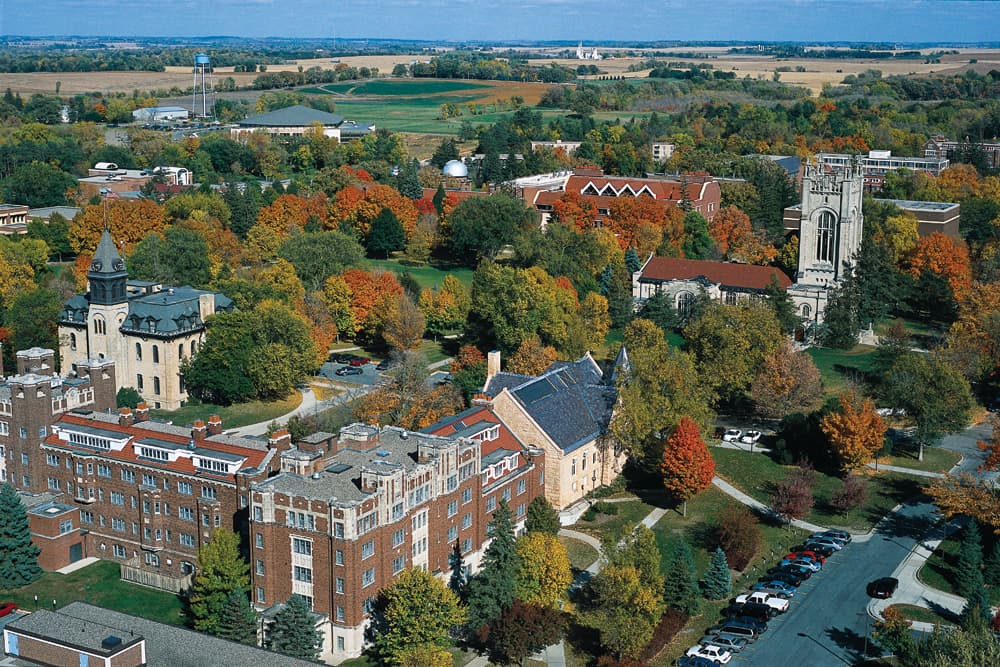
Northfield también es el hogar de dos distinguidas universidades. Explore los campus de Carleton College y St. Olaf College, ambos conocidos por sus hermosos terrenos y edificios históricos. El Cowling Arboretum de Carleton ofrece 800 acres de belleza natural con senderos para caminar, particularmente encantadores cuando las lilas florecen en primavera. En St. Olaf, incluso podría escuchar historias de los espíritus residentes de la universidad en edificios como Hilleboe Hall y Kelsey Theater.
Northfield ofrece una experiencia agradable durante todo el año, pero ciertas estaciones resaltan sus atracciones únicas. Principios de septiembre es particularmente animado, ya que la ciudad celebra los Días de la Derrota de Jesse James, un festival de varios días que presenta recreaciones del infame asalto bancario, un gran desfile y un rodeo. La primavera es ideal para disfrutar del Arboretum del Carleton College cuando sus lilas están en plena floración. El verano ofrece oportunidades para actividades al aire libre a lo largo del río Cannon y en los numerosos parques de la ciudad.
Northfield es fácilmente accesible en coche, ubicada a unas 40 millas al sur de Minneapolis y St. Paul. Las rutas principales incluyen las carreteras estatales de Minnesota 3 y 19. La interestatal más cercana es la I-35, aproximadamente a seis millas al oeste de la ciudad. Una vez en Northfield, el área compacta del centro es muy transitable a pie, lo que facilita la exploración de sitios históricos, tiendas y restaurantes. La ciudad también cuenta con rotondas con caminos separados para bicicletas y peatones, una característica notable para los viajeros activos. Generalmente hay amplio estacionamiento disponible en el centro. Para aquellos interesados en inmersiones históricas más profundas, la Sociedad Histórica de Northfield ofrece recursos y asistencia con la investigación.
Northfield en coreano, en chino o en hebreo — y 29 idiomas más, cada parada narrada por una voz nativa. La mayor variedad de idiomas de cualquier audioguía autoguiada.
Disponible en: