Sugar Loaf Bluff
Le monument le plus reconnaissable de Winona, Sugar Loaf, n'a pas toujours été aussi déchiqueté.
L'histoire complète se débloque dans le tour
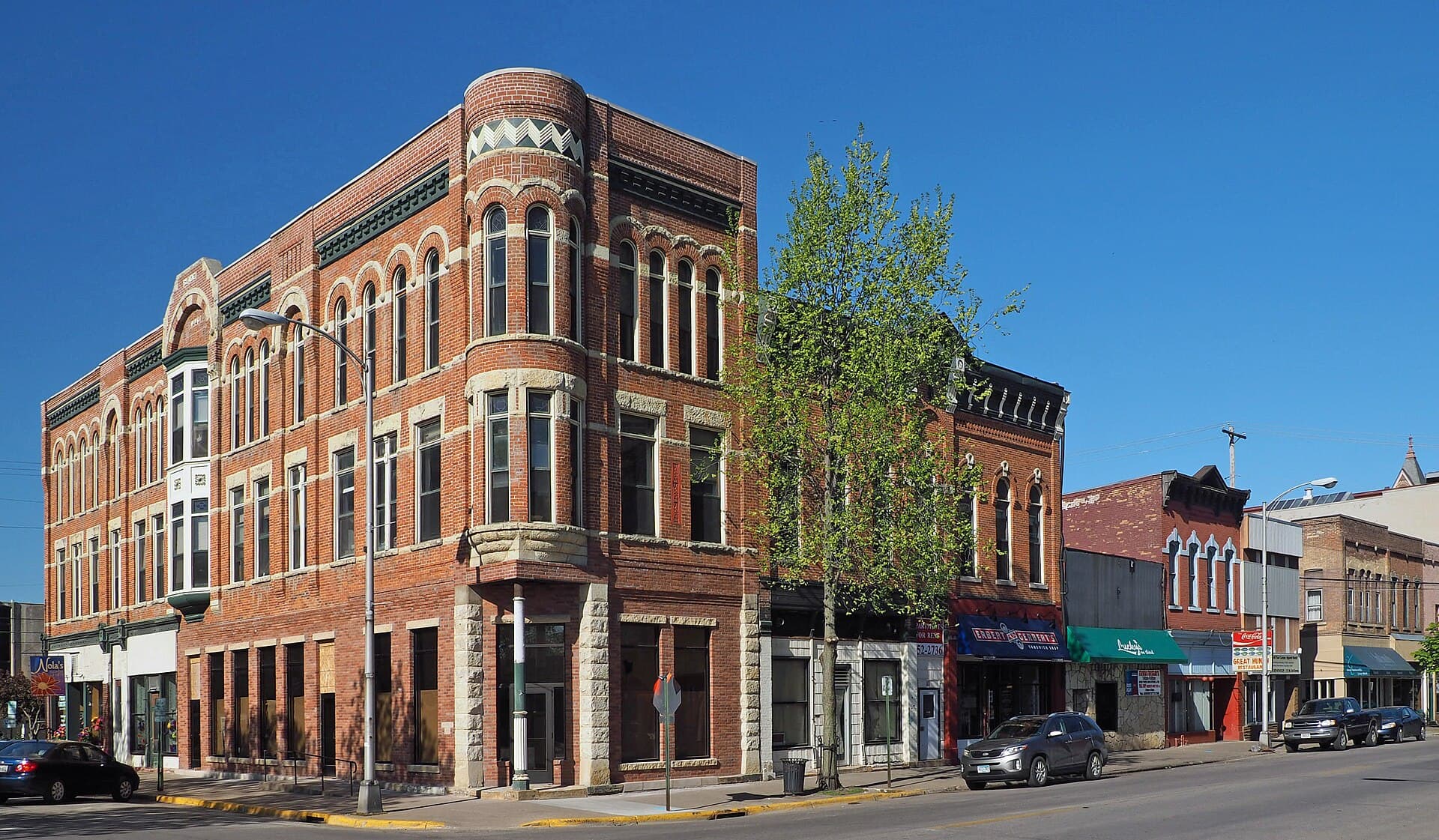 McGhiever / CC BY-SA 4.0, via Wikimedia Commons
Visite audio autoguidée de Winona — parcours GPS à pied, lecture hors ligne, narration en 32 langues.
“Là où les falaises calcaires rencontrent le Mississippi, et l'histoire résonne dans les vitraux.”
Pas les cartes postales. Les histoires que même les habitants ignorent — soufflées à l'oreille, là où elles se sont passées.
Le monument le plus reconnaissable de Winona, Sugar Loaf, n'a pas toujours été aussi déchiqueté.
L'une des banques historiques du centre-ville de Winona abrite une exposition inattendue et gratuite.
Il y a une curieuse raison historique pour laquelle une certaine rue de Winona était autrefois connue sous le nom de « ligne des porcs ».
Découvrez tous les secrets de Winona
Chaque adresse, chaque révélation en entier — dans ton oreille, là où elle s'est passée.
Tu choisis tes lieux. Tu marches. La voix te révèle ce que les autres ignorent.

Votre visite audioguidée de Winona vous attend — choisissez vos lieux, votre langue, et lancez-vous dès votre arrivée.
AcheterWinona, Minnesota, est une ville sculptée par le puissant fleuve Mississippi et encadrée par d'imposantes falaises calcaires, un paysage saisissant au cœur de la Driftless Area – une région célèbre pour avoir été épargnée par les anciens glaciers. Cette géographie unique a créé un environnement visuellement captivant, où la rivière coule d'ouest en est et des falaises spectaculaires s'élèvent de 150 à 180 mètres, offrant des vues imprenables uniques au Minnesota. La ville elle-même est située sur un banc de sable du Mississippi, entourée de fonds de rivière et de falaises boisées.
Au-delà de sa splendeur naturelle, Winona présente un riche éventail d'histoire et de culture. Autrefois patrie ancestrale de la Nation Dakota, dirigée par des générations de chefs Wapasha, les racines autochtones de la région sont profondes. Plus tard, des immigrants européens se sont installés dans la région en 1851, la transformant en une ville fluviale animée, alimentée par le commerce, en particulier du blé et du bois, et par le flux constant de bateaux à vapeur. Cette ère de prospérité se reflète dans l'architecture exquise de Winona, avec de grands bâtiments et des corniches élaborées bordant les rues du centre-ville, dont beaucoup sont inscrits au Registre national des districts historiques.
L'histoire de la région de Winona remonte à des millénaires, avec des preuves archéologiques indiquant une habitation humaine dans la vallée dès 9500 av. J.-C., et un site de la période Woodland datant de 800 av. J.-C. à 900 apr. J.-C. Pendant des siècles, ce fut la patrie chérie de la Nation Dakota, en particulier la bande Mdewakanton des Sioux de l'Est, dirigée par la dynastie Wapasha. Le peuple Dakota, dont le village de Keoxa était situé sur le site de l'actuelle Winona, appréciait cette région pour ses vues depuis les falaises, sa faune abondante et son accès au fleuve Mississippi. Le nom de la ville, « Winona », dérive du mot Dakota « Winuŋna », signifiant « première-née qui est une fille ».
La colonisation euro-américaine a commencé en 1851, après le traité de Mendota et le déplacement forcé du peuple Dakota vers une réserve dans l'ouest du Minnesota. Les nouveaux arrivants, beaucoup originaires de Nouvelle-Angleterre, ont été attirés par les opportunités le long du Mississippi. En 1856, Winona était rapidement devenue une ville fluviale animée, avec plus de 1 300 bateaux à vapeur s'arrêtant chaque année. Des immigrants allemands sont également arrivés en 1856, contribuant à la croissance de la ville. Winona est rapidement devenue un centre important pour le blé et le bois, se classant même parmi les plus grandes villes du Minnesota en quelques décennies.
La fin du XIXe et le début du XXe siècle ont vu un développement industriel important et la croissance du port de Winona. Cette ère de prospérité a laissé un héritage architectural durable. Charles G. Maybury, un architecte de renom de 1865 à 1905, a conçu de nombreuses églises, écoles, palais de justice et bâtiments commerciaux de Winona dans divers styles, notamment italianisant, Queen Anne, roman richardsonien et néo-gothique. Des exemples notables incluent la Basilique de Saint-Stanislas Kostka, conçue dans un style cathédrale polonaise, et le palais de justice du comté de Winona, un point culminant de l'architecture romane richardsonienne au Minnesota. Le centre-ville présente la plus grande collection d'architecture commerciale victorienne du Minnesota sur le Mississippi, avec de nombreux bâtiments de style italianisant ou Queen Anne. Des architectes comme George W. Maher ont également laissé leur marque, concevant le bâtiment administratif J.R. Watkins et la Winona Savings Bank de style néo-égyptien, qui présente des vitraux et des luminaires Tiffany.
Winona offre un mélange de beauté naturelle et de grandeur architecturale. Commencez par l'emblématique Sugar Loaf Bluff, un pinacle rocheux distinctif offrant des vues panoramiques et des possibilités de randonnée. Pour des vues imprenables sur la ville et la vallée du fleuve Mississippi, dirigez-vous vers le belvédère du Garvin Heights Park. Explorez la communauté de maisons flottantes unique le long du front de mer du Mississippi, une tradition colorée unique dans le Midwest.
Le centre-ville de Winona est un trésor d'architecture historique. Faites une visite autoguidée du Stained Glass Trail pour admirer la remarquable collection de vitraux anciens de la ville, ce qui lui vaut le titre de « Capitale américaine du vitrail ». Promenez-vous dans le Winona Downtown Commercial Historic District, qui présente la plus grande collection d'architecture commerciale victorienne du Minnesota sur le Mississippi. Ne manquez pas la Winona Savings Bank avec son design néo-égyptien et ses vitraux Tiffany, ou l'impressionnante Merchants National Bank de style Prairie School.
Pour une plongée plus profonde dans l'histoire locale, visitez le Winona County History Center et le Watkins Heritage Museum & Store, qui raconte l'histoire de J.R. Watkins, inventeur de la « garantie de remboursement ». Le Minnesota Marine Art Museum abrite des œuvres d'art de renommée mondiale, y compris des œuvres de Picasso et Van Gogh, aux côtés d'expositions sur le thème marin. Pour une expérience historique unique, la Bunnell House propose des représentations théâtrales en direct qui transportent les visiteurs dans les années 1850. Les amateurs de plein air peuvent pagayer dans les bras morts du Mississippi, emprunter les sentiers de randonnée derrière le Holzinger Lodge, ou explorer le sentier polyvalent du Levee Park.
Winona est magnifique toute l'année, mais pour un temps agréable et des activités de plein air, la meilleure période pour visiter est de mi-juin à début septembre. Juillet et septembre offrent généralement les conditions météorologiques les plus optimales. L'automne est particulièrement frappant, avec des éclats de feuillage orange, rouge et jaune sur les falaises, surtout de la troisième semaine de septembre à la deuxième semaine d'octobre. Les étés sont chauds et humides, tandis que les hivers sont glacials, neigeux et venteux, janvier étant le mois le plus froid.
Winona est accessible en voiture, avec des routes panoramiques le long de la Highway 61. Amtrak propose un service de train quotidien vers la gare historique de Winona, la reliant à St. Paul, Milwaukee et Chicago, avec un parking gratuit pour la nuit disponible. Jefferson Bus Lines propose également des itinéraires depuis la Winona State University vers des destinations régionales, y compris l'aéroport de St. Paul-Minneapolis.
À Winona, les transports en commun sont disponibles via le Winona Transit Bus Service, fonctionnant du lundi au samedi avec des itinéraires couvrant Winona et Goodview. Les trajets simples coûtent 2 $ en espèces, avec des options de déviation d'itinéraire et un service Dial-a-Ride. Les bus sont accessibles aux fauteuils roulants et équipés de porte-vélos. Le service de covoiturage Lyft, les trottinettes électriques Bird (saisonnières) et la location de vélos sont également disponibles.
Le stationnement dans le centre-ville de Winona comprend des parkings publics et du stationnement dans la rue. Soyez conscient des réglementations de stationnement alterné en vigueur du 15 novembre au 15 mars ; les véhicules doivent être garés du côté pair de la rue les jours pairs et du côté impair les jours impairs entre 00h01 et 06h30. Les véhicules ne peuvent pas être garés dans les rues de la ville ou les parkings publics pendant plus de 20 heures consécutives.
Winona en coréen, en chinois ou en hébreu — et dans 29 autres langues, chaque étape narrée par une voix native. La plus large gamme de langues de tous les audioguides autoguidés.
Disponible en :