La antigua Auberge de la Boule d'Or
Esta acogedora posada del siglo XVIII guarda un secreto sobre la casi desaparición del pueblo.
La historia completa se desbloquea en el tour
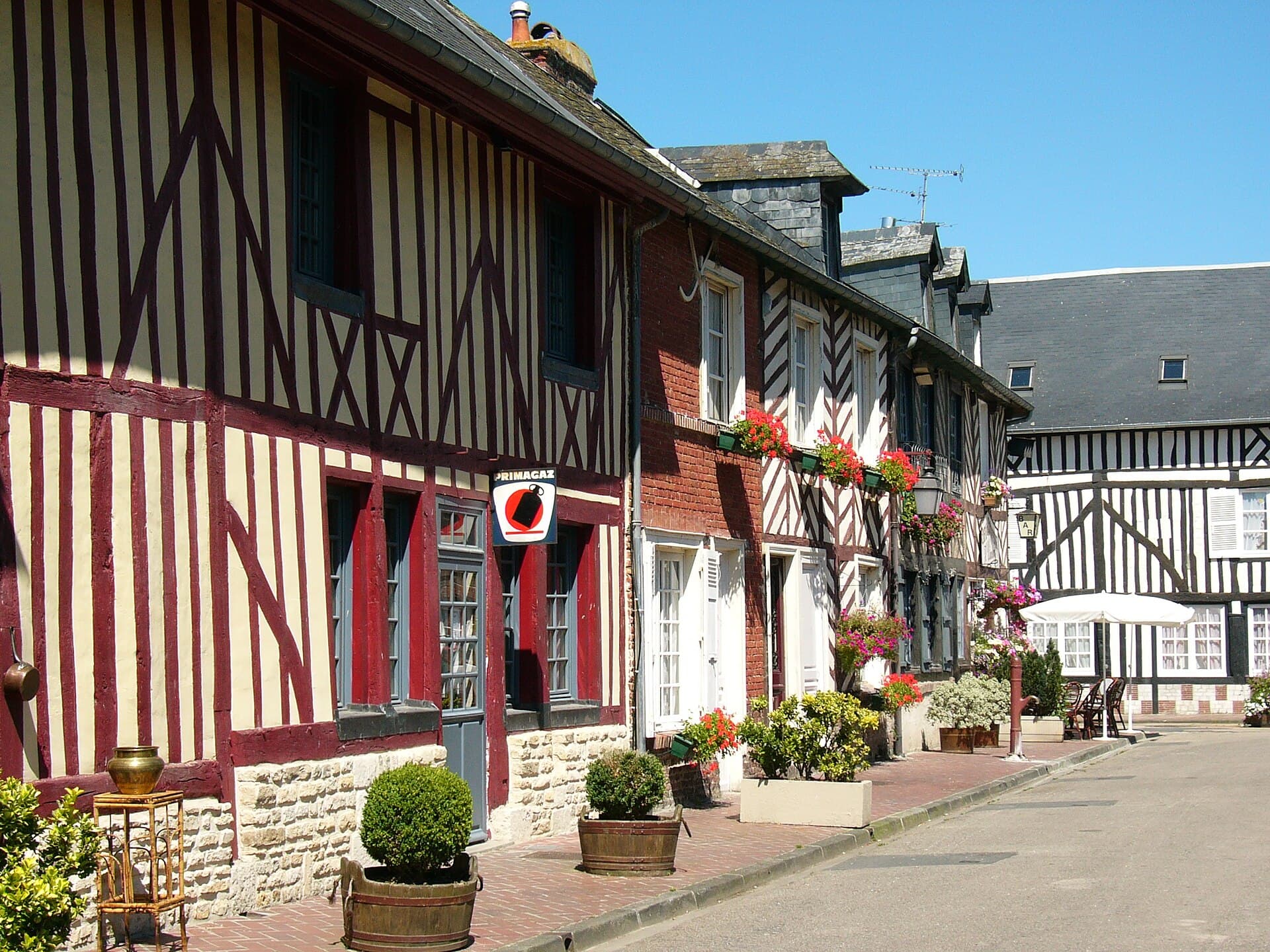 Cicero / CC BY-SA 3.0, via Wikimedia Commons
Tour de audio autoguiado de Beuvron-en-Auge — ruta GPS a pie, reproducción offline, narración en 32 idiomas.
“Donde el tiempo se ralentiza y las casas con entramado de madera cuentan sus historias.”
No las postales. Las historias que ni los locales conocen — al oído, justo donde ocurrieron.
Esta acogedora posada del siglo XVIII guarda un secreto sobre la casi desaparición del pueblo.
La plaza central, ahora llena de actividad, fue una vez un escenario muy diferente.
El origen del nombre de Beuvron revela una sorprendente conexión con un residente que alguna vez fue común.
Descubre todos los secretos de Beuvron-en-Auge
Cada dirección, cada revelación al completo — a tu oído, justo donde ocurrió.
Eliges tus paradas. Caminas. La voz te revela lo que los demás ignoran.
Tu tour de audioguía por Beuvron-en-Auge te espera — elige tus lugares, tu idioma y empieza al llegar.
ComprarLume incluye una guía de realidad aumentada. Levanta el móvil y su cámara muestra la calle que tienes delante, con una flecha luminosa sobre la imagen real que siempre apunta a tu próxima parada — sin mapas que descifrar, sin giros equivocados. Como todo en Lume, funciona completamente sin conexión.
Beuvron-en-Auge, un pueblo en el departamento de Calvados en Normandía, es reconocido como uno de los Pueblos Más Bonitos de Francia. Su armonía arquitectónica, caracterizada por casas con entramado de madera y una plaza central, ofrece una ventana a la vida tradicional normanda. Situado en el corazón del Pays d'Auge, el pueblo es un testimonio de una cuidadosa preservación y una próspera cultura local.
El pueblo es célebre por su carácter auténtico, con calles estrechas y una plaza central donde las casas históricas sobrevivieron a la Segunda Guerra Mundial. Beuvron-en-Auge es también una parada clave en la Ruta de la Sidra, un camino turístico claramente señalizado que muestra las tradiciones sidreras de la región y los productos locales.
Los visitantes pueden explorar talleres de artesanía y tiendas de antigüedades, o simplemente absorber el pintoresco entorno que ha atraído a artistas como David Hockney a vivir y trabajar aquí. La dedicación del pueblo a su patrimonio y su belleza natural es evidente en sus exhibiciones florales, lo que le ha valido tres flores en el concurso 'village fleuri'.
Los orígenes de Beuvron-en-Auge se remontan al siglo IX, un período marcado por las incursiones vikingas en la región. El nombre del pueblo, derivado de la palabra latina 'biber' (castor), sugiere una presencia histórica de estos animales a lo largo del río Douet. Inicialmente, una pequeña comunidad rural comenzó a desbrozar tierras para el cultivo en el siglo XII. La zona se desarrolló alrededor de un castillo feudal, aunque hoy no queda ningún rastro de él.
En 1374, Beuvron se convirtió en un feudo de la poderosa familia Harcourt a través del matrimonio, quienes poseyeron estas tierras desde 1382 hasta 1793. Esta asociación contribuyó significativamente al desarrollo del pueblo, que alcanzó su apogeo en los siglos XVII y XVIII. A finales del siglo XVIII y principios del XIX, las industrias del curtido y el tejido trajeron prosperidad a Beuvron. El siglo XIX también lo vio convertirse en un importante centro para el comercio de ganado, y el ferrocarró llegó en 1879. Muchos comerciantes y artesanos se establecieron alrededor del mercado cubierto de madera, construido en 1850 (y posteriormente demolido en 1958).
Sin embargo, a principios de la década de 1970, Beuvron-en-Auge se enfrentó a un declive, su población se redujo significativamente y muchas tiendas y talleres cerraron. El pueblo estaba a punto de quedar desierto. Afortunadamente, un residente local, Michel Vermughen, vislumbró su potencial y lideró un esfuerzo de restauración. Su sueño y determinación, combinados con el salvavidas inesperado de la cercana autopista A13, llevaron a la revitalización del pueblo. Esta iniciativa transformó Beuvron-en-Auge en el pueblo bellamente conservado que es hoy, lo que le valió la prestigiosa etiqueta de uno de los Pueblos Más Bonitos de Francia.
El estilo arquitectónico del pueblo es característico del Pays d'Auge, con casas tradicionales con entramado de madera con paredes de barro y ladrillo rojo, muchas de ellas que datan de los siglos XVII y XVIII. Los edificios notables incluyen el Vieux Manoir del siglo XVI, la Auberge de la Boule d'Or del siglo XVIII y la Iglesia de Saint-Martin, construida en 1640. El mercado cubierto en la plaza central fue restaurado utilizando técnicas y materiales de construcción tradicionales, y ahora alberga tiendas de antigüedades y un restaurante con estrella Michelin.
El compromiso de Beuvron-en-Auge con la preservación de su patrimonio es evidente en la meticulosa restauración de sus edificios y su designación como "Village de caractère du Calvados". La antigua escuela ha sido restaurada y ahora sirve como centro de artes y oficios, mostrando a los artesanos locales. El diseño armonioso del pueblo y sus exhibiciones florales bien mantenidas contribuyen a su imagen de postal.
Comience su exploración en la Place Michel Vermughen, la plaza central, donde podrá admirar el restaurado mercado cubierto con entramado de madera y las casas circundantes de los siglos XVI al XVIII. Busque el Vieux Manoir del siglo XVI, notable por sus vigas talladas y su intrincada carpintería. No pase por alto la Auberge de la Boule d'Or del siglo XVIII, una clásica antigua posada. La Iglesia de Saint-Martin, construida en 1640, presenta un altar mayor del siglo XVIII y un órgano polifónico.
Pasee por la Rue des Petits Prés, bordeada de antiguas casas cuidadosamente restauradas. Visite el Centro de Artes y Oficios, ubicado en la antigua escuela, donde podrá encontrar ceramistas, carpinteros, cuchilleros y pintores de porcelana. Beuvron-en-Auge es también una puerta de entrada a la Ruta de la Sidra, una ruta turística de 40 km donde podrá visitar a productores locales y degustar sidra y Calvados. Para una vista panorámica, suba un poco hasta el mirador desde la carretera de Clermont, que ofrece una panorámica del pueblo y sus verdes alrededores.
Más allá del pueblo, considere un paseo en bicicleta hasta la Capilla de las Forges de Clermont, un circuito fácil de 21 km por el campo. La Capilla de Saint-Michel de Clermont-en-Auge, construida en el siglo XII en estilo románico, también merece una visita, ofreciendo vistas del Valle del Dives.
Las mejores épocas para visitar Beuvron-en-Auge son mayo, junio, septiembre y octubre, cuando el clima es generalmente agradable y las multitudes de verano son menos intensas. La primavera es ideal para ver los manzanos en flor y experimentar la feria de los geranios a principios de mayo, que celebra las exhibiciones florales del pueblo. El otoño trae el Festival anual de la Sidra a finales de octubre, que ofrece la oportunidad de presenciar el prensado de manzanas y degustar diversas sidras. Si bien julio y agosto ofrecen el clima más cálido, el pueblo puede estar abarrotado, por lo que es aconsejable llegar temprano por la mañana.
Beuvron-en-Auge se encuentra en el departamento de Calvados en Normandía, a unos 25 kilómetros al este de Caen y a 2 horas de París en coche. Hay aparcamiento gratuito en el aparcamiento de la Halle y en el aparcamiento del Pressoir. La Oficina de Turismo se encuentra en la Place Michel Vermughen y está abierta todos los días en temporada (de abril a octubre) de 10 a 18 horas, y los fines de semana y festivos de noviembre a marzo. Un mercado tradicional tiene lugar los sábados por la mañana bajo el mercado cubierto.
El pueblo ofrece varios restaurantes y tiendas de antigüedades, particularmente alrededor de la plaza central. Las opciones de alojamiento incluyen bed and breakfasts en las antiguas casas del pueblo y hoteles cercanos. Se ofrecen visitas guiadas al pueblo, que brindan información sobre su historia y arquitectura, y algunas incluso brindan acceso a patios privados. El pueblo es fácilmente transitable a pie, con un circuito patrimonial que dura aproximadamente una hora.
Beuvron-en-Auge en coreano, en chino o en hebreo — y 29 idiomas más, cada parada narrada por una voz nativa. La mayor variedad de idiomas de cualquier audioguía autoguiada.
Disponible en: