Rue de l'Ancienne Poste
This seemingly ordinary street once hosted Hollywood royalty.
Full story unlocks in the tour
 Chensiyuan / CC BY-SA 4.0, via Wikimedia Commons
Self-guided audio walking tour of Beynac-et-Cazenac — GPS route, offline playback, story-driven narration in 32 languages.
“Where golden stone cliffs meet the winding Dordogne, a medieval dream endures.”
Not the postcards. The stories even locals don't know — whispered in your ear, right where they happened.
This seemingly ordinary street once hosted Hollywood royalty.
Beyond its formidable defenses, an artistic treasure awaits.
The seemingly placid waters of the Dordogne hold a secret about their purity.
Discover every secret of Beynac-et-Cazenac
Every address, every reveal in full — in your ear, right where it happened.
You pick your stops. You walk. The voice reveals what the others miss.
Your self-guided audio tour of Beynac-et-Cazenac is ready — pick your landmarks, choose your language, and start the moment you arrive.
BuyLume has a built-in augmented-reality guide. Hold your phone up and its camera shows the street ahead of you, with a glowing arrow laid over the real view that always points to your next stop — no map to puzzle over, no wrong turns. Like everything in Lume, it works fully offline.
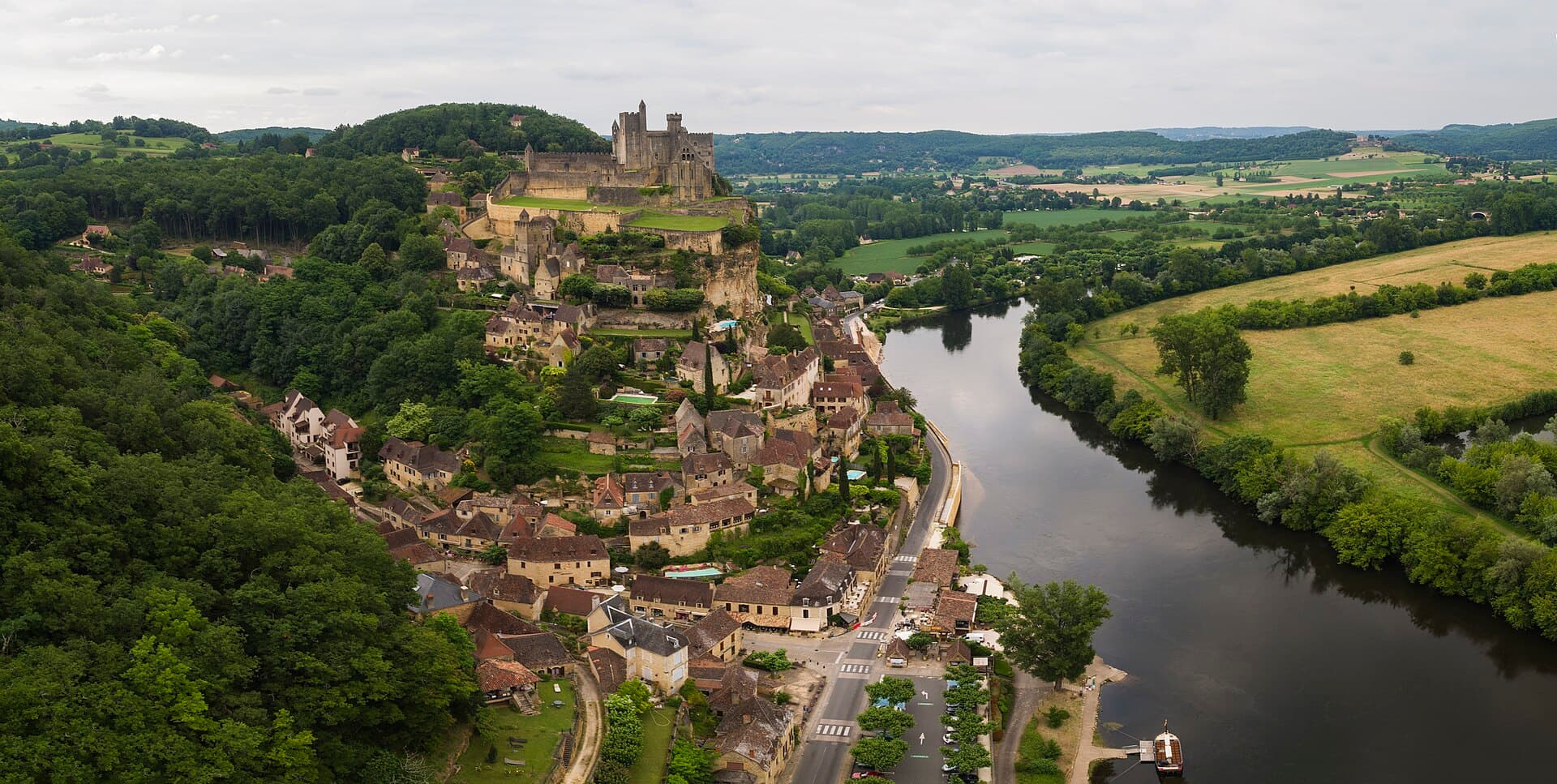
Beynac-et-Cazenac, often simply called Beynac, is a village in the Dordogne department of southwestern France, consistently listed among "Les Plus Beaux Villages de France" (The Most Beautiful Villages of France). It clings dramatically to a limestone cliff face, with its formidable 12th-century château surveying the winding Dordogne River below. The village's honey-colored stone houses, topped with traditional slate roofs, cascade down the steep hillside, connected by narrow, stone-paved streets that invite exploration.
This perfectly preserved medieval site offers more than just picturesque views; it's a journey back in time. The strategic location, with the sheer cliff protecting one side and extensive defenses on the others, made it a crucial stronghold throughout history. From its Bronze Age origins, when Gauls controlled the river's wine trade, to its pivotal role in the Hundred Years' War, Beynac-et-Cazenac has witnessed centuries of human activity and conflict.
The history of Beynac-et-Cazenac stretches back to the Bronze Age, with archaeological evidence indicating human settlement on the rocky promontory as early as the 8th century BCE. The Gauls later utilized this strategic location to control the wine trade flowing from Italy along the Dordogne River. The village's recorded history begins in 1115, when Maynard de Beynac made a significant gift to the sisters at Fontevrault Abbey.
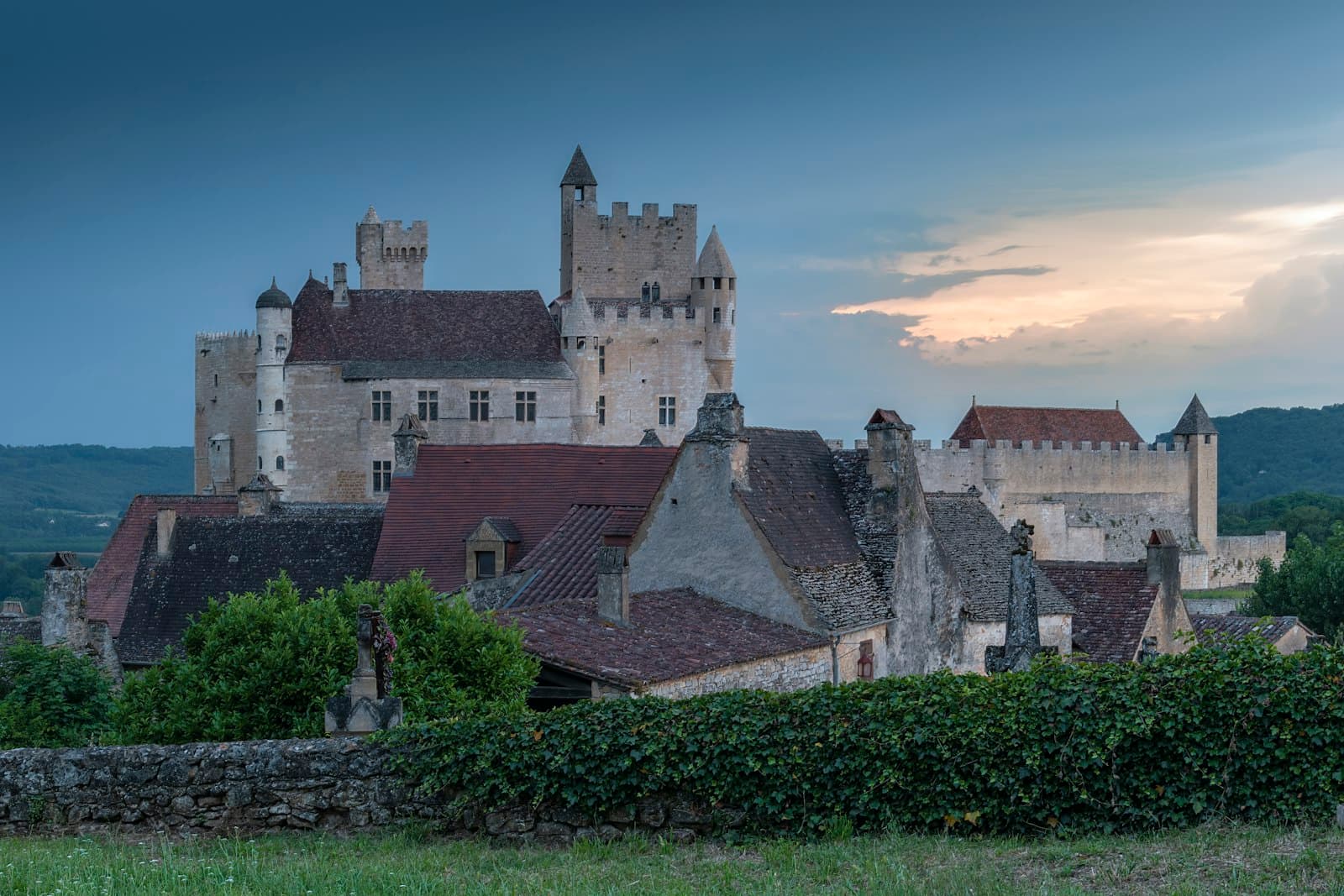
The imposing Château de Beynac, which dominates the village, was constructed in the 12th century by the barons of Beynac, one of the four baronies of Périgord. Its primary purpose was to guard the valley and the vital river trade route. The castle's defenses were formidable, with a sheer cliff face deterring assaults from the river side, complemented by double crenellated walls, double moats (one a deepened natural ravine), and a double barbican on the plateau. In 1194, with the death of Seigneur Ademar de Beynac without a direct heir, the castle came under the control of Richard the Lionheart, King of England and Duke of Aquitaine. He entrusted it to his loyal knight Mercadier, though it eventually returned to the Beynac family after Mercadier's assassination in 1200.
The 14th and 15th centuries saw Beynac-et-Cazenac become a crucial French stronghold during the Hundred Years' War. The Dordogne River formed a tense frontier, with Beynac facing its English-held rival, Château de Castelnaud, directly across the water. This period was marked by constant rivalries and clashes for dominance over the region. In the 15th century, Beynac prospered as a barony, but the 16th century brought hardship during the Wars of Religion, with the village experiencing poverty and peasant revolts. Calm returned in the 17th century, and the barony was elevated to a Marquisate by the King of France. The commune's name, Beynac-et-Cazenac, reflects the 1827 annexation of nearby Cazenac. Today, the village stands as a remarkably preserved example of medieval architecture, its history etched into its stone walls and winding lanes.
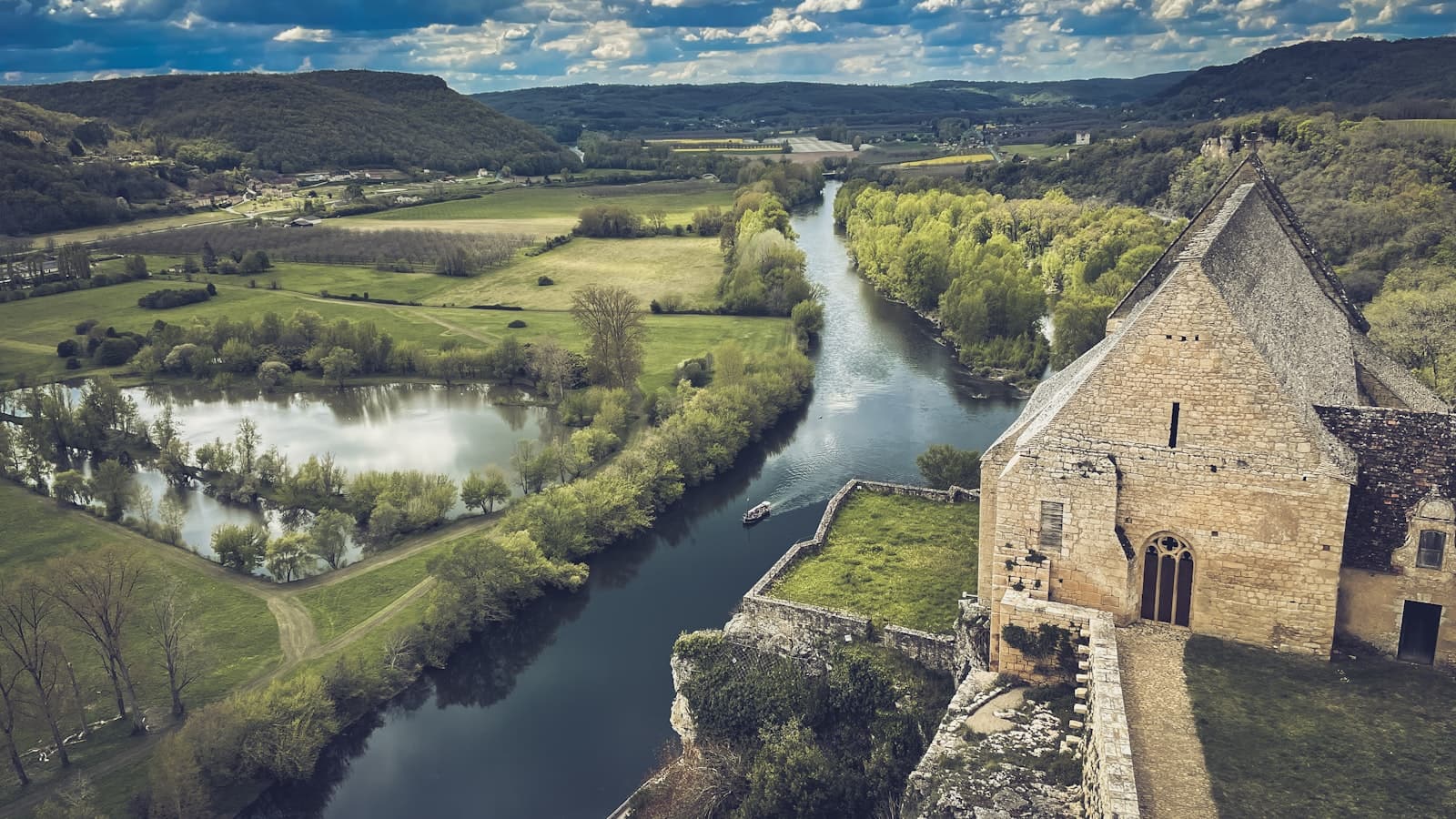
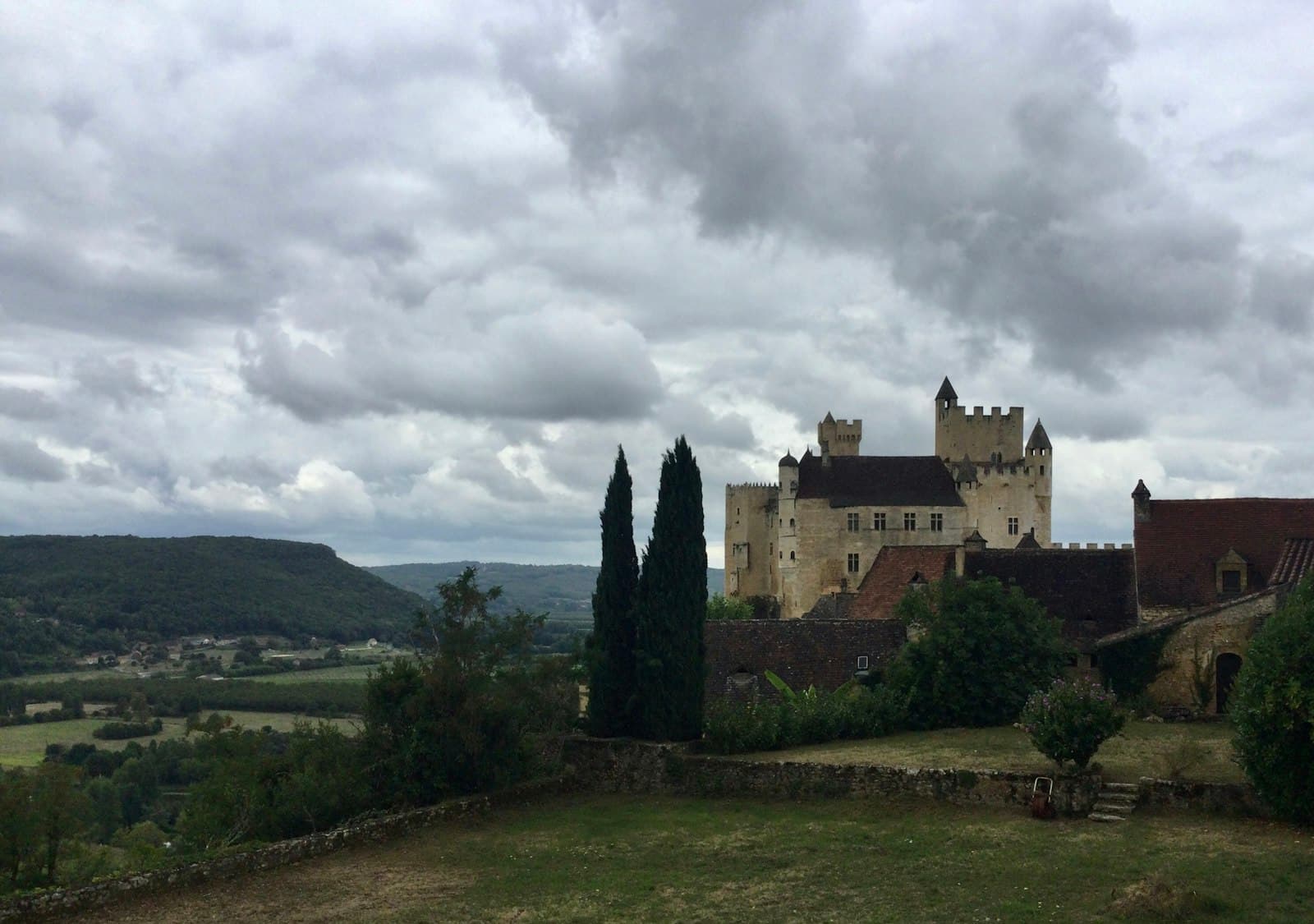
The undeniable focal point of Beynac-et-Cazenac is the Château de Beynac, a formidable 12th-century fortress set atop a 200-meter (656-foot) limestone cliff. Explore its Romanesque keep, guard rooms, fortified towers, and the private apartments from the 16th and 17th centuries, which feature period furniture and a painted walnut fireplace. From the castle's terrace, experience wide views of the Dordogne Valley and the surrounding landscape, including rival castles like Castelnaud.
Below the château, the village itself is a delight to explore. Wander through the narrow, stone-paved streets lined with medieval stone houses, many adorned with vines. Discover small shops, cafés, and restaurants offering regional food and wine. Do not miss the small oratory next to the castle, which houses 15th-century frescoes. For a different perspective, take a traditional gabare (flat-bottomed wooden boat) tour on the Dordogne River, offering views of the village and its castle from the water. Canoe and kayak rentals are also available for those wishing to paddle the gentle river.
The most favorable time to visit Beynac-et-Cazenac is between April and October, when the weather is pleasant, with temperatures ranging from 19°C (65°F) to 28°C (83°F). During these months, you're more likely to experience clear, sweeping views from the castle's terraces. While July and August offer warm weather for river activities like canoeing, they can also be the busiest months. Late spring (May-June) and early fall (September-October) strike a balance with good weather and fewer crowds.
Beynac-et-Cazenac is easily accessible, located in the heart of the Périgord Noir, a short drive from Sarlat-la-Canéda. There are several parking areas along the main road at the base of the village, and additional parking is available at the top, near the Château de Beynac entrance, for those who prefer not to walk the steep streets. The Château de Beynac is open daily, year-round, without the need for reservations. Admission fees vary, with children under 10 typically entering for free. Free guided tours are sometimes offered by the local tourist office during peak season. The village has small shops and terraces for refreshments.
Beynac-et-Cazenac in Korean, in Chinese or in Hebrew — and 29 more languages, every stop narrated by a native voice. The widest language range of any self-guided audio tour.
Available in: