The Bullring (Plaza de Toros)
Bocairent's bullring isn't just old; it's a testament to ingenuity born from an economic downturn.
Full story unlocks in the tour
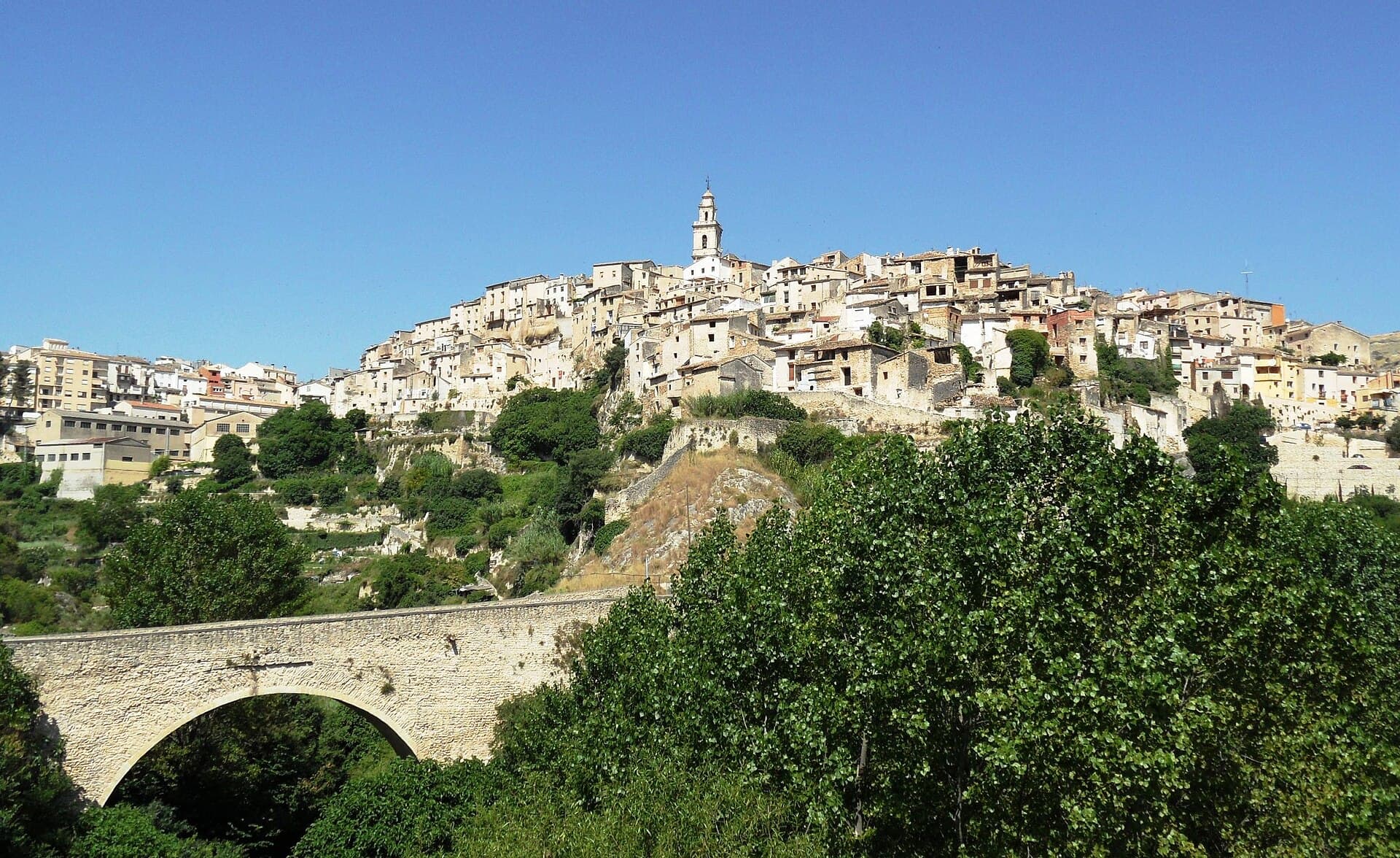 Enrique Íñiguez Rodríguez (Qoan) / CC BY-SA 3.0, via Wikimedia Commons
Self-guided audio walking tour of Bocairent — GPS route, offline playback, story-driven narration in 32 languages.
“Where ancient stones whisper secrets and the mountains hold unexpected depths.”
Not the postcards. The stories even locals don't know — whispered in your ear, right where they happened.
Bocairent's bullring isn't just old; it's a testament to ingenuity born from an economic downturn.
These enigmatic cave dwellings, resembling a honeycomb on a cliff face, have long prompted historians to ponder their original purpose.
Before modern refrigeration, Bocairent maintained a surprising industry that relied on the cool mountain air.
Discover every secret of Bocairent
Every address, every reveal in full — in your ear, right where it happened.
You pick your stops. You walk. The voice reveals what the others miss.


Your self-guided audio tour of Bocairent is ready — pick your landmarks, choose your language, and start the moment you arrive.
BuyLume has a built-in augmented-reality guide. Hold your phone up and its camera shows the street ahead of you, with a glowing arrow laid over the real view that always points to your next stop — no map to puzzle over, no wrong turns. Like everything in Lume, it works fully offline.
Bocairent, a captivating village in the Valencia Region of Spain, appears almost as an extension of the rugged Sierra de Mariola mountains it calls home. Its venerable old town, recognized as a national historical site, is a maze of steep, winding streets and stone houses that seem to cling to the rocky outcrop. This singular integration with the landscape imparts Bocairent a timeless quality, inviting visitors to slow their pace and explore its many layers of history and natural allure.
Often called a "living stone" village, Bocairent's architecture and urban layout reflect its ancient origins, particularly its strong Arab influence. The town's appeal lies not merely in its preserved medieval character but also in the tangible sense of a community that has lived and adapted to its dramatic surroundings for centuries. From its iconic cave dwellings to its rock-carved bullring, Bocairent offers a journey through time where every corner reveals a story.
Beyond its architectural marvels, Bocairent is a destination that appeals to both history enthusiasts and nature lovers. It serves as a gateway to the Sierra de Mariola Natural Park, providing opportunities for hiking and experiencing the region's diverse flora. The blend of cultural heritage, authentic local life, and striking natural scenery makes Bocairent a memorable and immersive experience.
Human presence in the Bocairent area extends to prehistoric times, with Neolithic remains uncovered in local caves such as Vinalopó and Sarsa. Later, Iberian settlements dotted the hilltops, and the Romans left their imprint with various villas in the valley. However, the most flourishing and enduring period in Bocairent's early history was the Islamic era. The town, then known as Bekiren or Bukayran, was established by the Moors and belonged to the Taifa of Dénia after the fragmentation of the Caliphate of Córdoba. The distinct layout of Bocairent's medieval quarter, with its narrow, winding streets and houses built into the rock, is a direct legacy of this Arab period.
In 1245, Bocairent was conquered by the forces of King James I of Aragon and incorporated into the Kingdom of Valencia. This transition saw mosques transformed into churches, yet much of the town's unique character, shaped by its Moorish roots, persisted. In 1418, Bocairent was declared a Royal Town, and in 1587, King Philip II bestowed upon it the title of Royal Wool Cloth Factory. This designation brought a Book of Privileges, outlining corporate regulations for its textile industry, an activity that significantly contributed to the town's economy for centuries. The textile trade, particularly the manufacturing of wool blankets, was a specialty of Bocairent until the late 20th century.
The town's history is also marked by remarkable feats of engineering and adaptation to its rocky terrain. The celebrated Covetes dels Moros, a complex of artificial caves carved into a cliff face, are believed to have been utilized for storage during the Moorish period. Similarly, the Cava de Sant Blai, an ice cave, stands as evidence of a bygone industry that harvested and stored snow for commercial use. Even the Bocairent Bullring, inaugurated in 1844, is a singular historical artifact, being the oldest in the Valencian Community and largely excavated from solid rock. These rock-hewn structures underscore Bocairent's enduring relationship with its geological environment and the inventiveness of its inhabitants throughout the ages.
Bocairent offers a concentrated experience of history and natural wonder. Begin your exploration in the historic old town, a designated national historical site. Wander through its steep, narrow, and winding streets, admiring the traditional stone houses and the medieval atmosphere. The town's layout, with houses appearing to hang from the ravine, is a direct link to its Arab past.
A highlight is the Covetes dels Moros (Moorish Caves), a fascinating complex of approximately 50 artificial cave-windows carved into a cliff face, just 300 meters from the old quarter. These chambers, accessible through window-like openings, offer a glimpse into ancient storage practices.
Do not overlook the Cava de Sant Blai (Ice Cave), a large underground structure used for centuries to store snow and ice. The cool interior provides a tangible connection to a historical industry. The Plaza de Toros (Bullring) is another architectural marvel, notable for being the oldest in the Valencian Community and largely carved directly from rock.
For expansive views, seek out the Bocairent Viewpoint or walk up to Ermita de Santo Cristo, a hilltop chapel that offers sweeping vistas of the town and surrounding Sierra de Mariola. The Parish Church of the Assumption of Our Lady, built in 1516 on the ruins of a Moorish alcazar and later renovated in Baroque style, also features frescoes sometimes referred to as the 'Little Sistine Chapel'.
Consider a walk along the Magic Route or a visit to the Pou Clar pools, natural mountain springs where you can enjoy a refreshing dip.
The most favorable times to visit Bocairent are during the spring (April to June) and autumn (September to November). During these months, the weather is mild and pleasant, ideal for exploring the town's historic sites and enjoying outdoor activities like hiking. Summers in Bocairent (June to September) are short, warm, and mostly clear, with average daily highs around 84°F (29°C) in August. Winters (November to March) are longer, cold, and partly cloudy, with January being the coldest month, averaging a high of 54°F (12°C) and a low of 34°F (1°C). While dry year-round, October typically sees the most rainfall.
Bocairent is approximately 95 km from Valencia. The most convenient way to reach the town is by car, with a journey taking about 1.5 hours from Valencia via the A-31 towards Alcoi, then local roads CV-81 and CV-795. Alternatively, you can take a train from Valencia to Ontinyent and then a taxi or bus to Bocairent. The historic center of Bocairent is pedestrianized, so access by car is restricted. Parking areas are available on Batalla de Lepanto Street and Joaquin Sorolla Street.
Comfortable, closed, and tied footwear is highly recommended, especially for exploring the Covetes dels Moros, where some physical effort is required, including walking on your knees for significant portions of the visit. Access to the Moorish Caves is not suitable for individuals with claustrophobia, vertigo, pregnant women, or babies (0-3 years old). Many locals in Bocairent understand basic English, particularly in tourist areas, but learning a few basic Spanish phrases can be helpful.
Bocairent in Korean, in Chinese or in Hebrew — and 29 more languages, every stop narrated by a native voice. The widest language range of any self-guided audio tour.
Available in: