Château de Malaspina
Un marquis, dévoré par une jalousie amoureuse, aurait pris des mesures extrêmes pour soustraire son épouse aux regards du public.
L'histoire complète se débloque dans le tour
 Zsuzsanna Tóth / cc0, via Wikimedia Commons
Visite audio autoguidée de Bosa — parcours GPS à pied, lecture hors ligne, narration en 32 langues.
“Là où une rivière serpente et les couleurs s'élèvent jusqu'au château.”
Pas les cartes postales. Les histoires que même les habitants ignorent — soufflées à l'oreille, là où elles se sont passées.
Un marquis, dévoré par une jalousie amoureuse, aurait pris des mesures extrêmes pour soustraire son épouse aux regards du public.
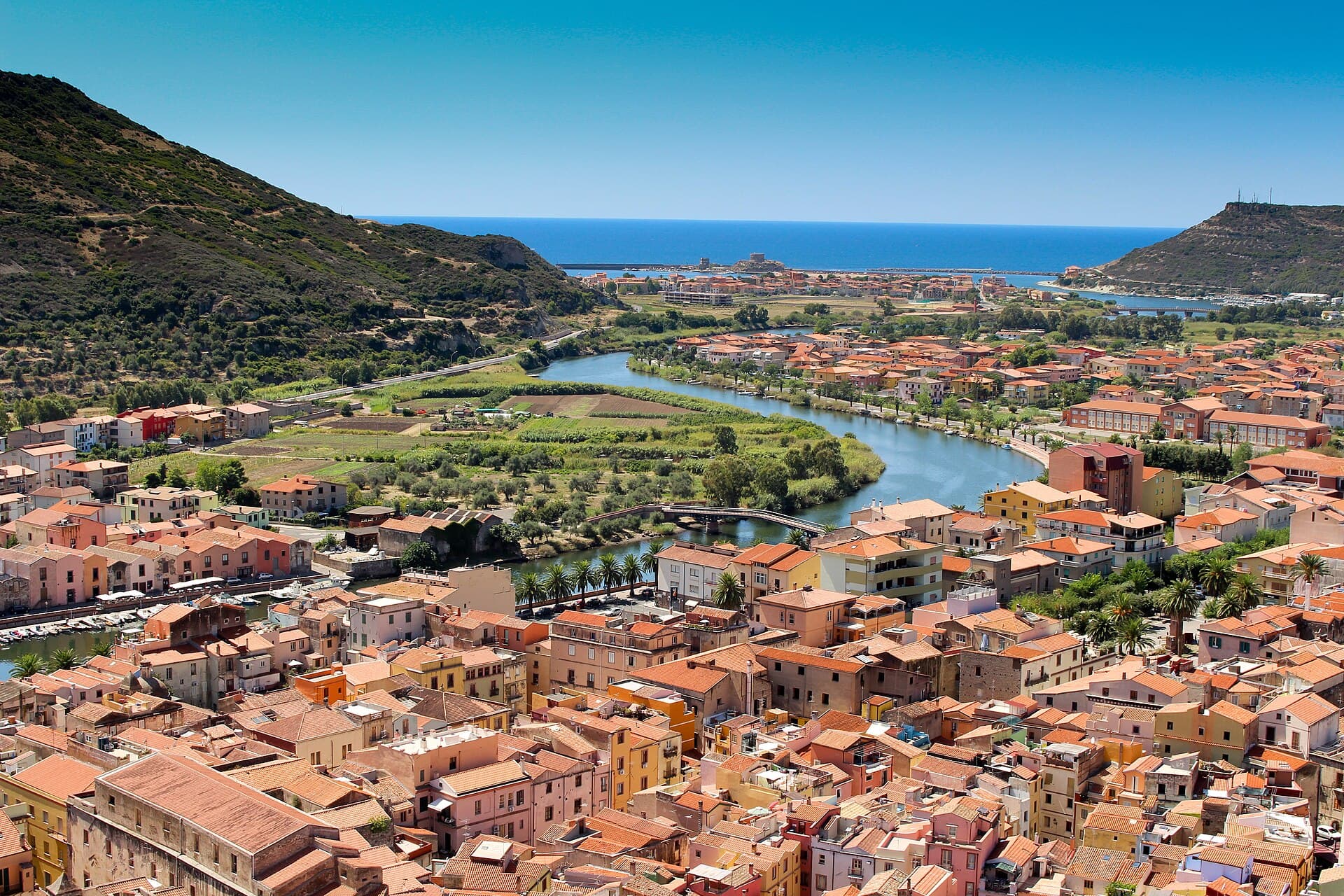
La palette colorée des maisons de Bosa n'est pas qu'une question d'esthétique ; il y a une raison pratique, et peut-être légèrement conspiratrice, derrière tout cela.
Bosa jouit d'une distinction unique en Sardaigne, grâce à la voie navigable qui traverse son cœur.
Découvrez tous les secrets de Bosa
Chaque adresse, chaque révélation en entier — dans ton oreille, là où elle s'est passée.
Tu choisis tes lieux. Tu marches. La voix te révèle ce que les autres ignorent.


Votre visite audioguidée de Bosa vous attend — choisissez vos lieux, votre langue, et lancez-vous dès votre arrivée.
AcheterLume intègre un guide en réalité augmentée. Levez votre téléphone : sa caméra montre la rue devant vous, avec une flèche lumineuse posée sur l'image réelle qui pointe toujours vers votre prochain arrêt — aucune carte à déchiffrer, aucun mauvais virage. Comme tout dans Lume, ça fonctionne entièrement hors-ligne.
Bosa, une toile colorée sur la côte ouest de la Sardaigne, se déploie le long des rives du fleuve Temo, la seule voie navigable de l'île. Cette ville saisissante présente un spectacle de maisons aux couleurs pastel qui escaladent les pentes de la colline de Serravalle, culminant au-dessus de l'ancien château de Malaspina. Son cadre fluvial unique, à une courte distance de la mer, offre un mélange captivant d'histoire, de culture et de beauté naturelle, en faisant une destination distinctive en Sardaigne.
Explorer Bosa, c'est flâner dans les ruelles labyrinthiques de son centre historique, connu sous le nom de Sa Costa, où chaque tournant révèle des boutiques d'artisans et de charmants cafés. Le caractère de la ville est encore enrichi par ses traditions culinaires, avec des fruits de mer frais et le célèbre vin Malvasia di Bosa. Contrairement à certains des centres touristiques plus animés de la Sardaigne, Bosa offre une expérience plus lente et plus authentique, invitant les visiteurs à s'immerger dans le rythme et l'histoire locaux sans les grandes foules.
## Origines Anciennes et Influence Romaine L'histoire de Bosa remonte à des temps préhistoriques et protohistoriques, comme en témoignent de nombreuses domus de janas (grottes funéraires creusées dans la roche) et structures Nuraghe dans les environs. Les Phéniciens auraient fondé l'établissement original et son port, suivis par les Puniques de Carthage. Sous la domination romaine, Bosa, alors située sur la rive gauche du fleuve Temo près de l'actuelle église de San Pietro Extramuros, devint un municipium et connut un développement significatif grâce à son port.
## Épanouissement Médiéval et Règle des Malaspina Au début du Moyen Âge, Bosa était une capitale provinciale dans le cadre du Giudicato de Logudoro. Cependant, des raids répétés de pirates arabes entraînèrent l'abandon du site original, et la ville fut reconstruite à son emplacement actuel vers le XIe siècle. La ville actuelle commença véritablement à prendre forme au XIIIe siècle avec la construction du château de Malaspina, également connu sous le nom de Castello di Serravalle, par la noble famille Malaspina. Cette forteresse stratégique, positionnée sur la colline de Serravalle, offrait une position défensive inégalée et projetait sa puissance sur la région. La population se déplaça progressivement du bord de mer vers les collines, se regroupant autour du château.
## Époques Aragonaise, Espagnole et Industrielle Bosa resta sous le contrôle des Malaspina jusqu'au XIVe siècle, date à laquelle elle fut reprise par la Couronne d'Aragon. Pendant une brève période, elle fit également partie du Giudicato d'Arborea. Avec le reste de la Sardaigne, Bosa tomba plus tard sous la domination espagnole, période durant laquelle elle devint la capitale de la Planargia au XVIe siècle. La ville connut ensuite un déclin économique, ce qui, ironiquement, contribua à préserver son centre historique. Du XVIIe au XXe siècle, Bosa devint un centre important pour le tannage du cuir. Les anciennes tanneries, connues sous le nom de Sas Conzas, bordaient le fleuve Temo et furent déclarées Monument National en 1989. L'industrie du tannage, cependant, cessa finalement au milieu du XXe siècle en raison de sa nature insalubre, ouvrant la voie à la vocation touristique moderne de Bosa.
Commencez votre exploration dans le quartier de Sa Costa, le centre historique de Bosa, caractérisé par ses maisons colorées aux teintes pastel qui grimpent à flanc de colline. Flânez dans ses rues étroites et sinueuses et ses escaliers, découvrant des boutiques d'artisans et l'architecture traditionnelle sarde.
Montez au Château de Malaspina (Castello di Serravalle), qui domine la ville d'en haut. L'ascension offre de larges vues sur Bosa, le fleuve Temo et la côte. À l'intérieur des murs du château, visitez l'Église de Nostra Signora de Sos Regnos Altos, qui abrite d'importantes fresques du XIVe siècle.
Promenez-vous le long du fleuve Temo, le seul fleuve navigable de Sardaigne. Les rives sont bordées de palmiers et offrent des vues pittoresques sur les maisons colorées se reflétant dans l'eau. Traversez le Ponte Vecchio, un vieux pont en trachyte rouge, pour certains des meilleurs points de vue photographiques de la ville. Sur la rive gauche du fleuve, vous trouverez les Anciennes Tanneries (Sas Conzas), un complexe d'architecture proto-industrielle aujourd'hui reconnu comme monument national, avec un bâtiment abritant le Museo delle Conce.
Parmi les autres sites remarquables, citons la Cathédrale de l'Immaculée Conception dans la partie basse de la ville, et l'ancienne Église de San Pietro Extramuros, l'une des plus anciennes églises romanes de Sardaigne, située juste à l'extérieur de la ville. Pour un avant-goût de la culture locale, envisagez une dégustation de vin Malvasia dans l'une des caves. Si le temps le permet, faites une excursion en bateau sur le fleuve Temo ou explorez la plage voisine de Bosa Marina et les piscines naturelles de Cane Malu.
La meilleure période pour visiter Bosa est pendant les mois de printemps (avril-mai) et d'automne (septembre-octobre). Ces périodes offrent des températures douces et moins de foule que la haute saison estivale. Mai, juin et septembre sont particulièrement idéaux pour un temps agréable et une expérience locale authentique. Pour les activités par temps chaud comme la baignade et les journées à la plage, de fin juin à début septembre est le meilleur moment, avec des températures diurnes moyennes atteignant jusqu'à 30°C (86°F) en août. Les hivers sont doux mais peuvent être plus pluvieux, avec des températures allant de 7°C à 14°C (45°F à 57°F). Évitez le milieu de journée en août si vous êtes sensible à la chaleur, car les températures peuvent dépasser 38°C (100°F). Le carnaval en février peut être très fréquenté, avec des hébergements entièrement réservés.
Le centre historique de Bosa est mieux exploré à pied, ce qui vous permet d'apprécier pleinement ses rues étroites et son architecture colorée. Pour vous rendre à Bosa Marina ou sur d'autres plages voisines, des bus locaux sont disponibles, bien que les horaires puissent être limités. Louer une voiture offre la plus grande flexibilité pour explorer la région plus large de la Sardaigne, y compris les routes côtières panoramiques comme celle entre Bosa et Alghero.
Les options d'hébergement à Bosa vont des charmants B&B dans le centre historique aux hôtels à Bosa Marina. Passer la nuit dans la vieille ville peut offrir une expérience plus magique après le départ des excursionnistes. Il est fortement recommandé de réserver à l'avance, surtout pendant les mois d'été. Attendez-vous à des prix pour les B&B familiaux d'environ 60-120€ par nuit, incluant souvent un petit-déjeuner local. Bosa est généralement considérée comme une ville très sûre avec de faibles taux de criminalité. La langue officielle est l'italien, mais le sarde est également parlé, et l'anglais est courant dans les zones touristiques. La monnaie est l'euro (€).
Bosa en coréen, en chinois ou en hébreu — et dans 29 autres langues, chaque étape narrée par une voix native. La plus large gamme de langues de tous les audioguides autoguidés.
Disponible en :