Jetée de Busselton
Cette monumentale structure en bois, s'étendant sur près de deux kilomètres, n'a pas toujours été uniquement dédiée aux promenades et à l'observation sous-marine.
L'histoire complète se débloque dans le tour
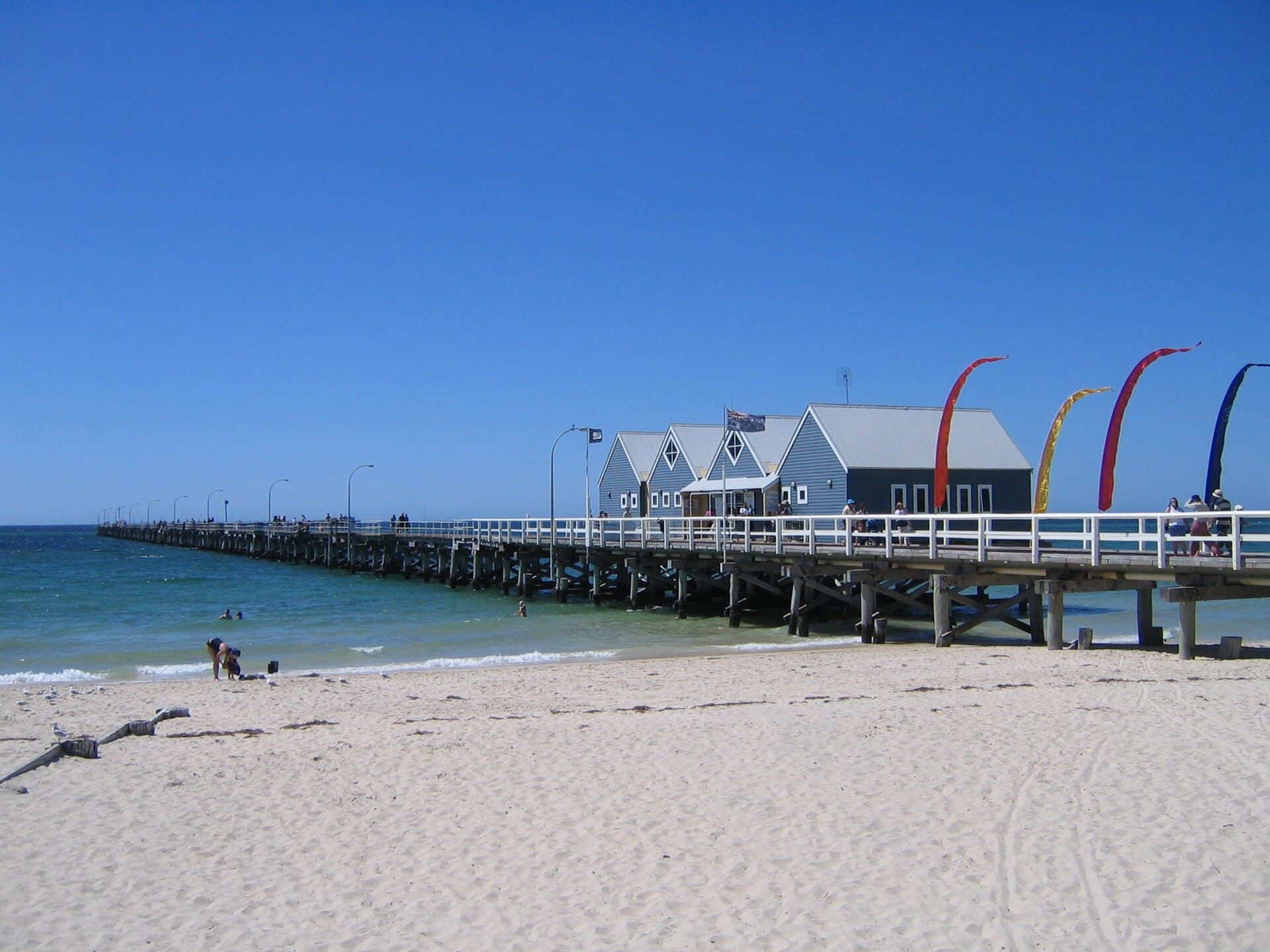 Photograph by Greg O'Beirne / CC BY 2.5, via Wikimedia Commons
Visite audio autoguidée de Busselton — parcours GPS à pied, lecture hors ligne, narration en 32 langues.
“Là où le plus long ponton en bois rencontre des histoires anciennes et l'attrait côtier.”
Pas les cartes postales. Les histoires que même les habitants ignorent — soufflées à l'oreille, là où elles se sont passées.
Cette monumentale structure en bois, s'étendant sur près de deux kilomètres, n'a pas toujours été uniquement dédiée aux promenades et à l'observation sous-marine.
Au-delà de sa façade digne, ce complexe classé au patrimoine contient plus que de simples documents juridiques.
Le nom d'une rivière locale proéminente suggère un récit dramatique, presque oublié, des premières explorations françaises.
Découvrez tous les secrets de Busselton
Chaque adresse, chaque révélation en entier — dans ton oreille, là où elle s'est passée.
Tu choisis tes lieux. Tu marches. La voix te révèle ce que les autres ignorent.


Votre visite audioguidée de Busselton vous attend — choisissez vos lieux, votre langue, et lancez-vous dès votre arrivée.
AcheterLume intègre un guide en réalité augmentée. Levez votre téléphone : sa caméra montre la rue devant vous, avec une flèche lumineuse posée sur l'image réelle qui pointe toujours vers votre prochain arrêt — aucune carte à déchiffrer, aucun mauvais virage. Comme tout dans Lume, ça fonctionne entièrement hors-ligne.
Busselton, une ville côtière de la région du sud-ouest de l'Australie-Occidentale, repose sur les rives sereines de Geographe Bay, à environ 220 kilomètres au sud-ouest de Perth. Connue sous le nom d'Undalup dans la langue Noongar, d'après le guerrier et chef Wadandi Undal, cette terre est le foyer du peuple Wadandi depuis plus de 40 000 ans, qui maintient une connexion profonde avec la terre et l'océan.
La ville est principalement reconnue pour sa monumentale jetée de Busselton, le plus long ponton en bois de l'hémisphère sud, s'étendant sur une impressionnante distance de 1,8 kilomètre dans Geographe Bay. Ce remarquable point de repère, avec son Observatoire sous-marin, offre un aperçu unique de la vie marine sous les vagues. Au-delà de la jetée, Busselton sert de porte d'entrée à la célèbre région viticole de Margaret River, présentant un mélange de splendeur naturelle, de profondeur historique et d'une culture locale animée.
Avec son climat méditerranéen, Busselton a longtemps été une destination de vacances prisée des habitants de l'Australie-Occidentale, évoluant d'un port de bois et agricole à un centre touristique florissant. Le front de mer de la ville est une zone animée avec des boutiques, des restaurants et un calendrier rempli d'événements, invitant les visiteurs à explorer ses offres de plein air, des pistes cyclables aux plages immaculées.
La terre où se trouve Busselton, connue sous le nom de Wadandi Boodja, est le foyer ancestral du peuple Wadandi Noongar depuis au moins 40 000 ans. Leur culture est profondément liée à la terre et à la mer, avec des lieux de sépulture traditionnels trouvés dans les dunes côtières entre l'estuaire de Vasse-Wonnerup et Geographe Bay. Le nom aborigène de Busselton est Undalup, en l'honneur du guerrier et chef Undal.
L'exploration européenne de la région a commencé en 1801 avec l'expédition française dirigée par Nicolas Baudin, qui a nommé Geographe Bay et Cape Naturaliste d'après ses navires. La rivière Vasse a été nommée d'après Thomas Vasse, un marin perdu en mer pendant l'expédition. Les premiers colons européens permanents, la famille Bussell, sont arrivés en 1832, s'installant initialement à Augusta avant de déménager dans la région de la rivière Vasse et d'établir une station d'élevage de bétail appelée Cattle Chosen. La ville a été officiellement arpentée en 1837 et nommée Busselton en l'honneur de la famille Bussell en 1835, bien qu'ils aient préféré le nom de Capel.
Au cours de ses premières décennies, l'économie de Busselton était tirée par l'exploitation forestière, l'élevage de bétail et la chasse à la baleine, les baleiniers américains visitant fréquemment Geographe Bay. Pour remédier aux eaux peu profondes de la baie, la construction de la jetée de Busselton a commencé en 1865. Commençant à 161 mètres, elle a été prolongée plusieurs fois au fil des décennies, atteignant sa longueur actuelle de 1,8 kilomètre dans les années 1960, ce qui en fait le plus long ponton en bois de l'hémisphère sud. La jetée a joué un rôle crucial dans l'exportation de bois et de produits agricoles, transformant Busselton en un port important.
Les années 1850 ont vu l'arrivée de condamnés à Busselton, contribuant à l'industrie du bois. Le premier chemin de fer d'Australie-Occidentale, une ligne de bois privée, a été construit à Lockville, près de Busselton, en 1871. La ville a continué de croître, en particulier avec le Group Settlement Scheme entre 1923 et 1926, qui a amené de nombreux colons britanniques dans la région pour l'agriculture. Le port de Busselton a officiellement fermé en 1972. Aujourd'hui, Busselton est devenue un centre de services majeur et une destination touristique populaire, reconnue pour sa jetée et comme porte d'entrée de la région viticole de Margaret River.
La jetée de Busselton est un arrêt essentiel, offrant une promenade ou un trajet en train de 1,8 kilomètre sur Geographe Bay jusqu'à l'Observatoire sous-marin, l'un des six aquariums naturels au monde. Pour une plongée plus profonde dans l'histoire locale, le complexe culturel ArtGeo, qui comprend l'ancien tribunal et le complexe de police, présente des bâtiments patrimoniaux et de l'art local. L'église anglicane St Mary, construite en 1844, est la plus ancienne église en pierre d'Australie-Occidentale.
Au-delà du centre-ville, explorez la splendeur naturelle de la région. Canal Rocks, à seulement 35 minutes de Busselton, présente des formations rocheuses saisissantes où l'eau de mer s'engouffre dans un canal naturel. Le phare de Cape Leeuwin, à la pointe sud-ouest de l'Australie, offre des vues imprenables où les océans Indien et Austral se rencontrent. Pour les merveilles souterraines, Landmark Cave est la plus grande grotte d'exposition de la région de Margaret River, abritant d'impressionnantes stalactites et cristaux, y compris la plus longue stalactite 'paille' d'Australie. La grotte de Ngilgi offre également une expérience souterraine captivante. Le musée de Busselton, situé dans l'ancien bâtiment de la laiterie, donne un aperçu du passé de la région, y compris une maison de colonisation de groupe restaurée et une école des années 1920. Pour ceux qui recherchent des produits locaux et de l'artisanat, l'Origins Market offre une sélection diversifiée.
Busselton bénéficie d'un climat méditerranéen avec des étés chauds et secs et des hivers doux et humides. La période la plus propice pour les activités par temps chaud et les journées à la plage est de mi-décembre à fin mars (été dans l'hémisphère sud), lorsque les températures peuvent atteindre 30°C avec un soleil abondant. Pour un temps plus doux, moins de foule et des opportunités d'observation des baleines ou de fleurs sauvages, envisagez le printemps (septembre à novembre) ou l'automne (mars à mai). La saison d'observation des baleines s'étend généralement de septembre à novembre. Bien que les hivers (juin à août) soient plus frais et plus humides, ils offrent une chance de découvrir les paysages hivernaux et les cascades de la région.
Busselton est à environ 220-230 kilomètres au sud-ouest de Perth. Bien que le centre-ville de Busselton soit accessible à pied, une voiture est recommandée pour explorer la région plus large de Margaret River et ses attractions, telles que les vignobles et les grottes. La ville offre une gamme d'options d'hébergement. Les transports en commun à Busselton sont limités, mais les pistes cyclables sont nombreuses, offrant un moyen agréable de découvrir la région. Le centre d'information touristique de Busselton peut fournir des cartes et des guides pour les sentiers du patrimoine et les entreprises locales. De nombreuses visites sont disponibles, y compris des visites de vignobles de la région de Margaret River et des excursions d'observation des baleines. Consultez toujours les prévisions météorologiques, en particulier pendant les saisons de transition, car les températures peuvent fluctuer.
Busselton en coréen, en chinois ou en hébreu — et dans 29 autres langues, chaque étape narrée par une voix native. La plus large gamme de langues de tous les audioguides autoguidés.
Disponible en :