William Bay National Park
The iconic Elephant Rocks aren't just a pretty sight; they hold a surprising secret about their namesake.
Full story unlocks in the tour
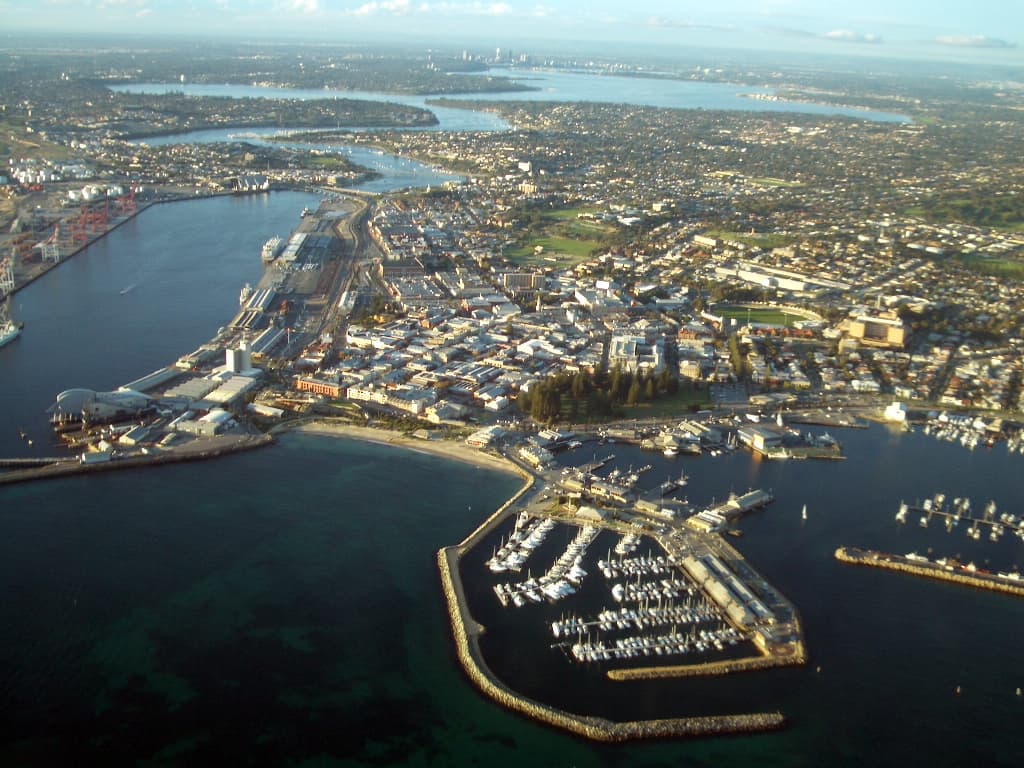 Photo of Fremantle, via Wikimedia Commons
Self-guided audio walking tour of Denmark — GPS route, offline playback, story-driven narration in 32 languages.
“Where ancient forests meet pristine coastlines, and life moves at a gentler pace.”
Not the postcards. The stories even locals don't know — whispered in your ear, right where they happened.
The iconic Elephant Rocks aren't just a pretty sight; they hold a surprising secret about their namesake.
This seemingly tranquil bay has a danger near its small island.
One section of Lights Beach offers a unique natural feature that appears only under specific conditions.
Discover every secret of Denmark
Every address, every reveal in full — in your ear, right where it happened.
You pick your stops. You walk. The voice reveals what the others miss.


Your self-guided audio tour of Denmark is ready — pick your landmarks, choose your language, and start the moment you arrive.
BuyLume has a built-in augmented-reality guide. Hold your phone up and its camera shows the street ahead of you, with a glowing arrow laid over the real view that always points to your next stop — no map to puzzle over, no wrong turns. Like everything in Lume, it works fully offline.
Denmark, Western Australia, is a coastal town in the Great Southern region, approximately 423 kilometers south-southeast of Perth. Here, towering karri forests converge with winding rivers and coastlines, offering a tranquil escape. The town itself rests along the Denmark River, close to William Bay's world-class beaches, creating a distinctive riverside-meets-coastal charm. Denmark is celebrated for its natural splendor, cool-climate wines, and a lively arts and food scene.
Often described as a place where nature takes charge, Denmark integrates its buildings within the mighty gum trees and surrounding karri forests. With a population around 5,000, the town maintains a peaceful atmosphere, though it can become quite busy during school holidays and summer due to tourism. The local economy is sustained by tourism, farming, fishing, and the arts, attracting a diverse mix of residents, including artists, naturalists, and individualists.
The coastline of the Denmark area was first observed in 1627 by Dutch captain François Thijssen, who sailed as far east as Ceduna in South Australia. The original Dutch name for the region from King George Sound to the Swan River was 't Landt van de Leeuwin (Leeuwin's Land), named after the Dutch East Indiaman Leeuwin which sighted the coast in 1622. However, the town of Denmark itself was later named by explorer Thomas Wilson after his colleague, Alexander Denmark. Despite sharing a name with the European country, Denmark, Western Australia, has no direct connection to the country of Denmark.
The first permanent European settlement in Denmark was established in 1895 by the Millar brothers, Edwin and Charles. They obtained leases for the timber in the area and subsequently opened several sawmills. The town was founded to provide housing for the families of the sawmill workers, with wood from the mills used to construct homes, various stores, and the town bridge. This timber industry was a significant part of Denmark's early development.
Over time, Denmark transitioned from a primarily timber and farming district to a destination increasingly sustained by tourism. In 1998, Denmark was recognized as "Australia's Tidiest Town." Today, Denmark is known for its cool-climate wine industry, with vineyards producing varietals like Chardonnay, Shiraz, Riesling, Sauvignon Blanc, and Cabernet blends. The town has also become a hub for artists and artisans, contributing to its unique character. The original Heritage Railway bridge, now a footbridge, stands as a testament to its past, and serves as a meeting point for several walking trails, including a section of the famous Bibbulmun Track.
Denmark offers a blend of natural wonders and local charm. William Bay National Park is a highlight, featuring the renowned Greens Pool and Elephant Rocks. Greens Pool is enclosed by rounded granite boulders, creating calm, clear waters ideal for snorkeling and swimming. Nearby, Elephant Rocks showcases massive granite formations resembling a herd of elephants in the water. For expansive coastal views, Conspicuous Cliff provides a boardwalk leading to a long beach, and from June to October, it's a spot for whale watching.
Inland, the Valley of the Giants Tree Top Walk allows you to walk up to 40 meters high on a 600-meter-long, barrier-free walkway through ancient red tingle trees. For beach enthusiasts, Madfish Bay and Waterfall Beach offer quieter spots to relax, with Waterfall Beach featuring a small waterfall that flows into the sea during winter. Ocean Beach is the closest beach to Denmark and is popular for surfing, kayaking, and kitesurfing, with patrols by the Denmark Surf Lifesaving Club during summer weekends. The Scotsdale Tourist Drive is a scenic route connecting wineries, farms, and galleries, perfect for exploring the region's gourmet offerings.
Denmark is appealing year-round, with each season offering distinct experiences. For warm-weather activities like swimming and beach days, late December to mid-March (summer) is ideal, though it's the busiest period due to school holidays. Autumn (March to May) brings mild weather, making it perfect for hiking, exploring national parks, and wine tasting as vineyards prepare for harvest. Spring (September to November) is characterized by wildflowers, abundant birdlife, and lush greenery, also offering great hiking conditions. Winter (June to August) is quieter, offering a cozy atmosphere for chalet stays and wine tasting by a fire, with opportunities for whale watching along the coast.
Denmark is approximately a 4.5 to 5-hour drive south of Perth along the Albany Highway. While it's possible to fly from Perth to Albany (a 45-minute drive from Denmark), renting a car in Albany is necessary as public transport options to Denmark are limited. The town center is walkable, but a car is essential for exploring the surrounding attractions like William Bay National Park and the Valley of the Giants. Accommodation options in Denmark range from around $150 to $300+ per night. Free Wi-Fi is available at Denmark's Community Resource Centre (CRC). The local currency is the Australian Dollar (AUD $). All non-Australian citizens require a valid visa to enter Australia, which must be obtained before travel. It is advisable to have a full validity passport and be prepared to demonstrate sufficient funds for your stay and a return ticket if requested by immigration authorities.
Denmark in Korean, in Chinese or in Hebrew — and 29 more languages, every stop narrated by a native voice. The widest language range of any self-guided audio tour.
Available in: