Hôtel de ville de York
Pendant la construction du grand hôtel de ville de York, une force inattendue de la nature a causé un revers significatif.
L'histoire complète se débloque dans le tour
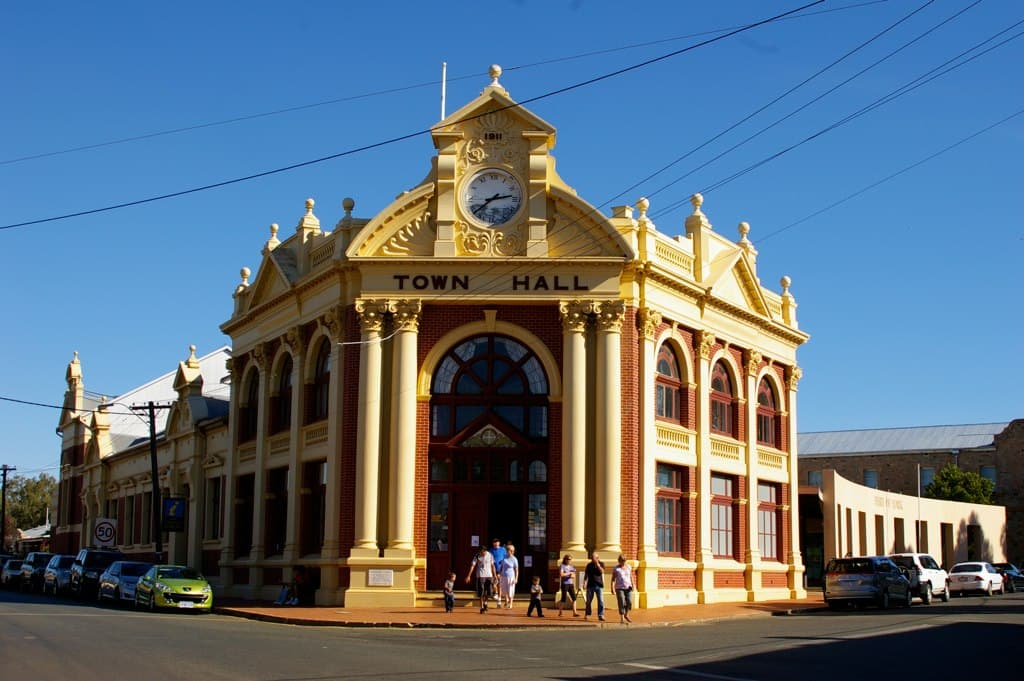 ashul / CC BY 2.0, via Wikimedia Commons
Visite audio autoguidée de York — parcours GPS à pied, lecture hors ligne, narration en 32 langues.
“Au-delà des champs de canola, un murmure des plus anciennes histoires de l'arrière-pays d'Australie-Occidentale.”
Pas les cartes postales. Les histoires que même les habitants ignorent — soufflées à l'oreille, là où elles se sont passées.
Pendant la construction du grand hôtel de ville de York, une force inattendue de la nature a causé un revers significatif.
Le désir de la ville d'avoir une horloge publique a conduit à un ajout plutôt peu fiable au bureau de poste.
Regardez attentivement le toit du bureau de poste de York, et vous trouverez un morceau d'histoire locale qui a déménagé.
Découvrez tous les secrets de York
Chaque adresse, chaque révélation en entier — dans ton oreille, là où elle s'est passée.
Tu choisis tes lieux. Tu marches. La voix te révèle ce que les autres ignorent.


Votre visite audioguidée de York vous attend — choisissez vos lieux, votre langue, et lancez-vous dès votre arrivée.
AcheterEntrez dans York, la plus ancienne ville de l'arrière-pays d'Australie-Occidentale, et ressentez les échos d'une époque révolue. Établie en 1831 sur les rives fertiles de la rivière Avon, à seulement 97 kilomètres à l'est de Perth, York offre un voyage captivant à travers l'histoire coloniale. Les bâtiments patrimoniaux bien conservés de la ville et ses charmantes rues lui ont valu la désignation de 'Ville historique' par le National Trust of Australia, en faisant un musée vivant de la première colonisation de l'Australie-Occidentale.
Au-delà de son attrait architectural, York est située au cœur du pays Ballardong Nyoongar, reconnaissant des milliers d'années de tutelle indigène avant l'arrivée des Européens. Aujourd'hui, les visiteurs sont attirés par York non seulement pour son passé, mais aussi pour ses festivals, sa scène artistique florissante et la beauté naturelle de la vallée de l'Avon, en particulier pendant la saison des fleurs sauvages et du canola. Que vous soyez un passionné d'histoire, un amoureux de la nature ou simplement à la recherche d'une évasion tranquille, York promet une expérience unique et mémorable.
Pendant des millénaires, la terre autour de l'actuelle York était le pays traditionnel du peuple Ballardong Nyoongar, qui entretenait des liens spirituels et culturels profonds avec la région. Leur compréhension du paysage, régie par de fortes croyances spirituelles et des histoires du Temps du Rêve, a façonné leur société.
La colonisation européenne dans la vallée de l'Avon a commencé en 1831, deux ans seulement après la fondation de Perth, motivée par le besoin de terres agricoles de la colonie de la rivière Swan. L'enseigne Robert Dale a dirigé le premier groupe de colons, qui sont arrivés le 15 septembre 1831, et ont immédiatement commencé à construire des huttes et à préparer la terre pour la culture et l'élevage. Le nom 'York' a été suggéré en octobre 1830 par l'explorateur J.S. Clarkson, qui a estimé que la région ressemblait à son comté d'origine du Yorkshire, en Angleterre. La ville a été officiellement établie en 1835, les premiers bâtiments étant érigés l'année suivante.
Le XIXe siècle a vu York prospérer en tant que centre agricole vital, connu pour l'élevage de moutons et de céréales, la récolte de bois de santal et l'élevage de bovins, de chèvres, de porcs et de chevaux. Cependant, les premiers défis comprenaient des conflits avec les populations aborigènes locales, des difficultés à adapter les méthodes agricoles anglaises au climat australien et une pénurie persistante de main-d'œuvre. L'arrivée de condamnés à partir de 1851, travaillant comme 'hommes sous licence', a contribué à atténuer les problèmes de main-d'œuvre, contribuant à la construction de nombreux premiers bâtiments. La ville a également connu un boom du bois de santal à la fin des années 1840, stimulant davantage son économie.
La période de croissance la plus significative pour York est venue avec la ruée vers l'or d'Australie-Occidentale, commençant dans la région de Yilgarn en 1887. Avec l'arrivée du chemin de fer de l'Est à York en 1885, la ville est devenue le dernier arrêt de train crucial pour des milliers de mineurs se dirigeant vers les champs aurifères. Ils descendaient, s'approvisionnaient et entreprenaient ensuite le long voyage terrestre en charrette ou à pied. Cet afflux de personnes et de commerce a apporté une immense prospérité, façonnant la fierté civique de la ville et conduisant à la construction de magnifiques bâtiments comme l'hôtel de ville de York en 1911.
Bien que le boom de York ait finalement diminué à mesure que le réseau ferroviaire s'est étendu et a contourné la ville dans certains cas, ce ralentissement a involontairement contribué à la préservation de son caractère historique. Aujourd'hui, York offre plus de bâtiments patrimoniaux que toute autre ville de sa taille en Australie-Occidentale, avec sa rue principale, Avon Terrace, conservant une grande partie de son apparence de 1911. Cet héritage architectural, combiné aux efforts pour reconnaître et partager les histoires de ses communautés indigènes et migrantes, garantit que York reste une destination captivante où l'histoire prend véritablement vie.
York offre une multitude de sites qui vous transportent dans une autre époque. Commencez votre exploration sur Avon Terrace, la rue principale, qui conserve son charme de 1911 et est bordée de bâtiments historiques. L'Hôtel de ville de York, un exemple impressionnant d'opulence édouardienne construit en 1911, abrite le centre d'information touristique et propose des visites pour explorer ses intérieurs grandioses. À proximité, le Bureau de poste de York, construit en 1893, est le plus ancien bâtiment de poste et télégraphe à deux étages encore existant en Australie-Occidentale.
Plongez plus profondément dans le passé de la ville au Musée de la Résidence, situé dans l'ancienne résidence du magistrat, qui partage avec sensibilité les histoires des Nyoongar, des condamnés et des communautés migrantes. L'Ancienne Prison et Palais de Justice offre également un aperçu du système judiciaire de York d'antan. Pour les passionnés d'automobile, le York Motor Museum présente l'histoire de l'automobile australienne.
Au-delà du centre-ville, faites une promenade pittoresque jusqu'au Mont Brown Lookout pour des vues panoramiques sur la ville de York et la vallée de l'Avon. Traversez le Pont Suspendu, un charmant pont suspendu offrant des vues pittoresques sur la rivière Avon. Les amoureux de la nature peuvent explorer le Jardin botanique de York avec sa flore indigène diversifiée, ou profiter d'une promenade le long du Sentier de la rivière Avon. Ne manquez pas les champs de canola en août et septembre, mais rappelez-vous qu'ils sont une propriété privée ; pour une expérience immersive, visitez PetTeet Park à Gilgering.
Le meilleur moment pour visiter York dépend de vos intérêts. Pour les activités par temps chaud et le tourisme de plein air en général, de début décembre à fin mars offre des températures agréables, avec un pic fin janvier. Si vous souhaitez admirer les spectaculaires fleurs sauvages et les champs de canola, planifiez votre visite entre août et octobre. L'automne (mars-mai) offre un temps plus frais et de beaux feuillages, tandis que l'hiver et le printemps sont idéaux pour les fleurs sauvages. York accueille divers festivals tout au long de l'année, notamment la Foire médiévale de York en février et le Festival de York en septembre-octobre.
York est à environ 90 minutes de route à l'est de Perth, ce qui en fait une excursion d'une journée accessible ou un séjour d'une nuit relaxant. La ville est compacte et facilement explorable à pied, avec des cartes de marche et de vélo disponibles au Centre d'information touristique de York, situé dans l'Hôtel de ville. Le Centre d'information touristique offre également une connexion Wi-Fi gratuite et des informations sur les visites autoguidées, y compris le sentier 'Tiny Doors of York', une activité amusante pour les familles. De nombreuses attractions ont des horaires d'ouverture variables, il est donc conseillé de consulter le site web du visiteur au préalable. York connaît des étés secs et chauds et des hivers frais et humides, alors préparez-vous en conséquence avec des vêtements légers et confortables pour les mois plus chauds et des couches chaudes pour les saisons plus fraîches. Des chaussures de marche robustes et de la crème solaire sont recommandées si vous prévoyez d'explorer les sentiers de randonnée.
York en coréen, en chinois ou en hébreu — et dans 29 autres langues, chaque étape narrée par une voix native. La plus large gamme de langues de tous les audioguides autoguidés.
Disponible en :