The Grand Lavoir
Locals speak of the restorative powers found in a particular spring in Cambremer.
Full story unlocks in the tour
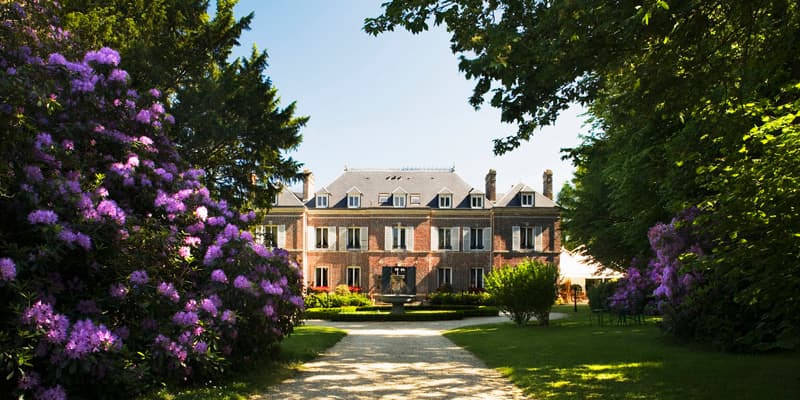 Phyldesbruyeres / CC BY-SA 3.0, via Wikimedia Commons
Self-guided audio walking tour of Cambremer — GPS route, offline playback, story-driven narration in 32 languages.
“Where orchards meet ancient stones, and cider flows through history.”
Not the postcards. The stories even locals don't know — whispered in your ear, right where they happened.
Locals speak of the restorative powers found in a particular spring in Cambremer.
This organic farm along the Cider Route offers more than just a taste of Normandy.
The name Cambremer may resonate with admirers of classic French literature.
Discover every secret of Cambremer
Every address, every reveal in full — in your ear, right where it happened.
You pick your stops. You walk. The voice reveals what the others miss.

Your self-guided audio tour of Cambremer is ready — pick your landmarks, choose your language, and start the moment you arrive.
BuyLume has a built-in augmented-reality guide. Hold your phone up and its camera shows the street ahead of you, with a glowing arrow laid over the real view that always points to your next stop — no map to puzzle over, no wrong turns. Like everything in Lume, it works fully offline.
Cambremer, a painterly village at the core of Normandy's Pays d'Auge region, offers a compelling fusion of history, verdant landscapes, and the enduring traditions of cider and Calvados production. With a population of approximately 1,300 inhabitants, it serves as an inviting starting point for the scenic Cider Route, a journey winding through apple orchards and artisanal producers. The village itself presents a collection of half-timbered buildings, ancient wash houses, and a Romanesque church, all contributing to its authentic Norman character.
Beyond its architectural allure, Cambremer is profoundly connected to the region's agricultural heritage. It is often called the 'cider capital of the Pays d'Auge,' a testament to its long-standing relationship with apple cultivation and the creation of acclaimed ciders, pommeau, and Calvados. The village hosts an annual festival celebrating AOC (Appellation d'Origine Contrôlée) and AOP (Appellation d'Origine Protégée) products, drawing thousands of visitors to savor local flavors. Whether seeking a leisurely walk through themed gardens or a deeper exploration into Norman culinary traditions, Cambremer provides a memorable experience.
The precise origin of Cambremer's name remains a topic of discussion, though the village is documented as early as the 7th century under the Latinized form 'Cambrimaro'. Some theories suggest a Celtic origin, while others point to Germanic elements related to lakes or ponds. Archaeological discoveries, such as flint arrowheads and polished axes, indicate human presence in the Cambremer region as far back as the 3rd millennium BC.
During the Middle Ages, Cambremer held a distinctive administrative status known as the 'exemption of Cambremer.' This meant that while geographically within the diocese of Lisieux, it fell under the administrative authority of the diocese of Bayeux, forming a separate enclave. The Hundred Years' War left its imprint on Cambremer and its surrounding communes, with fortresses invaded and properties affected.
In more recent history, Cambremer has broadened its administrative boundaries through mergers with neighboring communes. In 1973, Grandouet, Saint-Aubin-sur-Algot, and Saint-Pair-du-Mont were incorporated. More recently, on January 1, 2019, the former commune of Saint-Laurent-du-Mont was also merged into Cambremer. Today, Cambremer, with its Romanesque church tower dating back to the 12th century, and its well-preserved half-timbered buildings, continues to narrate the story of its enduring past.
Cambremer offers a delightful array of sights that mirror its heritage and natural splendor. The Saint-Denis Church, with its central Romanesque tower from the 12th century, stands as a prominent village landmark. Nearby, the Grand Lavoir and the Little Lavoir, two charming wash houses, evoke a sense of earlier times.
For those who appreciate nature, the Gardens of Pays d'Auge are a particular delight. This 4-hectare themed garden, arranged around a 17th-century farm, displays diverse plant arrangements, water gardens, and an eco-museum exhibiting old tools and crafts. It has received recognition with 'Remarkable Garden' status. A visit to the Pierre Huet Calvados Estate is also suggested, offering insights into the production of Calvados, cider, and Pommeau de Normandie since 1865.
The village also features the Grange aux Dimes, a former tithe barn now utilized for exhibitions, and a sundial on one of its oldest half-timbered buildings. For those interested in local products, the Manoir de Grandouet offers tastings and sales of organic cider, Calvados, and local cheeses. Cambremer is also the beginning of the Cider Route, a 40 km journey through appealing villages and cider producers.
The ideal time to visit Cambremer for outdoor pursuits is from late June to early September, when the weather is agreeable with perceived temperatures between 65°F and 80°F. July is typically the clearest month, with an average high of 72°F and a low of 55°F. The village awakens in early May with the annual AOC/AOP Festival, a two-day event celebrating regional products amidst blossoming apple trees. During the summer months, a traditional market with music and dancing is held every Sunday morning.
Cambremer is situated in the Calvados department of Normandy, positioned between Lisieux and Caen. The Cambremer Tourist Office, located at 2 place de la mairie, provides valuable resources for maps and information on walking routes. It operates Monday to Friday, with Saturday mornings also available, and is closed on Sundays. Parking is accessible at Parking des Tilleuls (also known as Parking de l'Europe) and other designated areas within the village.
While a brief stop can last an hour, allowing more time for visits to the Pierre Huet cellars or the Pays d'Auge Gardens is advisable. An audioguided tour of Cambremer is available through the free mobile app IZI TRAVEL. Local markets are held on Friday mornings in Cambremer, and a larger traditional market takes place on Sunday mornings during the summer.
Cambremer in Korean, in Chinese or in Hebrew — and 29 more languages, every stop narrated by a native voice. The widest language range of any self-guided audio tour.
Available in: