Igreja Matriz (Mother Church)
The main church in Caminha features an unusually ornate side door.
Full story unlocks in the tour
 HombreDHojalata / CC BY-SA 3.0, via Wikimedia Commons
Self-guided audio walking tour of Caminha — GPS route, offline playback, story-driven narration in 32 languages.
“Where ancient borders meet ocean breezes, and history breathes from every stone.”
Not the postcards. The stories even locals don't know — whispered in your ear, right where they happened.
The main church in Caminha features an unusually ornate side door.
Caminha's prominent Clock Tower was not always known by its current name, nor did it always house a clock.
The central fountain in Caminha's main square shares a surprising artistic lineage with other regional cities.
Discover every secret of Caminha
Every address, every reveal in full — in your ear, right where it happened.
You pick your stops. You walk. The voice reveals what the others miss.
![Caminha — boats docked near seaside promenade]](/_next/image?url=https%3A%2F%2Fxkitrzghrapdsyyvojzr.supabase.co%2Fstorage%2Fv1%2Fobject%2Fpublic%2Flume-images%2Fcities%2Fcaminha-gallery-1.jpg&w=1920&q=75)


Your self-guided audio tour of Caminha is ready — pick your landmarks, choose your language, and start the moment you arrive.
BuyLume has a built-in augmented-reality guide. Hold your phone up and its camera shows the street ahead of you, with a glowing arrow laid over the real view that always points to your next stop — no map to puzzle over, no wrong turns. Like everything in Lume, it works fully offline.
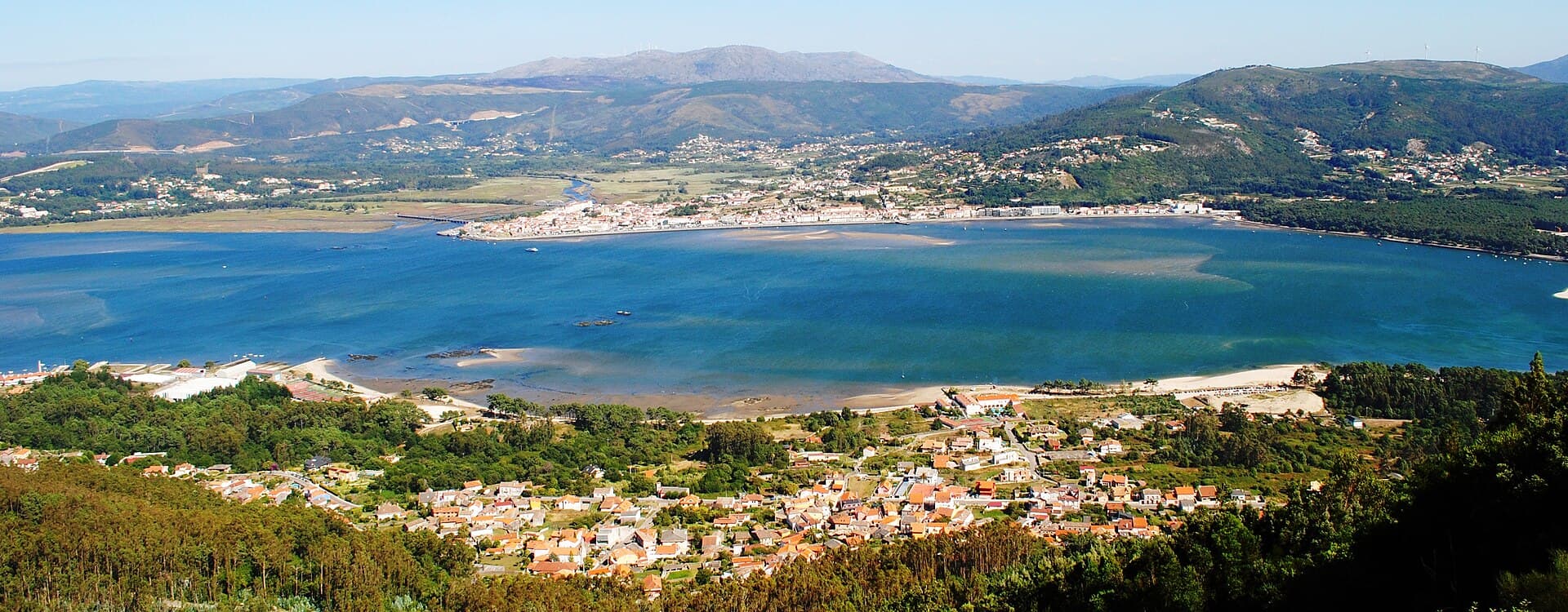
Caminha, a captivating town in Portugal's far north, occupies a singular geographical position: where the grand Minho River meets the smaller Coura River, and both flow into the Atlantic Ocean. This strategic location, directly on the Spanish border, has shaped its character for centuries, establishing it as a guardian against incursions and a center for commerce. Today, Caminha offers a peaceful retreat, a place where life unfolds at an unhurried pace, a distinct contrast to the more crowded destinations further south.
With its red-tiled roofs, white stucco walls, and occasional azulejo tiles, Caminha evokes a miniature Lisbon, yet without the throngs or elevated prices. The town's historic core, with its medieval stone paths and well-preserved architecture, invites unhurried exploration. Beyond the town, the surrounding landscape unfolds as a verdant expanse of river valleys, pine-clad mountains, and expansive, sandy Atlantic beaches, earning the region its moniker, the 'Green Coast.'
Caminha has recently garnered recognition as one of Portugal's most appealing small towns, a testament to its blend of history, natural splendor, and serene atmosphere. It is a destination that appeals to those seeking an authentic Portuguese experience, from enthusiasts of culture and outdoor pursuits to families and remote workers desiring a tranquil yet inspiring base.
## From Roman Outpost to Medieval Stronghold Caminha's story reaches back to prehistoric times, with evidence of early human presence. During the Roman conquest of the Iberian Peninsula, the site was fortified, with foundations dating from the 4th and 5th centuries. An islet at the confluence of the Minho and Coura rivers, now connected to the mainland, even hosted a small Roman military settlement.
By the 5th century, during Sueve rule, Caminha was known as Camenae or Camina. The area experienced depopulation due to Arab and Norman raids but was gradually reoccupied after the 10th century. Around 1060, under Ferdinand I of León, Caminha briefly served as the seat of the Caput Mini county, and a castle was already present.
## A Fortified Fishing Village In the 13th century, Caminha was primarily a fishing village. However, its strategic position on the border with Galicia prompted King Afonso III to construct a modern castle and a fortified village in the bastide model, completed in 1260. The castle received further reinforcements from Kings Dinis I and Ferdinand I, particularly as reclaimed land connected the original island to the shore. The first charter of feudal rights was granted in 1284.
## Golden Age of Maritime Trade King John I granted the town significant freedoms in 1390, fostering a thriving maritime commerce. The 15th and 16th centuries marked Caminha's golden age, transforming it into one of Northern Portugal's primary ports. It engaged in extensive trade with Northern Europe, Africa, and India. The magnificent Igreja Matriz (Mother Church), constructed during this period in a blend of late Gothic-Renaissance and Manueline styles, stands as a testament to this prosperous era. King Manuel I further solidified Caminha's importance, granting a new foral (charter) in 1512 and rebuilding the Ínsua Fort.
## Border Defenses and Modernity After Portugal regained independence from Spain in 1640, King John IV modernized Caminha's fortifications to account for ballistic advancements. The Ínsua Fort was also remodeled, establishing Caminha's defenses, alongside those of Viana do Castelo, Valença, and Monção, as a crucial part of the northern defense line against Castilians. Over time, Viana do Castelo surpassed Caminha in maritime trade dominance. Today, Caminha thrives on trade and tourism, offering a glimpse into its profound past through its well-preserved historical center and fortifications.
Begin your exploration in the heart of Caminha at Praça Conselheiro Silva Torres, a lively square centered around a beautiful 16th-century fountain. This is an ideal spot to savor a coffee and absorb the local atmosphere. Dominating the square is the Torre do Relógio (Clock Tower), the last remnant of the town's 13th-century city walls. You can ascend to the top for sweeping views of the town, the Minho River estuary, and even glimpses of Spain. Inside, a small museum displays local historical objects.
A brief walk will lead you to the Igreja Matriz (Mother Church), a striking 15th-century Gothic church with Manueline and Renaissance influences. Be sure to admire the intricately carved side door, a testament to its unique story. Nearby, the 16th-century Igreja da Misericórdia also merits a visit.
Beyond the town center, explore the remnants of Caminha's fortress walls, offering historical insights and views of the Minho River and Atlantic. For a distinct experience, take the ferry across the Minho River to A Guarda in Spain, a brief and scenic journey. Nature enthusiasts can venture to the nearby Serra D'Arga Mountains for hiking and to discover natural lagoons and waterfalls. The expansive, sandy Moledo Beach, just 4 kilometers south, is popular for water sports and provides views of the Ínsua Fort.
The most pleasant time to visit Caminha is during the warmer months, from June to September. These months offer the most comfortable weather for exploration, with agreeable temperatures and abundant sunshine, perfect for beach days and outdoor pursuits. July and August are the sunniest months and experience the fewest rainy days. While tourism is understated, it is more seasonal, with July and August being the busiest months. For those seeking fewer crowds and milder temperatures, spring and early autumn (April, May, and October) also provide a peaceful and enjoyable experience.
Caminha is readily accessible by car, via the N13 national road or the A28 expressway, which connects it to Viana do Castelo to the south and Valença to the north. Be aware that the A28 utilizes virtual tolls, requiring foreign cars to apply for a temporary permit. The town itself is walkable, and exploring its historic center on foot offers the best way to absorb its charm. For local information, visit the Loja Interativa de Turismo de Caminha in Praça Conselheiro Silva Torres. A ferry service links Caminha to A Guarda in Spain, providing a convenient way to visit the neighboring country. The local cuisine features fresh seafood and regional specialties, with numerous cafes and restaurants in the main square and along the riverfront. Do not miss the weekly market held every Wednesday, where you can find local crafts, food, and textiles.
Caminha in Korean, in Chinese or in Hebrew — and 29 more languages, every stop narrated by a native voice. The widest language range of any self-guided audio tour.
Available in: