Igreja de Nossa Senhora da Conceição (Église paroissiale)
Parmi les bâtiments sombres en schiste de Piódão, une structure se distingue par son blanc éclatant et son bleu. Quelle est son histoire ?
L'histoire complète se débloque dans le tour
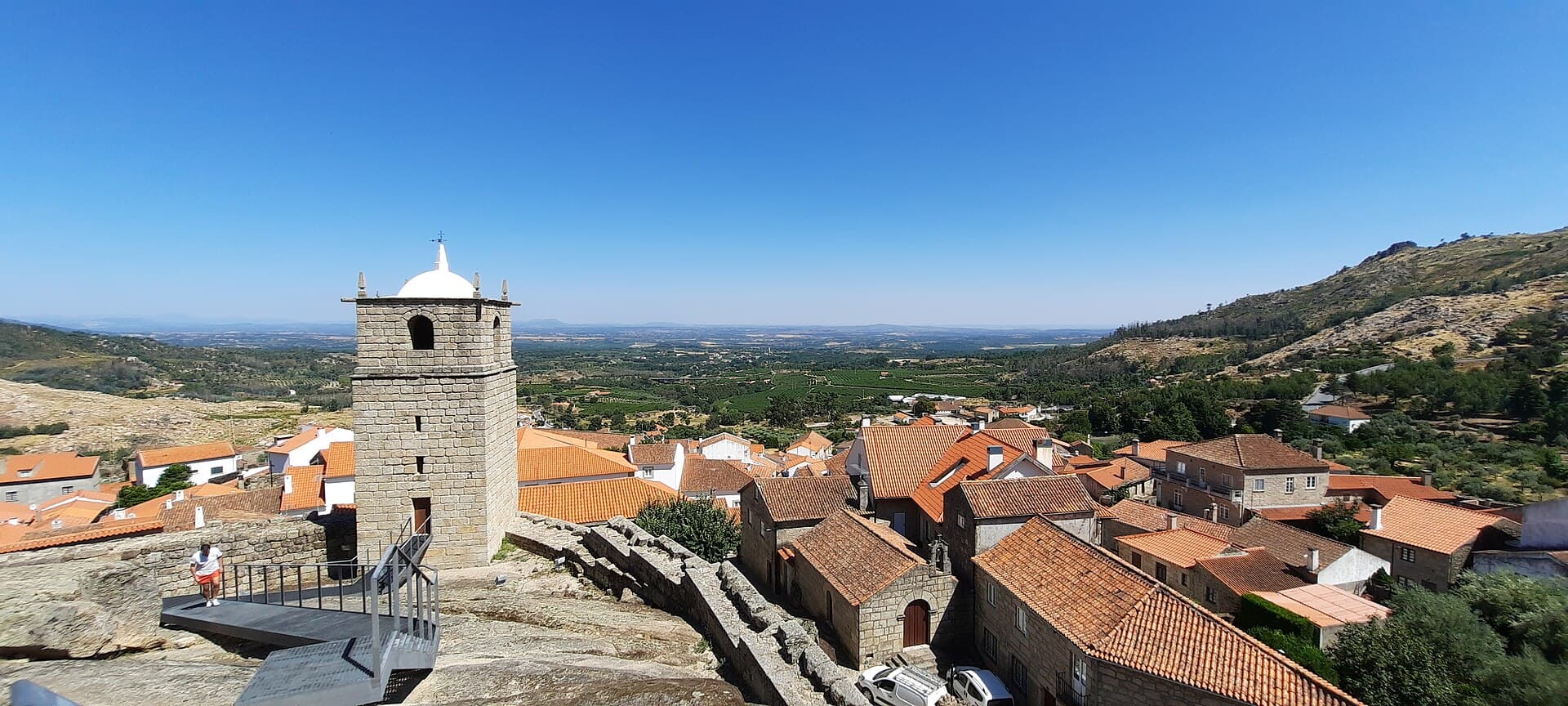 Paulo / cc by-sa 4.0, via Wikimedia Commons
Visite audio autoguidée de Piódão — parcours GPS à pied, lecture hors ligne, narration en 32 langues.
“Là où les maisons de schiste s'accrochent à la montagne, un village peint de bleu et de mémoire.”
Pas les cartes postales. Les histoires que même les habitants ignorent — soufflées à l'oreille, là où elles se sont passées.
Parmi les bâtiments sombres en schiste de Piódão, une structure se distingue par son blanc éclatant et son bleu. Quelle est son histoire ?
Les maisons de Piódão sont agencées d'une manière que les habitants comparent affectueusement à une scène de vacances familière. De quoi s'agit-il ?
Au-delà de son apparence évocatrice, Piódão a un passé surprenant en tant que refuge pour certaines personnes. Qui a cherché refuge ici ?
Découvrez tous les secrets de Piódão
Chaque adresse, chaque révélation en entier — dans ton oreille, là où elle s'est passée.
Tu choisis tes lieux. Tu marches. La voix te révèle ce que les autres ignorent.
![Piódão — boats docked near seaside promenade]](/_next/image?url=https%3A%2F%2Fxkitrzghrapdsyyvojzr.supabase.co%2Fstorage%2Fv1%2Fobject%2Fpublic%2Flume-images%2Fcities%2Fpiodao-gallery-1.jpg&w=1920&q=75)


Votre visite audioguidée de Piódão vous attend — choisissez vos lieux, votre langue, et lancez-vous dès votre arrivée.
AcheterLume intègre un guide en réalité augmentée. Levez votre téléphone : sa caméra montre la rue devant vous, avec une flèche lumineuse posée sur l'image réelle qui pointe toujours vers votre prochain arrêt — aucune carte à déchiffrer, aucun mauvais virage. Comme tout dans Lume, ça fonctionne entièrement hors-ligne.
Piódão, souvent appelé le « Village de la Nativité », est un spectacle captivant, ses maisons de schiste s'accrochant aux pentes abruptes des montagnes de la Serra do Açor, au centre du Portugal. Ce village historique, faisant partie du réseau des « Villages Historiques du Portugal », présente un ensemble architectural unique où les bâtiments en pierre sombre se fondent harmonieusement dans le paysage, ponctués par le bleu distinctif des portes et des fenêtres. Son emplacement reculé a préservé une qualité intemporelle, offrant aux visiteurs un aperçu d'un passé où la vie était intimement liée au terrain accidenté.
Entrer dans Piódão, c'est comme pénétrer dans une histoire vivante, avec ses ruelles étroites et sinueuses et ses escaliers raides invitant à l'exploration. L'isolement du village, qui en faisait autrefois un refuge, contribue aujourd'hui à son atmosphère sereine, ce qui en fait une destination idéale pour ceux qui recherchent la tranquillité et une connexion profonde avec la nature et la mémoire. De son architecture unique à son profond héritage culturel, Piódão offre une expérience portugaise authentique, loin de l'agitation de la vie moderne.
Les origines de Piódão remontent au Moyen Âge, avec une petite colonie connue sous le nom de « Casal Piodam » se formant dans une vallée près du village actuel. L'emplacement actuel du village, probablement établi vers le XVe siècle, est apparu après le déplacement de la colonie d'origine, peut-être en raison de la construction d'un monastère cistercien, dont il ne reste aucune trace. Au fil des siècles, Piódão est resté un petit village isolé, une caractéristique qui a profondément façonné son identité.
Sa position isolée au cœur des montagnes de la Serra do Açor a fait que pendant 400 ans, Piódão a été largement déconnecté du monde extérieur. Jusqu'aux années 1970, l'accès se faisait principalement à pied ou à cheval, un facteur qui a joué un rôle crucial dans la préservation de son caractère unique et de son architecture traditionnelle. Cet isolement en a également fait un lieu de refuge supposé pour les fugitifs médiévaux, y compris, pense-t-on, l'un des assassins de D. Inês de Castro au XIVe siècle.
L'architecture distinctive du village, caractérisée par des maisons et des rues construites en pierre de schiste locale, est le résultat direct de l'abondance de ce matériau dans la région. Cette ressource naturelle était une option bon marché et facilement disponible, ce qui a conduit à l'apparence uniforme et sombre des bâtiments. La peinture bleue frappante sur de nombreuses portes et fenêtres, aujourd'hui une caractéristique emblématique, proviendrait d'une époque où l'éloignement du village signifiait que seule la peinture bleue était disponible dans le magasin local. Depuis 1994, Piódão bénéficie d'un soutien à la restauration dans le cadre de la priorité du Portugal de préserver ses villages historiques, garantissant ainsi la pérennité de sa richesse culturelle.
Commencez votre exploration à l'Igreja de Nossa Senhora da Conceição, l'église paroissiale, qui se distingue par ses murs blanchis à la chaux et ses détails bleus contrastant avec le schiste sombre du village. Ses contreforts cylindriques uniques méritent également d'être notés. Promenez-vous dans les rues et ruelles étroites et sinueuses en schiste, émerveillez-vous devant l'architecture traditionnelle et les portes et fenêtres bleues distinctives qui parsèment le paysage. Ne manquez pas l'occasion de repérer toutes les portes bleues dans tout le village, un charmant détail qui raconte une histoire du passé de Piódão.
Recherchez des points de vue, comme celui près de l'hôtel Inatel Piódão sur la route M508-1, pour une vue panoramique imprenable sur le village niché dans les montagnes. Découvrez la Capela das Almas (Chapelle des Âmes), une chapelle du XVIIIe siècle aux murs blanchis à la chaux et aux portes brun châtaigne, offrant des vues pittoresques sur la vallée. Pour une pause rafraîchissante, dirigez-vous vers la plage fluviale (Praia Fluvial de Piódão), une zone de baignade en eau claire très prisée en été. Envisagez une promenade jusqu'au village voisin de Foz d'Égua, connu pour ses charmantes maisons et ponts en schiste qui évoquent un décor de conte de fées. Enfin, plongez dans la vie et les traditions locales au Musée de Piódão, situé près de l'église.
Piódão est magnifique toute l'année, mais chaque saison offre une expérience différente. Les mois d'été (juillet-août) sont chauds et venteux, idéaux pour profiter de la plage fluviale, mais le village peut devenir bondé de touristes. Pour une visite plus tranquille, envisagez les saisons intermédiaires. Octobre, par exemple, offre un temps agréable et chaud, bien que certains magasins et restaurants puissent avoir des horaires réduits. Le printemps et l'automne offrent des températures confortables pour explorer le village et les sentiers de randonnée environnants, avec moins de monde. L'emplacement montagneux signifie que le temps peut être imprévisible, avec un potentiel d'orages, de vent et de brouillard même en été.
Piódão est situé dans la région montagneuse d'Arganil et est mieux accessible en voiture. Les routes menant au village sont étroites, sinueuses et peuvent être raides, alors préparez-vous à un trajet difficile mais pittoresque. De Coimbra, le trajet dure environ 1 heure et 34 minutes, tandis que de Porto, il faut environ 2 heures et 22 minutes. Le village lui-même est petit, et la majeure partie n'est pas accessible aux personnes à mobilité réduite ou aux poussettes en raison de ses ruelles escarpées et de ses nombreux escaliers ; seule la place principale est facilement accessible. Bien que Piódão ait récemment attiré plus d'attention touristique, de nombreux villageois ne sont pas habitués à ce que leurs maisons soient photographiées, alors soyez respectueux lorsque vous prenez des photos. Seuls quelques habitants, généralement ceux qui travaillent dans les restaurants ou les bars, parlent anglais. Il existe quelques options d'hébergement local et un petit hôtel, il est donc conseillé de réserver à l'avance, surtout en haute saison.
Piódão en coréen, en chinois ou en hébreu — et dans 29 autres langues, chaque étape narrée par une voix native. La plus large gamme de langues de tous les audioguides autoguidés.
Disponible en :