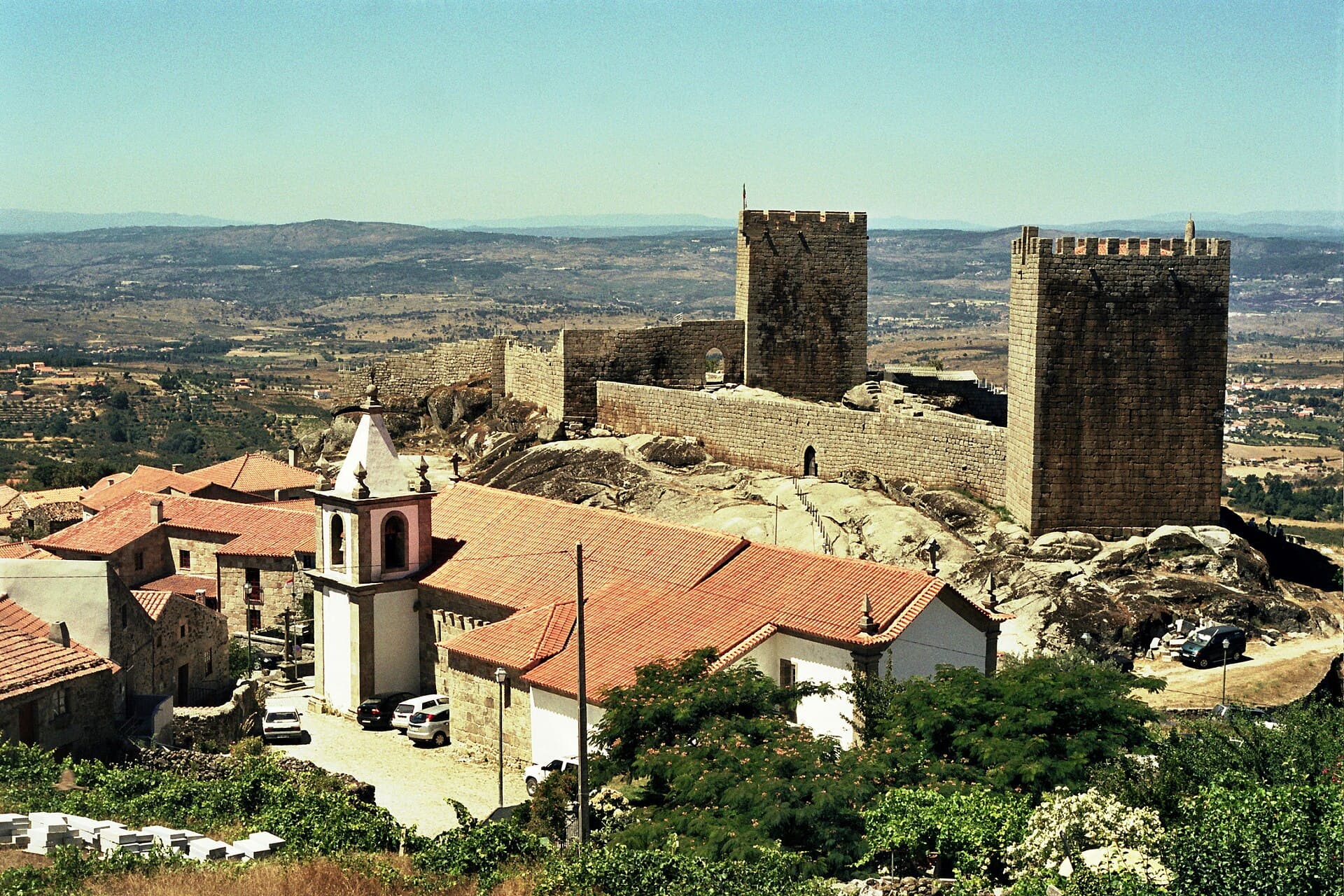
Linhares da Beira, PortugalElisa.rolle / CC BY-SA 4.0, via Wikimedia Commons
PT

Linhares da Beira

Self-guided audio walking tour of Linhares da Beira — GPS route, offline playback, story-driven narration in 32 languages.

Where ancient stones speak and paragliders drift on mountain winds.

The secrets of Linhares da Beira

Linhares da Beira, as no one tells it.

Not the postcards. The stories even locals don't know — whispered in your ear, right where they happened.

3 secrets below. Many more wait inside the tour.
Houses Formed with Boulders

As you wander the pathways, you will notice many homes that appear to rise directly from immense granite rocks. This is more than a distinctive architectural choice.

Full story unlocks in the tour
The Traitors' Gate at the Castle

Within the strong walls of Linhares Castle, there is a small, subtle exit known as the 'Traitors' Gate.' Its designation suggests a dramatic past, yet its true function was often more practical.

Full story unlocks in the tour
The Village's Name

The name 'Linhares' is not merely a pleasant sound; it offers a clue to the village's agricultural heritage.

Full story unlocks in the tour
The full tour

Discover every secret of Linhares da Beira

Every address, every reveal in full — in your ear, right where it happened.

Get the key to Linhares da Beira

You pick your stops. You walk. The voice reveals what the others miss.

Choose your time

How long do you have in Linhares da Beira?

Your self-guided audio tour of Linhares da Beira is ready — pick your landmarks, choose your language, and start the moment you arrive.

Buy
About Linhares da Beira

The story of Linhares da Beira

Linhares da Beira, one of Portugal's twelve Historic Villages, rests on the western slopes of the Serra da Estrela mountains, a place where time seems to slow to a medieval pace. This captivating village, constructed at over 800 meters of altitude on uneven, rocky terrain, offers a remarkably preserved glimpse into centuries past. Its strategic location, overlooking the Mondego Valley, has made it a significant settlement since the Iron Age, with traces of Roman, Visigothic, and Muslim presence woven into its fabric.

As you wander through Linhares da Beira, you will discover a unique architectural and artistic diversity, a legacy of its dense and long history. Stone pathways wind between granite houses, some seamlessly integrated into massive boulders, leading to stately manor homes and the imposing 12th-century castle that commands the skyline. Beyond its ancient stones, Linhares da Beira offers unexpected delights, from its status as a paragliding hub to its delicious regional specialties, making it a destination that appeals to history enthusiasts, nature lovers, and adventure seekers alike.

This village is not merely a collection of old buildings; it is a living museum, where every corner reveals a piece of its storied past. The air is fresh with the scent of the mountains, and the tranquility invites quiet exploration, a stark contrast to the bustling activity of modern life. Linhares da Beira promises a genuine journey back in time, where the echoes of ancient tales mingle with the gentle breeze of the Mondego Valley.

History

## From Iron Age Settlement to Medieval Stronghold Linhares da Beira's story begins long before the medieval era, with evidence suggesting occupation as far back as the Iron Age. Its elevated and rocky terrain provided a natural defensive advantage, a characteristic recognized and utilized by successive civilizations. The Romans, Visigoths, and Arabs all left their mark on this strategic location, which was once part of a vital Roman road connecting Mérida to Braga.

## The Christian Reconquista and the Birth of a Village The village as we largely see it today began to take shape during the Christian Reconquista. King Afonso Henriques, Portugal's first king, granted Linhares its first charter in 1169, initiating a period of repopulation and fortification. This charter was later confirmed by King Alfonso II in 1217. Linhares da Beira's role in defending the nascent Portuguese kingdom was crucial, particularly until the 17th century, as it formed part of the defensive system guarding the Mondego Basin and the border region.

## The Castle of King Dinis The most prominent architectural feature of Linhares da Beira, its imposing castle, dates largely to the reign of King Dinis in the 13th century. Constructed on an enormous granite massif over 800 meters high, the castle was a key fortress in the Beira Interior region. King Dinis not only ordered its construction but also donated the village and castle to his son, Jonathan Sanchez. The castle's design, with its two walled enclosures, towers, fortified gates, and cisterns, reflects its primary purpose as a military stronghold and a refuge for the local population during times of siege. It became a National Monument in 1922.

## A Village of Enduring Charm Throughout the centuries, Linhares da Beira has retained its medieval character. The urban structure, characterized by narrow, stone pathways and granite houses, reflects its 12th to 14th-century origins, with significant developments in the 16th century. Manueline architectural details, such as gargoyles and intricate windows, can still be observed on many buildings, speaking to the village's prosperity during the Renaissance. Despite a decline in population and economic recession in later centuries, the village continues to tell its history through its remarkably preserved stones and traditions.

What to see

Begin your exploration at the Linhares da Beira Castle, the village's crowning glory. This 12th-century fortress, largely rebuilt by King Dinis, offers wide views of the Mondego Valley and the Serra da Estrela Natural Park. Explore its two walled enclosures, the Keep, and the Watch Tower, and seek out the intriguing 'Traitors' Gate'.

Stroll through the village's stone pathways, admiring the granite houses, many of which are uniquely integrated into massive boulders. Look for the intricate Manueline-style windows and doors that adorn some of the older buildings. Discover the Parish Church of Nossa Senhora da Assunção, a 12th-century temple reformed in 1751, which houses valuable wood paintings attributed to the master Vasco Fernandes.

Visit the old medieval Jewry, a neighborhood with its own distinct character, and the stately manor houses like the Corte Real and Brandão e Melo manors. Do not miss the pelourinho (pillory) and the old town hall, symbols of medieval justice and administration. For a taste of ancient history, seek out sections of the Roman road, Estrada dos Almocreves, which once connected important Roman cities.

If you are an adventure seeker, Linhares da Beira is a known paragliding destination, with ideal conditions for free flight and an annual international festival. For those who prefer to stay grounded, the surrounding Serra da Estrela Natural Park offers numerous hiking and biking trails.

When to visit

The best times to visit Linhares da Beira are during spring (March to May) and early autumn (September to October). During these periods, the weather is mild and pleasant for exploring the village and its surrounding natural beauty, and the crowds are generally smaller than in the peak summer months. Spring brings blooming landscapes, while autumn offers comfortable temperatures and the chance to experience local harvests. While summers (June to August) are warm and sunny, they can also be very hot, especially in central Portugal, and attract more tourists. Winters (November to February) are cooler and potentially wetter, but still offer a good amount of sun and a cozy atmosphere, with the possibility of snow in the higher elevations of the Serra da Estrela.

Practical

Linhares da Beira is part of the municipality of Celorico da Beira, located in the Guarda District of Portugal. As a historic village with stone pathways and uneven terrain, comfortable walking shoes are essential for exploring. The village is best navigated on foot, allowing you to fully appreciate its medieval character and architectural details.

While Linhares da Beira offers a peaceful escape, it is a place for quiet exploration rather than bustling activity. Check local event listings for any special happenings, such as medieval fairs or paragliding festivals. For dining, you can savor local culinary specialties like Serra da Estrela cheese, traditional stews, and regional desserts such as pão-de-ló and rice pudding. Accommodation options within the village include traditional granite houses and rural tourism establishments.

Linhares da Beira has a wireless network for free use in public spaces and has also developed initiatives in physical and digital accessibility. The village is easily accessible by car, and a scenic drive to get there is part of the experience.

Good to know
What is Linhares da Beira most known for?
Linhares da Beira is most known for its remarkably preserved medieval architecture, its imposing 12th-century castle, and its unexpected status as the 'Portuguese capital of paragliding.'
Is Linhares da Beira part of the Serra da Estrela Natural Park?
Yes, Linhares da Beira is the only one of Portugal's 12 Historic Villages located within the Natural Park of Serra da Estrela, offering unique views and access to its natural beauty.
What kind of food can I expect in Linhares da Beira?
You can expect to find traditional Portuguese cuisine, with local specialties such as the renowned Serra da Estrela cheese, hearty stews, and regional desserts like *pão-de-ló* (sponge cake) and rice pudding.
Are there hiking opportunities in Linhares da Beira?
Yes, the region around Linhares da Beira, particularly within the Serra da Estrela Natural Park, is ideal for hiking, with numerous marked trails available.
Is Linhares da Beira suitable for families with children?
Yes, the village offers a peaceful setting for families. Children can enjoy exploring the castle, and there is even a playground near the castle.
What is the history of the castle in Linhares da Beira?
The castle of Linhares da Beira, largely built during the reign of King Dinis in the 13th century, stands on the ruins of earlier fortifications, possibly Moorish. It played a crucial role in the defense of the Portuguese kingdom's borders.
On the map
Linhares da Beira
€9.90
No booking · activate anytime · 12h to walk it
Load on Wi-Fi, then walk offline — no roaming abroad
Get the key to Linhares da Beira