Blason de Monção
Examinez le blason de la ville, et vous y discernerez une femme, les bras tendus, tenant deux pains au-dessus d'une tour de château. C'est bien plus qu'un simple emblème décoratif.
L'histoire complète se débloque dans le tour
 J. Alberto / cc by 2.0, via Wikimedia Commons
Visite audio autoguidée de Monção — parcours GPS à pied, lecture hors ligne, narration en 32 langues.
“Où l'histoire est gravée dans la pierre, et le vin coule avec des récits de défi.”
Pas les cartes postales. Les histoires que même les habitants ignorent — soufflées à l'oreille, là où elles se sont passées.
Examinez le blason de la ville, et vous y discernerez une femme, les bras tendus, tenant deux pains au-dessus d'une tour de château. C'est bien plus qu'un simple emblème décoratif.
Au cœur de Monção, une statue de femme se dresse, la main sur la poitrine, au sommet d'une fontaine. Son regard semble s'attarder, presque avec une expression de nostalgie.
Les imposants murs défensifs du XVIIe siècle encerclant Monção racontent une histoire d'importance stratégique, mais ils n'étaient pas la première ligne de défense de la ville.
Découvrez tous les secrets de Monção
Chaque adresse, chaque révélation en entier — dans ton oreille, là où elle s'est passée.
Tu choisis tes lieux. Tu marches. La voix te révèle ce que les autres ignorent.


Votre visite audioguidée de Monção vous attend — choisissez vos lieux, votre langue, et lancez-vous dès votre arrivée.
AcheterLume intègre un guide en réalité augmentée. Levez votre téléphone : sa caméra montre la rue devant vous, avec une flèche lumineuse posée sur l'image réelle qui pointe toujours vers votre prochain arrêt — aucune carte à déchiffrer, aucun mauvais virage. Comme tout dans Lume, ça fonctionne entièrement hors-ligne.
Monção, une ville pittoresque du nord du Portugal, est gracieusement située sur la rive sud du fleuve Minho, directement en face de la ville espagnole de Salvaterra de Miño. Cette ville frontalière, avec une population d'environ 19 000 habitants, présente un mélange captivant de signification historique et de splendeur naturelle. Ses murs défensifs du XVIIe siècle, bien conservés, témoignent de son passé dramatique en tant que champ de bataille stratégique entre les royaumes du Portugal et de Castille.
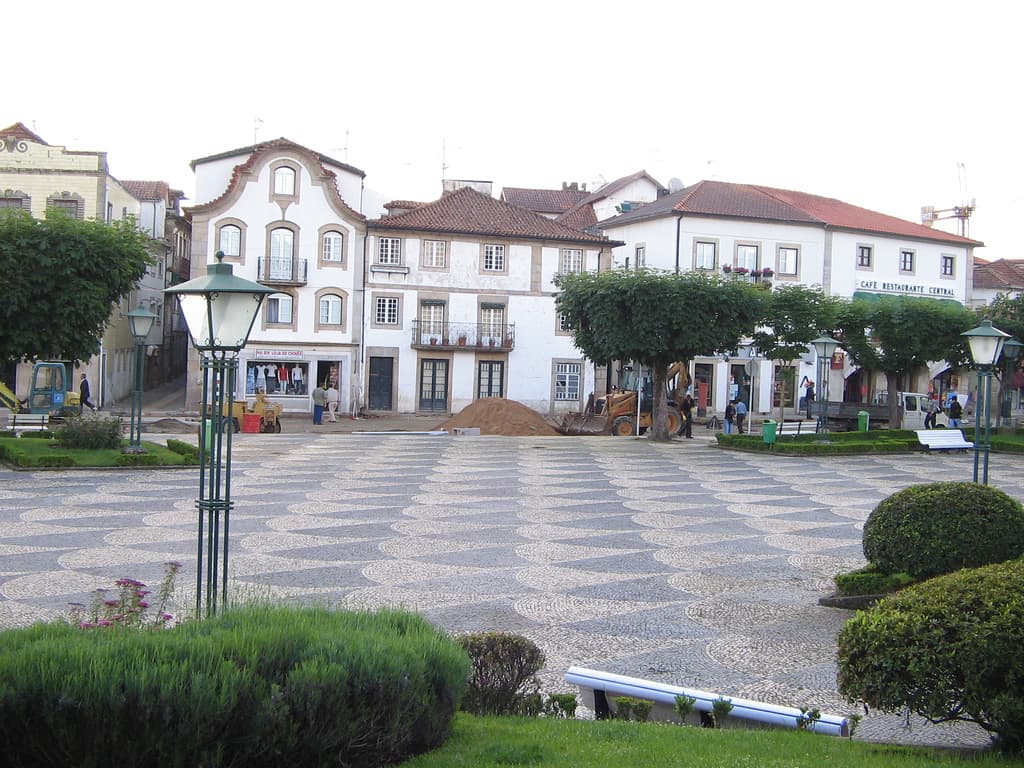
En flânant dans la vieille ville de Monção, on découvre des rues pavées, des ruelles étroites et des places pittoresques qui évoquent un sentiment d'intemporalité. Contrairement à de nombreuses destinations plus touristiques, Monção conserve une atmosphère authentique et rafraîchissante, invitant les visiteurs à découvrir son charme à un rythme tranquille. La ville est également célébrée pour son vin Alvarinho de renommée mondiale, un Vinho Verde vif qui accompagne parfaitement les délicieux poissons de rivière de la région. Pour ceux qui recherchent le repos, les stations thermales de Monção offrent des eaux thérapeutiques, offrant un contrepoint tranquille à son passé légendaire.
L'emplacement stratégique de Monção sur le fleuve Minho, formant une frontière naturelle avec l'Espagne, a façonné son histoire en tant qu'avant-poste défensif vital pendant des siècles. La ville a reçu sa charte du roi Afonso III en 1261, et un château, que l'on croit avoir été construit sous le règne du roi Dinis vers 1306, a formé ses premières défenses. Cependant, certains chercheurs suggèrent que des fortifications encore plus anciennes pourraient avoir existé sous le roi Sancho I.
L'une des légendes les plus tenaces de Monção provient des guerres fernandines en 1369, lorsque les forces castillanes ont assiégé la ville, dans le but d'affamer ses habitants pour les soumettre. C'est pendant cette période désespérée que Deu-la-Deu Martins, l'épouse du gouverneur de la ville absent, a orchestré un bluff audacieux. Elle a rassemblé la dernière farine restante, a fait du pain et l'a jeté par-dessus les murs aux assiégeants, proclamant que Monção avait amplement de provisions. Convaincus que le siège serait futile, les Castillans se sont retirés, cimentant la place de Deu-la-Deu dans le folklore portugais et sur le blason de la ville.
Au XVIIe siècle, pendant la guerre de Restauration portugaise, les défenses de Monção ont subi une modernisation significative. Sous la direction de l'ingénieur militaire français Miguel de L'Ecole, les murs médiévaux ont été intégrés à une nouvelle forteresse polygonale bastionnée conçue pour résister aux tirs d'artillerie. Ces formidables fortifications, classées monument national en 1910, sont toujours debout aujourd'hui, offrant des vues impressionnantes sur le fleuve Minho vers l'Espagne.
Au-delà de son passé militaire, Monção est devenue une ville célébrée pour son identité culturelle unique, y compris la production de vin Alvarinho et la préservation d'anciennes traditions comme le Festival de la Coca. Les bâtiments historiques de la ville, de l'église romane Igreja Matriz aux maisons palatiales des XVIIIe et XIXe siècles, reflètent son héritage durable et ses périodes de prospérité.
Commencez votre exploration par la Fortaleza de Monção, les impressionnants murs défensifs du XVIIe siècle de la ville. Promenez-vous le long des remparts pour des vues imprenables sur le fleuve Minho et le paysage espagnol au-delà.
Au cœur de la vieille ville se trouve la Praça Deu-la-Deu, une charmante place nommée d'après l'héroïne de la ville. Vous y trouverez une statue commémorant Deu-la-Deu Martins et la Capela da Misericórdia, reconnue pour son plafond à caissons peint de chérubins. À proximité, l'Igreja Matriz de Monção, une église romane avec des éléments manuélin, contient le tombeau de Deu-la-Deu Martins.
Juste à l'extérieur du centre-ville, le Palácio da Brejoeira est un magnifique palais du XIXe siècle entouré de magnifiques jardins et de vastes vignobles d'Alvarinho, offrant des dégustations de vin. Pour une immersion plus profonde dans la culture locale, visitez la Casa Museu de Monção, un bâtiment du XVIIIe siècle présentant une collection éclectique, y compris un métier à tisser oriental. Ne manquez pas les Termas de Monção, où vous pourrez vous détendre dans des eaux thermales thérapeutiques. Un court trajet en voiture vers l'ouest mène à la Torre de Lapela, une tour médiévale offrant de superbes vues.
La période idéale pour visiter Monção pour les activités par temps chaud s'étend de mi-juin à mi-septembre, lorsque les températures sont agréables, oscillant entre 24°C et 27°C. Juillet et août sont les mois les plus chauds, avec un ciel plus clair et moins de pluie. Le printemps (mars à mai) et le début de l'automne (septembre à octobre) offrent également des températures douces et moins de foule, ce qui les rend propices aux visites touristiques et à l'exploration culturelle. Bien que les hivers soient plus frais et plus humides, ils peuvent toujours être appropriés pour visiter les attractions intérieures et profiter de la cuisine locale.
Monção est mieux explorée à pied, ce qui vous permet d'apprécier pleinement ses sites historiques et ses vues panoramiques. La monnaie locale est l'Euro (€). Bien que Monção ne soit pas très orientée vers le tourisme de masse, vous découvrirez une gamme de restaurants locaux servant des spécialités régionales, en particulier du poisson de rivière frais, souvent accompagné du célèbre vin Alvarinho. Les options d'hébergement comprennent des maisons d'hôtes et des petits hôtels. Pour ceux qui s'intéressent au vin, envisagez une visite privée de la région d'Alvarinho, comprenant souvent des dégustations dans les caves locales. Monção constitue également une excellente base pour explorer d'autres villes de la région du Minho ou même traverser la frontière vers l'Espagne.
Monção en coréen, en chinois ou en hébreu — et dans 29 autres langues, chaque étape narrée par une voix native. La plus large gamme de langues de tous les audioguides autoguidés.
Disponible en :