Ban Gioc Waterfall
Many visitors approach Ban Gioc Waterfall by boat from the Vietnamese side, yet few understand the precise hours to witness its full force.
Full story unlocks in the tour
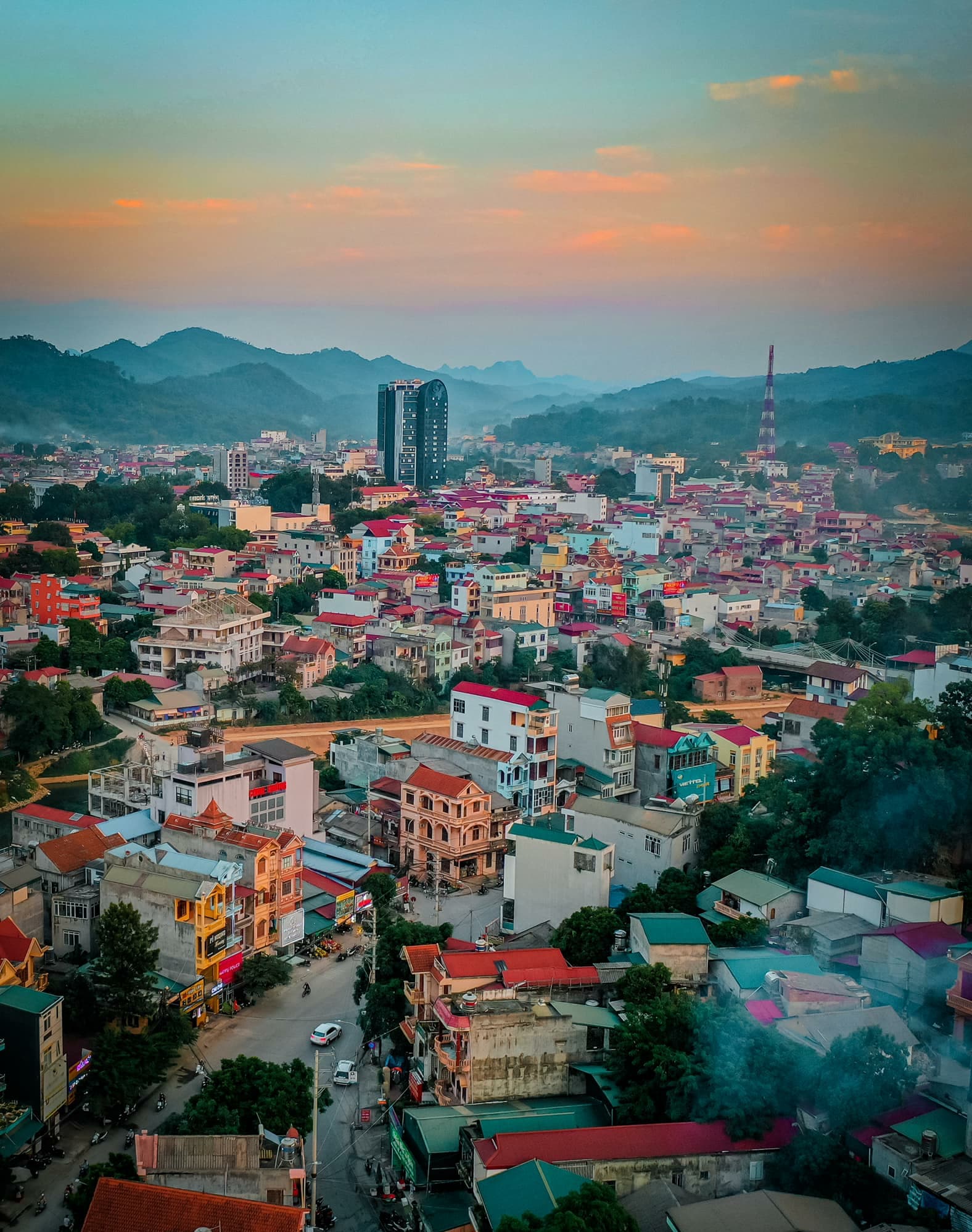 VietHung02092007 / CC BY-SA 4.0, via Wikimedia Commons
Self-guided audio walking tour of Cao Bằng — GPS route, offline playback, story-driven narration in 32 languages.
“Where ancient stone formations meet flowing emerald rivers.”
Not the postcards. The stories even locals don't know — whispered in your ear, right where they happened.
Many visitors approach Ban Gioc Waterfall by boat from the Vietnamese side, yet few understand the precise hours to witness its full force.
While Pac Bo Cave is known as Ho Chi Minh's revolutionary command center, the 'cave' itself may not align with expectations.
This national park is a center of biological diversity, and its distinctive climate provides an unexpected sight rarely encountered in tropical Vietnam.
Discover every secret of Cao Bằng
Every address, every reveal in full — in your ear, right where it happened.
You pick your stops. You walk. The voice reveals what the others miss.


Your self-guided audio tour of Cao Bằng is ready — pick your landmarks, choose your language, and start the moment you arrive.
BuyLume has a built-in augmented-reality guide. Hold your phone up and its camera shows the street ahead of you, with a glowing arrow laid over the real view that always points to your next stop — no map to puzzle over, no wrong turns. Like everything in Lume, it works fully offline.
Cao Bằng, a province on Vietnam's northeastern edge, offers a quiet escape into a landscape shaped by dramatic limestone formations, green valleys, and powerful waterfalls. Sharing a border with China, this area is part of the Non Nuoc Cao Bang UNESCO Global Geopark, recognized for its geological importance and varied life. Unlike some of Vietnam's more frequented destinations, Cao Bằng maintains a calm atmosphere, inviting travelers to explore its natural wonders and cultural depth at a more unhurried pace.
The provincial capital, also named Cao Bằng, serves as a central point for exploring the surrounding attractions. The city itself is situated along the Bằng Giang River and provides a look into local life with its markets and cafes. Beyond the city, the province unfolds into terraced rice fields, winding mountain roads, and villages where ethnic minority groups like the Tày, Nùng, Dao, and H'mong preserve their distinct traditions and ways of life.
The story of Cao Bằng reaches back to the Bronze Age, with the Tây Âu Kingdom establishing its presence in the area. Its strategic position near the Chinese border has meant a tumultuous past, with the territory changing hands many times throughout various dynasties. During the Lý and Trần Dynasties, the provinces of Cao Bằng and Lạng Sơn were known as châu Quảng Nguyên. The Lê Dynasty faced uprisings in the 15th century, and the Mạc family even declared it an independent region, governing for 75 years in the 16th and early 17th centuries.
Cao Bằng holds a significant place in Vietnam's revolutionary narrative, earning the title 'cradle of the revolutionary movement in the north' in the 1920s. Its rugged mountains provided a natural sanctuary for pro-independence groups. A pivotal moment occurred in 1941 when Hồ Chí Minh returned from exile in China and established his headquarters at Pác Bó Cave in Hà Quảng District, approximately 56 kilometers north of Cao Bằng. Here, he laid the groundwork for Vietnam's independence movement, drafting political documents and training cadres. The surrounding landscape was even renamed with ideological significance; the nearby stream became Lenin Stream, and a towering peak was named Karl Marx Mountain.
The province also bears the marks of more recent conflicts. During the Sino-Vietnamese War in February and March 1979, Chinese troops entered and occupied Cao Bằng city, employing a 'scorched earth' policy that leveled much of the city, including places of worship. Historical areas near Pác Bó Cave were mined and bombed, damaging the cave mouth where Hồ Chí Minh had based his guerrilla activities. Today, memorials and remnants throughout the region serve as a testament to this painful chapter, offering a deep understanding of the war's impact for those interested in understanding its traces.
The grand Ban Gioc Waterfall (Thác Bản Giốc) stands as a major draw, spanning the border between Vietnam and China. It is one of Asia's largest and most beautiful waterfalls, measuring 300 meters wide. Visitors can take a raft ride to approach the falling waters. Nearby, the Trúc Lâm Phật Tích Pagoda offers elevated perspectives of the falls and the surrounding karst landscape.
Descend into Ngườm Ngao Cave, an impressive limestone cave system known for its distinctive stalactite formations. While the entire system extends over 2 kilometers, a considerable portion is accessible for exploration.
For a journey into Vietnam's revolutionary past, visit the Pác Bó Historical Site. Here, you can explore Pác Bó Cave, where Hồ Chí Minh lived and worked, and observe the clear Lenin Stream and Karl Marx Mountain.
The Thang Hen Lake System comprises 36 interconnected small lakes, providing a calm setting for repose. Another natural wonder is Angel Eye Mountain (Núi Mắt Thần), a geological marvel with a distinctive opening through its peak, offering wide views of the valley below.
Those who appreciate nature can explore Phia Oac – Phia Den National Park, part of the UNESCO Global Geopark, known for its diverse life, cool temperate climate, and opportunities for walking through mossy forests. Consider visiting local craft villages like Phuc Sen, celebrated for its traditional blacksmithing, or Phia Thap, known for incense stick production, to experience the cultural heritage of ethnic minority groups.
Cao Bằng experiences a temperate climate with four distinct seasons. The dry season, from October to April, is generally considered the best time to visit, offering cooler, more comfortable weather and minimal rain, ideal for outdoor activities like walking and exploring natural landmarks. Autumn (September to November) is particularly recommended, as temperatures are pleasant (20°C to 29°C), and the rice terraces turn a golden hue, creating scenic views. October is often highlighted as the single best month, with ideal temperatures and the Ban Gioc Waterfall Festival. While the rainy season (May to September) brings lush green landscapes and powerful waterfalls, heavy downpours can occur, especially from June to August, potentially affecting travel plans and road conditions.
Cao Bằng is approximately 270-280 kilometers north of Hanoi, with the journey typically taking 6 to 9 hours by road. Sleeper buses are a popular and economical option, departing from Hanoi's Mỹ Đình and Giáp Bát stations. For more flexibility, private vehicles or motorbikes are also viable, though mountain roads can be winding and challenging. It's advisable to arrive in Cao Bằng before dark due to poorly lit and unpredictable mountain roads.
English is not widely spoken outside of major tourist sites, so having a translation app or a local guide can be beneficial. ATMs are available in Cao Bằng City but are scarce in rural areas, so carry sufficient cash, especially for homestays and smaller establishments. Cell service can be unreliable in mountainous regions, so downloading offline maps is recommended. Pack layers of clothing, sturdy walking shoes, and rain gear, as sudden downpours can occur year-round. Travel insurance is highly recommended, and it's wise to consult a doctor about vaccinations for typhoid and hepatitis A and B if planning extended stays in rural areas.
Cao Bằng in Korean, in Chinese or in Hebrew — and 29 more languages, every stop narrated by a native voice. The widest language range of any self-guided audio tour.
Available in: