Ngo Dong River
The rhythmic paddling on the Ngo Dong River might seem conventional, but observe closely.
Full story unlocks in the tour
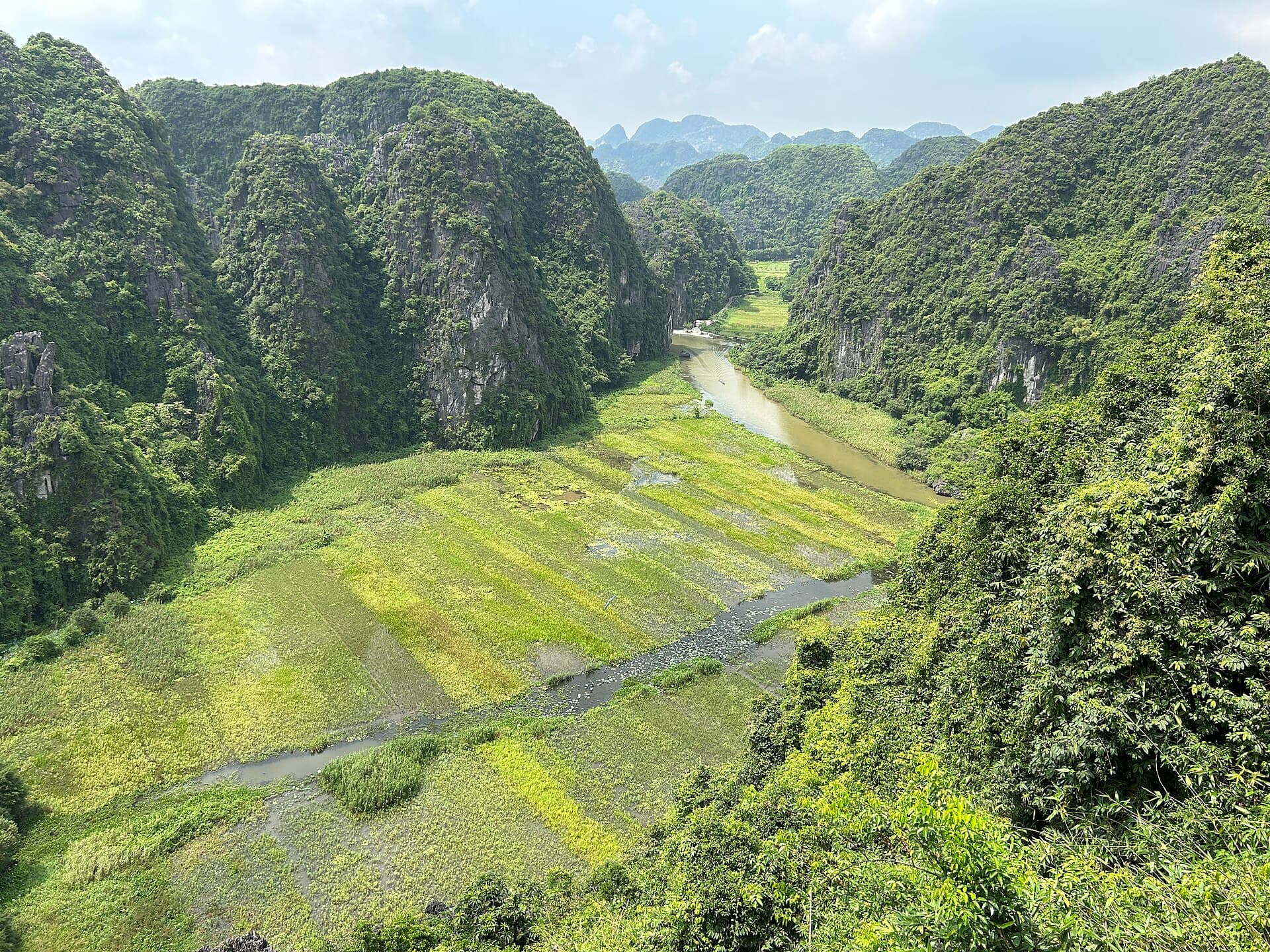 Anass Sedrati / cc by-sa 4.0, via Wikimedia Commons
Self-guided audio walking tour of Tam Cốc — GPS route, offline playback, story-driven narration in 32 languages.
“Where limestone karsts meet emerald rice paddies, and time floats by on a sampan.”
Not the postcards. The stories even locals don't know — whispered in your ear, right where they happened.
The rhythmic paddling on the Ngo Dong River might seem conventional, but observe closely.
Beyond the striking entrance bridge and lotus pond, the pagoda holds a secret within the mountain itself.
The green and golden hues of the rice fields are a photographer's aspiration, but their beauty reveals a deeper agricultural rhythm.
Discover every secret of Tam Cốc
Every address, every reveal in full — in your ear, right where it happened.
You pick your stops. You walk. The voice reveals what the others miss.


Your self-guided audio tour of Tam Cốc is ready — pick your landmarks, choose your language, and start the moment you arrive.
BuyLume has a built-in augmented-reality guide. Hold your phone up and its camera shows the street ahead of you, with a glowing arrow laid over the real view that always points to your next stop — no map to puzzle over, no wrong turns. Like everything in Lume, it works fully offline.
Tam Cốc, often referred to as the "Halong Bay on land," is an enchanting destination in Vietnam's Ninh Binh province. This serene landscape is characterized by dramatic limestone karsts that rise majestically from verdant rice paddies and tranquil waterways. Part of the UNESCO World Heritage-listed Trang An Landscape Complex, Tam Cốc offers a harmonious blend of natural splendor and cultural significance.
The heart of the Tam Cốc experience is a boat trip along the Ngo Dong River, where local rowers navigate through a flooded cave karst system. The journey takes visitors through three natural caves—Hang Cả, Hang Hai, and Hang Ba—each offering unique perspectives of the ancient rock formations. Beyond the iconic boat ride, the region provides opportunities for cycling through scenic countryside paths, exploring ancient temples, and hiking to expansive viewpoints that reveal the breadth of the area.
The story of Tam Cốc begins millions of years ago, not with human history, but with geological forces. Approximately 250 to 300 million years ago, the region that is now Ninh Binh province was submerged beneath a shallow tropical sea. Over vast stretches of time, the natural process of limestone erosion, shaped by the flowing waters of the Ngo Dong River, carved out the dramatic karst landscapes and the distinctive cave system seen today. These natural formations created the three caves—Hang Cả, Hang Hai, and Hang Ba—that define the area.
During the Tran Dynasty (1225–1400), Tam Cốc played a significant role as part of the Truong Yen base. This base was crucial during the resistance against the second Yuan-Mongol invasion in 1285, highlighting the strategic importance of the region's natural defenses. The area also holds deep spiritual significance for the local population, with ancient temples reflecting a blend of Buddhism, Vietnamese folklore, and nature worship.
Nearby, the Hoa Lư Ancient Capital, located about 16 kilometers from Tam Cốc, served as Vietnam's first capital between 968 and 1009, spanning the Dinh, Le, and Ly dynasties. This ancient citadel, surrounded by limestone cliffs and rice fields, was a significant political and economic center in the 10th century. The Thai Vi Temple in Tam Cốc, built during the Tran Dynasty in the 13th century, further connects the area to this imperial past, honoring King Tran Thai Tong and his successors. The region's history is not just about grand dynasties and battles, but also about the quiet resilience of its people, who have cultivated the land and preserved its spiritual sites for centuries.
The primary way to experience Tam Cốc is a boat tour along the Ngo Dong River, a journey that typically lasts about two hours. These tours, often rowed by local women using their feet, glide past verdant rice fields and through three natural caves: Hang Cả, Hang Hai, and Hang Ba. Hang Cả is the longest, measuring over 120 meters, while Hang Ba is the smallest with a lower ceiling.
Beyond the river, Bich Dong Pagoda is a worthy visit. This three-tiered cave pagoda, founded in 1428, is integrated into a limestone mountain. Visitors cross an arched stone bridge over a lotus pond to reach the Lower Pagoda, then ascend steps to the Middle Pagoda, which is built into a cave, and finally the Upper Pagoda for expansive views.
For sweeping vistas, a hike to Mua Cave Viewpoint is highly recommended. The ascent offers increasingly beautiful views, culminating in panoramic vistas of Tam Cốc's iconic landscapes of rice paddies, winding rivers, and towering karsts. Cycling through the countryside provides a closer look at rural life and the agricultural rhythms of the rice fields.
The best times to visit Tam Cốc are during the dry season, from November to April, for pleasant weather and low humidity. This period is ideal for outdoor activities like boat rides and hiking. For those seeking the iconic golden rice fields, late May to early June, or late September to mid-October, are prime times for the rice harvesting seasons. The fields transform into a rich array of green and gold during these periods. While July to October is the rainy season, with potential disruptions to outdoor activities, the landscapes remain lush.
Tam Cốc is approximately 100 kilometers south of Hanoi. Direct buses from Hanoi take 2.5 to 3 hours, with prices ranging from $10 to $16. Trains from Hanoi to Ninh Binh station take 2 to 3 hours, costing $8 to $10, followed by a 15-minute taxi or motorbike ride to Tam Cốc. Renting a private car or motorbike offers flexibility, with a drive from Hanoi taking about 2 to 2.5 hours.
The entrance fee for the Tam Cốc boat tour is 150,000 VND per adult, with an additional boat fee of 140,000 VND. Bich Dong Pagoda has no entrance fee. Accommodations in Tam Cốc range from 300,000 to 2,000,000 VND per night, depending on the service. A meal at a local restaurant typically costs between 50,000 and 200,000 VND per person. It is advisable to bring cash for local vendors and tips.
Tam Cốc in Korean, in Chinese or in Hebrew — and 29 more languages, every stop narrated by a native voice. The widest language range of any self-guided audio tour.
Available in: