Carlisle Castle
A walled-up woman within Carlisle Castle's keep is more than just a ghost story.
Full story unlocks in the tour
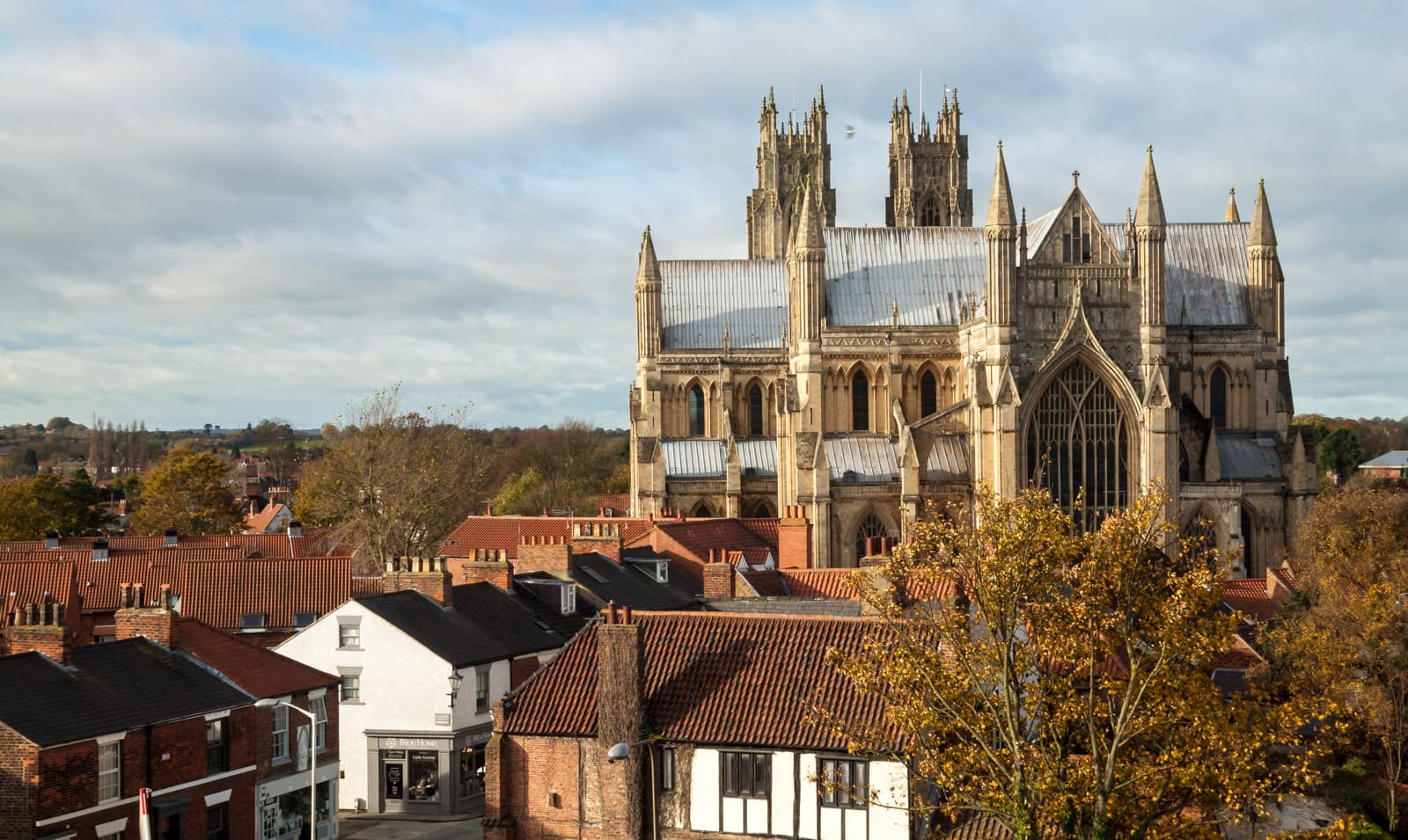 Photo of Beverley, via Wikimedia Commons
Self-guided audio walking tour of Carlisle — GPS route, offline playback, story-driven narration in 32 languages.
“Where Roman foundations meet Border Reiver sagas, Carlisle stands as a sentinel city.”
Not the postcards. The stories even locals don't know — whispered in your ear, right where they happened.
A walled-up woman within Carlisle Castle's keep is more than just a ghost story.
Rumors of a secret passage connect Carlisle Cathedral to a nearby tavern.
Carlisle's 'Cursing Stone' at Tullie House Museum holds a powerful, historical hex.
Discover every secret of Carlisle
Every address, every reveal in full — in your ear, right where it happened.
You pick your stops. You walk. The voice reveals what the others miss.


Your self-guided audio tour of Carlisle is ready — pick your landmarks, choose your language, and start the moment you arrive.
BuyLume has a built-in augmented-reality guide. Hold your phone up and its camera shows the street ahead of you, with a glowing arrow laid over the real view that always points to your next stop — no map to puzzle over, no wrong turns. Like everything in Lume, it works fully offline.
Carlisle, the sole city in Cumbria, England, serves as a historical nexus, strategically positioned near the Scottish border, earning it the moniker 'The Great Border City.' With a history extending over 2,000 years, from its origins as a Roman settlement to its role in Anglo-Scottish conflicts, Carlisle offers a journey through time. Today, it functions as a gateway to the dramatic expanses of the Lake District National Park and the ancient structures of Hadrian's Wall, a UNESCO World Heritage Site that traces through the city itself.
Beyond its historical significance, Carlisle is a city that intertwines its past with contemporary life. Visitors can explore its compact historic core, which includes a castle, a cathedral, and remnants of old city walls. The city also provides a lively environment with diverse establishments for dining, drinking, and shopping, alongside elegant accommodations. Whether drawn to ancient remnants, urban energy, or the tranquility of nearby natural parks, Carlisle presents a compelling destination for a range of interests.
## Roman Foundations and Border Conflicts Carlisle's narrative commences around 72 AD with the Roman settlement of Luguvalium, established to support forts along Hadrian's Wall. This initial fort, strategically situated on a Roman road overlooking two rivers, was reconstructed in 83 AD with sturdy oak wood and defended by 500 cavalry soldiers. By the early 100s, it had grown into a significant stronghold, and in 122 AD, Emperor Hadrian himself visited, leading to the construction of a new, larger fort called Petriana in the Stanwix area, which became the largest fort on Hadrian's Wall.
After the Romans withdrew, the area became the British kingdom of Rheged, with Carlisle likely serving as its primary city. The region then transformed into a disputed territory, contended by various groups including the Kingdom of Strathclyde and Northumbria. In 1092, William Rufus, son of William the Conqueror, seized Carlisle from the Scots, claiming it for England and initiating the construction of Carlisle Castle and city walls. This solidified Carlisle's role as a crucial military fortification, frequently at the center of conflicts between England and Scotland.
## Medieval Turbulence and Reiver Raids Throughout the Middle Ages, Carlisle repeatedly shifted control between Scotland and England due to a series of wars. This turbulent period also saw the emergence of the Border Reivers, raiders who operated along the Anglo-Scottish border until the late 1600s, causing considerable disruption to ruling monarchs. Carlisle Castle itself endured at least seven sieges between 1174 and 1461. In 1568, Mary, Queen of Scots, was famously held captive in Carlisle Castle. The city also played a significant role in the English Civil War, with the Royalist-held Carlisle Castle undergoing a nine-month siege from 1644 to 1645. In 1646, portions of Carlisle Cathedral's nave were even dismantled to provide stone for rebuilding the castle.
## Later History and Modern City Carlisle continued its role as a garrison town, facing its final siege in 1745 during the Jacobite Rising when Charles Edward Stuart (Bonnie Prince Charlie) captured it. Unlike many other English fortresses, Carlisle Castle was never permitted to fall into disrepair due to its enduring strategic importance. In the 19th century, Carlisle evolved into a market town with textile mills and the advent of the railway. Today, Carlisle is Cumbria's capital city, recognized for its agricultural and food-related businesses, and continues to be an energetic hub with a deep historical character woven into its contemporary identity.
Carlisle presents a fusion of ancient history and contemporary attractions. The formidable Carlisle Castle, a medieval fortress constructed in 1092, has defended the city for over 900 years and held Mary, Queen of Scots captive. Within its walls, you will find Cumbria's Museum of Military Life, displaying over 300 years of military history. A short walk away stands Carlisle Cathedral, established in 1133, recognized for its celestial painted ceiling and intricate stained glass. It is the second smallest ancient cathedral in England but offers a quiet sanctuary.
For a deeper exploration of the city's past, Tullie House Museum and Art Gallery traces Carlisle's history from Roman times to the present day, featuring art collections and interactive exhibits. The museum also includes beautiful gardens. The Guildhall Museum, one of Carlisle's oldest structures, provides further insights into the city's heritage. Beyond the city center, segments of Hadrian's Wall, a UNESCO World Heritage Site, are readily accessible, with Roman forts and walking paths. For repose, Bitts Park offers green expanses, riverside paths, and a war memorial.
Carlisle welcomes visitors throughout the year, with each season offering a distinct experience. The warmest weather for outdoor pursuits, with temperatures typically ranging from 66-88°F (19-31°C), occurs from late June to late August. However, this period also sees the most visitors and higher costs. The shoulder seasons of spring (March to May) and early autumn (September to October) provide a balance of pleasant weather, fewer crowds, and improved value for accommodations. Spring brings blossoming flowers, while autumn displays colorful foliage. Winter offers a quieter, more economical visit, with dramatic light for photography, though it can be cold and wet.
Carlisle is easily reached by car, situated just off the M6 motorway with ample city center parking. Its centrally located train station provides direct services from major cities such as London, Glasgow, and Manchester. A central bus station offers routes across the Lake District and Cumbria. The city center is compact and walkable, allowing for easy exploration of major attractions on foot. For those arriving by train, luggage storage options are available if your accommodation does not provide it. While Carlisle does have an airport, international flights are limited, so train or car travel is generally advised.
Carlisle in Korean, in Chinese or in Hebrew — and 29 more languages, every stop narrated by a native voice. The widest language range of any self-guided audio tour.
Available in: