Musée du Textile et de la Mode
Cholet is known as the 'handkerchief capital of France,' but the iconic red and white 'mouchoir de Cholet' has a surprisingly recent origin.
Full story unlocks in the tour
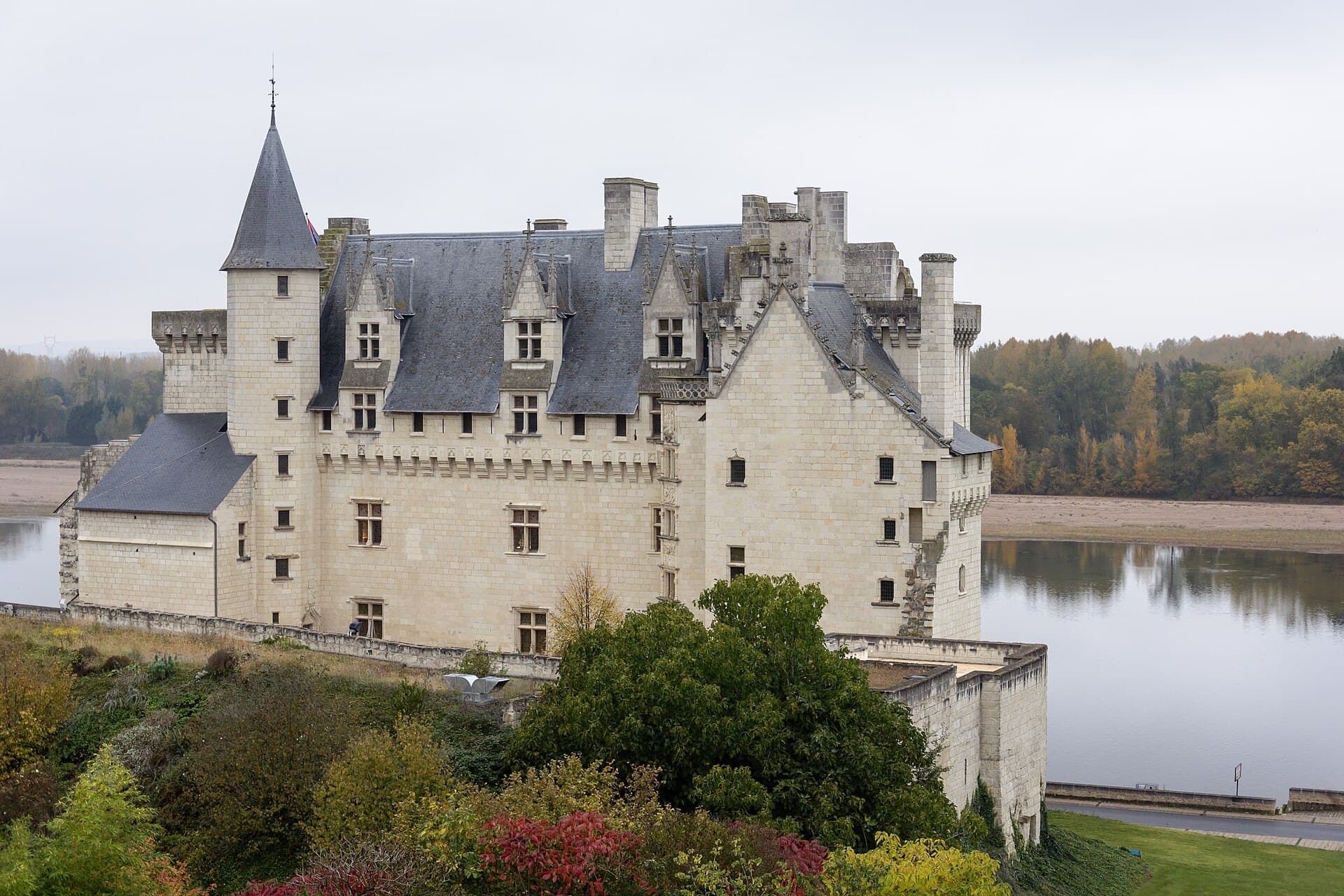 Myrabella / cc by-sa 3.0, via Wikimedia Commons
Self-guided audio walking tour of Cholet — GPS route, offline playback, story-driven narration in 32 languages.
“Cholet: Where threads of history and modernity intertwine.”
Not the postcards. The stories even locals don't know — whispered in your ear, right where they happened.
Cholet is known as the 'handkerchief capital of France,' but the iconic red and white 'mouchoir de Cholet' has a surprisingly recent origin.
Look closely at the gargoyles adorning the Église du Sacré-Cœur, and you might spot some unexpected faces among the traditional grotesque figures.
The central Place Travot, with its modern design and lively market, stands on ground that once witnessed a pivotal and devastating event in French history.
Discover every secret of Cholet
Every address, every reveal in full — in your ear, right where it happened.
You pick your stops. You walk. The voice reveals what the others miss.

Your self-guided audio tour of Cholet is ready — pick your landmarks, choose your language, and start the moment you arrive.
BuyLume has a built-in augmented-reality guide. Hold your phone up and its camera shows the street ahead of you, with a glowing arrow laid over the real view that always points to your next stop — no map to puzzle over, no wrong turns. Like everything in Lume, it works fully offline.
Cholet, a city in western France, is located in the Maine-et-Loire department of the Pays de la Loire region. Situated along the Moine River, it serves as a regional hub, known for its industrial heritage, particularly in textiles. The city offers a blend of historical depth, scenic parks, and a lively local atmosphere, making it a compelling stop for those exploring the French countryside. While not always on the main tourist trails, Cholet provides an authentic glimpse into French urban life, where tradition and innovation are interwoven.
With a population of around 54,000, Cholet is the second most populous commune in Maine-et-Loire, after Angers. Its favorable location makes it a convenient base for discovering the cultural and natural attractions of the Loire Valley. The city's identity is deeply connected to its textile past, which is celebrated in its museums and local events. Visitors can enjoy its well-maintained parks, bustling markets, and a dynamic arts scene.
Cholet is also recognized for its strong sporting culture, particularly basketball, with the Cholet Basket team being well-known in France. The city has also hosted stages of the Tour de France, highlighting its connection to cycling. This combination of industrial legacy, cultural offerings, and a dynamic local spirit creates a unique and engaging experience for travelers.
The origins of Cholet can be traced back to the Middle Ages, with its first written records appearing in the 11th century. The name 'Cholet' itself is thought to derive from the Latin word 'cauletum,' meaning 'a place planted with cabbage,' hinting at its early agricultural roots. The town initially developed around a feudal castle, built by the Counts of Anjou to secure their territorial borders.
In the 17th century, Cholet began to emerge as a significant weaving center, driven by the local cultivation of flax and hemp. This early specialization laid the groundwork for its future as a prominent textile producer. By the 18th century, the production of handkerchiefs became a notable industry.
The late 18th century brought a period of immense upheaval to Cholet during the French Revolution, specifically the Wars of the Vendée (1793–1796). Cholet became a focal point of the counter-revolutionary struggle. The town witnessed several significant battles, including the First Battle of Cholet in March 1793, where Vendéen insurgents captured the city. Later that year, in October, the main Vendéan army suffered a major defeat at the Battle of Cholet, leading to brutal government repression. The conflict had a devastating impact, with the city being almost entirely burned and 60-70% destroyed. An estimated 5,000 inhabitants were killed or went missing from a pre-war population of around 8,400. This destruction necessitated a complete urban rebuilding, which explains the prevalence of 19th-century architecture in the city today.
Following the devastation, Cholet was slowly rebuilt, primarily in the 19th century. The textile industry continued to be a driving force, with the transition from manual home-based weaving to large mechanized factories in the late 19th century. The arrival of the railway in 1866 further cemented Cholet's position as a regional textile capital. This era also saw the popularization of the iconic red and white Cholet handkerchief, which became a symbol of the city, often linked to the Vendée Wars. In 2003, Cholet was officially recognized as a "City of Art and History" by the French Ministry of Culture, acknowledging its profound past and cultural preservation efforts.
Begin your exploration at the Musée du Textile et de la Mode, housed in a former bleachworks factory. This museum chronicles Cholet's history as a major textile producer, showcasing traditional looms and the evolution of textile production, with a focus on the iconic red and white handkerchiefs.
For a broader historical and artistic perspective, visit the Musée d'Art et d'Histoire. It features exhibits ranging from prehistoric artifacts to modern art, offering insights into the region's past, including the Wars of the Vendée, and showcasing regional artists.
The Église du Sacré-Cœur, a Neo-Gothic church constructed in the late 19th century, is an architectural highlight. Known for its stained-glass windows and intricate details, visitors can climb the bell tower for panoramic views of Cholet.
For a tranquil escape, the Parc de Moine offers a green space with a lake, flower gardens, and shaded pathways, often featuring sculptures and monuments. Just outside the town, the Lac de Ribou is a picturesque spot for outdoor activities like walking, cycling, and boating.
A short drive from Cholet, the Parc Oriental de Maulévrier is the largest Japanese garden in Europe, providing a serene landscape with waterfalls, red bridges, and lush vegetation.
Do not overlook the Market at Place Travot, especially on Saturdays, for a lively atmosphere and a chance to find local products and souvenirs, including the famous Cholet handkerchief.
Cholet experiences a temperate and mild climate, making it comfortable to visit throughout the year. The ideal time for warm-weather activities is from mid-June to mid-September. During July and August, average daytime temperatures hover around 20-25°C, with minimal rainy days, perfect for exploring the city's parks and outdoor attractions. Spring and early summer (May to early October) also offer pleasant weather with fewer crowds. Autumn brings cooler temperatures and colorful foliage around Lac de Ribou. Winters are milder, with average temperatures around 6-7°C, and offer a quieter experience with seasonal events.
Cholet is well-connected by train, with services from major French cities like Nantes and Angers, both less than an hour away. The closest major airport is Nantes Atlantique, approximately a 50-minute drive. For those traveling by car, Cholet is accessible via the A87 motorway.
Within the city, Cholet offers several convenient parking options, including car parks at Place Travot and Les Arcades Rougé. Street parking is available but can be limited on market days, particularly Saturdays. Public transportation includes a local bus network, Choletbus. The city center is compact and walkable, making it easy to explore on foot.
Dining options in Cholet range from traditional bistros to modern cafés, offering local specialties like 'Fouace,' a local bread, and 'Choletais' chocolates. The Saturday market at Place Travot is an excellent place to find gastronomic souvenirs. Shops generally operate from 9:30 or 10:00 AM to 7:00 PM. Accommodation ranges from budget-friendly options to chain hotels, with prices typically starting from 50-75 euros per night. Booking 2-3 months in advance is recommended for summer visits due to increased demand, especially if planning a trip to the nearby Puy du Fou historical park.
Cholet in Korean, in Chinese or in Hebrew — and 29 more languages, every stop narrated by a native voice. The widest language range of any self-guided audio tour.
Available in: