While Cockermouth Castle stands as a testament to Norman power and medieval conflicts, its ruinous state today is partly due to the actions of a surprising historical figure.
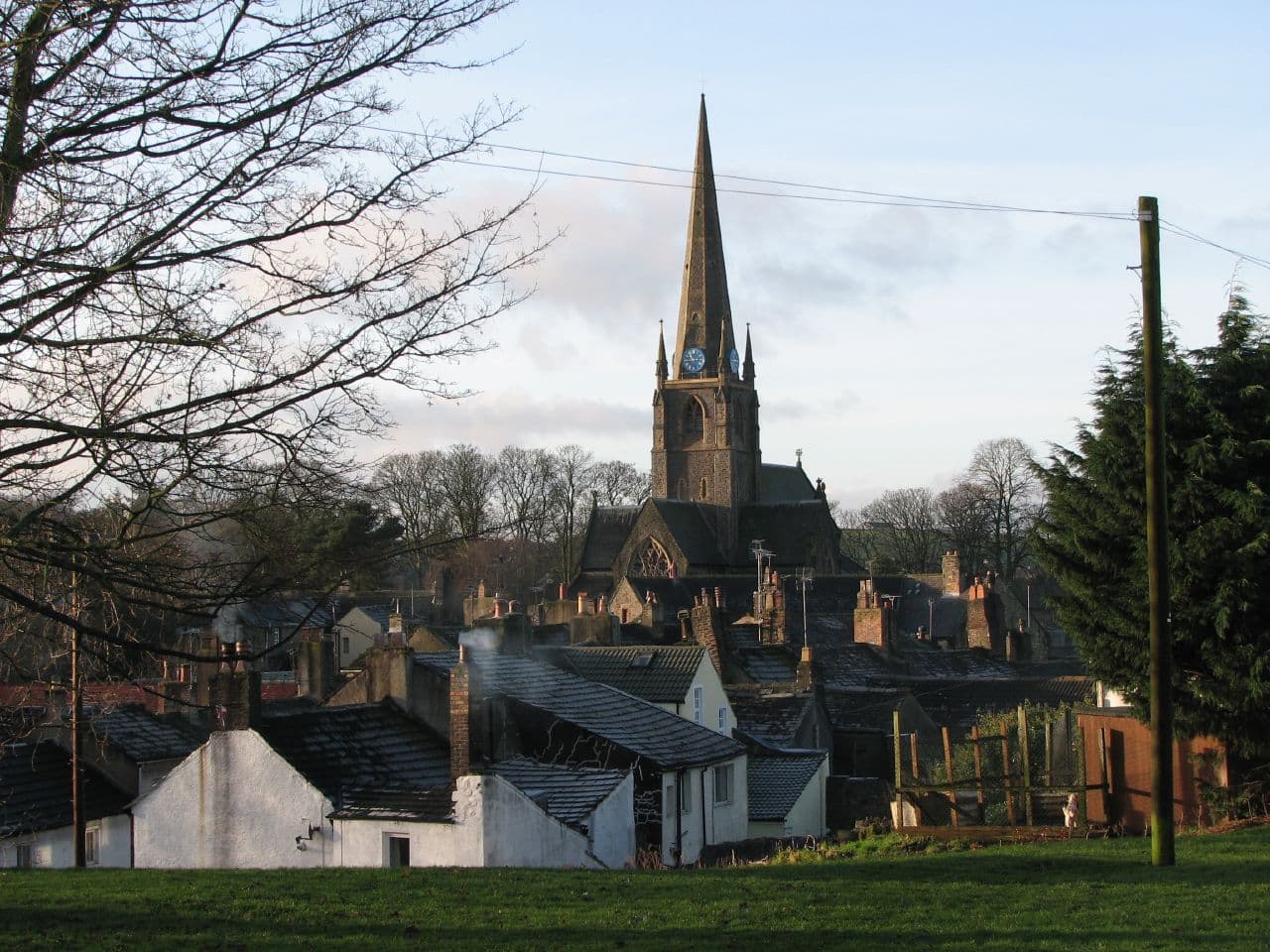
Tim Herrick from Sheffield, UK / CC BY 2.0, via Wikimedia CommonsCockermouth
Self-guided audio walking tour of Cockermouth — GPS route, offline playback, story-driven narration in 32 languages.
“Where rivers converge, history resonates, and poets found their voice.”
Cockermouth, as no one tells it.
Not the postcards. The stories even locals don't know — whispered in your ear, right where they happened.
Strolling along Cockermouth's main thoroughfare, one might notice something unusual about its historical street lighting.
Stepping inside a particular ironmonger's shop, one discovers more than just hardware; there's a compelling glimpse into a past profession.
Discover every secret of Cockermouth
Every address, every reveal in full — in your ear, right where it happened.
You pick your stops. You walk. The voice reveals what the others miss.
How long do you have in Cockermouth?
Your self-guided audio tour of Cockermouth is ready — pick your landmarks, choose your language, and start the moment you arrive.
BuyThe story of Cockermouth
Cockermouth, a market town in Cumbria, England, offers a blend of enduring character and natural splendor at the confluence of the River Derwent and River Cocker, which lends the town its name. Resting on the edge of the Lake District National Park, it presents a calmer alternative to the region's more active tourist centers, while still providing easy access to lakes, fells, and the Solway Coast.
The town is admired for its well-preserved Georgian and Victorian architecture, with a distinctive medieval layout that earned it 'Distinguished Town' status in 1964 from the British Council for Archaeology. Beyond its architectural appeal, Cockermouth is known as the birthplace of Romantic poet William Wordsworth and his sister Dorothy, whose childhood home is now a National Trust property. This combination of literary heritage, independent shops, and a thriving arts scene makes Cockermouth a compelling destination for those seeking culture and countryside.
## From Roman Outpost to Market Hub Cockermouth's origins trace back thousands of years, with evidence of Mesolithic settlements along its rivers. The Romans established a fort called Derventio at nearby Papcastle, guarding a crucial river crossing and road junction that supported Hadrian's Wall. After the Romans departed around 400 AD, the Normans arrived, building Cockermouth Castle around 1134 on a ridge between the River Cocker and River Derwent. This strategic location at the rivers' convergence, the lowest point where the fast-flowing Derwent could be bridged, was pivotal to the town's development.
## Medieval Prosperity and Industrial Growth Under Norman influence, a settlement grew around the castle, and by the 13th century, Cockermouth became a significant market center. King Henry III granted market charters in 1221 and 1227, solidifying its role as a commercial hub. The town's prosperity was initially built on the cloth trade, with a fulling mill recorded as early as 1156. For 600 years, a thriving cottage industry in textiles flourished. The medieval layout, characterized by a broad main street and narrow burgage plots, remains largely preserved today.
## Literary Connections and Modern Resilience The Industrial Revolution brought mechanization, and Cockermouth adapted, becoming a center for wool, linen, and cotton mills, powered by its abundant water supply. The town is perhaps most famous as the birthplace of William Wordsworth in 1770, whose childhood home is now a National Trust property. Other notable figures include Fletcher Christian, leader of the Mutiny on the Bounty, and scientist John Dalton.
In more recent times, Cockermouth has demonstrated resilience, particularly after experiencing significant flooding in 2009 and 2015. Restoration efforts carefully preserved the town's historic character, resulting in beautifully restored Georgian shopfronts. Flood markers on local business walls serve as reminders of these events.
Begin your exploration at Wordsworth House and Garden, the 18th-century Georgian birthplace of William and Dorothy Wordsworth. This National Trust property offers a glimpse into their childhood, with period rooms and a tranquil riverside garden.
Walk along Main Street and Market Place, appreciating the Georgian and Victorian architecture. This area is known for its independent shops, cafes, and galleries, maintaining a distinct local character. While Cockermouth Castle is largely in ruins and privately owned, its exterior can be admired from riverside walks in the Memorial Gardens, offering views of the remaining hall, Flag Tower, and gatehouse.
For those interested in local industry, Jennings Brewery has a history dating back to 1828, though tours currently need to be checked for availability. The Kirkgate Centre is the town's community arts venue, hosting theatre, music, and film. Consider exploring the nearby western lakes, such as Loweswater, Crummock Water, and Buttermere, all within a short drive.
Cockermouth welcomes visitors throughout the year, but late spring (May to June) and early autumn (September to October) offer mild weather and fewer crowds. Summer (July to August) is popular and brings warmer temperatures, with average highs around 19°C (66°F) in July. May receives considerable daily sunshine, around 5.4 hours.
Visiting in spring is particularly rewarding as hundreds of thousands of daffodils, planted in honor of Wordsworth, bloom around the town. Key events include the Cockermouth Live! festival in July and the Taste Cumbria food festival in September.
Cockermouth is easily accessible by car via the A66 from both east and west, or the A595 from Carlisle. While the town no longer has a railway station, regular bus services connect it to nearby locations like Penrith (the nearest mainline station), Carlisle, Workington, and Keswick. Several public car parks are available, including at Wakefield Road, Fairfield, and Memorial Gardens; limited disc parking is also on Main Street.
The town offers a range of accommodation, from bed and breakfasts to historic inns and self-catering cottages, with advance booking recommended during peak seasons. Dining options include traditional pubs, tearooms, and contemporary restaurants. Cockermouth is considered a family-friendly destination with various activities for children.
- What is Cockermouth famous for?
- Cockermouth is most famous as the birthplace of the Romantic poet William Wordsworth and his sister Dorothy.
- What does the name Cockermouth mean?
- The name Cockermouth refers to the town's location at the confluence, or mouth, of the River Cocker into the River Derwent.
- Is Cockermouth part of the Lake District National Park?
- Cockermouth is situated just outside the boundary of the Lake District National Park, on its north-west fringe, serving as a gateway to the Western Lakes and Solway Coast.
- Are there any notable historical figures from Cockermouth besides Wordsworth?
- Yes, other notable historical figures include Fletcher Christian, leader of the Mutiny on the Bounty, and pioneering scientist John Dalton, who developed the atomic theory of matter.
- What is 'Distinguished Town' status?
- In 1964, Cockermouth was designated one of Great Britain's few 'Distinguished Towns' by the British Council for Archaeology, recognizing its distinctive medieval layout and well-preserved architecture as worthy of special preservation.
- Is Cockermouth prone to flooding?
- Yes, due to its location at the confluence of two rivers, Cockermouth has historically been prone to flooding, experiencing significant events in 2009 and 2015.