Côn Đảo Prison's 'Tiger Cages'
Imagine cells so brutal, they were designed to break the human spirit not just physically, but psychologically.
Full story unlocks in the tour
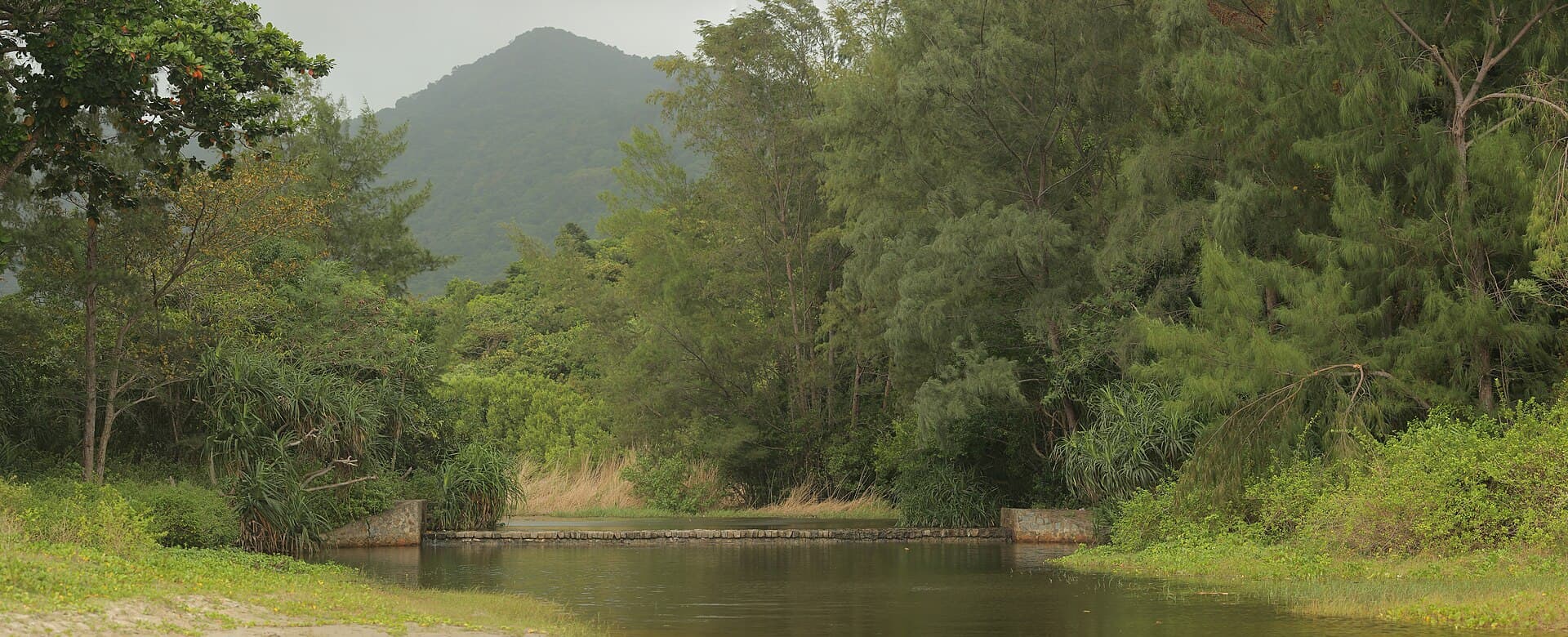 [Tycho] talk , http://shansov.net / CC BY-SA 3.0, via Wikimedia Commons
Self-guided audio walking tour of Côn Đảo — GPS route, offline playback, story-driven narration in 32 languages.
“Where emerald waters meet a haunting past.”
Not the postcards. The stories even locals don't know — whispered in your ear, right where they happened.
Imagine cells so brutal, they were designed to break the human spirit not just physically, but psychologically.
A cemetery where thousands rest, many in unmarked graves, yet one grave draws a constant stream of visitors, especially at night.
These islands are a sanctuary for more than just rare land animals; they protect a unique marine mammal found in only one place in Vietnam.
Discover every secret of Côn Đảo
Every address, every reveal in full — in your ear, right where it happened.
You pick your stops. You walk. The voice reveals what the others miss.

Your self-guided audio tour of Côn Đảo is ready — pick your landmarks, choose your language, and start the moment you arrive.
BuyCôn Đảo, an archipelago of 16 islands and islets off Vietnam's southeastern coast, offers a compelling blend of untouched natural beauty and profound historical significance. The main island, Côn Sơn, is renowned for its tranquil beaches, lush national park, and diverse marine life, making it a growing destination for eco-tourism. Yet, beneath this serene surface lies a poignant past, as Côn Đảo was once home to a notorious penal colony that earned it the moniker 'hell on Earth.'
Today, visitors can explore both facets of Côn Đảo—from diving into crystal-clear waters teeming with coral and sea turtles to contemplating the solemn history preserved within the former prison complex. The archipelago's remote location, about 185 km from Vũng Tàu and 230 km from Ho Chi Minh City, has helped maintain its untouched charm and diverse ecosystems. It's a place where the echoes of a tumultuous past resonate amidst striking landscapes, inviting a deeper understanding of Vietnam's resilient spirit.
Côn Đảo's strategic location on maritime trade routes meant it was known to seafarers and empires long before the French arrived. Ancient Cambodian inscriptions mention Javanese fleets attacking the islands around 767 CE, with pirates using them as a base for raids. In 1702, the English East India Company established a settlement on Côn Sơn Island, naming it Pulo Condore, but this venture was short-lived, ending in a mutiny and the expulsion of settlers in 1705.
The archipelago's most infamous chapter began in 1861 when the French colonial government seized the islands and established Côn Đảo Prison. Its isolation, surrounded by rough seas and sharp cliffs, made it an ideal location for a high-security prison, effectively cutting off prisoners from the outside world. The French built a system of detention camps, including the notorious 'Tiger Cages,' designed for the brutal repression of Vietnamese political prisoners and revolutionaries.
After 1954, the prison system continued under the South Vietnamese government, supported by the United States, further expanding its facilities and employing equally cruel methods of torture. Over its 113 years of operation (1862-1975), an estimated 20,000 people perished within its walls, including many prominent figures in Vietnam's independence movement such as Võ Thị Sáu, Phạm Văn Đồng, and Lê Đức Thọ. The revelation of the 'Tiger Cages' by a US Congressional delegation in 1970 sparked international outrage, highlighting the inhumane conditions.
Following the reunification of Vietnam in 1975, the prison system was dissolved. In 1979, the Côn Đảo Historical Site, encompassing the prison complex and Hàng Dương Cemetery, was recognized as a special national historical relic, serving as a powerful memorial to the resilience and sacrifice of the Vietnamese people.
Begin your exploration with the poignant Côn Đảo Prison complex, a Special National Historical Relic. Visit Phu Hai Prison, the oldest and largest camp, and the notorious 'Tiger Cages' at Phu Tuong Prison, where graphic mannequin reconstructions offer a stark reminder of the past. Afterwards, pay respects at Hàng Dương Cemetery, the resting place for thousands of political prisoners, including the revered Võ Thị Sáu. The Côn Đảo Museum provides a comprehensive overview of the island's history and culture. Do not overlook the Governor's Palace (Dinh Chúa Đảo), once the residence of the island's colonial rulers.
For a contrasting experience, immerse yourself in the natural wonders of Côn Đảo National Park. Hike through primeval forests, home to endemic species like the Côn Đảo black giant squirrel and long-tailed macaque. The park is also a critical habitat for dugongs and sea turtles. Join a boat tour to Bảy Cạnh Island, the largest sea turtle conservation area in Vietnam, where you might witness turtles nesting or hatchlings being released (seasonal). Côn Đảo offers some of Vietnam's finest diving and snorkeling, with over 400 species of coral and diverse marine life, including rays, barracuda, and bamboo sharks, at sites like Hòn Tài, Bảy Cạnh, and Câu islands. Đầm Trầu Beach and Nhat Beach are popular for swimming and relaxation.
Côn Đảo enjoys a tropical monsoon climate with warm temperatures year-round. The dry season, from November to July, is generally considered the most favorable time to visit. During this period, the weather is pleasant with less humidity, calm seas, and excellent visibility for water activities like snorkeling and diving. The sea turtle nesting season runs from April to October, with peak hatching season from May to December, offering a unique opportunity to witness these conservation efforts. While the rainy season (August to October) brings occasional short bursts of rain, the sea often remains calm, making it suitable for many activities.
Côn Đảo is accessible by air with direct flights from Ho Chi Minh City and Cần Thơ to Côn Đảo Airport (Côn Sơn Airport), taking around 50 minutes to an hour. Alternatively, high-speed ferries operate from Vũng Tàu and Sóc Trăng, with travel times ranging from 2.5 to 5.5 hours. Many hotels and resorts offer shuttle services from the airport or pier.
Getting around Côn Sơn Island is relatively easy. Motorbikes are the most flexible option for exploring the island's diverse landscapes, with rental services widely available. Taxis and electric shuttles are also readily available for convenience. Bicycles are a great choice for shorter distances, with many accommodations offering them for free. When visiting historical and religious sites, remember to dress respectfully, covering your shoulders, belly, and knees.
Côn Đảo in Korean, in Chinese or in Hebrew — and 29 more languages, every stop narrated by a native voice. The widest language range of any self-guided audio tour.
Available in: