Le Pub à la Bière Froide
Cet établissement de campagne discret cache un secret derrière son nom inhabituel.
L'histoire complète se débloque dans le tour
 Genghiskhanviet / Public domain, via Wikimedia Commons
Visite audio autoguidée de Phong Nha — parcours GPS à pied, lecture hors ligne, narration en 32 langues.
“Là où d'anciens karsts gardent les plus grandes grottes du monde et où des rivières émeraude racontent des histoires oubliées.”
Pas les cartes postales. Les histoires que même les habitants ignorent — soufflées à l'oreille, là où elles se sont passées.
Cet établissement de campagne discret cache un secret derrière son nom inhabituel.
Au-delà de sa grande entrée, un monde d'aventure attend ceux qui osent s'aventurer plus loin.
La jungle et les montagnes sereines cachent un rappel frappant d'un passé tumultueux.
Découvrez tous les secrets de Phong Nha
Chaque adresse, chaque révélation en entier — dans ton oreille, là où elle s'est passée.
Tu choisis tes lieux. Tu marches. La voix te révèle ce que les autres ignorent.


Votre visite audioguidée de Phong Nha vous attend — choisissez vos lieux, votre langue, et lancez-vous dès votre arrivée.
AcheterLume intègre un guide en réalité augmentée. Levez votre téléphone : sa caméra montre la rue devant vous, avec une flèche lumineuse posée sur l'image réelle qui pointe toujours vers votre prochain arrêt — aucune carte à déchiffrer, aucun mauvais virage. Comme tout dans Lume, ça fonctionne entièrement hors-ligne.
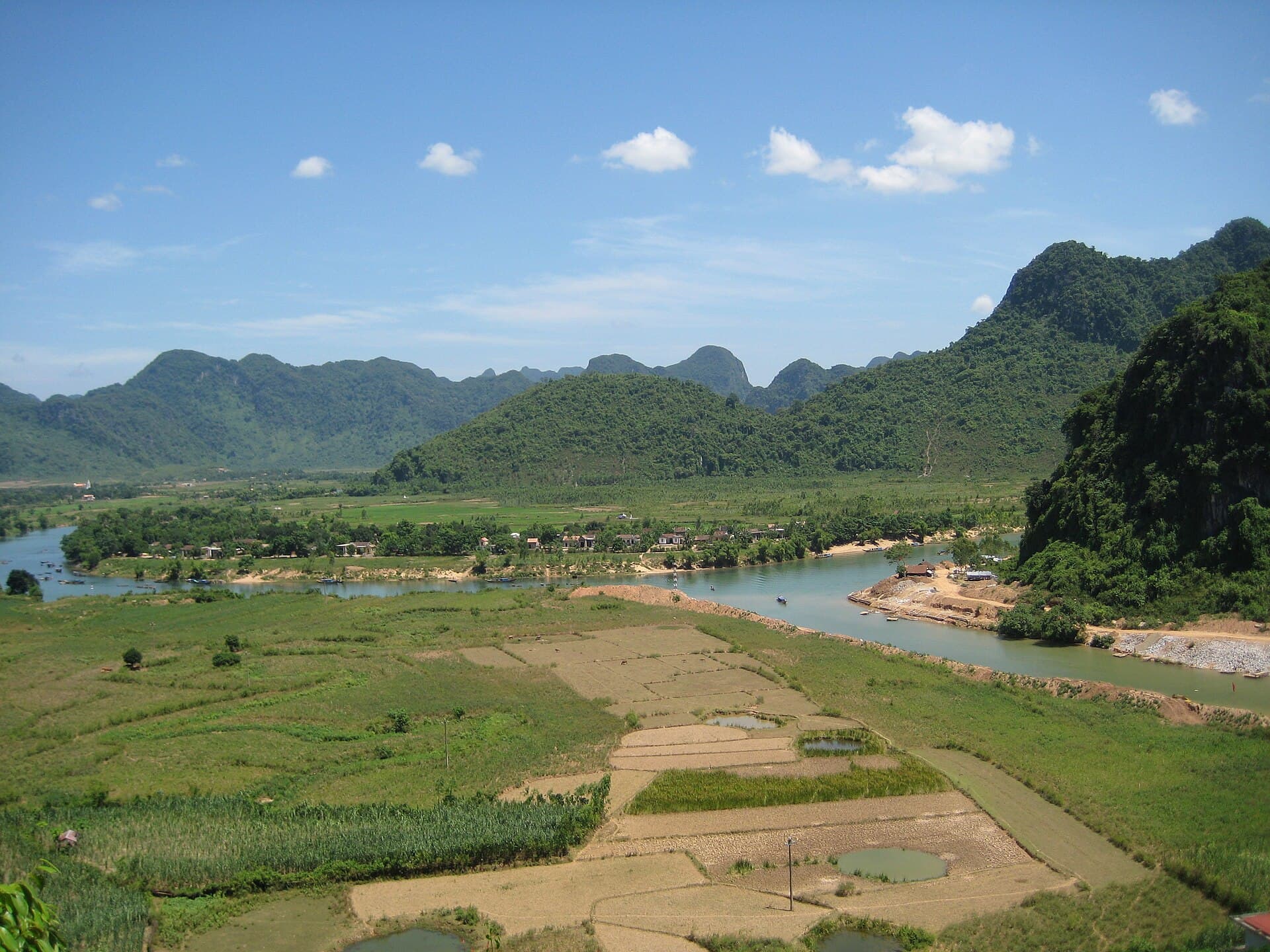
Phong Nha, une ville officiellement connue sous le nom de village de Son Trach, est la principale porte d'entrée du parc national de Phong Nha-Ke Bang, un site du patrimoine mondial de l'UNESCO au centre du Vietnam. Cette région présente un paysage spectaculaire de montagnes karstiques anciennes, de jungles denses et d'un réseau complexe de plus de 400 grottes, y compris Son Doong, la plus grande grotte du monde. Bien que célébrée mondialement comme le « Royaume des Grottes », Phong Nha offre bien plus que de simples merveilles souterraines.
La rivière Son, avec ses eaux émeraude, serpente à travers la vallée, reflétant les imposantes formations calcaires et soutenant la vie locale. La région offre un mélange d'aventure et de tranquillité, des expéditions spéléologiques difficiles de plusieurs jours aux balades à vélo tranquilles à travers les rizières et aux moments paisibles au bord de la rivière. Phong Nha reste moins développé que certaines des destinations les plus fréquentées du Vietnam, offrant une expérience de voyage immersive et authentique où le rythme de la vie rurale prévaut encore.
La région de Phong Nha-Ke Bang possède une histoire qui remonte à des dizaines de milliers d'années, avec des preuves archéologiques indiquant une habitation humaine dès 10 000 à 5 000 av. J.-C. Des outils en pierre et des fragments de poterie ont été découverts dans des grottes comme Bi Ky et Cha Noi, révélant une présence humaine de longue date. Le nom de la région, Phong Nha, provient probablement d'un ancien village ou établissement, qui a ensuite été associé à sa grotte la plus proéminente.
Tout au long de l'histoire, Phong Nha a eu une importance stratégique. Pendant la dynastie Nguyen, c'était une étape cruciale sur l'autoroute Nord-Sud, facilitant le commerce et la communication entre la capitale Hué et la région de Truong Son occidental. Des équipes d'arpentage et des postes militaires ont été établis pour protéger cette route et extraire des ressources précieuses telles que le bois, la cire d'abeille et le bois d'agar.
Cependant, c'est pendant la guerre du Vietnam que Phong Nha a joué un rôle particulièrement important, bien que moins connu. La région de Phong Nha a servi de zone de rassemblement majeure pour les soldats et les fournitures nord-vietnamiens se déplaçant vers le sud le long du sentier Ho Chi Minh. Les grottes du parc national ont été utilisées comme usines, installations de stockage, quartiers d'habitation et cachettes pour les troupes et les provisions. La région a été le théâtre de conflits intenses, avec des campagnes de bombardement américaines ciblant les lignes d'approvisionnement. Aujourd'hui, des sites comme la grotte de Tam Co et le ferry de Xuan Son sont des rappels poignants des sacrifices faits pendant cette période.
En 2003, le parc national de Phong Nha-Ke Bang a été reconnu comme site du patrimoine mondial de l'UNESCO, témoignage de sa beauté naturelle exceptionnelle et de son importance géologique. Cette désignation, étendue en 2015 pour inclure la biodiversité et les critères culturels, a contribué à préserver la région tout en attirant l'attention internationale sur son mélange unique de merveilles naturelles et de profondeur historique.
Le parc national de Phong Nha-Ke Bang est un royaume de merveilles souterraines et de paysages verdoyants. Les expériences ici tournent autour de ses grottes. La grotte de Phong Nha est explorée lors d'une promenade en bateau le long de la rivière Son, menant à ses impressionnantes formations calcaires et à sa rivière souterraine. Pour une perspective différente, la grotte du Paradis offre de vastes chambres aux allures de cathédrale ornées de stalactites et de stalagmites imposantes, accessibles via des passerelles en bois. Pour les amateurs d'adrénaline, la grotte sombre propose de la tyrolienne, de la baignade dans la grotte et des bains de boue.
Au-delà des grottes bien connues, le parc offre une variété de randonnées d'aventure vers des systèmes plus reculés comme Hang En, la troisième plus grande grotte du monde, impliquant souvent des nuitées. Pour l'expédition ultime, la grotte de Son Doong, la plus grande du monde, nécessite une visite de plusieurs jours, réservée à l'avance. En surface, explorez la campagne en faisant du vélo à travers les villages locaux, les champs d'arachides et les rizières, ou faites du kayak sur la paisible rivière Son. Le sentier écologique de Nuoc Mooc offre des promenades en forêt et des lieux de baignade rafraîchissants.
La meilleure période pour visiter Phong Nha est pendant la saison sèche, qui s'étend généralement de février à août. Pendant ces mois, les températures sont chaudes, les précipitations sont minimes et le ciel est souvent clair, offrant des conditions idéales pour explorer les grottes et pratiquer des activités de plein air. Plus précisément, de février à avril offre des températures agréables (22-28°C) et des paysages luxuriants. Bien que de mai à août puisse être plus chaud, les grottes maintiennent une température fraîche et constante toute l'année.
La saison des pluies, de septembre à novembre, peut apporter de fortes précipitations et des inondations potentielles, entraînant la fermeture temporaire de certaines grottes et de certains sentiers de randonnée. Décembre et janvier sont plus frais et plus secs, mais certaines activités nautiques pourraient être moins attrayantes.
Phong Nha n'a pas d'aéroport ni de gare directement dans la ville. Le centre le plus proche est la ville de Dong Hoi, à environ 40-45 kilomètres, qui dispose d'un aéroport (VDH) et d'une gare. De Dong Hoi, vous pouvez rejoindre Phong Nha en taxi, en bus local ou en voiture privée pré-arrangée. Des bus-couchettes relient également Phong Nha directement aux grandes villes comme Hanoï, Hué et Da Nang.
Se déplacer à Phong Nha même se fait mieux à deux roues. De nombreux hébergements proposent des locations de vélos gratuites, et des motos sont facilement disponibles à la location. Si vous n'êtes pas à l'aise de conduire, des guides locaux peuvent être engagés pour des visites en moto. Notez que les applications de covoiturage comme Grab ne fonctionnent pas à Phong Nha. Il est crucial de s'en tenir aux sentiers balisés dans le parc national de Phong Nha-Ke Bang en raison du risque de munitions non explosées de la guerre. La ville dispose d'un seul distributeur automatique de billets en son centre.
Phong Nha en coréen, en chinois ou en hébreu — et dans 29 autres langues, chaque étape narrée par une voix native. La plus large gamme de langues de tous les audioguides autoguidés.
Disponible en :