Phan Thiet Fischsauce-Fabriken
Die Stadt Phan Thiet trägt einen deutlichen, allgegenwärtigen Duft, den die meisten Besucher sofort bemerken.
Die ganze Geschichte wird in der Tour freigeschaltet
 Tran The Vinh / CC BY-SA 3.0, via Wikimedia Commons
Selbstgeführte Audio-Walking-Tour durch Phan Thiết — GPS-Route, Offline-Wiedergabe, erzählerische Narration in 32 Sprachen.
“Wo ockerfarbene Dünen auf saphirblaue Meere treffen und alte Cham-Flüstern im Wind wehen.”
Nicht die Postkarten. Die Geschichten, die selbst Einheimische nicht kennen – dir ins Ohr geflüstert, genau dort, wo sie geschahen.
Die Stadt Phan Thiet trägt einen deutlichen, allgegenwärtigen Duft, den die meisten Besucher sofort bemerken.
Die meisten Reiseführer werden Ihnen sagen, den Fischereihafen von Mui Ne zu besuchen, aber sie verpassen oft das beste Zeitfenster zur Besichtigung.
Der Märchenbach ist eine bekannte Naturattraktion, aber die meisten Besucher erleben nur einen Bruchteil seiner einzigartigen Schönheit.
Entdecke jedes Geheimnis von Phan Thiết
Jede Adresse, jede Enthüllung vollständig – in deinem Ohr, genau dort, wo es geschah.
Du wählst deine Stationen. Du gehst. Die Stimme enthüllt, was andere übersehen.


Deine selbstgeführte Audio-Tour durch Phan Thiết ist bereit – wähle deine Sehenswürdigkeiten, deine Sprache und starte, sobald du ankommst.
KaufenLume enthält einen integrierten Augmented-Reality-Guide. Halten Sie Ihr Handy hoch: Die Kamera zeigt die Straße vor Ihnen, mit einem leuchtenden Pfeil über dem echten Bild, der immer auf Ihren nächsten Stopp zeigt — keine Karte zum Rätseln, keine falschen Abzweigungen. Wie alles bei Lume funktioniert es komplett offline.
Phan Thiet, eine Küstenstadt im Südosten Vietnams, ist ein Reiseziel, wo die Wüste auf das Meer trifft. Es ist die Hauptstadt der Provinz Binh Thuan und dient als Tor zur beliebten Strandstadt Mui Ne. Bekannt für seine weitläufigen goldenen Strände, wiegenden Palmen und sanften Wellen, bietet Phan Thiet eine Mischung aus Abenteuer, Kultur und Entspannung an der Küste.
Die Identität der Stadt ist tief mit ihrem Fischereierbe verbunden, was sich in ihren geschäftigen Märkten und dem einzigartigen Aroma der Nuoc Mam (Fischsauce)-Produktion zeigt. Jenseits der Küste präsentiert Phan Thiet beeindruckende Naturlandschaften, darunter weite Sanddünen und antike Relikte, die von seiner beständigen Vergangenheit zeugen. Egal, ob Sie Wassersport, kulturelle Immersion oder einfach nur eine ruhige Auszeit am Meer suchen, Phan Thiet bietet eine vielfältige Palette an Erlebnissen für Reisende, die Vietnam jenseits der bekannteren Routen erkunden möchten.
Die Geschichte von Phan Thiet ist mit den Fäden wechselnder Kulturen und Reiche verwoben. Lange vor der Ankunft der Vietnamesen war die Region ein integraler Bestandteil des Champa-Königreichs, das vom 7. bis zum 17. Jahrhundert florierte. Das beständigste Zeugnis dieser alten Zivilisation sind die Po Sah Inu Cham-Türme, die im 8. Jahrhundert zu Ehren des Hindu-Gottes Shiva erbaut wurden. Diese kunstvollen Bauwerke stellen einige der frühesten Beweise für bedeutende Siedlungen in der Gegend dar und sind ein wichtiges Bindeglied zum Cham-Erbe von Phan Thiet.
Über Jahrhunderte hinweg, durch die südliche Expansion des Dai Viet-Staates, wurden Cham-Länder, einschließlich des heutigen Phan Thiet, allmählich Teil Vietnams. Die Lage der Stadt an der Küste des Südchinesischen Meeres machte sie zu einem wichtigen Zentrum für Fischerei und Seehandel, eine Rolle, die sie seit Jahrhunderten innehat. Während der Champa-Ära war sie in Handelsnetzwerke eingebunden, die Indien, China und die indonesischen Inseln verbanden. Später konzentrierte sich die Wirtschaft auf die Fischereiindustrie und die Produktion von Fischsauce, die bis heute ein Markenzeichen der Stadt ist.
Phan Thiet wurde während der französischen Kolonialzeit 1898 offiziell als Stadt anerkannt. Unter französischer Verwaltung wurden Erholungseinrichtungen entwickelt und die Stadt durch die Mündung des Ca Ty-Flusses in zwei Gebiete geteilt. Die Stadt spielte auch eine kleine, aber bedeutende Rolle in der modernen vietnamesischen Geschichte; die 1907 gegründete Duc Thanh Schule war die Schule, an der Präsident Ho Chi Minh von September 1910 bis Februar 1911 unterrichtete, bevor er sich auf die Suche nach einem Weg machte, das Land zu retten.
1999 wurde Phan Thiet zu einer Stadt zusammengelegt und hat sich seitdem von einem hauptsächlich auf Fischerei und Fischprodukte spezialisierten Zentrum zu einem wachsenden Touristenziel entwickelt, das insbesondere als Tor nach Mui Ne bekannt ist.
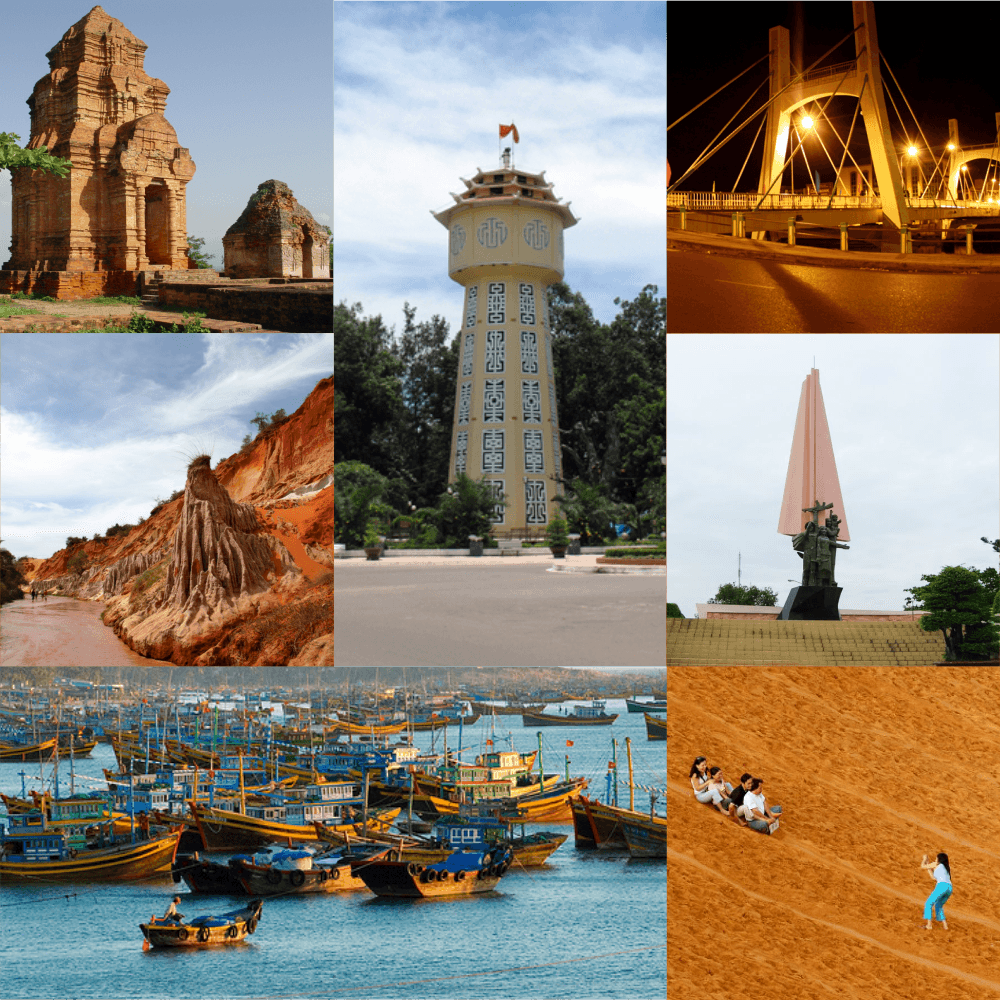
Phan Thiet und seine Umgebung bieten eine vielfältige Palette an Sehenswürdigkeiten, von alten Türmen bis hin zu einzigartigen Naturlandschaften. Die Po Sah Inu Cham-Türme bieten mit ihrer Architektur aus dem 8. Jahrhundert, die Shiva gewidmet ist, einen Einblick in das Cham-Erbe der Region. Diese Türme bieten auch einen Panoramablick auf die Stadt und die Küste.
Für ein einzigartiges Naturerlebnis erkunden Sie die Mui Ne Sanddünen. Es gibt sowohl die Weißen Sanddünen (Bau Trang), die einer Wüstenlandschaft ähneln und sich ideal zum Sandboarding und für Jeep-Touren eignen, als auch die Roten Sanddünen, die besonders bei Sonnenuntergang beeindruckende Ausblicke bieten. Ein weiteres Naturwunder ist der Märchenbach (Suoi Tien), ein flacher Bach, der sich durch eine farbenfrohe Schlucht aus roten und weißen Sandsteinformationen schlängelt und perfekt für einen Spaziergang barfuß ist.
Tauchen Sie im Fischereihafen von Mui Ne in das lokale Leben ein, besonders am frühen Morgen, wenn bunte Boote mit ihrem Fang zurückkehren. Der Wasserturm von Phan Thiet, erbaut 1928 und entworfen von Prinz Souphanouvong von Laos, ist ein ikonisches Wahrzeichen der Stadt, das einer riesigen Lotusblume ähnelt. Für einen historischen Stopp besuchen Sie die historische Stätte der Duc Thanh Schule, wo Ho Chi Minh unterrichtete. Ein Ausflug zum Ta Cu Berg bietet eine Seilbahnfahrt zu einer Pagode mit einer 49 Meter langen liegenden Buddha-Statue, einer der größten Vietnams.
Phan Thiet hat ein ozeanisches Klima mit zwei ausgeprägten Jahreszeiten: trocken und regnerisch. Die ideale Zeit für einen Besuch ist während der Trockenzeit, die von November bis April dauert. In diesen Monaten ist das Wetter sonnig, windig und trocken, mit Durchschnittstemperaturen um 26-27°C, was es perfekt für Strandaktivitäten und Besichtigungen macht. Während die Regenzeit von Mai bis Oktober dauert, fällt der Regen typischerweise in kurzen Nachmittagsschauern, sodass Sie immer noch gutes Wetter genießen können. Es ist jedoch am besten, Juli und August zu meiden, da dies die feuchtesten Monate sind und manchmal Rote Tiden auftreten können, die das Meer trüb machen.
Phan Thiet ist etwa 215 Kilometer von Ho-Chi-Minh-Stadt entfernt und kann mit dem Privatauto, dem Zug oder dem Schlafwagenbus erreicht werden. Die Fahrt dauert etwa 4 Stunden. Der Zug SPT2 fährt täglich vom Saigon Train Station ab. Innerhalb von Phan Thiet ist der öffentliche Nahverkehr begrenzt, daher verlassen sich die meisten Reisenden auf Ride-Hailing-Apps wie Grab, Taxis oder Motorradverleih. Es ist ratsam, vor der Fahrt mit Motorradtaxis über den Fahrpreis zu verhandeln. Viele Hotels bieten auch Rollerverleih an.
Der Vietnamesische Dong (VND) ist die lokale Währung. Kreditkarten werden zwar in einigen Geschäften akzeptiert, aber es ist ratsam, Bargeld für kleinere Einkäufe und lokale Märkte mitzunehmen. Beim Besuch religiöser Stätten kleiden Sie sich respektvoll und bescheiden. Phan Thiet ist bekannt für seine frischen Meeresfrüchte, und die Erkundung lokaler Gerichte ist ein wichtiger Teil des Erlebnisses. Es wird empfohlen, Unterkünfte im Voraus zu buchen, insbesondere während der Hauptreisezeiten.
Phan Thiết — Koreanisch, Chinesisch, Hebräisch und 29 weitere Sprachen, jede Station von einer muttersprachlichen Stimme erzählt. Die größte Sprachauswahl aller selbstgeführten Audiotouren.
Verfügbar auf: