Huynh Thuy Le Old House
This seemingly ordinary house holds the key to one of the 20th century's most scandalous and celebrated literary affairs.
Full story unlocks in the tour
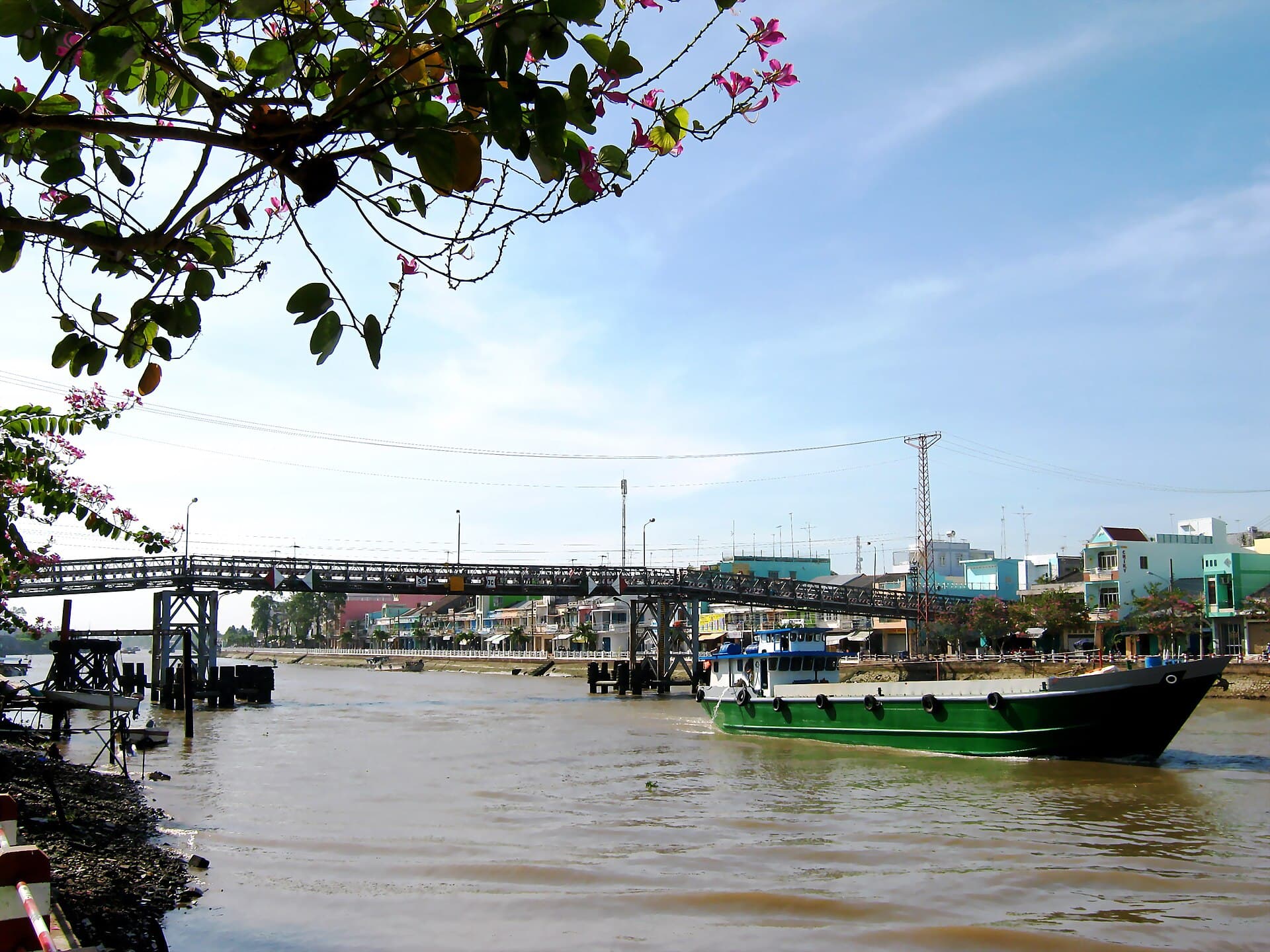 Bùi Thụy Đào Nguyên / CC BY-SA 3.0, via Wikimedia Commons
Self-guided audio walking tour of Sa Đéc — GPS route, offline playback, story-driven narration in 32 languages.
“Where the Mekong's currents carry whispers of colonial romance and a thousand blossoms bloom.”
Not the postcards. The stories even locals don't know — whispered in your ear, right where they happened.
This seemingly ordinary house holds the key to one of the 20th century's most scandalous and celebrated literary affairs.
The flower fields of Sa Đéc are not just beautiful; their unique cultivation method is a clever adaptation to the Mekong Delta's watery landscape.
This ornate Chinese pagoda has a surprising past, having served a very different purpose during a tumultuous period.
Discover every secret of Sa Đéc
Every address, every reveal in full — in your ear, right where it happened.
You pick your stops. You walk. The voice reveals what the others miss.


Your self-guided audio tour of Sa Đéc is ready — pick your landmarks, choose your language, and start the moment you arrive.
BuySa Đéc, a serene city in Vietnam's Mekong Delta, offers a captivating blend of colonial charm, floriculture, and a rich cultural fabric. Often referred to as the "flower capital" of the South, it is a place where the rhythm of life flows with the gentle currents of the Tien River and the hues of countless blossoms.
Beyond its flower village, Sa Đéc holds stories of a bygone era, particularly its connections to French colonial history and the romance immortalized in Marguerite Duras's novel, The Lover. The city's tree-lined streets and aging villas speak of a multicultural past, making it a destination for those seeking an authentic glimpse into the Mekong Delta's unique heritage.
The origins of Sa Đéc can be traced back to the Khmer Empire, with its original name, "Phsar Dek," meaning "Iron Market" in Khmer, suggesting a history of metal and agricultural tool trade. The official founding year is considered to be 1757, during the Nguyen Dynasty's southward expansion, when the region's fertile lands saw a boom in trade and agriculture. From its inception, Sa Đéc was a multicultural center, a confluence where Vietnamese (Kinh), Khmer, and Chinese (Hoa) traditions intertwined.
In the late 19th century, Sa Đéc became part of the French colony of Cochinchina, transforming into an important administrative and trading post. This colonial period brought significant urban development, including the construction of roads and administrative buildings, shaping the city's infrastructure and architectural landscape with a unique blend of Vietnamese, Chinese, and French styles.
A pivotal moment in Sa Đéc's history was the establishment of the Tan Quy Dong flower village in the early 20th century. What began as a small community of farmers cultivating ornamental plants evolved into a major floral hub, earning Sa Đéc the moniker "flower capital" of southern Vietnam. This century-old tradition of floriculture continues to define a significant part of the city's identity and economy.
Sa Đéc gained international renown through French writer Marguerite Duras, who lived in the city between 1928 and 1932. Her autobiographical novel, The Lover, based on her teenage romance with a wealthy Chinese man from Sa Đéc, brought worldwide fame to the city and turned it into a destination for literary enthusiasts. Following the unification of Vietnam in 1976, Sa Đéc briefly served as the capital of Dong Thap Province, further solidifying its administrative status before the capital moved to Cao Lanh in 1994. In 2013, Sa Đéc was officially recognized as a provincial city, a testament to its continued growth and regional importance.
Begin your exploration at the Huynh Thuy Le Old House, an architectural fusion of Eastern and Western styles, famous as the setting for Marguerite Duras's The Lover. Wander through the Sa Đéc Flower Village (Tan Quy Dong Flower Village), especially before the Tet Lunar New Year, where thousands of flowers are cultivated in bamboo baskets above the water. The village offers over 1,000 different types of ornamental flowers, including more than 50 kinds of roses.
Visit the Kien An Cung Pagoda, also known as Ong Quach Pagoda, a Chinese-influenced temple with a storied past. For a unique natural wonder, head to Phuoc Kien Pagoda, known for its immense lotus swamps featuring giant lotus leaves strong enough to support an adult. Do not miss the bustling Sa Đéc Market near the river, offering a glimpse into local daily life and regional specialties. You can also find tranquility at the Kim Hue Pagoda, built in 1806 near the Cai Son Canal, notable for its unique Chinese-style architecture.
Sa Đéc experiences a tropical monsoon climate with consistently warm temperatures throughout the year. There are two distinct seasons: the dry season from December to April and the rainy season from May to November. The best time to visit is during the dry season, particularly from late November to late March, for comfortable weather and less rainfall. If you wish to witness the Sa Đéc Flower Village in its full splendor, plan your trip for the 12th lunar month (typically December to early February), just before the Tet Lunar New Year, when flowers are in full bloom and being prepared for market.
Sa Đéc is approximately 140 km southwest of Ho Chi Minh City. You can reach Sa Đéc by car, motorbike, or bus, enjoying a scenic drive through the Mekong Delta countryside. For a more immersive experience, consider a boat trip through the canals. While in Sa Đéc, comfortable walking shoes are essential for exploring. If visiting during the rainy season (May-November), pack a light raincoat or umbrella, as showers can be frequent but often short-lived. Bringing mosquito repellent is also advisable, especially if staying in homestays within the flower village. Safety is paramount, so choose reputable tour providers, especially for boat and cycling tours.
Sa Đéc in Korean, in Chinese or in Hebrew — and 29 more languages, every stop narrated by a native voice. The widest language range of any self-guided audio tour.
Available in: