Coutances Cathedral
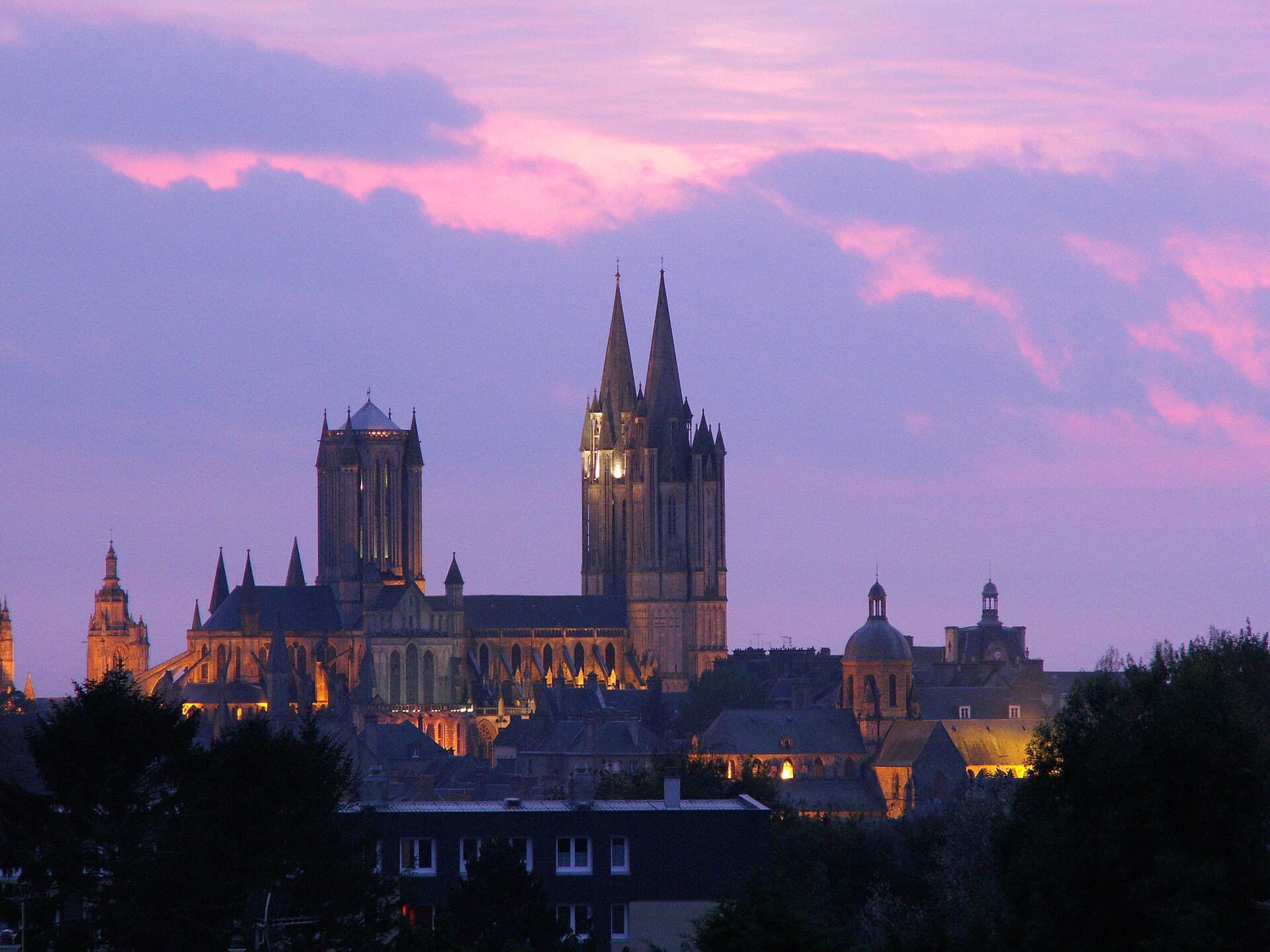
The soaring Gothic cathedral of Coutances attests to architectural ambition, but a subtle detail within its ancient stones hints at a much older, almost forgotten, past.
Full story unlocks in the tour
 Aroche / CC BY-SA 3.0, via Wikimedia Commons
Self-guided audio walking tour of Coutances — GPS route, offline playback, story-driven narration in 32 languages.
“Where Gothic spires meet resilient spirit and jazz fills the air.”
Not the postcards. The stories even locals don't know — whispered in your ear, right where they happened.
The soaring Gothic cathedral of Coutances attests to architectural ambition, but a subtle detail within its ancient stones hints at a much older, almost forgotten, past.
This tranquil botanical garden, a harmonious blend of French, English, and Italian styles, holds a surprising connection to a significant local figure.
Despite suffering immense destruction during World War II, one of Coutances' most iconic landmarks miraculously endured the bombings.
Discover every secret of Coutances
Every address, every reveal in full — in your ear, right where it happened.
You pick your stops. You walk. The voice reveals what the others miss.

Your self-guided audio tour of Coutances is ready — pick your landmarks, choose your language, and start the moment you arrive.
BuyLume has a built-in augmented-reality guide. Hold your phone up and its camera shows the street ahead of you, with a glowing arrow laid over the real view that always points to your next stop — no map to puzzle over, no wrong turns. Like everything in Lume, it works fully offline.
Coutances, a historic market town in Normandy, France, offers a captivating blend of medieval heritage and a thriving cultural scene. Situated on a steep hill between the valleys of the Prépont, Soulle, and Bulsard rivers, it provides sweeping views of the surrounding countryside. Known as the 'Toledo of the Cotentin,' the town is dominated by the Cathédrale Notre-Dame, a masterpiece of Norman Gothic architecture visible for miles, even from the island of Jersey.
Beyond its architectural grandeur, Coutances is a designated 'Town of Art and History,' recognized for its preserved monuments, parks, and gardens. It offers a quieter, more reflective experience of Normandy, with winding lanes, traditional markets, and blossoming gardens providing a serene backdrop to centuries of ecclesiastical history. The town is also a cultural center, particularly renowned for its annual Jazz sous les Pommiers festival, which transforms the town into a lively stage each May.
Coutances traces its origins back to pre-Roman times, when it was known as Cosedia, a chief town inhabited by the Unelli, an ancient Celtic tribe. In the 3rd century, it was renamed Constantia in honor of the Roman emperor Constantius I Chlorus. By the 5th century, Coutances became an episcopal see, solidifying its importance as a spiritual center for the Cotentin region.
The town endured numerous challenges throughout the Middle Ages, including devastating Viking raids in 886 that left much of it ravaged. Despite these setbacks, Coutances was rebuilt, and its iconic Notre-Dame Cathedral, primarily a 13th-century Gothic structure, rose on the site of a church consecrated around 1090. The town also suffered during the Wars of Religion in the 16th century, when the cathedral was looted by Protestants.
Coutances served as the capital of the Cotentin during the Ancien Régime until 1795, when the prefecture was transferred to Saint-Lô. The 19th century saw the town focus on textile work, particularly linen. However, the most profound impact on Coutances in recent history was during World War II. The town suffered extensive destruction from Allied bombings in June 1944 as the Cotentin Peninsula became a crucial battleground during the Battle of Normandy. Despite 60% of the town being destroyed, Coutances was meticulously rebuilt, preserving its historic charm and many of its authentic monuments, with the cathedral miraculously surviving the bombardment. Today, Coutances stands as a testament to its enduring spirit, blending its deep past with a lively present.
The Cathédrale Notre-Dame de Coutances is the town's most prominent landmark, an exceptional example of Norman Gothic architecture with twin towers that rise 80 meters. Inside, observe the slender rib vaults, carved angels, and the 33-meter lantern tower that fills the crossing with light. Guided tours are available to explore its upper galleries and discover the blend of Romanesque and Gothic styles.
Adjacent to the cathedral is the Jardin des Plantes, a beautifully maintained botanical garden dating back to the 19th century. This tranquil space features a diverse collection of flora, fountains, and shaded paths, offering views over the surrounding countryside. The Musée Quesnel-Morinière, housed in an 18th-century townhouse, showcases local art, archaeology, and Norman ceramics.
Beyond these major sites, wander through Coutances' old town with its medieval courtyards and narrow streets. Explore other historic churches like Église Saint-Pierre, dating from the 15th and 16th centuries with its Gothic Flamboyant and Renaissance architecture, and the late Gothic Église Saint-Nicolas. The Théâtre de Coutances, a restored Italianate theatre, hosts various performances throughout the year.
The most favorable time to visit Coutances is during spring (April–June) and early summer (July), when the weather is mild and the gardens are in full bloom. This period also coincides with the renowned Jazz sous les Pommiers festival in May, which draws international musicians and lively crowds. Autumn offers beautiful countryside colors and fewer visitors, while winter provides a quieter, festive atmosphere with Christmas markets. July, August, and September generally offer optimal weather for warm-weather activities, with average daytime temperatures reaching 22°C (72°F) in August.
Coutances is accessible by regional rail and road. Trains from Paris, via Caen or Saint-Lô, typically take 3–3.5 hours. The town is well-connected to nearby cities like Granville and Saint-Lô, and the Normandy beaches are within easy reach. Parking is generally convenient, with several car parks near the town center and cathedral offering free or low-cost spaces.
For dining, Coutances offers a selection of restaurants, bistros, and cafés serving traditional Norman fare, including duck with apple sauce, seafood platters, and creamy cheeses. Local favorites include Le Râtelier and La Baratte for classic French cuisine, and Le Kalamansi for bistronomic dishes using fresh, local produce. Do not miss the lively weekly market on Thursday mornings at Place de Gaulle, where you can find fresh produce, Norman cheeses, and artisan crafts. An organic market is held on Tuesday late afternoons at Place de la Poissonnerie.
Coutances in Korean, in Chinese or in Hebrew — and 29 more languages, every stop narrated by a native voice. The widest language range of any self-guided audio tour.
Available in: