Cowbridge Town Walls
The medieval town walls of Cowbridge speak of defense and commerce, yet one section holds a surprising account of a past attempt to modernize the town's thoroughfares.
Full story unlocks in the tour
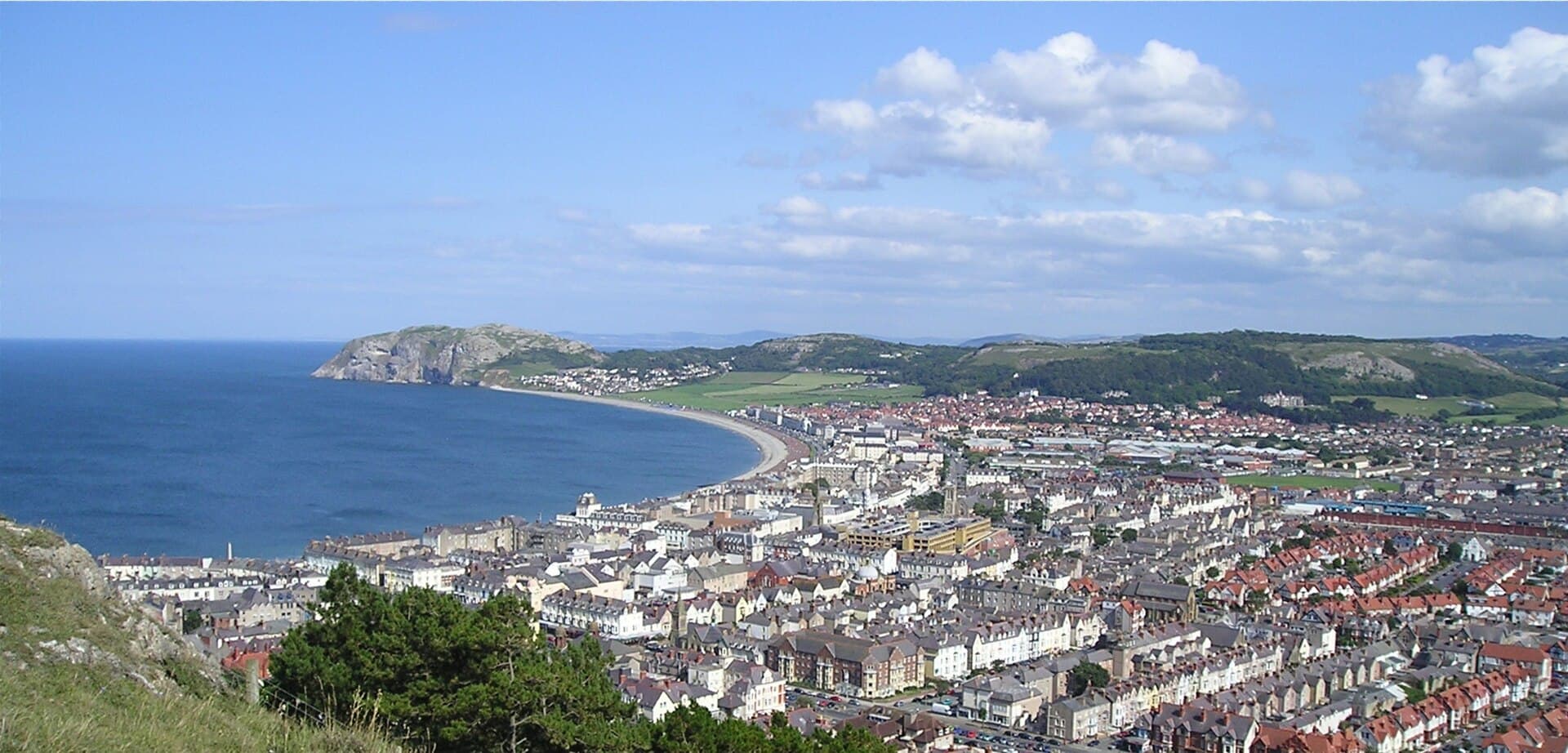 Photo of Llandudno, via Wikimedia Commons
Self-guided audio walking tour of Cowbridge — GPS route, offline playback, story-driven narration in 32 languages.
“Where Roman roads meet medieval walls, and an independent spirit flourishes.”
Not the postcards. The stories even locals don't know — whispered in your ear, right where they happened.
The medieval town walls of Cowbridge speak of defense and commerce, yet one section holds a surprising account of a past attempt to modernize the town's thoroughfares.
Cowbridge's High Street is celebrated for its independent shops and venerable buildings, but one specific address once housed a figure who profoundly shaped Welsh culture.
Cowbridge Grammar School educated many distinguished individuals, including a future Oscar-winning actor, though its original structures have undergone a dramatic transformation.
Discover every secret of Cowbridge
Every address, every reveal in full — in your ear, right where it happened.
You pick your stops. You walk. The voice reveals what the others miss.

Your self-guided audio tour of Cowbridge is ready — pick your landmarks, choose your language, and start the moment you arrive.
BuyLume has a built-in augmented-reality guide. Hold your phone up and its camera shows the street ahead of you, with a glowing arrow laid over the real view that always points to your next stop — no map to puzzle over, no wrong turns. Like everything in Lume, it works fully offline.
Cowbridge, known in Welsh as Y Bont-faen, is a historic market town in the Vale of Glamorgan, Wales, positioned approximately 12 miles west of Cardiff. Here, ancient history is visibly woven into the fabric of daily life, from its Roman origins to its medieval town plan. The town is recognized for its well-preserved Georgian and Victorian architecture, contributing to its standing as one of Wales' most desirable places to reside.
Often likened to the charm of a Cotswolds town without the crowds, Cowbridge offers a singular blend of countryside living with convenient access to South Wales' capital. Its High Street serves as a nexus of independent shops, boutiques, and eateries, creating a distinctive atmosphere that draws both locals and visitors. Beyond its active main street, Cowbridge provides a tranquil escape with its Physic Garden and ready access to the scenic Vale of Glamorgan countryside and Heritage Coast.
With a population just over 6,000, Cowbridge maintains the character of a traditional Welsh market town while offering a wide array of amenities. It is a community that cherishes its heritage, evident in its preserved town walls and the ongoing Cowbridge Food and Drink Festival and Cowbridge Music Festival.
Cowbridge's history extends back to the 1st century AD, when it was established as a Roman settlement, possibly the fort of Bovium, strategically positioned on the Roman road connecting the forts of Neath and Cardiff. Archaeological excavations have unearthed evidence of a Roman bathhouse, abandoned by the early 2nd century, with bricks stamped by the Legio II Augusta, suggesting a significant military presence. The Roman settlement remained occupied into the 4th century, with findings indicating agricultural processing and extensive iron working.
Following the Roman departure, documented evidence is sparse until the post-Norman conquest era. The medieval town of Cowbridge was founded in the mid-13th century by Richard de Clare, the Lord of Glamorgan, who granted its first borough charter on March 13, 1254. This charter established Cowbridge as an ancient borough, conferring privileges and rights upon its freemen, known as burgesses, and fostering its development as an important market and trading center.
The town's medieval layout, with its elongated street and burgage plots, remains largely intact today. Substantial portions of its 13th-century town walls, constructed around 1266, along with the South Gate, still stand, making it one of the few medieval walled towns in Wales. These fortifications represented a modest investment, primarily intended to safeguard estates and facilitate toll collection during market days. During the 15th century, Cowbridge faced adversity, including an assault and partial destruction by Owain Glyndŵr's forces during the Glyndŵr Rising, though the town was subsequently rebuilt.
Cowbridge experienced a notable revival in the 18th century with the emergence of new industries and the construction of grand townhouses by the local gentry. Increased traffic with Ireland led to the demolition of the old town hall and the East and West gates of the town walls to accommodate stagecoaches. The town became recognized for its inns and hostelries serving this trade. However, the industrial revolution largely bypassed Cowbridge, with Brunel's Great Western Railway situated to the north, leaving the town with only a minor branch line.
By the 20th century, Cowbridge was perhaps best known for its Grammar School, which, founded in 1608, educated notable alumni such as poet Alun Lewis and actor Sir Anthony Hopkins. The opening of a bypass in the 1960s invigorated Cowbridge, leading to the construction of new housing estates for commuters and a resurgence of its shops and offices. Today, Cowbridge is considered one of the most prosperous towns in Wales, preserving its historic character while adapting to contemporary needs.
Begin your exploration of Cowbridge at the Town Walls and South Gate, tangible remnants of its medieval past. The South Gate is the sole survivor of the original four, offering a glimpse into the town's fortified history. Wander along the High Street, the town's main thoroughfare, which retains its medieval configuration. Here, you will encounter an array of independent shops, boutiques, and cafes housed within historic Georgian and Victorian buildings.
Seek out the tranquility of the Cowbridge Physic Garden, an 18th-century walled garden dedicated to medicinal and culinary plants. It offers a peaceful retreat just off the High Street. For a deeper understanding of local heritage, visit the Cowbridge & District Museum, which opens on the first Sunday of each month. You can also follow the Blue Plaque Trail to uncover significant historical sites throughout the town.
Beyond the town center, the surrounding Vale of Glamorgan countryside presents opportunities for exploration. The nearby Glamorgan Heritage Coast features rugged cliffs and scenic beaches, approximately 20 minutes away by car. For those interested in local produce, the Cowbridge Farmers' Market convenes every Saturday morning.
Cowbridge is a delightful destination year-round, but late spring and autumn offer particular highlights. In late spring, the town hosts the annual Cowbridge Food and Drink Festival, a celebration of local and international cuisine. The Cowbridge Music Festival takes place every autumn, presenting a mix of jazz, folk, and classical performances in various venues throughout the town. Summer provides ideal conditions for exploring the Physic Garden and the surrounding Vale of Glamorgan countryside and coast.
Cowbridge is approximately 12 miles west of Cardiff and can be reached by car or bus. While there is no direct public transport connection from Cardiff Airport, it is less than 7 miles away by air, and a car journey takes around 20 minutes. Parking is available, though charges may apply. The town's High Street is pleasant for pedestrians, with many attractions within walking distance.
For accommodation, Cowbridge offers various options, including traditional inns and modern lodgings. The town is well-equipped with dining choices, from traditional pubs to fine dining restaurants, and independent cafes. Many shops along the High Street are independent businesses. The local currency is the Great British Pound (GBP).
Cowbridge in Korean, in Chinese or in Hebrew — and 29 more languages, every stop narrated by a native voice. The widest language range of any self-guided audio tour.
Available in: