Église Paroissiale de Crieff
Sous les pierres de l'église Est de Crieff, un secret a été enfoui pendant des siècles.
L'histoire complète se débloque dans le tour
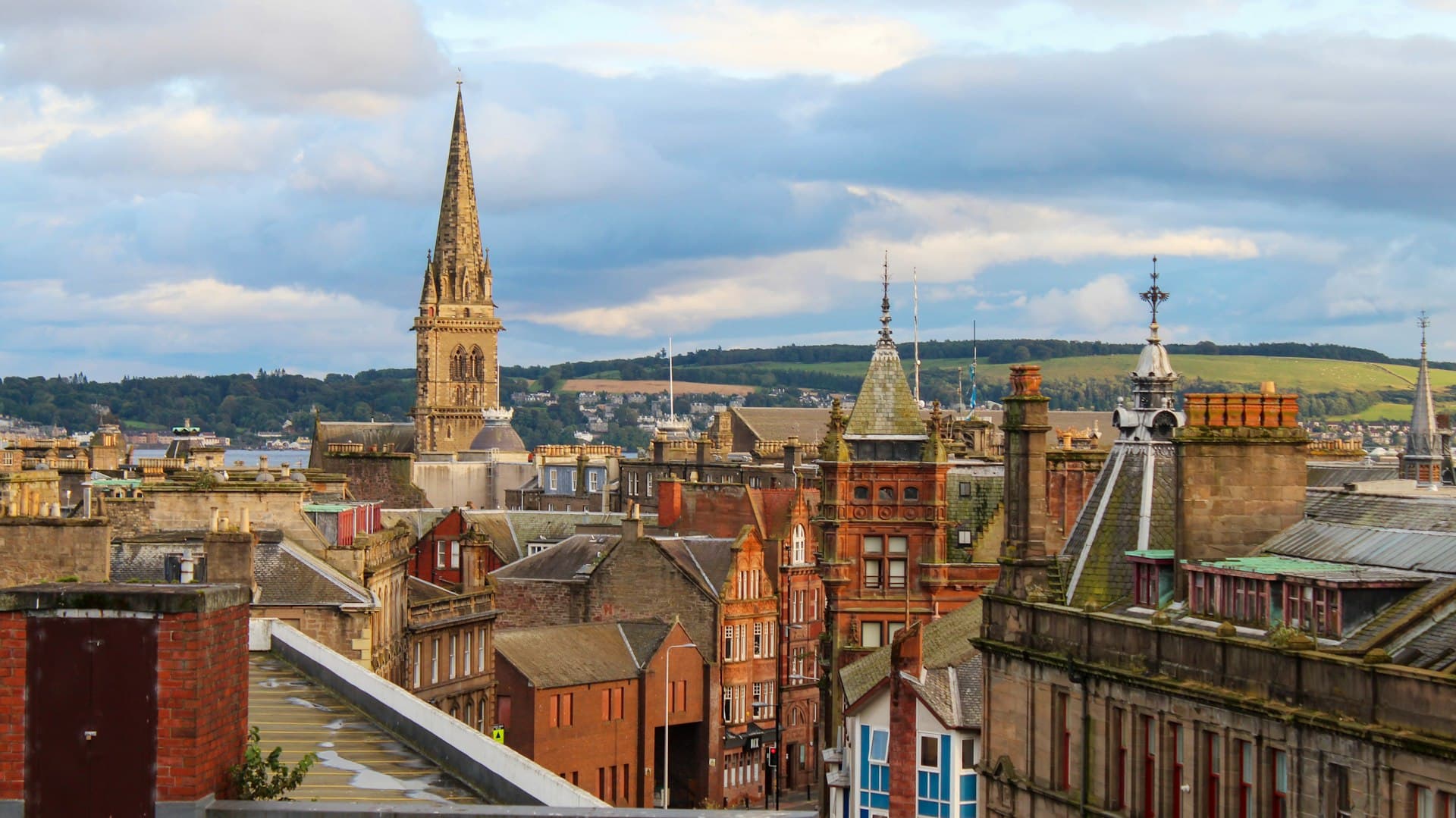 Photo of Dundee, via Wikimedia Commons
Visite audio autoguidée de Crieff — parcours GPS à pied, lecture hors ligne, narration en 32 langues.
“Où la détermination des Highlands rencontre l'élégance victorienne.”
Pas les cartes postales. Les histoires que même les habitants ignorent — soufflées à l'oreille, là où elles se sont passées.
Sous les pierres de l'église Est de Crieff, un secret a été enfoui pendant des siècles.
Cette place centrale abritait autrefois un service public qui, bien que vital, était initialement assez rudimentaire.
La plus ancienne distillerie en activité d'Écosse a une résidente à fourrure, détentrice d'un record, commémorée par une statue.
Découvrez tous les secrets de Crieff
Chaque adresse, chaque révélation en entier — dans ton oreille, là où elle s'est passée.
Tu choisis tes lieux. Tu marches. La voix te révèle ce que les autres ignorent.


Votre visite audioguidée de Crieff vous attend — choisissez vos lieux, votre langue, et lancez-vous dès votre arrivée.
AcheterLume intègre un guide en réalité augmentée. Levez votre téléphone : sa caméra montre la rue devant vous, avec une flèche lumineuse posée sur l'image réelle qui pointe toujours vers votre prochain arrêt — aucune carte à déchiffrer, aucun mauvais virage. Comme tout dans Lume, ça fonctionne entièrement hors-ligne.
Crieff, une vénérable ville marchande du Perthshire, en Écosse, présente une fusion captivante de paysages des Highlands, de raffinement victorien et de caractère rural. Positionnée sur le versant sud du Knock of Crieff, elle domine la vallée de Strathearn, servant de passage entre les Highlands et les Lowlands écossais. Le nom de la ville, dérivé du gaélique 'craobh' signifiant 'arbres', fait allusion à ses environs verdoyants. Autrefois un centre névralgique pour le commerce du bétail en Écosse, le passé de Crieff est gravé dans ses ruelles sinueuses et ses édifices en pierre, où les échos des bouviers et des marchands résonnent encore.
Aujourd'hui, Crieff est célébrée pour ses offres culinaires, ses boutiques indépendantes et un large éventail d'activités de plein air. Elle constitue une excellente base pour explorer les glens, les lochs et les montagnes du Perthshire, ou simplement pour savourer un rythme de vie paisible au sein d'une communauté accueillante. Avec son mélange distinctif de patrimoine, d'attractions culturelles et d'opportunités d'aventure, Crieff offre une expérience écossaise profonde, à la fois accessible et authentique.
Le récit de Crieff remonte à des siècles, avec ses origines en tant que capitale administrative des comtes celtiques du XIIe siècle. Cependant, c'est au XVIIIe siècle que Crieff a véritablement pris son essor, évoluant pour devenir l'une des villes marchandes les plus renommées d'Écosse. Des Highlanders, venus d'aussi loin que Caithness et les Hébrides extérieures, conduisaient leur bétail noir à l'annuel "October Tryst" de Crieff – une vente de bétail de la Saint-Michel mémorable qui voyait jusqu'à 30 000 têtes de bétail se rassembler sur les champs et les collines de la ville. Ce commerce énergique apporta prospérité et une réputation de réjouissances animées, les bouviers célébrant leurs efforts après les ventes.
Cette période ne fut pas sans troubles. Rob Roy MacGregor et ses partisans étaient connus pour fréquenter l'October Tryst, et en 1714, ils marchèrent de manière célèbre sur la place de Crieff, chantèrent des chants jacobites et portèrent un toast à leur roi sans couronne Jacques VIII. Deux ans plus tard seulement, en 1716, 350 Highlanders revenant de la bataille de Sheriffmuir rasèrent la majeure partie de Crieff. Malgré ces adversités, la ville continua de s'étendre, avec James Drummond, 3e duc de Perth, aménageant la place centrale de James Square et établissant une industrie textile en 1731. Les efforts de construction de routes militaires du général Wade dans les années 1730 renforcèrent encore l'importance de Crieff, la plaçant sur une route cruciale de Stirling à Perth et vers le nord.
À la fin du XVIIIe siècle, Crieff commença à se transformer. Alors que le commerce du bétail se déplaçait vers des marchés comme Falkirk, la ville se réinventa en une retraite à la mode. Des hommes d'affaires aisés et des touristes d'Édimbourg et de Glasgow furent attirés par ses paysages attrayants et son air "restaurateur", menant à la construction de grandes villas et de l'imposant hôtel Crieff Hydro en 1868, un établissement hydropathique qui reste un point de repère aujourd'hui. L'arrivée du chemin de fer en 1857 renforça encore son attrait en tant qu'évasion champêtre. Cet héritage de raffinement victorien, combiné à ses profondes fondations historiques, confère à Crieff son caractère particulier.
Crieff offre une variété d'attractions qui répondent à différents intérêts. Pour les amateurs de whisky, une visite à la distillerie The Glenturret est une expérience enrichissante. Établie en 1775, elle est l'une des plus anciennes distilleries en activité d'Écosse, proposant des visites et des dégustations qui explorent la production traditionnelle de whisky. Un autre point fort est les jardins du château de Drummond, situés à une courte distance en voiture de Crieff. Ces magnifiques jardins à la française, conçus initialement au début du XVIIe siècle, sont considérés parmi les plus beaux d'Europe, avec une vue imprenable depuis la terrasse supérieure surplombant un parterre du début de l'époque victorienne.
Ceux qui s'intéressent à l'histoire apprécieront la bibliothèque Innerpeffray, la plus ancienne bibliothèque de prêt d'Écosse, fondée vers 1680. Le Crieff Town Hall abrite une exposition gratuite sur l'histoire de la ville, où les visiteurs peuvent également admirer la Croix du Burgh, vieille de 1000 ans. Pour ceux qui recherchent des activités de plein air, la promenade de Lady Mary offre un sentier fluvial pittoresque le long de la rivière Earn, adapté à différentes capacités, offrant des vues sur les Highlands de Crieff et des opportunités d'observer la faune locale. Comrie Croft propose des pistes de VTT pour tous les niveaux, ainsi que du glamping et des activités forestières. Le Crieff Hydro propose également un large éventail d'activités, dont deux terrains de golf et deux piscines, sur son domaine de 900 acres.
Au-delà des sites spécifiques, le centre-ville de Crieff est idéal pour explorer ses rues historiques, ses boutiques indépendantes et sa scène culinaire florissante, qui comprend des boulangeries locales, des épiceries fines et des bistrots. La Strathearn Gallery expose l'art contemporain d'artistes locaux et nationaux. Pour une expérience unique, pensez à visiter le Caithness Glass Visitor Centre pour observer l'artisanat du verre.
Le temps le plus agréable à Crieff se situe généralement en juin, juillet, août et septembre, avec des températures diurnes moyennes variant de 16°C à 19°C (61-66°F). Juillet est souvent considéré comme le mois le plus propice pour une visite, offrant les ciels les plus clairs. Bien que ces mois apportent des conditions douces, des précipitations sont toujours à prévoir. Pour ceux qui préfèrent un temps plus doux et moins de foule, la fin du printemps (mai à juin) et le début de l'automne (septembre à octobre) sont également recommandés. Le Crieff Highland Gathering, l'un des plus anciens jeux des Highlands d'Écosse, a lieu l'avant-dernier dimanche d'août. Les hivers, en particulier janvier et décembre, sont généralement froids et venteux, avec des températures comprises entre 0 et 5°C (32-40°F) et une couverture nuageuse et des précipitations plus élevées.
Crieff est facilement accessible en voiture, à environ une heure de route d'Édimbourg et de Glasgow, et à environ 20 minutes à l'ouest de Perth. Pour les transports en commun, vous pouvez prendre un train jusqu'à Perth ou Stirling, puis prendre un bus local pour Crieff. Des services de bus directs sont également disponibles depuis Édimbourg et Glasgow. La ville offre de nombreuses places de parking gratuites et payantes, notamment autour du centre-ville et des principales attractions comme MacRosty Park. Le stationnement dans la rue est généralement disponible, sauf pendant les jours de festival ou de marché.
Crieff propose une gamme d'options d'hébergement, y compris des hôtels, des chambres d'hôtes et des locations de vacances. Le Crieff Hydro Hotel, un complexe historique, offre de vastes installations et divers choix d'hébergement. Pour la restauration, Crieff a une scène culinaire florissante avec des options allant de la cuisine élégante aux salons de thé traditionnels et aux bistrots modernes. La ville propose également une sélection de boutiques indépendantes pour des cadeaux, de l'artisanat et des produits locaux. Bien que Crieff elle-même soit assez compacte pour être explorée en une demi-journée, une journée complète ou une nuit est recommandée pour profiter pleinement de ses attractions et de la campagne environnante. L'Office de Tourisme local, situé dans l'hôtel de ville sur High Street, peut fournir une aide et des informations supplémentaires.
Crieff en coréen, en chinois ou en hébreu — et dans 29 autres langues, chaque étape narrée par une voix native. La plus large gamme de langues de tous les audioguides autoguidés.
Disponible en :