Culross Abbey
Beneath the ruins of Culross Abbey, a legend speaks of a tunnel and a golden reward.
Full story unlocks in the tour
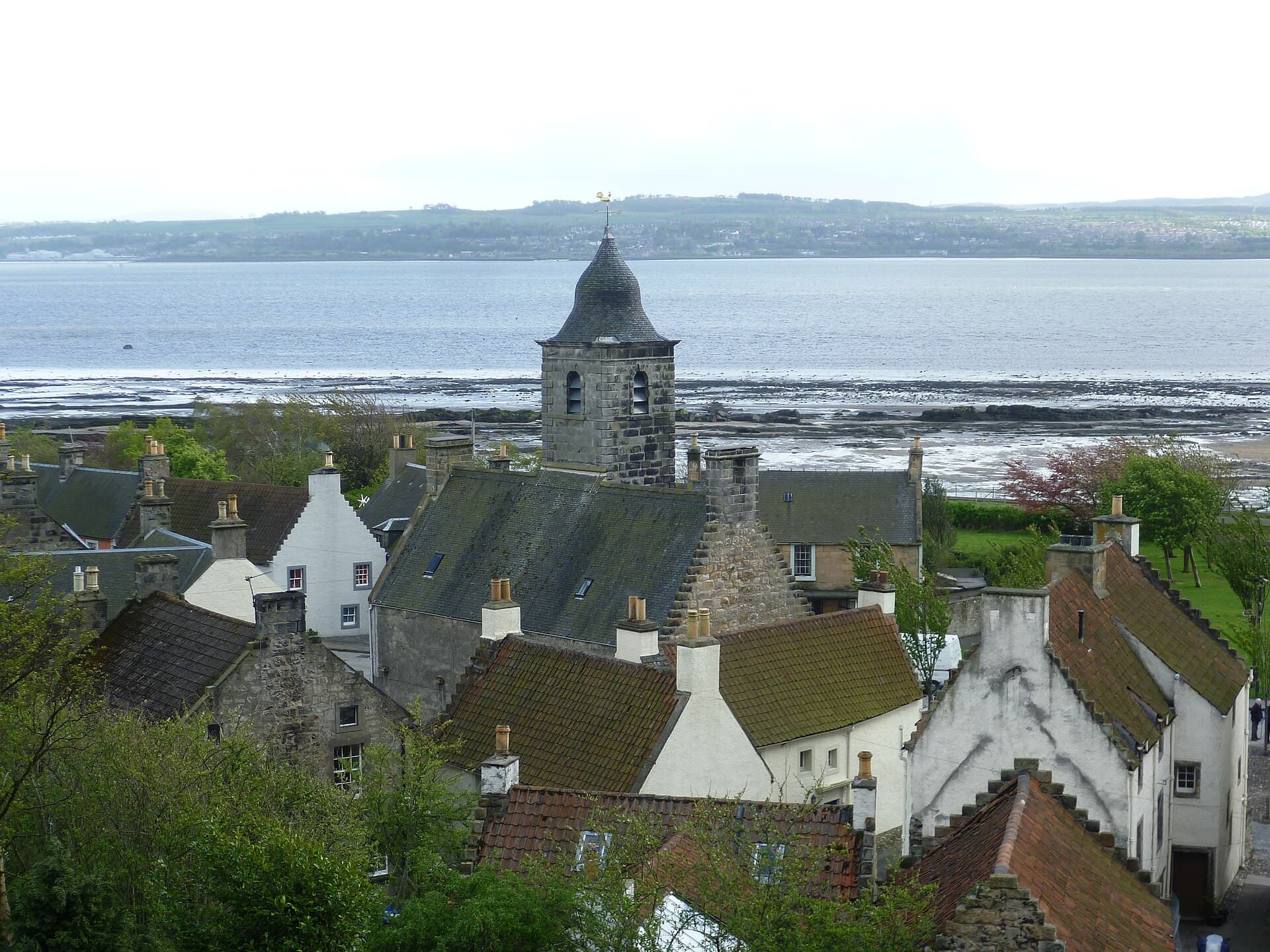 Kim Traynor / CC BY-SA 3.0, via Wikimedia Commons
Self-guided audio walking tour of Culross — GPS route, offline playback, story-driven narration in 32 languages.
“Wander through a perfectly preserved 17th-century Scottish burgh, where ochre-colored houses line ancient lanes, echoing centuries of saints, industry, and intrigue.”
Not the postcards. The stories even locals don't know — whispered in your ear, right where they happened.
Beneath the ruins of Culross Abbey, a legend speaks of a tunnel and a golden reward.
Culross once pioneered a feat of engineering that extended beneath the sea.
The seemingly quaint Town House holds a darker past, connected to a ruthless period in Scottish history.
Discover every secret of Culross
Every address, every reveal in full — in your ear, right where it happened.
You pick your stops. You walk. The voice reveals what the others miss.

Your self-guided audio tour of Culross is ready — pick your landmarks, choose your language, and start the moment you arrive.
BuyLume has a built-in augmented-reality guide. Hold your phone up and its camera shows the street ahead of you, with a glowing arrow laid over the real view that always points to your next stop — no map to puzzle over, no wrong turns. Like everything in Lume, it works fully offline.
Culross, pronounced 'Coo-riss,' is a village in Fife, Scotland, celebrated as the most complete 17th-century burgh in the country. Its distinctive white-harled houses with red-tiled roofs, winding lanes paved with stone, and crow-stepped gables create an immersive historical experience. Situated on the north shore of the Firth of Forth, Culross offers a singular window into Scotland's past, feeling as though you've stepped through a portal to the 1600s.
Beyond its historical charm, Culross has gained recognition as a filming location for the popular TV series Outlander, where it stands in for the fictional village of Cranesmuir. This blend of authentic history and cinematic allure makes Culross a captivating destination for visitors seeking to explore Scotland's heritage.
Culross's origins are rooted in legend. Tradition holds that Saint Serf founded a Christian community here in the 6th century. It is said that Saint Serf cared for Princess Thenew, who, after being cast adrift by her father for becoming pregnant out of wedlock, landed at Culross and gave birth to Saint Mungo, the patron saint of Glasgow. By the 13th century, Culross Abbey was established by the Earl of Fife, a Cistercian monastery built on what is believed to be the site of an earlier Pictish church.
Culross truly flourished in the 16th and 17th centuries, becoming a significant center for coal mining and salt production. Sir George Bruce of Carnock was instrumental in this industrial boom, establishing a coal mine in 1575 and, in 1595, constructing the groundbreaking 'Moat Pit.' This innovative mine was the first in the world to extend beneath the sea, a technological marvel that fueled the town's prosperity. The heat from coal also powered numerous salt pans, making Culross the largest salt producer in Scotland at one point. The wealth generated from these industries allowed merchants like Sir George Bruce to construct impressive homes, including the building now known as Culross Palace.
Much of Culross's distinctive appearance, with its red-tiled roofs, can be attributed to its trading relationships with the Low Countries (modern-day Belgium and the Netherlands). Ships returning from these voyages often used Dutch roof tiles as ballast, which were then incorporated into the local architecture. However, the town's fortunes eventually waned. The Moat Pit was destroyed by a storm in 1625, and by the 18th century, Culross's role as a bustling port declined. The industrial revolution bypassed the village, preserving its 17th-century character while other areas modernized. In the 20th century, the National Trust for Scotland recognized the unique historical value of Culross and began its extensive preservation and restoration efforts, ensuring its survival as a living museum.
Begin your exploration at the Mercat Cross, the historic heart of the village and a key Outlander filming location. From here, wander the steep, stone-paved streets, particularly Tanhouse Brae, known for its colorful houses. Look closely at the doorways for carved lintel stones, which often reveal the professions of past residents, such as a butcher or a sea captain.
Visit Culross Palace, an ochre-colored mansion built between 1597 and 1611 for Sir George Bruce. Despite its name, it was a wealthy merchant's home, not a royal residence. Explore its small, dark rooms with original painted ceilings and the terraced Palace gardens, which are a recreation of a 17th-century kitchen garden. These gardens served as Claire's herb garden at Castle Leoch in Outlander. The Town House, once a courthouse and prison, now houses a shop. Finally, make the steep but rewarding walk up to Culross Abbey. While much of it is in ruins, the choir still functions as the parish church, and the elevated position offers expansive views over the village and the Firth of Forth.
Culross welcomes visitors year-round, each season offering a distinct atmosphere. Spring and early autumn are often recommended for fewer crowds and a more authentic feel. July and August see more visitors, particularly Outlander day-trippers, so arriving before 11 am is advisable if you prefer a quieter experience. While Culross Palace closes from November to February, the village itself remains accessible. Winter offers a quiet, atmospheric visit, with cold and often windy weather. The Palace gardens are particularly verdant in summer.
Culross is easily accessible by car, approximately 40 minutes from Edinburgh via the M90 and A985, or about an hour from Glasgow via the M80 and A985. Free parking is available at both the east and west ends of the village. While driving through the narrow, stone-paved streets is discouraged due to limited space, the village is highly walkable. For public transport, take a train to Dunfermline, then connect with Stagecoach buses 71, 78, or 74. Allow half a day to explore the village, or a full day if you plan to include Culross Palace, the West Kirk, and lunch. The village has a few cafes and a pub for refreshments. Culross Palace is managed by the National Trust for Scotland, with adult tickets typically costing around £14.00, though NTS members enjoy free entry.
Culross in Korean, in Chinese or in Hebrew — and 29 more languages, every stop narrated by a native voice. The widest language range of any self-guided audio tour.
Available in: