Le nom de Cumalıkızık
Le nom inhabituel du village, « Cumalıkızık », est plus qu'une simple suite de sons ; il éclaire une pratique historique profondément enracinée.
L'histoire complète se débloque dans le tour
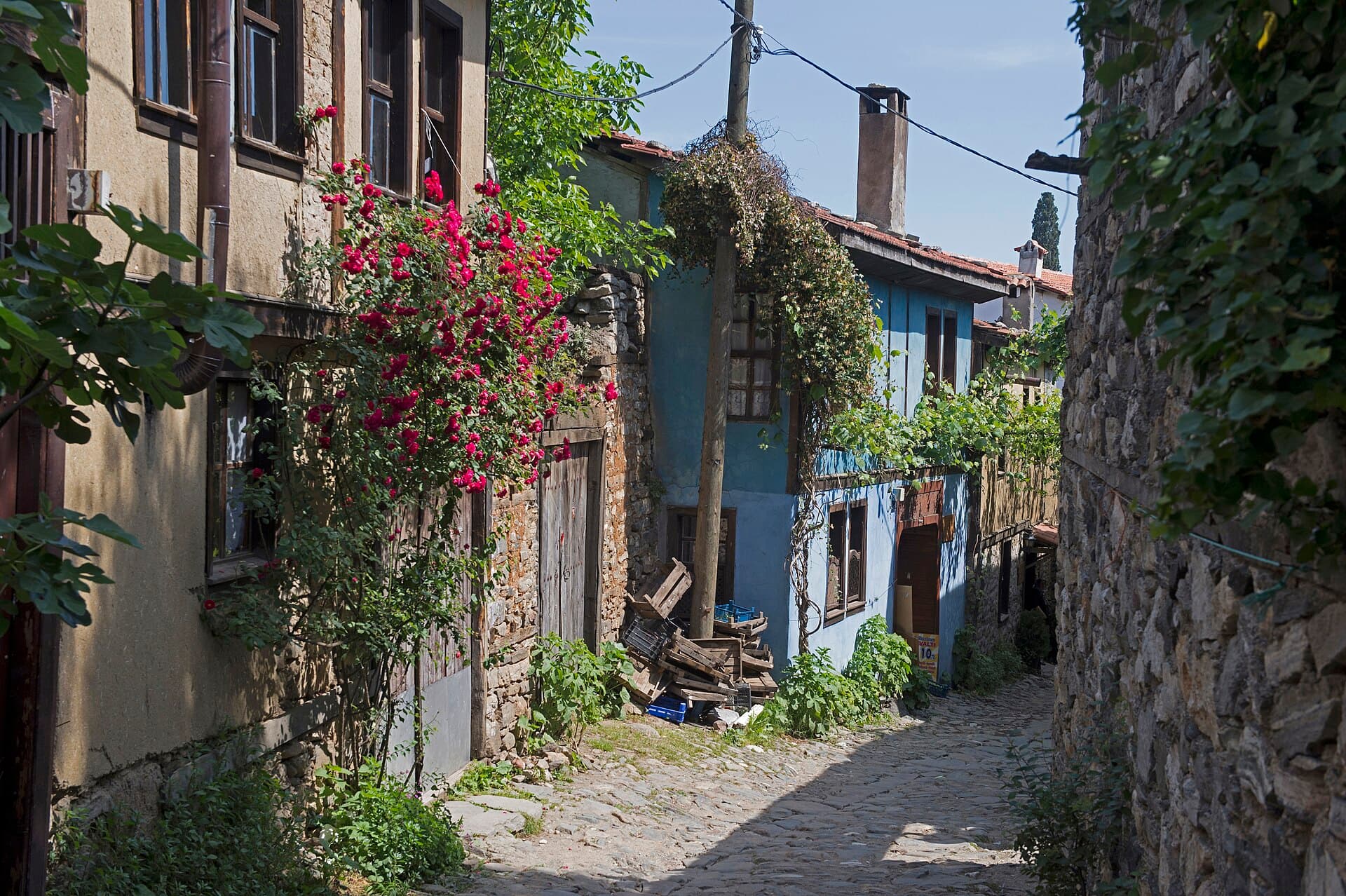 Dosseman / CC BY-SA 4.0, via Wikimedia Commons
Visite audio autoguidée de Cumalıkızık — parcours GPS à pied, lecture hors ligne, narration en 32 langues.
“Flânez dans un village ottoman où les siècles se dévoilent à travers chaque pierre.”
Pas les cartes postales. Les histoires que même les habitants ignorent — soufflées à l'oreille, là où elles se sont passées.
Le nom inhabituel du village, « Cumalıkızık », est plus qu'une simple suite de sons ; il éclaire une pratique historique profondément enracinée.
Cumalıkızık n'était pas une colonie isolée ; il appartenait à un réseau plus large de villages, dont la plupart ont depuis disparu.
Parmi les maisons historiques du village, l'une se distingue non seulement par son âge, mais aussi par un nom unique, presque lyrique.
Découvrez tous les secrets de Cumalıkızık
Chaque adresse, chaque révélation en entier — dans ton oreille, là où elle s'est passée.
Tu choisis tes lieux. Tu marches. La voix te révèle ce que les autres ignorent.

Votre visite audioguidée de Cumalıkızık vous attend — choisissez vos lieux, votre langue, et lancez-vous dès votre arrivée.
AcheterCumalıkızık, site classé au patrimoine mondial de l'UNESCO, offre un rare aperçu de la vie rurale ottomane primitive, ayant conservé son atmosphère authentique et son intégrité architecturale pendant plus de 700 ans. À seulement 10 kilomètres du centre-ville de Bursa, ce village, au pied du mont Uludağ, donne l'impression d'un voyage dans le temps.
Promenez-vous dans des rues étroites pavées de pierres, bordées de maisons colorées à colombages, dont beaucoup sont encore habitées par des habitants qui maintiennent des modes de vie traditionnels. Le village est un musée vivant, où chaque recoin révèle un chapitre de l'histoire ottomane, ce qui en fait une destination fascinante pour ceux qui recherchent un lien plus profond avec le patrimoine culturel de la Turquie.
## La tribu Kızık et les origines ottomanes L'histoire de Cumalıkızık commence au début des années 1300 avec la tribu Kızık des Turcs Oghuz, qui a établi une série de sept villages sur les pentes du mont Uludağ. Le nom « Kızık » lui-même est censé faire référence à ces colonies à flanc de montagne. Cumalıkızık, en particulier, a tiré son nom de « Cuma » (vendredi), car il servait de point de rassemblement central pour les prières du vendredi pour les villages Kızık environnants.
Fondé en tant que village vakıf (fondation), Cumalıkızık était destiné à générer des revenus, soutenant la construction de complexes et la capitale ottomane naissante de Bursa. Ce principe fondateur unique a influencé son agencement et son style architectural, qui restent remarquablement intacts aujourd'hui. Des sept villages Kızık originaux, seuls cinq ont perduré, Cumalıkızık étant célébré comme le meilleur exemple préservé de l'architecture rurale ottomane primitive.
## Un patrimoine vivant Pendant des siècles, Cumalıkızık a maintenu sa texture historique et son mode de vie traditionnel. Les maisons du village, construites en bois, en pierre et en adobe, présentent des éléments architecturaux ottomans distinctifs comme des étages supérieurs en encorbellement et des fenêtres en baie. Ces maisons, dont beaucoup sont encore habitées, offrent un aperçu authentique de la façon dont les gens vivaient il y a sept siècles. Les rues étroites et pavées de pierres du village, conçues pour les piétons et les bêtes de somme plutôt que pour les véhicules modernes, renforcent encore cette impression de remonter le temps.
En 2014, Cumalıkızık a été reconnu pour son immense valeur historique et culturelle, devenant partie intégrante du bien en série du patrimoine mondial de l'UNESCO « Bursa et Cumalıkızık : La Naissance de l'Empire ottoman ». Cette désignation reconnaît son importance en tant qu'exemple unique de planification et d'architecture rurale ottomane primitive, complétant les sites urbains ottomans du centre-ville de Bursa.
Commencez votre exploration en vous promenant simplement dans les rues étroites et pavées du village, en admirant les maisons ottomanes distinctives avec leurs couleurs vives, leurs bases en pierre et leurs étages supérieurs en surplomb. Cherchez la « Küpeli Ev » (Maison aux boucles d'oreilles), la plus ancienne maison du village, qui fait maintenant partie du Musée d'ethnographie, exposant des artefacts locaux et des objets ménagers traditionnels. La mosquée de Cumalıkızık, datant de 1396, est une autre structure historique importante sur la place du village, à côté de la fontaine Zekiye Hatun.
Ne manquez pas de voir le Hamam de Cumalıkızık, un bain turc du XVe siècle qui a été restauré et reste opérationnel. Pour une occasion de photo unique, cherchez « Cin Aralığı » (Allée des Génies), un passage exceptionnellement étroit. Au-delà des trésors architecturaux du village, vous pouvez parcourir les étals locaux pour des confitures maison, des produits frais et de l'artisanat. Pour une immersion plus profonde dans la beauté naturelle de la région, envisagez une excursion à la cascade de Saitabat, à environ 15 kilomètres du village.
Les périodes les plus agréables pour visiter Cumalıkızık sont le printemps et l'automne, lorsque le temps est doux et confortable pour explorer les rues pavées. Le printemps offre la beauté supplémentaire des fleurs en pleine floraison dans tout le village. Si vous êtes intéressé par une expérience culturelle animée, planifiez votre visite en juin pour coïncider avec le Festival annuel de la Framboise, qui célèbre le statut du village en tant que grand producteur de framboises. Les jours de semaine offrent généralement une atmosphère plus détendue, car le village peut devenir très animé avec les touristes locaux le week-end, surtout après 10h00.
Cumalıkızık est facilement accessible depuis le centre-ville de Bursa, situé à seulement 10-12 kilomètres. Vous pouvez rejoindre le village en bus locaux (lignes 22, 23 ou 38), en minibus (dolmuş) ou en taxi. Si vous utilisez les transports en commun, sachez que les bus et les minibus circulent plus fréquemment le dimanche. Certaines cartes de transport d'Istanbul peuvent fonctionner sur le système de métro de Bursa, mais de l'argent liquide est généralement nécessaire pour les minibus du village.
Des chaussures confortables sont essentielles en raison des rues pavées inégales. Si vous êtes un passionné de photographie, essayez d'arriver tôt le matin ou pendant l'« heure dorée » avant le coucher du soleil pour le meilleur éclairage et moins de monde. N'oubliez pas que Cumalıkızık est un village vivant, alors demandez toujours la permission avant d'entrer dans les cours ou de photographier les habitants. Le stationnement peut être difficile le week-end, donc les transports en commun sont souvent l'option la plus pratique.
Cumalıkızık en coréen, en chinois ou en hébreu — et dans 29 autres langues, chaque étape narrée par une voix native. La plus large gamme de langues de tous les audioguides autoguidés.
Disponible en :