The Plaza de Curaco de Vélez
Observe the ground in the town's central plaza, and you will find a phrase etched into the very surface of the community.
Full story unlocks in the tour
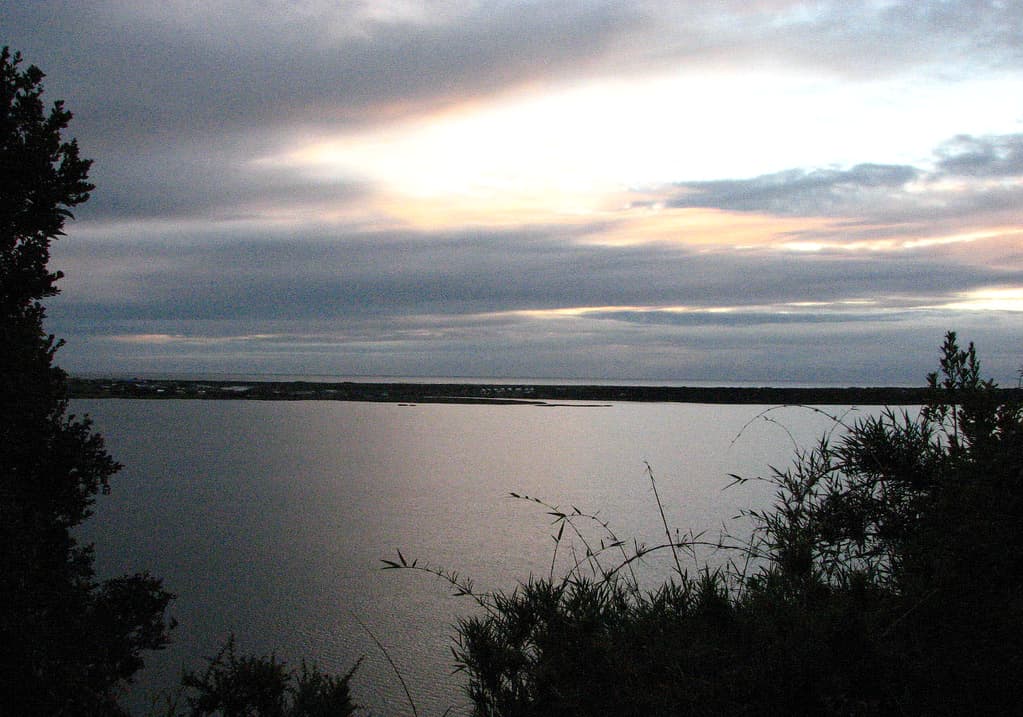 Photo of Cucao, via Wikimedia Commons
Self-guided audio walking tour of Curaco de Vélez — GPS route, offline playback, story-driven narration in 32 languages.
“Where the Pacific murmurs stories of sailors and shorebirds.”
Not the postcards. The stories even locals don't know — whispered in your ear, right where they happened.
Observe the ground in the town's central plaza, and you will find a phrase etched into the very surface of the community.
While many of Chiloé's wooden churches are UNESCO World Heritage Sites, Curaco de Vélez's own Iglesia San Judas Tadeo holds a distinct, poignant past.
Thousands of birds undertake an incredible journey to reach the wetlands of Curaco de Vélez each year, a migration of extraordinary scale.
Discover every secret of Curaco de Vélez
Every address, every reveal in full — in your ear, right where it happened.
You pick your stops. You walk. The voice reveals what the others miss.


Your self-guided audio tour of Curaco de Vélez is ready — pick your landmarks, choose your language, and start the moment you arrive.
BuyLume has a built-in augmented-reality guide. Hold your phone up and its camera shows the street ahead of you, with a glowing arrow laid over the real view that always points to your next stop — no map to puzzle over, no wrong turns. Like everything in Lume, it works fully offline.
Curaco de Vélez is a serene town located on Quinchao Island, part of the Chiloé Archipelago in Chile's Los Lagos Region. This appealing location provides a window into authentic Chilote life, defined by its profound connection to the sea, traditional wooden architecture, and a strong sense of community. The town is recognized for its peaceful atmosphere and expansive coastal views, making it an inviting destination for those seeking a quiet escape amidst natural splendor.
As the inaugural village established on Quinchao Island, Curaco de Vélez acts as a starting point for exploring the island's unique cultural and natural heritage. Visitors can wander along its pedestrian-friendly waterfront promenade, the Costanera, which offers uninterrupted views of the channel and is built on a wooden walkway, unaffected by tidal shifts. The town also functions as a center for ecotourism, particularly birdwatching, due to its significant coastal wetlands.
The history of Curaco de Vélez begins with early indigenous inhabitants, including the Huilliches and Chonos peoples, who thrived through fishing, gathering, and navigating the waters in traditional dalcas. Spanish settlers arrived in the Chiloé Archipelago around 1600, with those from Osorno arriving in 1602. The village of Curaco de Vélez itself was established in 1660.
The 17th century marked the arrival of the Jesuits, a religious order that played a significant role in organizing the first Christian communities in the area. They built chapels and integrated local cosmology into the emerging religious framework. By 1724, the population of Curaco de Vélez consisted of 33 families, totaling approximately 262 people, residing in simple homes constructed from wood and straw.
For centuries, Curaco de Vélez evolved as a modest agricultural, livestock, and fishing center, its identity deeply intertwined with the sea and trade among other island communities. Despite its quiet development, the town became known as the birthplace of several distinguished Chilean sailors. Figures such as Admiral Galvarino Riveros Cárdenas, a key participant in the War of the Pacific (1879), and Carlos Miller Norton, who navigated the Goleta Ancud to claim the Strait of Magellan for Chile in 1843, originated from this commune. Hydrographer and explorer Francisco Hudson also came from Curaco de Vélez.
At the turn of the 20th century, the town remained small. However, in 1901, Bishop Ramón Angel Jara initiated efforts to establish a more organized future for Curaco de Vélez, contributing to its growth. The community has maintained its rural character, preserving its traditional houses and its strong connection to the natural environment.
The architecture of Curaco de Vélez reflects the unique Chilota style, characterized by its use of local wood, often featuring balconies and lookouts that lend a simple and original aesthetic to the buildings. The local churches, some dating back to the 1700s and 1800s, exemplify this style, constructed from durable alerce and cypress wood and embodying the profound faith of the islanders.
Begin your exploration at the Plaza de Curaco de Vélez, the town's central square, where you can observe local life and its unique tribute to maritime heroes. Adjacent to the plaza stands the Iglesia San Judas Tadeo, a wooden church rebuilt in the traditional Chilota style after a fire in 1971. Its simple facade, frontal tower, and columned portico are characteristic of the archipelago's religious architecture.
Walk along the Costanera de Curaco de Vélez, a pedestrian wooden walkway that traces the coastline, offering expansive views of the channel. This pleasant path provides a tranquil setting to observe the surrounding seascape.
For those drawn to nature, the Humedales de Curaco de Vélez (Curaco de Vélez Wetlands) and Chullec Wetlands are important stops. These internationally recognized sites are vital for both resident and migratory waterbirds, including the Hudsonian Godwit and Whimbrel, making them excellent locations for birdwatching. A visitor center at the wetlands provides information on ecotourism and conservation efforts.
Delve into local history and culture at the Museo Comunal de Curaco de Vélez, which also functions as a cultural center and tourist information point. Another intriguing attraction is the Molino de Agua (Water Mill) of Curaco de Vélez, located within the municipal park and restored to display ancestral food traditions amidst a native forest circuit.
The austral summer months, from January to March, provide an excellent time to visit Curaco de Vélez. During this period, the commune hosts a variety of cultural events and traditional festivals that illuminate Chilote heritage, gastronomy, and music. The weather in July typically experiences highs around 50°F (10°C) and lows around 38°F (3°C), with a blend of sunshine, clouds, and intermittent rain. Temperatures can feel cooler due to wind. Precipitation is common throughout the year, with July often seeing significant rainfall.
Curaco de Vélez is located on Quinchao Island, which is part of the Chiloé Archipelago. To reach Quinchao Island, you will typically need to cross the Dalcahue Channel by ferry. Buses operate between Dalcahue and Curaco de Vélez, with the journey lasting approximately 12-15 minutes. The closest major city is Castro, the capital of Chiloé Province. From Curaco de Vélez to Puerto Montt, a bus journey takes approximately 4 hours, covering a distance of 300 km.
Within Curaco de Vélez, many attractions are accessible on foot, particularly along the Costanera and around the town center. For exploring the wider island, local buses or organized tours are available. The commune's population was estimated at 4,165 in 2026. While accommodations are available in the vicinity, booking in advance, especially during peak season, is advisable.
Curaco de Vélez in Korean, in Chinese or in Hebrew — and 29 more languages, every stop narrated by a native voice. The widest language range of any self-guided audio tour.
Available in: