La costanera de Dalcahue
El crujido rítmico de la madera y el suave chapoteo del agua contra cascos antiguos cuentan una historia mucho más antigua que cualquier registro escrito.
La historia completa se desbloquea en el tour
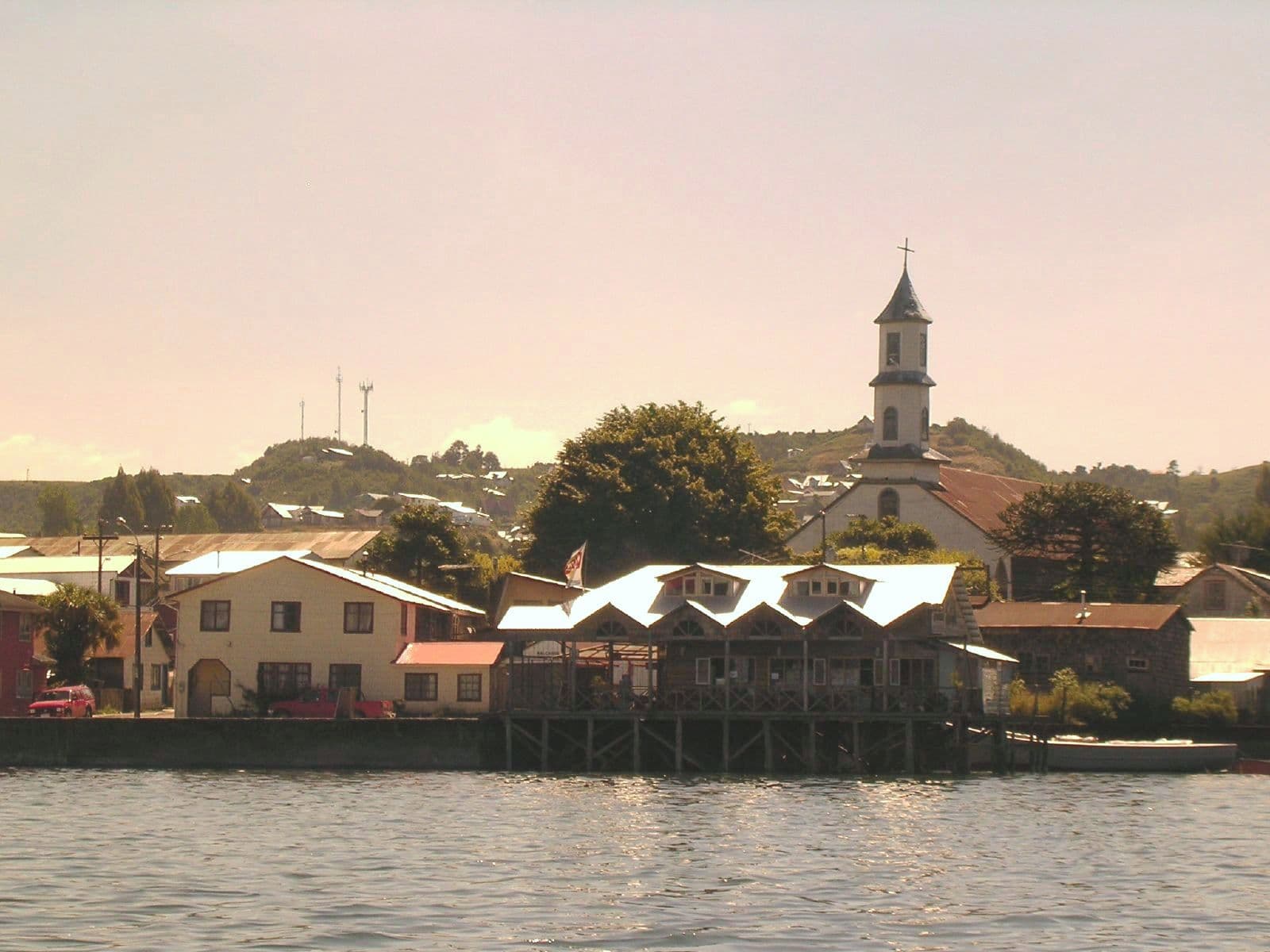 Cristian Bórquez (Seo2) from Santiago de Chile, Chile / CC BY 2.0, via Wikimedia Commons
Tour de audio autoguiado de Dalcahue — ruta GPS a pie, reproducción offline, narración en 32 idiomas.
“Donde los susurros de la tradición se encuentran con el ritmo de la marea.”
No las postales. Las historias que ni los locales conocen — al oído, justo donde ocurrieron.
El crujido rítmico de la madera y el suave chapoteo del agua contra cascos antiguos cuentan una historia mucho más antigua que cualquier registro escrito.
Más allá de su estatus de Patrimonio de la Humanidad por la UNESCO, esta iglesia de madera guarda un secreto dentro de sus sagradas paredes, visible solo durante un ritual anual particular.
Aunque el mercado dominical es famoso por sus artesanías, un aspecto menos conocido de la atmósfera del mercado a menudo pasa desapercibido para los visitantes ocasionales.
Descubre todos los secretos de Dalcahue
Cada dirección, cada revelación al completo — a tu oído, justo donde ocurrió.
Eliges tus paradas. Caminas. La voz te revela lo que los demás ignoran.
Tu tour de audioguía por Dalcahue te espera — elige tus lugares, tu idioma y empieza al llegar.
ComprarLume incluye una guía de realidad aumentada. Levanta el móvil y su cámara muestra la calle que tienes delante, con una flecha luminosa sobre la imagen real que siempre apunta a tu próxima parada — sin mapas que descifrar, sin giros equivocados. Como todo en Lume, funciona completamente sin conexión.
Dalcahue, un asentamiento costero en la Isla de Chiloé, ofrece una ventana al espíritu perdurable del archipiélago. A lo largo de su costa, el suave movimiento del agua contra la tierra habla de siglos de vida marítima. Este lugar es un testimonio vivo del ingenio y la profundidad cultural del pueblo chilote, donde el ritmo de la vida diaria se desarrolla con un telón de fondo de arquitectura de madera y la vasta extensión del Pacífico.
La vida aquí está entrelazada con el mar, desde los barcos de pesca que parten al amanecer hasta los artesanos que se inspiran en las formas naturales de la isla. El aire lleva el aroma a salitre y humo de leña, un abrazo reconfortante que da la bienvenida a quienes buscan una conexión auténtica con un lugar moldeado tanto por manos humanas como por las poderosas fuerzas de la naturaleza. Dalcahue invita a la contemplación tranquila y a un compromiso genuino con su carácter único.
Los primeros habitantes de la región de Dalcahue fueron el pueblo Chono, hábiles navegantes y pescadores que atravesaron las intrincadas vías fluviales del Archipiélago de Chiloé en sus distintivas embarcaciones de tres tablones, conocidas como dalcas. El nombre 'Dalcahue' en sí, derivado del mapudungun 'Dalkawe', se traduce directamente como 'lugar de dalcas', subrayando la profunda y antigua conexión entre esta ubicación y su patrimonio marítimo. Estas embarcaciones indígenas no eran simplemente un medio de transporte; eran centrales para el modo de vida Chono, facilitando el comercio, la pesca y la exploración a través de las islas.
Cuando los españoles llegaron en el siglo XVI, también reconocieron la importancia estratégica de las aguas protegidas de Dalcahue. Los colonizadores españoles adoptaron muchas costumbres locales, incluido el uso de dalcas, integrándolas en sus propias actividades marítimas. Con el tiempo, Dalcahue evolucionó hasta convertirse en un puerto significativo y un centro para la floreciente industria maderera, que aprovechó los abundantes bosques de la isla. El crecimiento de la ciudad estuvo intrínsecamente ligado a su papel como puerta de entrada, conectando el interior de Chiloé con el mundo en general a través de su activa costanera.
La llegada de los misioneros jesuitas en el siglo XVII marcó un momento crucial en el desarrollo cultural y arquitectónico de Dalcahue. Los jesuitas iniciaron la construcción de numerosas iglesias de madera en Chiloé, incluida la icónica Iglesia de Nuestra Señora de los Dolores en Dalcahue. Estas iglesias, construidas íntegramente con madera local utilizando técnicas tradicionales de construcción naval, son ahora reconocidas como Patrimonio de la Humanidad por la UNESCO, celebradas por su estilo arquitectónico único que fusiona influencias barrocas europeas con la artesanía indígena.
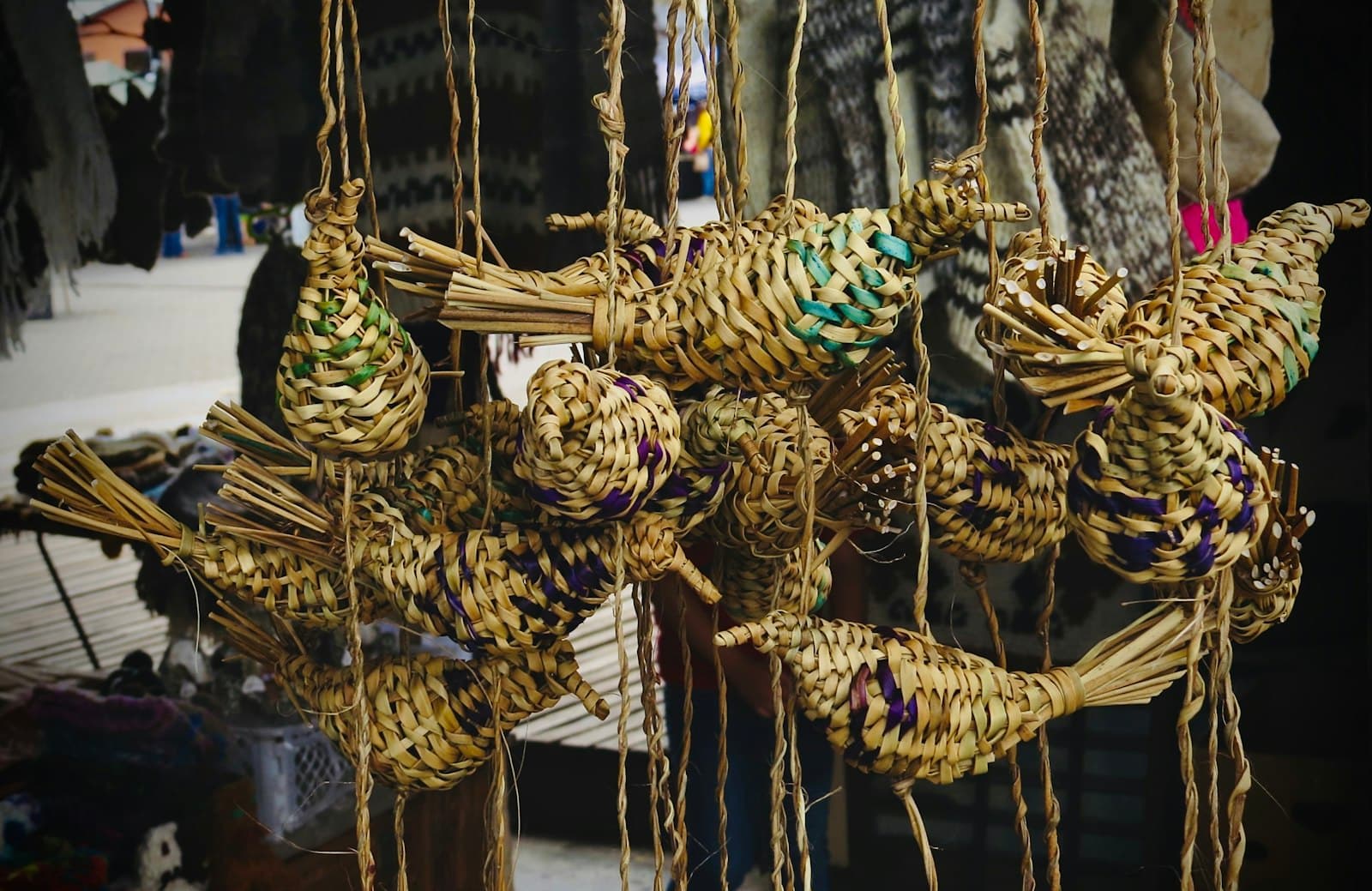
A lo largo de los siglos, Dalcahue mantuvo su identidad como centro de la cultura chilota. El mercado artesanal dominical de la ciudad, la 'Feria Artesanal', ha servido durante mucho tiempo como punto de encuentro para artesanos, agricultores y pescadores locales, perpetuando las tradiciones de tejido, talla de madera y preparación de alimentos tradicionales. Este mercado, junto con las fiestas religiosas anuales y las celebraciones comunitarias, continúa preservando y expresando el espíritu perdurable de Dalcahue, reflejando un diálogo continuo entre sus antiguas raíces y su vida actual.
Comience su exploración en la Iglesia de Nuestra Señora de los Dolores, una maravilla de madera reconocida por la UNESCO. Sus intrincadas uniones y el cálido resplandor de su interior ofrecen un espacio tranquilo para la contemplación. Cerca de la iglesia, el Museo de Dalcahue proporciona contexto para el pasado de la isla, exhibiendo artefactos que hablan de la vida diaria y las actividades marítimas de su gente.
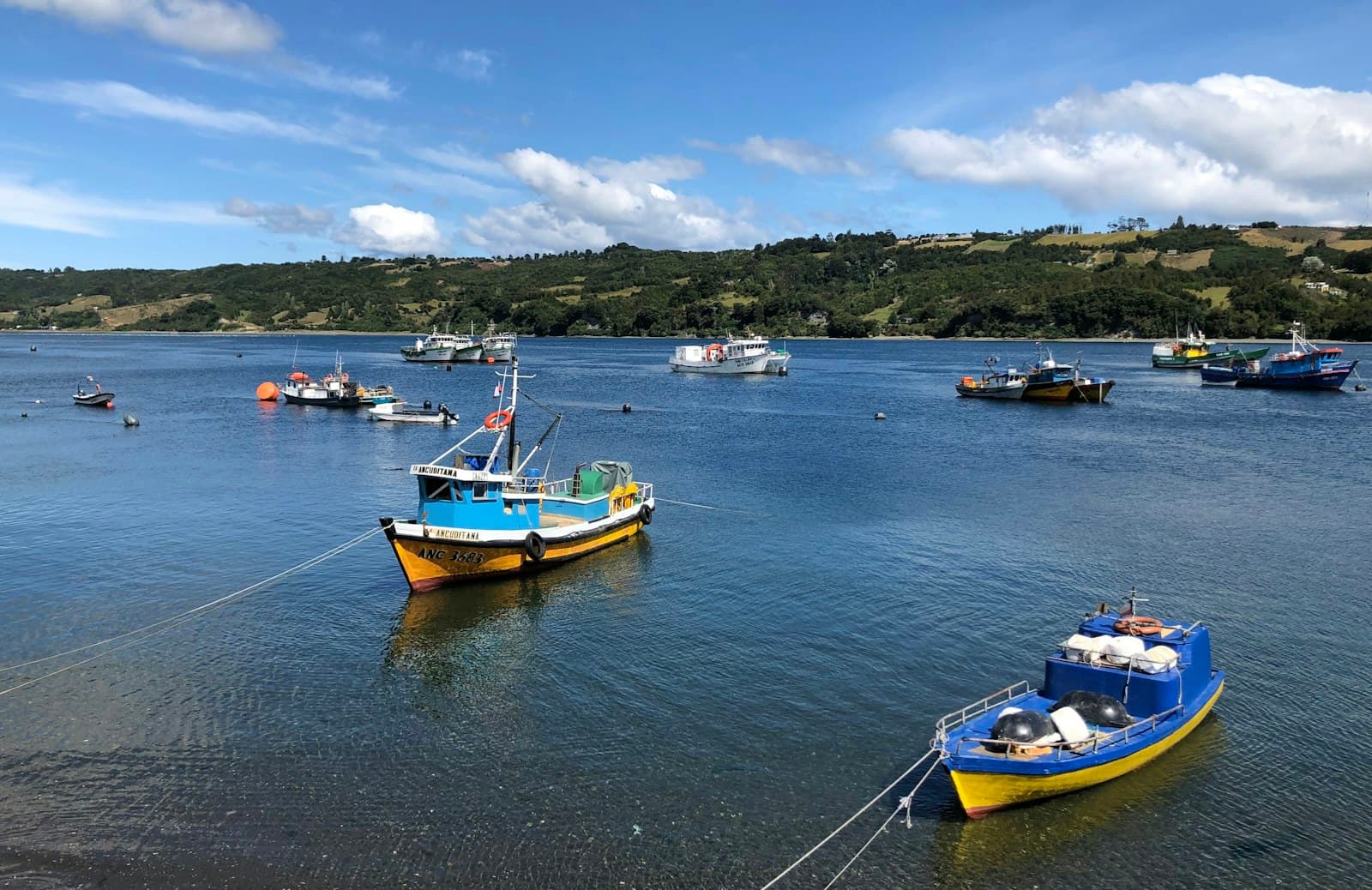
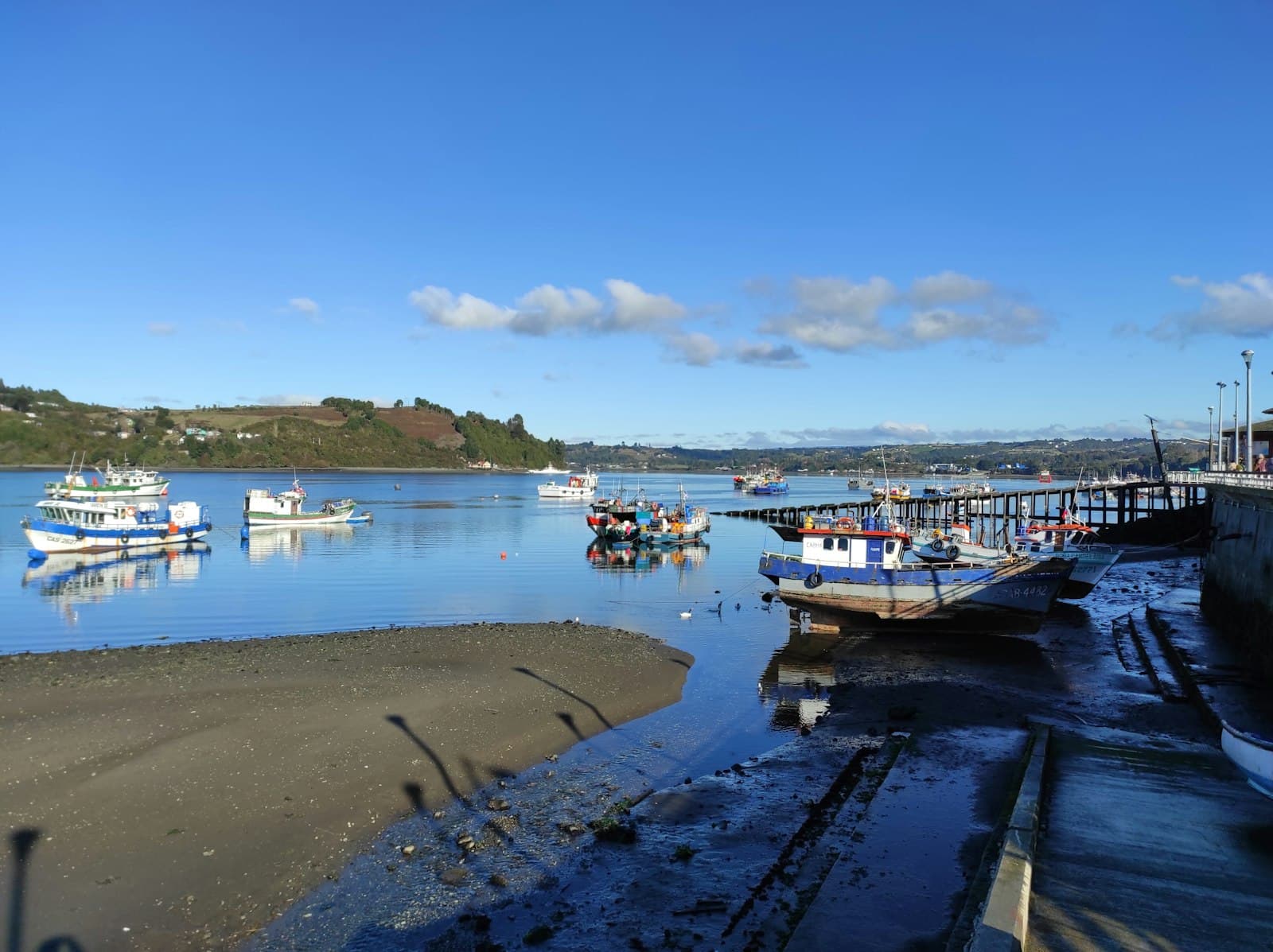
Pasee por el paseo marítimo, donde los barcos de pesca se mecen suavemente, sus cascos pintados reflejándose en las tranquilas aguas. Esta zona es un puerto en funcionamiento, un lugar donde los ritmos del mar dictan el día. La Feria Artesanal, particularmente animada los domingos, presenta una variedad de artesanías locales, desde textiles tejidos a mano hasta figuras de madera talladas, ofreciendo una conexión directa con el espíritu creativo de la isla. Experimente los sabores locales en las 'cocinerías', pequeños y sencillos restaurantes junto al agua, donde se preparan con esmero mariscos frescos y platos tradicionales chilotes.
El verano austral, de diciembre a marzo, ofrece el clima más agradable para visitar Dalcahue. Durante estos meses, los días son más largos y generalmente más templados, lo que hace que la exploración al aire libre sea más cómoda. Este período también coincide con varios festivales y eventos culturales locales, lo que proporciona una inmersión más profunda en las tradiciones chilotas. Si bien otras estaciones brindan una atmósfera más tranquila, también pueden presentar un clima más impredecible.
Dalcahue es fácilmente accesible en autobús desde Castro, la capital de Chiloé, con salidas frecuentes durante todo el día. El viaje es corto y pintoresco, ofreciendo vistas del interior de la isla. Las opciones de alojamiento en Dalcahue incluyen una selección de pequeños hoteles y casas de huéspedes, muchos con vistas al canal. Cenar es una parte central de la experiencia; busque las 'cocinerías' a lo largo de la costanera para disfrutar de mariscos auténticos y recién preparados y especialidades locales. Los servicios básicos, incluidos cajeros automáticos y un pequeño supermercado, están disponibles en el centro de la ciudad.
Dalcahue en coreano, en chino o en hebreo — y 29 idiomas más, cada parada narrada por una voz nativa. La mayor variedad de idiomas de cualquier audioguía autoguiada.
Disponible en: